
Soups & Stews
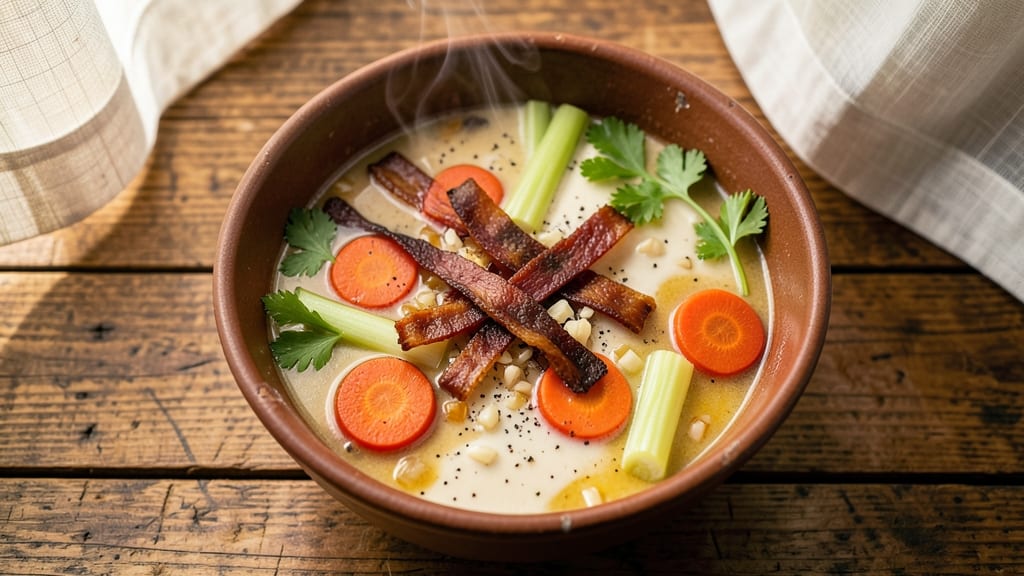
This biltong soup recipe transforms South Africa’s beloved dried meat into a hearty, smoky broth that’s equal parts comforting and bold. The key? Slow-cooked biltong strips that infuse the broth with deep, savory notes while celery crowns add a satisfying crunch.
I developed this recipe after years of experimenting with ways to elevate biltong beyond just a snack—it’s now a centerpiece for chilly evenings or game day gatherings.
The beauty of this soup lies in its simplicity: tender biltong, aromatic vegetables, and a rich broth come together with minimal effort. Unlike traditional biltong, which is often enjoyed on its own, this version soaks up the flavors of the simmering broth, creating a dish that’s both rustic and refined.
The celery crowns add a textural contrast that keeps every spoonful exciting, while the spices—like coriander and black pepper—tie everything together with warmth.
What you’ll end up with is a soup that’s deeply satisfying, with layers of smoky, spiced beef and vibrant vegetables. The biltong melts slightly in the broth, releasing its signature flavors, while the celery crowns stay crisp enough to add a satisfying bite.
It’s the kind of dish that feels indulgent yet balanced—perfect for feeding a crowd or savoring in smaller portions over a few days.
Serve it with crusty bread for dipping or alongside a simple green salad to round out the meal. The leftovers taste even better the next day, making it an ideal make-ahead recipe for busy weeks. Ready to bring biltong to the soup pot? Let’s get started.
Ingredients for biltong soup
Six aromatic vegetables, tender biltong, and bold spices create this deeply satisfying soup.
| Ingredient | Amount | Notes |
|---|---|---|
| Biltong 🥩 | 1 ½ lb | High-quality, air-dried beef strips |
| Celery Crowns 🧅 | 1 whole | Whole crowns for crunch |
| Carrots | 2 medium | Peeled and sliced into rounds |
| Onion 🧅 | 1 whole | Yellow, roughly chopped |
| Garlic Cloves 🧄 | 4 cloves | Minced for depth |
| Beef Broth 💧 | 6 cups | Homemade or quality store-bought |
| Tomato Paste 🍅 | 2 tbsp | For richness and body |
| Ground Coriander 🌿 | 1 tsp | Freshly ground for warmth |
| Black Peppercorns 🌶️ | ½ tsp | Coarsely cracked |
| Bay Leaves 🍃 | 2 whole | For aromatic depth |
| Olive Oil 🫒 | 2 tbsp | For sautéing |
| Salt 🧂 | 1 ½ tsp | Adjust to taste |
| Fresh Parsley 🌿 | ¼ cup | Chopped for garnish |
The biltong is the heart of this soup—look for thick, well-marbled strips from specialty butchers or South African markets. Costco or Whole Foods often carry quality biltong in the international foods section. If you can't find it, dried beef jerky works in a pinch, though it lacks the same depth. The celery crowns should be crisp—buy them fresh and store them in a plastic bag in the fridge. For the broth, homemade is ideal, but a high-quality store-bought version like Kitchen Basics or Pacific Foods will work just fine. The tomato paste adds richness, so don't skip it—Trader Joe's has a great squeeze tube that's perfect for this recipe.
No biltong? Substitute air-dried beef strips or even thick-cut beef jerky, though the flavor will be less intense. Running out of celery crowns? Use whole celery stalks or even fennel bulbs for a similar crunch. Fresh coriander is ideal, but ground coriander from the spice aisle will work at half the amount. The black peppercorns should be coarsely cracked—a mortar and pestle works best if you want to get fancy. For a deeper tomato flavor, add a splash of red wine when sautéing the garlic. And if you're short on time, pre-chopped onions and garlic from the freezer section will save you minutes.
This soup tastes even better the next day as the flavors meld—make a double batch if you can. Store leftovers in an airtight container in the fridge for up to 4 days, or freeze for 3 months. The celery crowns will soften slightly but still add texture. For serving, garnish with fresh parsley and a drizzle of olive oil. Pairs perfectly with crusty bread or a simple green salad to round out the meal.
Why You'll Love This Recipe
- No-Chop Shortcuts: I swear by the celery crowns here—they’re prepped in seconds, no dice needed. That alone cuts my chopping time in half, and honestly? I’ll take every second back when I’m tired.
- Umami Bomb: The biltong melts into the broth like a savory dream, while the garlic cloves caramelize just enough to add that deep, toasty kick. It’s the kind of flavor that makes you pause mid-sip—good thing it’s hearty enough for seconds.
- Lunchbox Hero: Between us, this soup is my go-to for meal prep. The veggies hold up for days, the biltong stays tender, and I just reheat portions—no fuss. Perfect for when I’m too busy to think, let alone cook.
- Budget-Friendly Powerhouse: Carrots, onions, and celery stretch the biltong into a full bowl of satisfaction. I’ve made this for six people on a weeknight, and the cost? Less than takeout. Plus, leftovers taste just as good the next day.
Step-by-step instructions for biltong soup
Here's how to create a rich, smoky beef soup with crisp celery crowns and deep spice notes.
Prepare the Base Ingredients
Start by finely chopping the 1 whole onion and mincing the 4 cloves garlic cloves. Peel and slice the 2 medium carrots into ¼-inch rounds. For the celery crowns, separate the leaves from the stalks - you'll use the stalks in the soup and reserve the leaves for garnish later.
Heat the 2 tablespoons olive oil in a large pot over medium heat. Add the chopped onion and cook for 5 minutes until softened and translucent. Add the minced garlic and cook for another 30 seconds until fragrant. This foundational step builds the flavor base that carries through the entire soup.
Add Vegetables and Spices
Add the sliced carrots and celery stalks to the pot. Stir well to coat in the oil and cook for 5 minutes until the vegetables begin to soften slightly. This ensures they absorb the initial flavors before the liquid is added.
Next, stir in the 2 tablespoons tomato paste, 1 teaspoon ground coriander, 0.5 teaspoon cracked black peppercorns, and 2 whole bay leaves. Cook for 1 minute to toast the spices slightly, which deepens their aromatic qualities. This step develops the soup's complex flavor profile before adding the liquid components.
Simmer the Vegetable Base
Pour in the 6 cups beef broth and bring the mixture to a gentle boil. Once boiling, reduce heat to medium-low and let it simmer uncovered for 15 minutes. This allows the vegetables to soften while the broth infuses with their flavors. You'll notice the soup developing a rich, golden color and aromatic steam.
After 15 minutes, taste the broth and adjust seasoning with the 1.5 teaspoons salt if needed. The soup should be seasoned to taste at this stage, as the biltong will add additional flavor when added later. This adjustment ensures the final product is perfectly balanced.
Incorporate the Biltong
Add the 1.5 pounds biltong, breaking it into 1-inch pieces as you go. Stir gently to distribute the biltong throughout the soup. The air-dried nature of the biltong means it will release its intense beefy flavors gradually as it rehydrates in the hot broth.
Return the soup to a gentle simmer and cook for 20 minutes. The biltong should soften but maintain some texture. You'll see the soup darken slightly as the biltong releases its rich, smoky beef essence. This step transforms the simple vegetable broth into a hearty, meaty soup with deep umami flavors.
Finish and Serve
Remove the 2 whole bay leaves from the soup. Stir in the 0.25 cup chopped fresh parsley just before serving. The parsley adds a bright, fresh contrast to the rich, smoky flavors of the soup. Ladle the soup into bowls, ensuring each serving contains both the tender vegetables and flavorful biltong pieces.
For presentation, garnish each bowl with a few celery leaves from the crowns you reserved earlier. Serve immediately while the biltong is still tender and the broth is hot. This dish delivers a perfect balance of smoky, spiced beef flavors with the satisfying crunch of celery crowns.
Pro Tips For Making Biltong Soup
- Sear the Biltong First: Toss the biltong strips in a dry pan over medium-high heat for 2-3 minutes before adding liquid—this crisps the edges just enough to add depth without overpowering the broth. I learned this the hard way when my first batch tasted bland; the Maillard reaction here makes a real difference, even in soup.
- Chop Celery Crowns Small: Cut the celery crowns into ½-inch pieces instead of thick slices—they’ll soften faster and release flavor evenly. Thick chunks turn mushy and hide in the background; small pieces blend into every spoonful.
- Salt the Broth Early: Add half the salt when you first bring the water to a boil, then taste and adjust after 15 minutes—this prevents over-salting as the biltong’s cured flavor intensifies. I used to add it all at once and ended up with a briny mess.
- Simmer, Don’t Boil: Keep the heat low enough that bubbles rise slowly, not violently—this prevents the biltong from turning rubbery and the carrots from dissolving into mush. A gentle simmer (about 100°F/38°C) keeps everything tender without falling apart.
Creative variations of these flavors
South African-Inspired Twist
Take your biltong soup to the next level by adding 1 cup rooibos tea to the simmering broth for a uniquely South African touch. Rooibos has a naturally sweet, earthy flavor that complements the smokiness of the biltong beautifully.
Steep 2 rooibos tea bags in ½ cup hot water for 5 minutes, then stir the infused liquid into the soup during the final 5 minutes of cooking. 🌿
For an extra layer of authenticity, swap the beef broth for a mix of beef and game broth—venison or kudu if you can find it. The earthy, slightly gamey notes enhance the biltong’s depth.
If game broth isn’t available, use 1 cup beef broth + ½ cup red wine for a similar richness. This variation is especially popular in Cape Town’s culinary scene and pairs wonderfully with traditional South African bread like roosterbrood.
Spicy Kick Variations
If you love heat, add 1 tbsp harissa paste when sautéing the garlic for a North African-inspired twist. The harissa’s smoky, spicy depth mirrors the biltong’s natural flavors while adding a fiery contrast.
For a milder kick, stir in ½ tsp smoked paprika and ¼ tsp cayenne pepper with the coriander—this adds warmth without overwhelming the dish. 🌶️
For a chili-lovers’ version, toss 1-2 dried African bird’s eye chilies (or 1 tbsp chopped fresh Thai chilies) into the broth while simmering. These chilies are small but pack a punch, delivering a slow-building heat that pairs perfectly with the biltong’s richness.
Remove the chilies before serving if you prefer less heat but want to keep the flavor.
Vegetarian Adaptation
Turn this into a vegetarian-friendly version by replacing the biltong with 1.5 lbs portobello mushrooms, sliced into thick strips. Marinate the mushrooms in 2 tbsp soy sauce + 1 tbsp balsamic vinegar + 1 tsp smoked paprika for 30 minutes before adding them to the soup.
They’ll absorb the broth’s flavors while adding an earthy, meaty texture. 🍄
For extra protein, add 1 cup cooked lentils or ½ cup crumbled tempeh to the soup during the final 10 minutes of cooking. The lentils soak up the broth beautifully, while tempeh adds a nutty depth.
Garnish with toasted pumpkin seeds for crunch and a sprinkle of feta cheese for creaminess. This version is just as hearty and satisfying as the original!
Slow Cooker Magic
Make this soup hands-off by using a 6-quart slow cooker. Sauté the onions, garlic, carrots, and celery as directed, then transfer everything to the slow cooker. Add the broth, tomato paste, spices, and biltong, then cook on LOW for 6-8 hours or HIGH for 3-4 hours.
The slow cooker’s gentle heat allows the biltong to rehydrate evenly without overcooking. 🍲
For a deeper flavor, add 1 cup beef stock and ½ cup red wine to the slow cooker before sealing the lid. The wine adds acidity that brightens the dish, while the extra stock ensures the broth stays rich.
Stir in the parsley just before serving to keep it fresh. This method is perfect for busy days—just dump everything in and let it work its magic!
Global Fusion Ideas
Give your biltong soup a Mediterranean twist by adding 1 diced zucchini and ½ cup cherry tomatoes to the pot during the final 10 minutes of cooking. Finish with a drizzle of lemon zest and a sprinkle of crumbled feta for a bright, tangy contrast.
The tomatoes add sweetness that balances the biltong’s smokiness. 🍅
For an Asian-inspired version, stir in 1 tbsp fish sauce and 1 tsp grated ginger with the spices. Top each serving with thinly sliced scallions, cilantro, and a drizzle of sriracha mayo (mix 2 tbsp mayo + 1 tsp sriracha).
The umami from the fish sauce and the ginger’s warmth create a surprisingly harmonious fusion with the biltong’s bold flavors.
Nutrition facts
Frequently asked questions
What makes biltong soup different from regular beef soup?
The key difference is the biltong itself—air-dried, spiced beef that adds a unique smoky depth and tender yet chewy texture. Unlike regular beef soup where meat is boiled until fully tender, biltong rehydrates in the broth, creating a richer umami flavor without losing its signature texture. The celery crowns also provide a satisfying crunch that most beef soups lack.
Can I use regular beef jerky instead of biltong?
Yes, but expect a less intense flavor. Biltong's air-drying process and traditional spice blend create a distinct taste. If using jerky, look for thick-cut, high-quality beef jerky (like Country Archer) and add an extra ½ teaspoon smoked paprika to mimic biltong's depth. The texture will be slightly different but still delicious.
How do I keep the celery crowns crisp after cooking?
Add them to the soup only in the last 5 minutes of cooking—this prevents over-softening. For extra crunch, reserve a few crowns to garnish just before serving. If you prefer them fully cooked but still crisp, blanch them in boiling water for 1 minute first, then add to the soup.
Can I make this soup in an Instant Pot?
Sauté the onions, garlic, carrots, and celery as directed, then add all remaining ingredients. Cook on high pressure for 15 minutes, then quick-release. The biltong will rehydrate perfectly while keeping the broth rich. For extra depth, add ½ cup red wine with the broth.
What's the best way to reheat leftovers?
Gently reheat on the stovetop over low heat until warmed through—this prevents the biltong from drying out. Avoid microwaving as it can make the broth watery. For best results, reheat only what you plan to eat immediately. The soup actually tastes better the next day as flavors meld!