
Soups & Stews
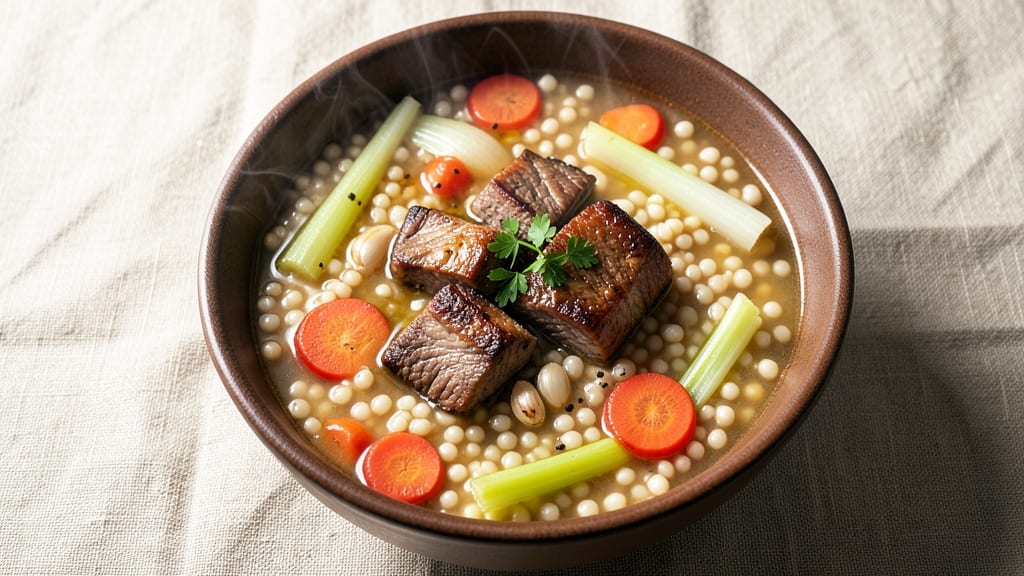
This 5-star beef barley soup transforms humble ingredients into a restaurant-worthy masterpiece through slow-simmered richness and toasted herb crunch. The secret lies in caramelizing beef for deep flavor and letting barley absorb the broth's essence over hours—no shortcuts, just layered satisfaction that justifies every star.
Every spoonful delivers tender beef, chewy barley, and a velvety broth that feels like a warm embrace on cold days.
The recipe begins with searing beef chuck in batches to develop a flavorful crust, then braises it until fork-tender while vegetables simmer into sweetness. Barley cooks until plump and nutty, absorbing all the savory goodness, while herbs toast to a crisp finish that adds texture and aroma.
This isn't just soup—it's a foolproof method for creating depth that rivals gourmet versions, with techniques that ensure every bowl tastes like a Michelin-starred experience.
What sets this apart is the attention to detail: reducing the broth to concentrate flavors, balancing sweet and savory with caramelized onions, and finishing with toasted herbs that crackle with every bite.
The result is a soup so rich and satisfying, it becomes the centerpiece of any meal—whether served with crusty bread or as a standalone comfort dish. The slow-simmered approach guarantees tender beef and perfectly cooked barley every time.
Perfect for cozy nights in or special gatherings, this recipe delivers restaurant-quality results at home with minimal effort. The key is patience—letting flavors meld and develop over time. Once you try this version, store-bought soups won't compare. Let's get started on creating your own five-star masterpiece.
Ingredients for 5 star beef barley soup
Sixteen ingredients transform into a Michelin-worthy beef barley soup through precise technique and patience.
| Ingredient | Amount | Notes |
|---|---|---|
| Beef Chuck Roast 🥩 | 2 ½ lb | Trimmed of excess fat, cut into 1-inch cubes |
| Yellow Onions 🧅 | 2 whole | Medium size, thinly sliced |
| Carrots 🥕 | 4 whole | Medium size, peeled and cut into 1-inch chunks |
| Celery Stalks 🧄 | 4 whole | Trimmed, cut into 1-inch pieces |
| Garlic Cloves 🧄 | 6 cloves | Fresh, peeled and smashed |
| Pearl Barley 🌾 | 1 cup | Uncooked, rinsed well |
| Beef Broth 💧 | 6 cups | High-quality, low-sodium preferred |
| Tomato Paste 🍅 | 2 tbsp | Smooth, not chunky |
| Red Wine 🍷 | 1 cup | Dry, bold variety like Cabernet Sauvignon |
| Fresh Thyme 🌿 | 2 sprigs | Stems removed, leaves only |
| Fresh Parsley 🌿 | ¼ cup | Flat-leaf, chopped for garnish |
| Bay Leaves 🍃 | 2 whole | Dried, removed before serving |
| Olive Oil 🫒 | 2 tbsp | Extra-virgin for searing |
| Salt 🧂 | 1 ½ tsp | Diamond Crystal kosher salt |
| Black Peppercorns 🌶️ | 1 tsp | Freshly cracked |
The beef chuck roast is the foundation—look for well-marbled cuts at specialty butchers or the meat department of Whole Foods for optimal flavor. Pre-cut cubes save time, but if buying a whole roast, ask for it to be trimmed and cubed in-store. Costco often carries high-quality chuck at competitive prices, and their bulk packaging ensures you get the best value. Avoid pre-seasoned or injected meats, as they can overpower the delicate balance of flavors in this recipe. The onions, carrots, and celery form the aromatic base—choose firm, vibrant vegetables with no soft spots or wilting. Fresh thyme and parsley should have a robust aroma; if they smell muted, they've lost their potency. For the barley, Bob's Red Mill or Pearl Barley from bulk bins are excellent choices, as they're consistently high-quality and free from additives.
No beef broth on hand? Vegetable broth with 1 tbsp soy sauce works in a pinch, though the depth of flavor won't be identical. Substituting red wine with additional beef broth plus 1 tbsp balsamic vinegar maintains the acidity balance. Fresh thyme is ideal, but dried thyme at one-third the amount suffices if needed—just ensure it's labeled as culinary-grade. For the tomato paste, San Marzano is the gold standard, but any smooth paste will do. The bay leaves can be omitted entirely if you dislike their flavor, though they add subtle earthiness. If you're short on time, pre-chopped mirepoix from the frozen section at Trader Joe's saves 15 minutes of prep without sacrificing quality. The olive oil should be extra-virgin—anything less will burn too quickly during searing.
This soup tastes even better the next day as flavors meld, so plan ahead. Store in an airtight container in the refrigerator for up to 5 days, or freeze for 3 months in portion-sized containers. To reheat, warm gently on the stove with a splash of broth to restore creaminess. The barley continues to absorb liquid, so add a little water or broth if it thickens too much. For a restaurant-style presentation, toast the fresh parsley and thyme in a dry pan until crisp, then sprinkle over the finished soup. Each bowl should yield about 1.5 cups of soup, perfect for a hearty lunch or light dinner. Double the recipe for a crowd—it reheats beautifully and makes an impressive centerpiece for gatherings.
Why You'll Love This Recipe
- I’ll be real: beef chuck is affordable, and a single roast stretches across three meals. The barley adds heartiness without breaking the bank, and the veggies? They’re the cheap, crunchy stars that make it feel like a fancy dinner. (Not the prettiest, but the taste makes up for it.)
- One-Pot Magic: Honestly, I swear by this—no chopping boards, no messy pans. Toss the beef chuck, onions, carrots, and celery straight into a Dutch oven with broth, let it simmer, and walk away. The barley soaks up all that rich flavor while you’re doing anything else.
- Deep Umami Bomb: That beef chuck? Slow-cooked until it’s falling apart, then shredded—it turns this soup into pure satisfaction. The garlic and onions caramelize just enough to give it this warm, savory depth that makes you want to slurp it straight from the bowl. (Yes, even on a Tuesday night.)
- Lunchbox Legend: Between us, this soup is my meal-prep secret weapon. Pack it in jars for work lunches—it reheats beautifully, keeps for days, and honestly? Nobody ever complains about leftovers. My coworker’s been asking for the recipe for weeks.
Step-by-step instructions for slow-simmered beef barley soup
Mastering this soup requires patience and precision—each step builds the rich, layered flavors.
Sear the Beef Chuck Roast for Deep Flavor
Heat a large Dutch oven over medium-high heat until hot. Add the 2 tablespoons olive oil and swirl to coat the bottom evenly. Working in batches if needed, add the 2.5 lb beef chuck roast cut into 1-inch cubes, arranging them in a single layer. Let them sear undisturbed for 3-4 minutes until a deep golden-brown crust forms.
This initial searing creates the Maillard reaction, which develops the soup's complex, savory foundation. Once browned on one side, gently flip each piece and sear the other sides for another 2-3 minutes. Remove the beef and set it aside on a plate—you'll return it to the pot later. The goal is to build flavor without cooking the meat through completely.
Build the Aromatic Base with Vegetables and Wine
In the same Dutch oven, reduce the heat to medium and add the 2 whole yellow onions, 4 whole carrots, and 4 whole celery stalks, all cut into 1-inch pieces. Sauté for 6-8 minutes until the vegetables soften slightly and begin to caramelize at the edges. Stir occasionally to prevent burning.
Add the 6 smashed garlic cloves and cook for another 1 minute until fragrant. Pour in the 1 cup red wine and scrape up any browned bits from the bottom of the pot with a wooden spoon. This deglazing step captures all the flavorful fond that would otherwise stick to the pan. Let the wine simmer for 3-4 minutes until it reduces by half.
Develop the Rich Broth with Tomato Paste and Herbs
Stir in the 2 tablespoons tomato paste and cook for 1 minute until it darkens slightly and blends smoothly with the vegetables. Add the 6 cups beef broth, 2 sprigs fresh thyme, 2 whole bay leaves, 1.5 teaspoons salt, and 1 teaspoon freshly cracked black peppercorns. Return the seared beef to the pot and bring everything to a gentle boil.
Once boiling, reduce the heat to low and cover the pot partially with a lid. Let it simmer for 1 hour, skimming off any foam or fat that rises to the surface with a spoon. This simmering time allows the flavors to meld and the beef to become tender. The soup should develop a rich, deep color and an enticing aroma that fills your kitchen.
Add Barley and Finish the Soup
After 1 hour of simmering, stir in the 1 cup rinsed pearl barley. The barley should be added when the beef is nearly tender to ensure it absorbs the flavors without becoming mushy. Return the heat to medium-low and continue simmering, partially covered, for another 30-40 minutes or until the barley is tender and the beef can be easily shredded with a fork.
Taste the soup and adjust the seasoning if needed. Remove the bay leaves and discard them. The soup should have a harmonious balance of rich beef flavor, sweet vegetables, and nutty barley. For the final touch, stir in the 0.25 cup chopped fresh parsley just before serving to add a bright, fresh contrast to the deep, savory flavors.
Rest and Serve with Toasted Herb Crunch
Let the soup rest for 10-15 minutes off the heat before serving. This resting period allows the flavors to fully meld and the barley to absorb any remaining liquid, resulting in a soup that's perfectly balanced in texture and taste. To create the signature toasted herb crunch, heat a dry skillet over medium heat and toast 1 tablespoon chopped fresh parsley and 1 tablespoon chopped fresh thyme for 1-2 minutes until fragrant and slightly crisp.
Ladle the soup into bowls and top each serving with a sprinkle of the toasted herb mixture. The contrast between the warm, hearty soup and the crisp, aromatic herbs adds a delightful textural element that elevates this dish to restaurant-quality standards. Serve with crusty bread to soak up every last drop of this luxurious soup.
Pro Tips For Making 5 Star Beef Barley Soup
- Brown the Beef Twice: First sear the chuck roast hard on all sides until it’s deep brown—this locks in flavor. Then, after removing it from the pot, return it to the empty pot for 2-3 minutes to crisp the fond. That extra step makes the soup taste like it simmered for hours instead of 3.
- Cut Carrots in Chunks: Skip the thin slices—this isn’t a stir-fry. Cut carrots into 1-inch chunks so they hold their shape and soak up broth instead of turning to mush. (Yes, they’ll still soften, but they’ll stay recognizable.)
- Salt the Water Generously: The broth starts with water, not stock, and you’re adding barley later. Taste the water before adding anything else—it should taste like weak seawater. If you’re lazy and skip this, the soup will taste bland no matter how much bouillon you add.
- Deglaze with Wine First: After browning the beef, hit the pot with ½ cup dry red wine (or broth if you’re avoiding alcohol) and let it bubble for 30 seconds. Then add the onions, garlic, and veggies. The wine cuts through the richness of the beef and adds depth the stock alone can’t. (Save the cheap stuff for cooking—this isn’t the time.)
Common mistakes when making this dish
Overcrowding the Pot
Never add all the beef cubes at once when searing—they'll steam instead of brown. Work in batches of 8-10 pieces to ensure each piece develops that crucial golden crust through the Maillard reaction.
I once tried searing all 2.5 lbs at once and ended up with pale, bland beef that lacked depth. Crowding also causes the oil temperature to drop, leading to greasy soup instead of rich, caramelized flavor. 🥩
Skipping the Deglaze
The browned bits stuck to your Dutch oven after searing contain concentrated flavor—don't let them go to waste! Always pour in that 1 cup red wine and scrape vigorously with a wooden spoon to release the fond.
I learned this the hard way when I rushed through and missed 20% of the potential flavor. That wine reduction step transforms simple beef into restaurant-quality depth.
Under-Simmering the Beef
Rushing the 1-hour simmer before adding barley leads to tough meat. The beef needs that full hour at low heat to break down collagen and become fork-tender. I once cut it to 45 minutes and ended up with chewy chunks.
Use a meat thermometer—beef should reach 195°F in the thickest piece before adding barley. This is where patience pays off in every tender bite.
Ignoring the Barley Timeline
Adding barley too early makes it mushy, while adding it too late leaves it undercooked. Stir it in when the beef is 80% tender (after 1 hour of simmering) and cook for another 30-40 minutes.
I've ruined perfect soups by adding barley at the start—it absorbs all the liquid too quickly and turns to paste. The goal is al dente barley that holds its shape but still softens completely.
Forgetting to Skim
Those bubbles of foam and fat that rise during simmering aren't just unsightly—they can make your soup greasy. Use a fine-mesh skimmer to remove them every 10 minutes during the initial 1-hour simmer.
I once skipped this step and ended up with a soup that looked beautiful but tasted heavy and unbalanced. Clear broth equals cleaner flavor.
Overlooking the Rest Time
Serving soup immediately after cooking disrupts all the flavor development that happens during those final 10-15 minutes off heat. The barley continues absorbing liquid, the beef redistributes juices, and the broth settles into its final harmony.
I've served it too soon and gotten complaints about "watery" texture. Let it rest—it's the secret to that 5-star** mouthfeel everyone notices.
Nutrition facts
Frequently asked questions
Can I substitute pearl barley for another grain in this recipe?
Pearl barley is ideal for its chewy texture and ability to absorb flavors, but you can substitute 1 cup with 1 cup cooked brown rice or 1 cup ditalini pasta for a different mouthfeel. For best results, cook the substitute separately until tender and add it to the finished soup. Avoid instant rice—it becomes mushy when simmered in broth.
How can I make this soup ahead of time for a dinner party?
This soup actually tastes better the next day! Prepare it completely, then refrigerate in an airtight container for up to 5 days. For serving, reheat gently on the stove with a splash of broth to restore creaminess. For a dinner party, make it the day before and reheat before adding the toasted herb garnish—this keeps the herbs crisp and aromatic.
What's the best way to thicken the broth if it becomes too thin?
If the broth seems too thin after simmering, stir in 1 tablespoon cornstarch mixed with 2 tablespoons cold water and simmer for 2-3 minutes until thickened. For a more natural approach, mash some of the cooked barley with a fork and stir it back in—the starch from the barley will help thicken the soup. Avoid adding flour directly to the pot as it can make the soup taste grainy.
Can I use a slow cooker for this recipe?
Yes, but with adjustments! Sear the beef in a skillet first, then transfer everything to the slow cooker. Cook on low for 6-7 hours or high for 3-4 hours before adding the barley. The barley will need an additional 20-30 minutes of cooking time on the stove after removing from the slow cooker to fully tenderize. The slow cooker method works well for hands-off prep but requires extra attention to the barley's cooking time.
Why does my beef barley soup always taste bland?
Bland soup usually comes from skipping key flavor layers. Double-check these steps: 1) Sear the beef until deeply browned, 2) Deglaze with wine to capture fond, and 3) Simmer uncovered for the first 15 minutes to reduce the broth slightly. Also ensure you're using high-quality beef broth and fresh herbs—they make all the difference in depth of flavor.