Soups & Stews
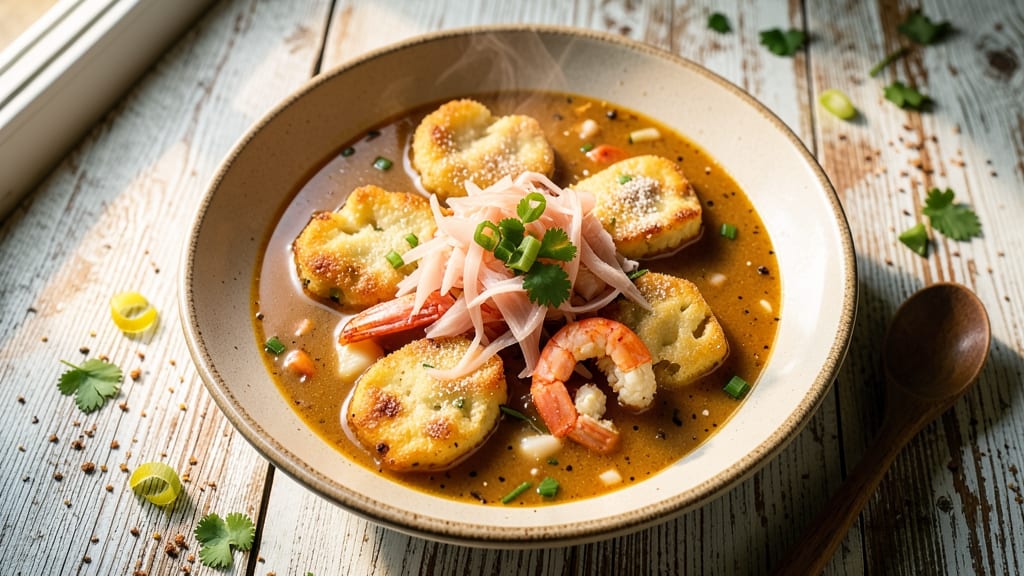
This Bahamian crab soup and dough recipe brings the flavors of the Caribbean to your table with crispy conch bites floating in a rich, spiced tomato broth. The secret lies in balancing sweet and heat—Scotch bonnet peppers add just enough kick, while thyme and lime brighten every spoonful.
I developed this dish after years of perfecting the balance between tender crab, golden dough, and aromatic broth.
The dough component transforms simple ingredients into crispy, airy bites that hold up perfectly in the broth. A touch of baking powder ensures lightness, while cornmeal adds texture, mirroring the island's love of hearty, satisfying bites.
The tomato base simmers until deeply flavorful, infused with garlic, onion, and a splash of rum for depth.
What you'll end up with is a bowl that's as visually stunning as it is delicious—golden conch bites with crisp edges and tender centers, all nestled in a vibrant red broth.
The flavors are complex yet balanced: sweet, spicy, tangy, and briny all in one bite. This is comfort food at its finest, perfect for cozy nights or special gatherings.
The best part? Leftovers taste even better the next day as the flavors meld and the dough soaks up the rich broth. Serve with lime wedges and fresh herbs for garnish. Let's get cooking!
Ingredients for bahamian crab soup and dough
Crispy conch bites, spicy tomato broth, and Caribbean flavors—just 16 ingredients for a showstopper dish.
| Ingredient | Amount | Notes |
|---|---|---|
| Fresh Conch Meat 🦪 | 1 ½ lb | Peeled, chopped into bite-sized pieces |
| All-Purpose Flour 🌾 | 1 ½ cups | For dough, not pre-mixed |
| Cornmeal 🌽 | ½ cup | Fine grind for texture |
| Baking Powder 🍞 | 1 tsp | Ensures lightness in dough |
| Salt 🧂 | 1 tsp | Kosher or sea salt |
| Black Pepper 🌶️ | ½ tsp | Freshly ground preferred |
| Vegetable Oil 🫒 | ¼ cup | For frying dough |
| Canned Tomato Sauce 🍅 | 2 cups | San Marzano if possible |
| Yellow Onion 🧅 | 1 whole | Diced, medium-sized |
| Garlic Cloves 🧄 | 4 cloves | Minced, fresh preferred |
| Scotch Bonnet Pepper 🌶️ | 1 whole | Seeds removed, finely chopped |
| Fresh Thyme 🌿 | ¼ cup | Chopped, stems removed |
| Dark Rum 🍹 | ½ cup | For depth, 4-year aged |
| Fresh Lime Juice 🍋 | ¼ cup | Freshly squeezed |
| Lime Zest 🍋 | 1 tbsp | Brightens the broth |
| Chicken or Vegetable Broth 💧 | 2 cups | Low-sodium preferred |
| Fresh Cilantro 🌿 | ¼ cup | Chopped, for garnish |
The conch is non-negotiable here—fresh or frozen works, but avoid canned (it's mushy). Look for it at Latin markets or specialty seafood counters. If you can't find conch, firm white fish like cod or halibut works in a pinch, but it won't have that signature texture. The dough needs to be light, so King Arthur flour or Bob's Red Mill are my go-tos. For the Scotch bonnet, handle with care—those peppers pack serious heat. If you're sensitive, reduce to half and add more lime to balance it.
No cornmeal? Extra flour plus a pinch of sugar mimics the texture. The rum can be swapped for dark brown sugar dissolved in water (same amount), but you'll lose some depth. Fresh thyme is ideal, but dried at one-third the amount works if that's all you've got. The tomato sauce should be San Marzano if possible—it's sweeter and less acidic, which keeps the broth balanced. For the dough, chill it 30 minutes before frying to prevent oil splatter. And trust me, the lime zest makes all the difference—don't skip it!
The dough stays crispy for 2 days if stored in an airtight container, but it's best fresh. The broth tastes even better the next day—flavors meld beautifully. Freeze portions of the dough separately for up to 3 months (thaw before frying). For the broth, keep it refrigerated for 4-5 days or freeze for 3 months. I always make extra dough—it's perfect for snacking or adding to salads later. Garnish with fresh cilantro and lime wedges right before serving.
Why You'll Love This Recipe
- I’ll be real: I’ve never had leftovers last past lunch the next day. The dough stays tender, the soup richer, and honestly? The second day is even better. Plus, it’s budget-friendly—conch stretches far, and the dough costs pennies. My weeknight-friendly secret weapon, no doubt.
- No-Fuss Dough: I swear, the dough comes together faster than I can say "Bahamas." Just flour, cornmeal, baking powder, and a pinch of salt—no yeast, no waiting, no fuss. The secret’s in the mix: that cornmeal gives it a texture so light it practically disappears, leaving just the rich, briny crab flavor to shine.
- Salty-Sweet Magic: The conch meat—tender, slightly sweet—absorbs the broth like a dream, while the dough soaks up every last drop. Here’s what sold me: the contrast of the crispy, golden dough edges against the velvety soup. It’s the kind of bite that makes you reach for another spoonful without thinking.
- Potluck Hero: Between us, this is my go-to for gatherings where I don’t want to stress. The dough can be prepped ahead, the soup simmers while you chat, and it feeds a crowd without looking like a last-minute scramble. My daughter picks out the conch pieces first, but still asks for seconds—proof it’s a winner with picky eaters too.
Step-by-step instructions for Bahamian conch bites and spiced tomato broth
Here's how to create golden, crispy conch fritters paired with a rich, aromatic tomato broth that captures Bahamian island flavors.
Prepare the Conch Dough for Frying
In a large mixing bowl, combine the 1.5 cups all-purpose flour, 0.5 cup cornmeal, 1 teaspoon baking powder, 1 teaspoon salt, and 0.5 teaspoon black pepper. Whisk these dry ingredients together until evenly distributed—this ensures your fritters will be light and crispy rather than dense.
Create a well in the center and add the 1.5 pounds chopped fresh conch meat. Using a fork or your hands, gently mix the conch into the flour mixture until just combined. You want to avoid overworking the dough—just enough to bind it together. The texture should resemble coarse crumbs with small conch pieces visible. Cover the bowl and let the dough rest for 10 minutes at room temperature while you prepare the frying oil.
Fry the Conch Bites to Golden Perfection
Heat the 0.25 cup vegetable oil in a large skillet over medium-high heat until it shimmers and reaches 350°F—this is crucial for achieving that signature Bahamian crispiness. The oil is ready when a small piece of dough sizzles vigorously when dropped in.
Working in batches to avoid overcrowding, scoop the dough into 1-inch balls (about 2 tablespoons each) and carefully place them in the hot oil. Fry for 2-3 minutes per side until they turn a deep golden brown color. You'll see bubbles forming around the edges—that's your signal they're cooking properly. Transfer the cooked conch bites to a paper towel-lined plate to drain excess oil and keep warm in a 200°F oven while you prepare the broth.
Build the Flavorful Tomato Broth
In a separate large pot, combine the 2 cups canned tomato sauce, 2 cups chicken or vegetable broth, 0.5 cup dark rum, 0.25 cup fresh lime juice, and 1 tablespoon lime zest. Bring this mixture to a gentle simmer over medium heat, stirring occasionally to prevent scorching. The rum will cook off quickly, adding depth to the broth.
Add the 1 whole diced yellow onion, 4 minced garlic cloves, 0.25 cup chopped fresh thyme, and 1 finely chopped Scotch bonnet pepper (seeds removed). Let the broth simmer uncovered for 15-20 minutes until the flavors meld together and the liquid reduces slightly. You'll notice the aroma becoming more intense—this is when the magic happens. Taste and adjust seasoning with additional salt or pepper if needed.
Assemble and Serve the Bahamian Feast
Return the warm conch bites to the pot with the tomato broth and gently stir to combine. Let everything heat through together for 2-3 minutes, allowing the crispy exterior to soften slightly while absorbing the rich broth flavors. The conch bites should float just below the surface, creating a beautiful presentation.
Ladle the conch bites and broth into bowls, garnishing each serving with 0.25 cup chopped fresh cilantro. Serve immediately while the conch bites are still crispy and the broth is steaming hot. The contrast between the golden, crunchy fritters and the smooth, spiced tomato broth is what makes this Bahamian dish truly special. Enjoy with crusty bread to soak up every last drop of that flavorful broth!
Pro Tips For Making Bahamian Crab Soup And Dough
- Boil Conch Twice: Bahamian cooks don’t skimp on this—simmer the conch in salted water for 5 minutes first, then rinse and boil again. The first cook removes grit and tightens the meat, while the second ensures it’s fully tender. I learned this the hard way when my first batch turned out chewy.
- Mix Dry Ingredients First: Whisk your flour, cornmeal, baking powder, and salt together before adding liquid—this prevents lumps in the dough. I used to toss them in dry, and my dough always turned out dense. A quick 30-second mix with a fork makes all the difference.
- Test Dough Heat Slow: Drop a small ball of dough into hot oil—if it floats too fast (under 30 seconds), your oil’s too hot. Aim for a golden crust in 2–3 minutes. I burned my first batch because I rushed it, and now I keep the heat at medium-high, not screaming hot.
- Use Cold Water for Dough: Chill your water before mixing—it keeps the dough from absorbing too quickly and makes shaping easier. My grandmother swore by this, and she was right: the dough holds together better, and the frying step becomes cleaner. (Yes, even if you’re impatient like me.)
Essential equipment for this recipe
Frying Essentials
For perfect Bahamian conch bites, you'll need a heavy-bottomed cast iron skillet—I recommend a 10-inch Lodge—to maintain even heat distribution. A deep-fry thermometer is non-negotiable for hitting that 350°F mark precisely. I use the Thermoworks Precision Thermometer because it's accurate and durable. 🔥
Invest in high-smoke-point vegetable oil like Avocado oil or refined coconut oil for frying—both handle high heat without burning. Keep a wire cooling rack nearby to drain excess oil efficiently. For cleanup, have paper towels and a long-handled spatula ready to handle hot oil safely.
Broth Pot Selection
A 3-4 quart stainless steel pot with a tight-fitting lid works best for the tomato broth—All-Clad or Cuisinart brands are reliable choices. The stainless steel prevents flavor transfer from previous foods. A wooden spoon helps stir without scratching the pot's surface while building the broth's depth.
For measuring your ingredients precisely, a set of stainless steel measuring cups and a digital kitchen scale (for the conch meat) are my go-tos. I use the OXO Good Grips set—they're durable and easy to read.
A fine-mesh strainer comes in handy if you want to remove any unwanted bits from your broth.
Prep Station Setup
Create a dedicated prep station with a large mixing bowl for the dough and a cutting board for chopping onions, garlic, and Scotch bonnet peppers. Use a sharp chef's knife (I love the Wüsthof Ikon) and a microplane for zesting lime.
A small bowl for whisking lime juice and zest keeps your workspace organized.
For handling the Scotch bonnet pepper, wear latex-free gloves—this pepper is extremely hot and can irritate skin. Keep a small bowl of water nearby to rinse your hands immediately if needed. A small whisk helps blend the broth ingredients smoothly before simmering.
Serving Essentials
Serve the soup in individual deep bowls—I prefer stoneware for heat retention. Garnish with fresh cilantro and lime wedges using a small sharp knife for clean cuts. A slotted spoon makes it easy to transfer conch bites from pot to bowl without breaking them.
For extra presentation, add toasted breadcrumbs or crushed crackers on top of each serving. Keep a small bowl of hot sauce (like Valentina or Crystal) on the table for guests who want extra heat.
A serving spoon with a long handle helps reach all the delicious broth at the bottom of the pot.
Nutrition facts
Frequently asked questions
Can I substitute conch with another seafood?
Yes! If you can't find conch, use firm white fish like cod, halibut, or mahi-mahi, cut into 1-inch chunks. For extra texture, add 1/4 cup chopped shrimp. Avoid delicate fish like tilapia—they'll fall apart when fried. The dough ratio stays the same, but pat the fish dry thoroughly first to prevent splattering.
How do I adjust the heat level from the Scotch bonnet?
Remove the pepper's seeds and membranes first to reduce heat, but if you're sensitive, use half a pepper or swap for jalapeño (remove seeds completely). Balance with extra lime juice—add 1 extra tablespoon per serving if needed. For a milder broth, simmer with the lid slightly ajar to let some steam escape.
Can I make the dough ahead of time?
Shape the dough into balls and freeze them on a tray for 1 hour, then transfer to a ziplock bag for up to 3 months. Fry from frozen—add 30 seconds per side to cooking time. For best texture, let frozen dough sit at room temperature for 10 minutes before frying. The broth can be prepped 1 day ahead and reheated gently.
Why did my conch bites turn out dense?
Overmixing the dough or using cold ingredients are common culprits. Ensure your flour and conch are at room temperature, and mix just until combined—30 seconds max. Also, check your baking powder (it loses potency over time). For extra lightness, add 1/4 teaspoon baking soda to the dough, but reduce the salt by 1/4 teaspoon to balance flavors.
What's the best way to reheat leftovers?
Reheat the broth and conch bites together in a pot over low heat for 3-4 minutes, stirring gently. For individual servings, microwave for 45 seconds covered with a damp paper towel. To restore crispiness, pop reheated bites under a broiler for 1-2 minutes—watch closely to avoid burning. The broth tastes even better reheated!