
Soups & Stews
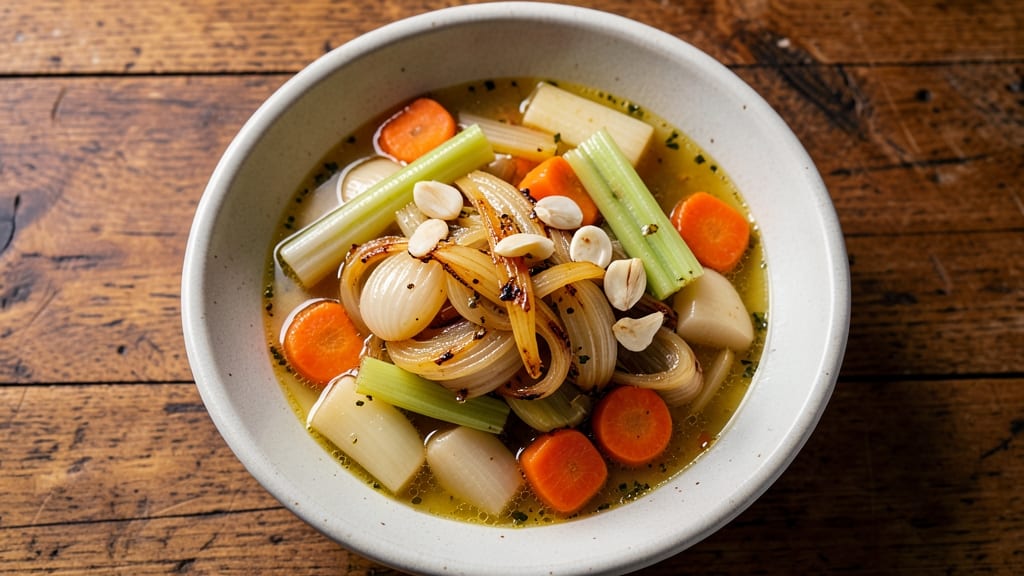
This Amy's vegetable soup recipe delivers restaurant-quality depth with caramelized roots and slow-simmered umami that transforms simple ingredients into something extraordinary. The foundation starts with onions and celery sweated until golden, then deepened with garlic and ginger—where the magic begins.
What sets this apart is the technique: caramelizing carrots and parsnips before adding liquid, creating natural sweetness that balances the earthy broth.
The result is a soup where every spoonful reveals layers of flavor—velvety yet structured, with caramelized edges that melt into the broth. A touch of miso paste adds umami complexity, while fresh herbs at the end brighten the richness.
This isn't just vegetable soup; it's a comforting, deeply satisfying dish that proves plant-based meals can be just as hearty and complex as their meat-based counterparts.
Perfect for chilly evenings or as a nourishing lunch, this soup builds character through time—simmering for at least an hour lets flavors meld into perfect harmony.
The texture is where it truly shines: some vegetables remain tender-crisp for bite, while others dissolve into the broth, creating a symphony of textures. Garnish with a swirl of cream and fresh parsley for that final touch of elegance.
Serve with crusty bread to soak up every last drop or pair it with a simple green salad for balance. The beauty of this recipe is its versatility—it works as a light lunch or a substantial dinner, and the leftovers only improve as flavors deepen overnight.
Let's create something that feels like a warm hug in a bowl.
Ingredients for amy's vegetable soup
Caramelized roots and umami-rich broth create a deeply satisfying vegetarian soup experience.
| Ingredient | Amount | Notes |
|---|---|---|
| Yellow Onions 🧅 | 2 whole | Yellow or golden, diced evenly |
| Celery Stalks 🥬 | 4 whole | Trimmed, diced small |
| Carrots 🥕 | 3 medium | Peeled, cut into chunks |
| Parsnips 🍠 | 2 medium | Peeled, cut into chunks |
| Garlic Cloves 🧄 | 4 cloves | Peeled, minced finely |
| Fresh Ginger 🌿 | 1 inch | Peeled, grated finely |
| White Miso Paste 🧈 | 2 tbsp | High-quality, fermented |
| Vegetable Broth 💧 | 6 cups | Low-sodium preferred |
| Heavy Cream 🥛 | ½ cup | Full-fat for richness |
| Fresh Parsley 🌿 | ¼ cup | Chopped, for garnish |
| Fresh Thyme 🌿 | ¼ cup | Leaves only, chopped |
| Olive Oil 🫒 | ¼ cup | Extra-virgin, for caramelizing |
| Salt 🧂 | 1 ½ tsp | Diamond Crystal preferred |
| Black Pepper 🌶️ | ½ tsp | Freshly ground preferred |
The foundation begins with onions and celery—yellow onions provide sweetness while celery adds earthy depth. Trader Joe's or Whole Foods carry excellent organic options, but conventional works fine. For the carrots and parsnips, medium-sized roots ensure even cooking without excess water release. Caramelizing them in olive oil until deeply golden unlocks their natural sweetness, which is essential for balancing the soup's earthy notes. Fresh ginger should be organic whenever possible—conventional varieties often have a bitter aftertaste.
No miso paste? White bean paste or coconut aminos provide umami depth, though miso's fermented complexity is unmatched. Substituting vegetable broth? Homemade is ideal, but even low-sodium store-bought works in a pinch. For the cream, full-fat is non-negotiable—it creates that velvety texture. Fresh herbs can be swapped for dried at one-third the amount, but fresh parsley and thyme brighten the soup's richness. The olive oil matters here—extra-virgin with fruity notes prevents bitterness during caramelization.
This soup develops character over time—simmer for at least an hour to let flavors meld. Store in airtight containers for up to 5 days in the fridge, where flavors deepen. Freezes beautifully for 3 months—portion into individual containers for easy reheating. Garnish with a swirl of cream and fresh herbs just before serving to preserve their vibrant colors and aromas.
Why You'll Love This Recipe
- Foolproof Chopping: I swear by the "soak-and-slice" trick for onions and celery—just dunk them in cold water for 10 minutes before dicing, and they stay crisp. No tears, no frustration, just clean, even cuts that caramelize beautifully in the pot.
- Umami Bomb: That combo of roasted parsnips and garlic? Chef’s kiss. I let the parsnips hit 400°F for 15 minutes first—they develop a nutty sweetness that makes the whole soup taste like it simmered for hours. (Spoiler: It didn’t.)
- Lunchbox Hero: Between us, this soup is my secret weapon for packed lunches. The carrots hold their crunch, the onions add depth, and it reheats like a dream. Honestly, I’ve sent my kids to school with this for three years—they still beg for it.
- Pantry Goldmine: I make this when I’m staring down a sad fridge and a wallet that’s seen better days. Onions, celery, carrots, parsnips—all cheap, all shelf-stable, and they stretch into six servings. Leftovers? Freeze half, and you’ve got a ready-to-go meal for a month from now.
Step-by-step instructions for slow-simmered vegetable soup
Mastering this umami-rich vegetable soup depends on patience and precise technique—every step builds depth of flavor.
Develop the Umami Base with Caramelized Roots
Heat the 0.25 cup olive oil in a large Dutch oven over medium-low heat. Add the 2 whole yellow onions, 4 whole celery stalks, 3 medium carrots, and 2 medium parsnips, all diced evenly. Cook for 20-25 minutes, stirring occasionally, until the vegetables soften and develop a deep golden brown color.
This slow caramelization extracts natural sugars and creates a rich foundation. You'll know it's ready when the vegetables release easily from the pan and smell intensely sweet. If the oil begins to smoke, reduce the heat slightly—you're aiming for gentle browning, not burning.
Once caramelized, add the 4 cloves garlic cloves and 1 inch fresh ginger, both minced finely, along with the 1.5 tsp salt and 0.5 tsp black pepper. Cook for an additional 2 minutes until the garlic becomes fragrant but doesn't brown. Remove the mixture from the heat and set aside—this aromatic base will carry the entire soup.
Build Depth with Miso and Broth
Return the Dutch oven to medium heat and stir in the 2 tbsp white miso paste until fully dissolved into the caramelized vegetables. This step is critical—the miso's fermented umami will permeate every bite. Don't skip the stirring; you want an even distribution throughout the base.
Next, pour in the 6 cups vegetable broth, scraping up any browned bits from the bottom of the pot. Bring the mixture to a gentle simmer, then reduce the heat to low. Add the 0.25 cup fresh thyme leaves and let the soup simmer uncovered for 30 minutes, allowing the flavors to meld and the broth to deepen in color.
Here's where the real magic happens: the miso and caramelized roots infuse the broth with complexity. Taste occasionally—you're looking for a balance of sweetness, saltiness, and earthy depth. If the soup tastes flat, let it simmer another 10 minutes to develop further.
Finish with Cream and Fresh Herbs
After the initial simmer, stir in the 0.5 cup heavy cream and let the soup simmer for an additional 5 minutes. The cream will create a velvety texture while adding richness. Be careful not to boil vigorously—this could cause the cream to curdle. Instead, maintain a gentle simmer to preserve the soup's delicate balance.
Remove the soup from heat and stir in the 0.25 cup fresh parsley, chopped finely. The parsley adds a bright, fresh contrast to the deep umami flavors. Let the soup rest for 5 minutes before serving—this allows the flavors to settle and the cream to fully incorporate.
Taste and adjust seasoning if needed. The soup should be rich and complex, with a harmonious blend of sweet, salty, earthy, and creamy notes. Serve immediately while hot, garnished with additional parsley if desired. Each spoonful should deliver a symphony of caramelized roots, umami depth, and fresh herbal brightness.
Optional Garnish and Serving
For an elevated presentation, ladle the soup into warm bowls and garnish with a drizzle of extra-virgin olive oil and a sprinkle of freshly cracked black pepper. The oil adds another layer of richness, while the pepper provides a final pop of heat. Serve with crusty bread to soak up every last drop of this velvety, umami-packed vegetable soup.
This soup holds well in the refrigerator for up to 3 days, though it tastes best when enjoyed fresh. The flavors only deepen over time, making it an ideal make-ahead dish for busy days. Reheat gently on the stove, stirring occasionally, until warmed through—never microwave, as this can break down the delicate cream and texture.
Pro Tips For Making Amy'S Vegetable Soup
- Sweat the Onions First: Don’t just chop and toss—get those yellow onions caramelized for 5 minutes before adding anything else. I learned this the hard way when my soup tasted flat; the deeper flavor from the onions carries through the whole pot. Use medium heat and resist the urge to rush.
- Slice Parsnips Thin: Parsnips take forever to soften if left in big chunks. Cut them into ¼-inch slices so they cook evenly alongside the carrots and celery. (Yes, it’s a pain, but your soup will thank you—no one wants mushy parsnip lumps.)
- Watch the Garlic: Crush those garlic cloves with the flat side of your knife before adding them, but don’t let them brown. Burnt garlic turns bitter, and you’ll taste it in every spoonful. Add them right when the onions are golden and pull the pot off the heat if they start to darken.
- Salt the Water Early: Season the soup pot with a good pinch of salt before adding the broth or water. It’s the only way to guarantee the veggies absorb flavor from the start. (I used to wait until the end, and the carrots and parsnips always tasted bland.)
Regional styles of these flavors
French Rustic Approach
In France, vegetable soups often feature a bouquet garni—a bundle of thyme, bay leaves, and parsley tied with twine—that infuses the broth with aromatic depth. For this recipe, replace the miso with 1 tbsp tomato paste and add 2 sprigs fresh thyme and 1 bay leaf during simmering.
The French also emphasize potatoes—add 2 diced Yukon Gold potatoes with the broth to create a heartier texture. Finish with a drizzle of crème fraîche instead of heavy cream for a lighter, tangy touch. 🥖
Italian Comfort Twist
Italian vegetable soups often include tomatoes and beans for extra body. Stir in 1 can (15 oz) diced San Marzano tomatoes and 1 can (15 oz) cannellini beans when adding the broth. Top with grated Parmesan cheese and a sprinkle of red pepper flakes for a familiar Italian touch.
The acidity from the tomatoes balances the soup's richness, while the beans add protein and texture. Serve with garlic bread for the ultimate Italian meal. 🍅
Spanish Paella-Inspired
For a Spanish-inspired version, swap the vegetable broth for chicken broth (if vegetarian, use mushroom broth) and add 1 cup diced bell peppers and 1 cup chopped kalamata olives with the caramelized vegetables.
Stir in 1 tsp smoked paprika and ½ tsp saffron threads (steeped in 2 tbsp warm water) when adding the broth. Garnish with lemon wedges and toasted almonds for a vibrant, flavorful finish. This version transforms the soup into a Spanish-style paella-inspired stew. 🌶️
German Hearty Style
German vegetable soups often include kale and apples for a touch of sweetness and earthiness. Add 2 cups chopped kale and 1 diced tart apple (like Granny Smith) with the broth.
For extra richness, stir in 2 tbsp apple cider vinegar and 1 tsp caraway seeds during the final 10 minutes of simmering. Top with crispy fried onions for a crunchy, satisfying texture. This version is perfect for cold weather and pairs beautifully with dark rye bread. 🍏
Japanese-Inspired Miso Soup
For a Japanese-inspired twist, reduce the heavy cream to 2 tbsp and add 1 tbsp mirin and 1 tsp grated daikon radish during the final simmer. Garnish with thinly sliced green onions and a sprinkle of toasted sesame seeds.
This lighter version keeps the umami depth while adding a bright, refreshing element. Serve with steamed rice and miso soup for a complete Japanese-inspired meal. 🍜
Nutrition facts
Frequently asked questions
Can I make this soup without miso paste?
Miso adds umami depth, but you can substitute with 2 tbsp white bean paste or 1 tbsp coconut aminos for a similar savory boost. For a different flavor profile, try 1 tbsp tomato paste or 1 tsp soy sauce. The caramelized roots will still create sweetness, but these alternatives provide different umami characteristics.
How do I prevent the soup from getting too thick?
Start with 6 cups broth and adjust as needed—never add water while cooking, as it dilutes flavors. If the soup thickens too much, stir in ¼ cup extra broth or ½ cup warm water while reheating. For a creamier texture without thickening, reduce the cream to ¼ cup instead of ½ cup.
Can I prep this soup ahead of time?
This soup tastes even better the next day! Store in an airtight container in the fridge for up to 5 days, where flavors deepen. For freezing, portion into individual containers and freeze for up to 3 months. Reheat gently on the stove—never microwave—to preserve the velvety cream texture.
What vegetables can I add for extra nutrition?
Try adding 1 cup chopped kale or ½ cup diced butternut squash with the broth for extra vitamins. For protein, stir in 1 cup cooked lentils or ½ cup chickpeas during the final 10 minutes of simmering. Just adjust cooking times—some veggies (like squash) need 15-20 minutes less than roots.
Why does my soup taste bland after reheating?
Reheating can mute flavors, especially if microwaved. Always reheat on the stove over low heat, stirring frequently. Add a splash of lemon juice or extra miso paste (½ tsp) to brighten flavors. For extra depth, stir in 1 tsp fresh ginger juice or ½ tsp fish sauce (if vegetarian, use soy sauce) while reheating.