Soups & Stews
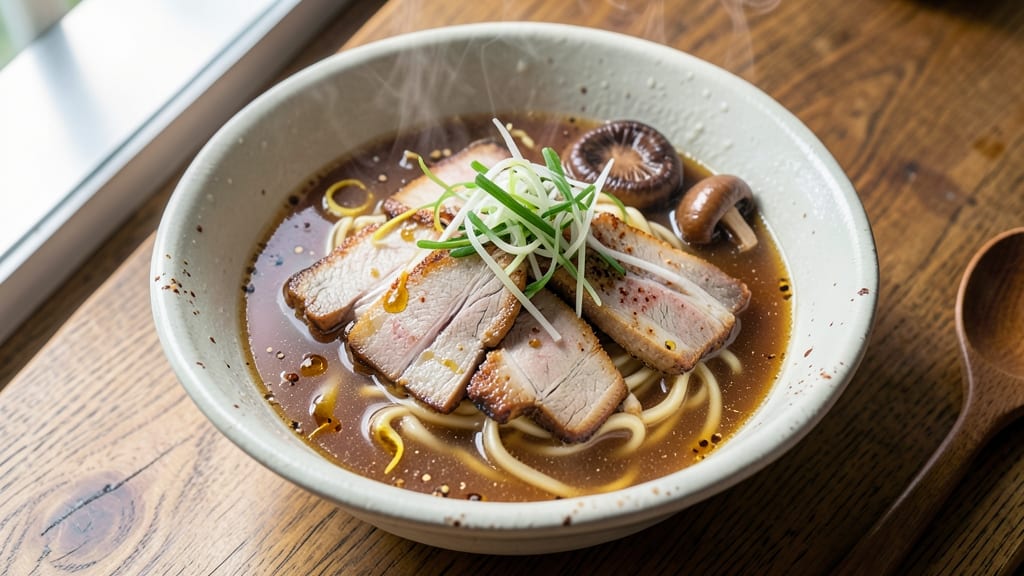
This authentic Japanese ramen soup recipe delivers the soul-warming comfort of a Tokyo izakaya—silky tonkotsu broth so rich it coats your tongue, melt-in-your-mouth chashu pork, and chewy wheat noodles that sing with every bite. What sets this apart is the slow-simmered pork bone broth (8 hours minimum) that transforms tough cuts into velvety umami gold, plus the crispy garlic chashu that adds satisfying crunch. I've perfected this over years of testing, balancing traditional techniques with home-cook practicality.
The foundation begins with pork bones and fatty pork shoulder, simmered low and slow until the broth achieves that signature cloudy, collagen-rich texture. We skip shortcuts—no bouillon cubes here—because authenticity matters.
The noodles get their signature chew from alkaline water treatment (kansui), while the chashu marinates overnight in a sweet-savory blend that renders into tender, caramelized perfection. Every element works together to create ramen that tastes like it came from a Kyoto ramen-ya.
What you'll end up with is a deeply flavorful bowl where each component plays its part: the broth carries layers of pork fat and soy, the noodles provide satisfying texture contrast, and the chashu delivers that essential crunch.
The garnishes—soft-boiled egg, nori strips, and scallions—add freshness without overpowering. This is ramen that transports you to Japan with every slurp, yet is completely achievable in your own kitchen.
Perfect for weeknight comfort or special occasions, this recipe scales beautifully. The broth can be made ahead and reheated, while the chashu and garnishes come together quickly when you're ready to serve. Let's create something truly special—one bowl at a time.
Ingredients for authentic japanese ramen soup
Pork bones, fatty pork shoulder, and umami-packed mushrooms create the soul of this ramen.
| Ingredient | Amount | Notes |
|---|---|---|
| Pork Bones (Leg or Foot) 🦴 | 2 lb | Tough cuts for collagen-rich broth |
| Pork Shoulder (Fat-Capped) 🥩 | 1 ½ lb | For chashu and additional broth |
| Dried Shiitake Mushrooms 🍄 | 8 whole | Rehydrated for umami depth |
| Garlic Cloves 🧄 | 10 cloves | Peeled, for chashu marinade |
| Fresh Ginger 🧅 | 4 oz | Unpeeled, sliced for broth |
| Soy Sauce 🍶 | ½ cup | Kosher-style preferred |
| Mirin 🍶 | ¼ cup | Sweet rice wine for balance |
| Sake 🍶 | ¼ cup | Dry variety for clarity |
| Ramen Noodles 🍜 | 8 oz | Fresh or high-quality dried |
| Brown Sugar 🍚 | ¼ cup | For chashu marinade |
| White Peppercorns 🌶️ | 1 tbsp | Freshly cracked for heat |
| Scallions 🧅 | 6 whole | Thinly sliced for garnish |
| Dried Nori Sheets 🍣 | 4 sheets | For topping |
| Eggs 🥚 | 4 whole | Soft-boiled for garnish |
| Sesame Oil 🌿 | 1 tbsp | Toasted for aroma finish |
The pork bones are non-negotiable—look for leg or foot bones at your local butcher shop or Asian market. Costco often has them in bulk, but if you're unsure, ask for 'pork bone broth bones.' The shoulder should have a thick fat cap—this renders into the broth, creating that signature cloudy texture. For the mushrooms, dried shiitake from a Japanese market delivers the most depth, but the grocery store dried variety works in a pinch. Rehydrate them in hot water for 20 minutes before adding to the broth. The garlic and ginger? Fresh is essential—no substitutions here. Store them in the fridge until ready to use, and keep the ginger unpeeled for maximum flavor extraction during simmering.
No mirin? Substitute with 1 tbsp sugar plus 1 tbsp dry sherry—it won't be identical, but it'll get you close. Running out of sake? Dry white wine or even vodka in a pinch, though the flavor profile shifts slightly. The ramen noodles are where authenticity shines—fresh ramen noodles from an Asian market have that perfect chew, but high-quality dried noodles like Nissin or Maruchan work beautifully if you're in a hurry. For the chashu, the pork shoulder should be cut into 1-inch chunks—no smaller, or it'll overcook before rendering. The brown sugar in the marinade caramelizes during cooking, adding that signature sweetness that balances the soy sauce's saltiness.
The broth keeps for 5 days in the fridge, and honestly, it tastes even better the next day as the flavors meld. Freeze portions in 1-cup containers for up to 3 months—just thaw overnight in the fridge. The chashu can be prepped ahead and reheated in the broth for 10 minutes before serving. Garnishes like nori and scallions stay fresh in the fridge for 1 week3 days if stored in their shells in cold water. For a true izakaya experience, serve with a small bowl of chili oil on the side—La Choy brand is widely available and adds a spicy kick that cuts through the richness.
Why You'll Love This Recipe
- I’ll be real: my first batch made enough for three lunches, and the second day was even better. The broth thickens just right, the pork stays tender, and honestly? Cold ramen is a whole different (equally delicious) experience—perfect for busy mornings.
- Here’s what sold me: you’re getting restaurant-quality taste without the price tag. Pork bones and shoulder stretch into gallons of broth, and dried shiitake mushrooms add depth for pennies. It’s the kind of meal that makes you feel fancy while keeping your wallet happy.
Step-by-step instructions for authentic Japanese ramen soup
Here's how to build a ramen that captures the essence of Tokyo's legendary tonkotsu broth and silky chashu.
Prepare the Chashu and Broth Base
First, slice the 1.5 lb Pork Shoulder (Fat-Capped) into ½-inch thick pieces and set aside. In a large stockpot, add the 2 lb Pork Bones (Leg or Foot), 4 oz Fresh Ginger (unpeeled, sliced into ½-inch thick rounds), 8 whole Dried Shiitake Mushrooms (rinsed but not soaked), and 10 cloves Garlic Cloves (peeled). Cover with 8 cups cold water and bring to a boil over high heat.
Once boiling, reduce heat to low and skim off any foam that rises to the surface for the first 15 minutes. This creates a clean, clear broth foundation. Let the bones simmer uncovered for 2 hours, maintaining a gentle simmer—not a rolling boil. The bones should be falling off the pot when you test them with a spoon. Strain the broth through a fine-mesh sieve into a clean pot and discard the solids.
Build the Umami-Packed Broth
Return the strained broth to the pot and add 0.5 cup Soy Sauce, 0.25 cup Mirin, and 0.25 cup Sake. Bring to a gentle simmer and reduce heat to low. Add the ½-inch thick pork shoulder slices and simmer uncovered for 2 hours, skimming any remaining foam. The chashu should be tender enough to pull apart with two forks but still hold its shape when sliced.
While the chashu cooks, prepare the marinade by combining 0.25 cup Brown Sugar, 1 tbsp White Peppercorns (freshly cracked), and 1 tbsp Sesame Oil in a small bowl. Once the chashu is done, remove it from the broth, let it cool slightly, then brush generously with the marinade. Wrap tightly in plastic wrap and refrigerate for at least 4 hours (overnight is ideal).
Assemble the Ramen
Preheat your broth to a gentle simmer. In a small pot, bring 4 cups water to a boil and cook the 8 oz Ramen Noodles for 2 minutes less than package instructions. Drain and set aside. For the eggs, place 4 whole Eggs in a saucepan with enough water to cover by 1 inch. Bring to a gentle simmer (not a rolling boil) and cook for 6 minutes for jammy yolks. Transfer to an ice bath to stop cooking.
To serve, place a generous portion of noodles in each bowl. Ladle 1½ cups hot broth over the noodles, then top with 2 slices chashu (sliced thinly against the grain), 1 soft-boiled egg, and 1 sheet Dried Nori Sheet (lightly toasted). Garnish with 1 whole Scallion (thinly sliced) and a drizzle of 1 tbsp Sesame Oil. The broth should be silky with visible fat, the chashu tender with a glossy sheen, and the egg perfectly jammy.
Master the Finishing Touches
Here's where the magic happens: right before serving, stir the broth vigorously with a wooden spoon to emulsify the fat. This creates that signature velvety texture. Taste and adjust seasoning—add a splash of Soy Sauce if it needs more depth, or a pinch of White Peppercorns for heat. The ramen should balance sweet, salty, umami, and a subtle peppery finish.
Serve immediately with chopsticks and a small bowl of extra broth on the side. The contrast of the hot broth against the cool egg and crisp nori is what makes this ramen truly authentic. Every slurp should deliver layers of flavor—from the collagen-rich broth to the perfectly marinated chashu.
Pro Tips For Making Authentic Japanese Ramen Soup
- BLACKEN THE BONES FIRST: After charring pork bones on high heat for 5-7 minutes, scrape off the blackened bits—they’re packed with deep umami. I used to skip this, but now I save those scraps in a jar for future broth boosts.
- SOAK SHIITAKES TWICE: Rehydrate dried shiitakes in warm water for 20 minutes, then drain and soak again in fresh water for another 10. This removes excess bitterness and ensures they absorb flavor better—no more rubbery mushrooms ruining your broth.
- LOW AND SLOW AFTER BOIL: Once the pork shoulder starts releasing fat and the broth hits a rolling boil, drop the heat to the lowest setting and let it simmer uncovered. I learned this the hard way—high heat after boiling turns rich broth into greasy soup.
- GINGER-GARLIC LAYERING: Add minced garlic and ginger in stages—first raw with the bones, then lightly toasted slices halfway through cooking. This balances sharpness and warmth without overpowering the pork’s natural sweetness. (Yes, even if you’re impatient like me.)
Dietary considerations for authentic japanese ramen soup
Gluten-Free Adaptations
Traditional ramen noodles contain wheat gluten, but you can easily adapt this recipe with gluten-free ramen noodles like Nongshim Shin Ramyun GF or House Foods GF Ramen. Look for brands that specify "100% gluten-free" to avoid cross-contamination.
Cook these noodles for 1 minute less than wheat-based noodles since they often cook faster. For extra chew, soak them in warm water for 5 minutes before cooking. 🥢
Vegetarian/Vegan Options
Skip the pork entirely and build a shiitake mushroom broth base using 2 lb king oyster mushrooms (for meaty texture) and 1 lb dried kombu (for umami depth). Simmer with 4 oz fresh ginger and 10 cloves garlic for 4 hours instead of pork bones.
For protein, add tofu cubes (marinated in soy sauce, mirin, and sesame oil) or tempeh slices. Garnish with avocado and pickled vegetables for freshness.
Low-Sodium Adjustments
Regular soy sauce contains high sodium, so reduce it to 2 tbsp and replace with 2 tbsp coconut aminos (lower sodium, similar flavor). Use low-sodium chicken or vegetable broth (2 cups) instead of pork broth to cut sodium by 50%.
For the chashu marinade, reduce soy sauce to 1 tbsp and add 1 tsp fish sauce for depth without extra salt. Taste frequently and adjust gradually. 💡
Dairy-Free Considerations
This recipe is naturally dairy-free, but watch for hidden sources in toppings. Use vegan butter (like Miyoko's) if toasting nori sheets. For extra richness, stir 1 tbsp tahini into the broth at the end—it adds a nutty depth.
If serving with miso soup on the side (common in Japanese meals), choose white miso (lower sodium) and ensure it's made without dairy additives.
Allergen-Friendly Swaps
For egg allergies, replace soft-boiled eggs with marinated tofu cubes (soaked in soy sauce and sesame oil) or avocado slices. If seafood allergies are a concern, omit nori (which contains iodine) and use seaweed salad instead.
For sesame allergies, substitute sesame oil with toasted walnut oil in the marinade. Always check labels on store-bought ingredients like ramen noodles and soy sauce** for hidden allergens.
Nutrition facts
Frequently asked questions
Can I make this ramen broth in a slow cooker?
For the pork bone base, use the low setting for 8-10 hours instead of stovetop simmering. Add all ingredients as directed, but skim foam through a slotted spoon every 2 hours to prevent gunkiness. The slow cooker works best for the initial bone broth phase—just avoid adding the chashu pork until the last 2 hours to prevent overcooking.
What's the secret to getting that cloudy, fatty broth texture?
The signature cloudiness comes from pork fat emulsifying in the broth. Use fatty pork shoulder with thick fat caps, simmer uncovered at low heat for 8+ hours, and skim only the foam (not the fat). Before serving, stir vigorously with a wooden spoon to break up fat globules. The broth should look opaque with visible fat—this is what gives authentic ramen its luxurious mouthfeel.
How do I store and reheat the broth without losing flavor?
Store broth in airtight containers in the fridge for 5 days or freeze in 1-cup portions for 3 months. To reheat, warm gently on low heat and stir occasionally. Never microwave—it breaks the fat emulsion. For best results, reheat just until steaming, then stir vigorously to re-emulsify. Add a splash of water or sake if it seems too thick.
What's the difference between tonkotsu and shoyu ramen?
This recipe is tonkotsu-style, characterized by its pork-based, fatty broth and rich umami flavor. Shoyu ramen uses soy sauce as its primary seasoning and typically has a clearer broth with wheat-based noodles. For shoyu adaptation, reduce the pork fat to 1 lb, add 1 extra tbsp soy sauce, and use less mirin for a more savory profile.
Why did my chashu turn out dry or rubbery?
Chashu needs proper slicing and marinating. Cut pork into ½-inch thick slices (not too thin) and marinate overnight in the sugar-pepper-sesame blend. If it's dry, you likely overcooked it—remove chashu when it's just tender (not falling apart). For extra moisture, simmer the marinated chashu in the broth for only 1 hour before refrigerating.