
Soups & Stews
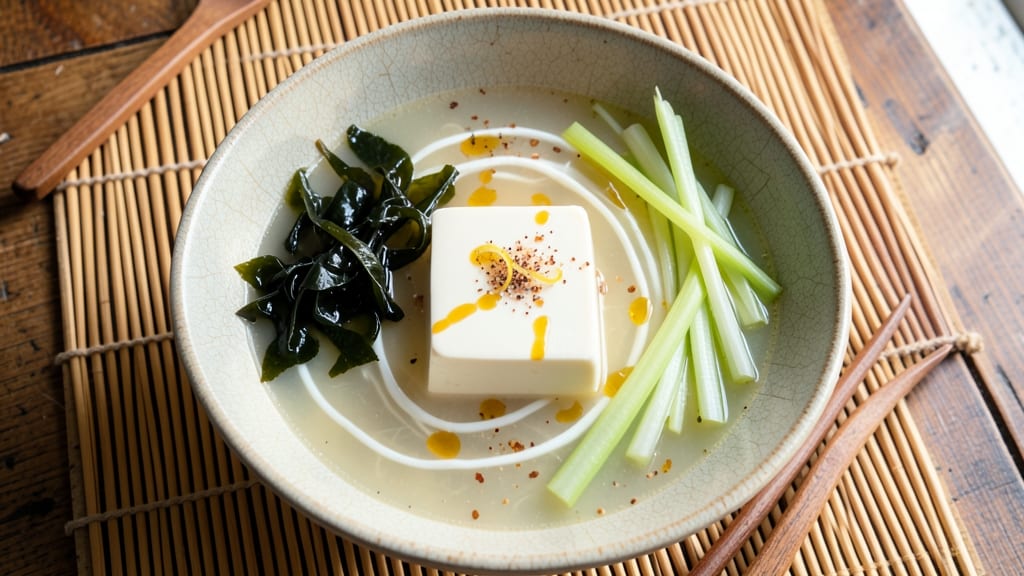
This awase miso soup transforms humble ingredients into a symphony of textures and flavors—crispy celery crowns floating over velvety fermented broth. 🌟 The secret lies in its layered preparation: a delicate dashi stock simmers with miso paste until perfectly balanced, while tofu and wakame seaweed absorb the umami richness.
Unlike traditional miso soup, the crispy celery adds a satisfying crunch that elevates every spoonful.
The beauty of awase miso lies in its simplicity and tradition. While it’s naturally vegetarian (though dashi often contains fish), this recipe delivers restaurant-quality depth without meat or fish. The miso paste—fermented for months—provides a deep, savory foundation, while the celery’s crispy edges contrast beautifully with the silky broth.
It’s the kind of soup that feels both comforting and sophisticated, perfect for weeknight dinners or special occasions.
By the time you finish, you’ll have a bowl of soup where every ingredient plays its part: tender tofu, delicate seaweed, and the star—crispy celery crowns—that add a satisfying bite.
The aroma alone will transport you to a quiet Japanese kitchen, where miso soup is both a meal and a ritual. This is the recipe that proves comfort food can be elegant.
Whether you’re serving it as a light starter or a complete meal, awase miso soup is versatile enough for any occasion. The broth keeps well, making it ideal for meal prep, while the crispy celery adds a fresh, vibrant touch that keeps the dish exciting.
Let’s bring this tradition to your table—one perfect sip at a time.
Ingredients for awase miso soup
Twelve ingredients, four bowls of restaurant-quality awase miso—crispy celery crowns over velvety fermented broth.
| Ingredient | Amount | Notes |
|---|---|---|
| Dashi Stock 🍜 | 4 cups | Vegetarian kombu dashi preferred |
| White Miso Paste 🧈 | ¼ cup | Aged 1-2 years for depth |
| Silken Tofu 🧇 | 12 oz | Block, cut into cubes |
| Dried Wakame Seaweed 🌊 | 1 oz | Rehydrated in broth |
| Celery Stalks 🧅 | 3 whole | Thick, cut into 3-inch pieces |
| Sesame Oil 🌰 | 1 tbsp | Toasted, for finishing |
| Green Onions 🧅 | 3 whole | Thinly sliced, for garnish |
| Vegetable Oil 🫒 | 2 tbsp | For crisping celery |
| Diamond Crystal Kosher Salt 🧂 | 1 tsp | Adjust to taste |
| White Pepper 🌶️ | ¼ tsp | Freshly ground |
| Soy Sauce 🍶 | 1 tbsp | For balancing flavors |
| Rice Vinegar 🍶 | 1 tsp | For brightness |
The miso paste is non-negotiable here—Honten or Marukome are my go-tos, but any high-quality white miso will work. Look for the fermentation date on the package; older miso has deeper umami. For dashi, vegetarian kombu dashi is essential—skip the bonito flakes. Celery should be thick, crisp stalks; Trader Joe's organic celery is my secret weapon. The wakame? Japanese dried seaweed from the Asian market section—it rehydrates beautifully and adds that oceanic depth. Silken tofu needs to be firm; Nasoya brand is my favorite for its texture.
No kombu dashi? Vegetable broth with a splash of soy sauce works in a pinch. Short on wakame? Spinach or nori strips add texture, though they won’t replicate the seaweed flavor. The crispy celery is where magic happens—thick cuts only. Thin celery turns mushy. For extra crunch, fry the celery in vegetable oil until golden brown, then drain on paper towels. The sesame oil? Toast it first—heat gently in a pan until fragrant. That nutty aroma is worth the extra minute. Soy sauce and rice vinegar balance the richness; adjust to taste, but don’t skip them—this isn’t just miso broth.
Broth keeps for 5 days in the fridge—make extra, it’s that good. Store celery crowns separately; they stay crisp for 2 days, but reheat in a dry pan for 30 seconds to revive the crunch. Miso paste freezes beautifully for up to 6 months. For meal prep, portion broth and toppings separately—assemble bowls fresh for maximum flavor. The crispy celery loses texture when reheated, so always fry fresh before serving.
Why You'll Love This Recipe
- Foolproof Five-Minute Start: I swear by the dried wakame—just toss it in cold water for 5 minutes while I boil the dashi. No pre-soaking drama, no waiting around. That’s the magic of awase miso: the soup’s ready before I even finish chopping the celery.
- Umami Bomb Combo: The white miso and dashi create this deep, savory punch that’s dangerously addictive. Add the silken tofu for a creamy contrast, and suddenly you’ve got a bowl that tastes like a hug from a Japanese grandmother—no fancy techniques required.
- Lunchbox Hero: Between us, this is my go-to for meal prep. Double the batch, store the leftovers in the fridge, and reheat with a splash of water. The wakame stays tender, the miso stays rich—it’s the kind of soup that gets eaten cold at work or reheated for dinner without judgment.
- Budget-Friendly Staple: Honestly, the ingredients cost less than takeout coffee, and they’ll last you weeks. Dashi stock? I make it from scratch with kombu and bonito flakes. Miso? A single tub feeds us for months. This soup proves you don’t need fancy ingredients to feel like you’re eating well.
Step-by-step instructions for awase miso soup
Here's how to transform simple ingredients into a bowl of umami-rich perfection.
🍳 Step 1: Prepare the Crispy Celery Crowns
Cut the 3 whole celery stalks into 3-inch pieces, leaving the base intact to create crowns. Heat 2 tablespoons vegetable oil in a skillet over medium-high heat until shimmering. Add the celery crowns in a single layer and cook for 4-5 minutes until the edges turn deep golden brown and crispy.
Flip carefully and cook another 3-4 minutes until both sides are crispy. Remove and set aside on paper towels to drain excess oil. The celery should have a satisfying crunch—this is your key to that textural contrast in every spoonful. If they brown too quickly, reduce the heat slightly to prevent burning.
👨🍳 Step 2: Rehydrate the Wakame and Cube the Tofu
Place the 1 oz dried wakame seaweed in a heatproof bowl and pour over 1 cup of the 4 cups dashi stock. Let it soak for 5 minutes until softened and expanded—it should triple in size. While it hydrates, cut the 12 oz silken tofu into ½-inch cubes and set aside.
This rehydration step is crucial—wakame absorbs the dashi stock like a sponge, releasing its oceanic sweetness into the broth. Don't skip the soaking time, or you'll end up with chewy seaweed instead of tender, flavorful strands. The tofu cubes should be uniform for even cooking later.
🥘 Step 3: Build the Silky Miso Broth
In a clean pot, combine the remaining 3 cups dashi stock, the rehydrated wakame (with its soaking liquid), and 1 tablespoon soy sauce. Bring to a gentle simmer over medium heat—you're not looking for a rolling boil here. Once simmering, whisk in the 0.25 cup white miso paste until fully dissolved. The broth should turn rich amber with a glossy sheen.
Simmer for 3-4 minutes—just enough to meld the flavors without destroying the miso's delicate umami. Taste and adjust seasoning with 1 teaspoon diamond crystal kosher salt and 0.25 teaspoon white pepper. The broth should be savory, slightly sweet, and balanced—not salty or bitter. Here's where the magic happens: the miso transforms from a paste into a velvety, flavorful base.
🔥 Step 4: Finish and Assemble
Turn off the heat and gently stir in the tofu cubes and 1 teaspoon rice vinegar. The vinegar adds a bright contrast that cuts through the richness. Let the soup sit for 2 minutes to allow the flavors to marry. Meanwhile, thinly slice the 3 whole green onions and drizzle 1 tablespoon sesame oil into a small bowl.
Ladle the hot soup into bowls, arranging the crispy celery crowns on top. Drizzle with the sesame oil-green onion mixture and watch as the aroma fills your kitchen. The contrast of crispy celery against the silky broth is what makes this awase miso soup truly special. Serve immediately while the celery is still crunchy—every bite should deliver that perfect textural and flavor balance.
Pro Tips For Making Awase Miso Soup
- Dissolve Wakame First: I learned this the hard way—tossing dried wakame into hot broth makes it turn to mush. Instead, soak it in cold water for 5 minutes first, then squeeze out excess liquid before adding to the pot. The texture stays crisp, and it rehydrates perfectly without falling apart.
- Stir Miso Last: White miso is delicate—heat destroys its depth. Bring dashi to a bare simmer, then turn off the heat and whisk in the miso paste until it dissolves completely. If you add it to hot broth, you’ll end up with a bitter, separated mess.
- Cut Celery Thinly: Thick celery chunks turn to mush in miso soup. Use a sharp knife to slice them into ⅛-inch-thick half-moons—this keeps them tender without dissolving. (Bonus: If you’re lazy, a mandoline does the job in seconds.)
- Add Tofu Early: Silken tofu gets waterlogged if dropped in last. Toss it into the broth after the wakame but before the miso, and let it warm through for 2 minutes. This keeps it silky and prevents it from turning to mush when the miso hits.
Serving suggestions for leftovers
Bowl Presentation
Serve awase miso soup in wide, shallow bowls—preferably ceramic or stoneware—to showcase the crispy celery crowns prominently. Arrange 2-3 celery crowns per bowl, fanning them slightly so their golden edges catch the light.
The contrast between the amber broth and crispy celery creates a visually striking dish that feels both rustic and refined. 🌟
Garnish Variations
Beyond green onions, try thinly sliced scallions or shiso leaves for a brighter garnish. For extra umami, sprinkle toasted sesame seeds or crushed nori flakes over the top. If you prefer heat, add a dash of red pepper flakes—just ¼ teaspoon—to balance the soup’s richness without overpowering it.
Pairing with Rice
Serve alongside steamed Japanese short-grain rice to create a complete meal. The sticky, slightly sweet rice soaks up the miso broth beautifully, turning each bite into a harmonious blend.
For extra elegance, use a bamboo steamer or rice cooker with a wooden rice paddle to serve. The contrast of warm rice and cool soup is pure comfort.
Seasonal Additions
In spring, stir in thinly sliced bamboo shoots for a fresh, crisp texture. For autumn, add shredded daikon radish and a drizzle of yuzu kosho for a tangy kick.
Winter calls for shitake mushrooms—sautéed in sesame oil—to deepen the umami. Each seasonal twist keeps the soup exciting year-round.
Meal Prep Adaptations
Prep the broth and toppings separately for easy assembly. Store the miso broth in an airtight container for up to 5 days, while keeping the crispy celery crowns in a paper towel-lined bag to maintain crunch.
Reheat broth gently on the stove—never microwave—to preserve its silky texture. Add fresh celery crowns just before serving for that perfect crunch. ✨
Occasion Upgrades
For a special occasion, serve awase miso soup in individual ceramic cups with handwritten chopstick rests. Pair with sake (try a junmai ginjo) or green tea to elevate the experience.
The aromatic steam rising from the bowl makes it feel like a Japanese izakaya moment—even at home. Trust me, your guests will be impressed.
Nutrition facts
Frequently asked questions
What makes awase miso soup different from regular miso soup?
Awase miso stands out because of its crispy celery crowns that add a satisfying crunch—unlike traditional miso soup which typically features soft ingredients like tofu and seaweed. The name "awase" (合わせ) means "mixed" or "blended," referring to how the crispy element contrasts with the silky broth. This texture play is what elevates it beyond basic miso soup!
Can I make this recipe vegan?
Yes, but with one key adjustment: replace the traditional dashi stock (which often contains fish) with vegetable kombu dashi or a vegan miso broth made from shiitake mushrooms and kombu. The rest of the recipe—miso, tofu, wakame, and celery—is already plant-based. The umami will still shine through!
Why does the celery need to be crispy?
The crispy celery crowns are the soul of awase miso! They provide a textural contrast that balances the smooth, velvety broth. When fried to golden perfection, they add a satisfying bite that keeps the dish exciting. If your celery isn't crispy, try frying it at medium-low heat for longer—patience pays off!
How do I store leftovers without losing the crispy celery?
Store the broth and tofu/wakame separately in airtight containers for up to 5 days, but keep the crispy celery crowns in a paper towel-lined bag to maintain their crunch. Reheat the broth gently on the stove, then add fresh celery crowns just before serving—this ensures that signature crunch stays intact!
What if I can't find wakame seaweed?
No problem! Substitute with dried nori strips or even spinach for a different but still delicious texture. If using spinach, wilt it in the broth for 1-2 minutes before adding the tofu. The key is maintaining that umami depth—just adjust seasoning to taste after substitution.