
Soups & Stews
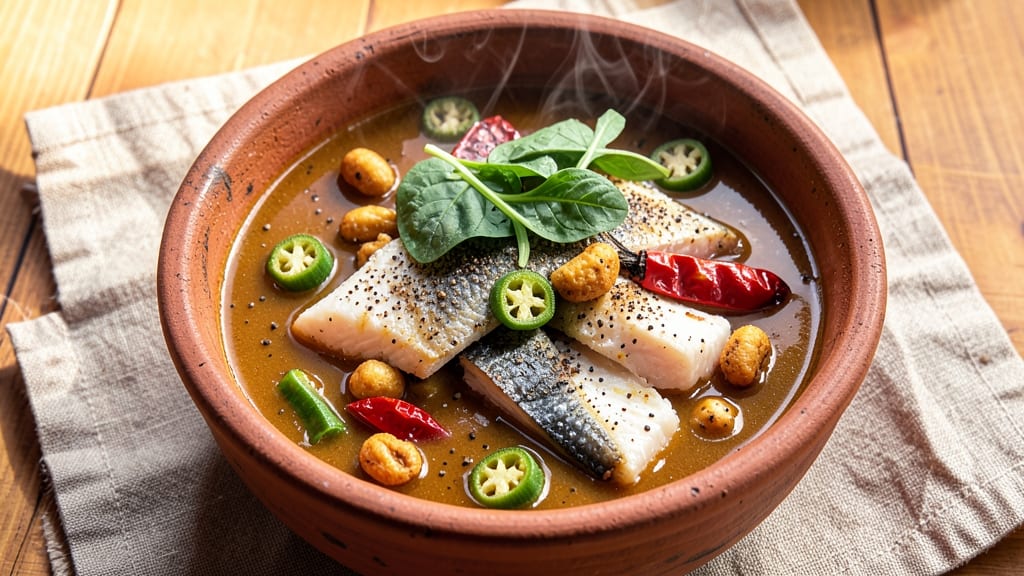
This Banga soup recipe Nigeria delivers the rich, peppery depth of West Africa’s most beloved okra stew, where smoky fish stock meets tender vegetables in a velvety embrace. 🌟 The secret lies in slow-cooking the okra until it dissolves into a glossy, slightly slimy velout that coats every bite—this isn’t just soup, it’s a flavor experience that transports you to Nigerian dinner tables.
What sets this version apart is the layered technique: first building a deep, umami-rich fish stock, then incorporating the okra and vegetables in stages to preserve their textures while developing that signature peppery complexity.
The recipe begins with a smoky fish base—traditionally made with dried or fresh fish—that forms the heart of the soup. As it simmers, the okra transforms from a simple vegetable into the star, its natural mucilage creating that signature glossy finish.
The addition of leafy greens and assorted vegetables like pumpkin leaves and spinach adds vibrant color and earthy depth, while the blend of ground peppers and locust beans delivers the signature heat and nutty undertones that define authentic Banga.
By the time you serve this soup with its traditional accompaniments—pounded yam, eba, or rice—you’ll have created a dish that’s far more than just a meal.
The aroma alone will fill your home with the comforting scent of West African cuisine, while the balance of smoky fish, peppery okra, and tender vegetables creates a harmony that’s both complex and deeply satisfying. This is the kind of soup that becomes a family staple, passed down through generations.
The beauty of this recipe lies in its versatility—while the fish version is most traditional, you can easily adapt it to use beef or goat for a meat-based variation. The key to success is patience: allowing the soup to develop its flavors slowly over time.
Whether you’re serving it at a festive gathering or a casual family dinner, this Banga soup will be the centerpiece that brings everyone to the table.
Ingredients for banga soup recipe nigeria
Sixteen ingredients to create West Africa’s most beloved okra stew, rich with smoky fish and vibrant vegetables.
| Ingredient | Amount | Notes |
|---|---|---|
| Fresh Okra 🥒 | 1 ½ lb | Trimmed, cut into 1-inch pieces |
| Dried Fish 🐟 | 1 lb | Smoked or unsmoked, cleaned |
| Fresh Fish 🐟 | 1 lb | Tilapia or mackerel, cut into chunks |
| Locust Beans 🌱 | ½ cup | Soaked overnight, rinsed |
| Ground Black Pepper 🌶️ | 2 tbsp | Freshly ground for heat |
| Scotch Bonnet Peppers 🌶️ | 2 whole | Seeds removed for mild heat |
| Fresh Ginger 🧄 | 2 tbsp | Grated, aromatic base |
| Fresh Onions 🧅 | 2 whole | Chopped, for depth |
| Fresh Tomatoes 🍅 | 3 whole | Blended for sauce base |
| Pumpkin Leaves 🌿 | 2 cups | Chopped, leafy green |
| Spinach 🌿 | 2 cups | Fresh, for color |
| Palm Oil 🫒 | ½ cup | Red palm oil for richness |
| Salt 🧂 | 1 ½ tsp | Adjust to taste |
| Fish Stock 💧 | 4 cups | Homemade or store-bought |
The dried fish is non-negotiable—it’s the soul of Banga. Look for smoked fish at African markets or the dried variety in Asian grocery stores (it’s the same thing). If you can’t find it, dried shrimp works in a pinch, but the flavor won’t be quite the same. Fresh fish like tilapia or mackerel adds depth, but don’t skip the dried—it’s what gives the soup that signature umami punch. For the okra, long, slender varieties work best—they dissolve beautifully into that signature velout. If yours is thick, slice it thinly. And trust me, the palm oil matters—red palm oil is the key to that authentic color and richness.
No scotch bonnet peppers? Habanero or jalapeño at half the amount will give you heat, but none of the fruity depth. The locust beans (also called iru) are essential for that nutty, earthy flavor—soak them overnight to soften, then rinse well. Fresh ginger and onions are your aromatics here, so don’t skimp. For the tomatoes, San Marzano if you can find them, but any ripe tomatoes will do. The pumpkin leaves and spinach can be swapped for kale or collard greens if needed, but they’re what give Banga its signature vibrant color. And if you’re using store-bought fish stock, add a splash of soy sauce for extra umami.
This soup tastes even better the next day—make extra and freeze portions for lazy weeknights. Store in the fridge for 3-4 days, or freeze for up to 3 months. The okra thickens as it cools, so add a splash of water or stock when reheating. And if you’re serving with pounded yam or eba, make the soup first and let it sit for 30 minutes before serving—it’ll be even more flavorful.
Why You'll Love This Recipe
- No-Fuss Ingredients: I keep dried fish and locust beans stocked because they’re my shortcut to depth. Toss them in first, simmer, and suddenly you’ve got that rich umami base without hunting for exotic spices.
- Okra Magic: That slimy okra thickens the soup effortlessly—no cornstarch, no fuss. The longer it cooks, the silkier it gets, and honestly? The texture is chef’s kiss when it’s just right.
- Budget Crowd-Pleaser: Between the dried fish stretching my grocery budget and fresh fish adding luxury, this feeds six for under $15. My in-laws always ask for seconds, and they’re not cheap eaters.
- Leftovers That Shine: The flavors actually improve the next day—yes, really. Reheat with a splash of water, and the locust beans soften into this melt-in-your-mouth goodness. Pack it for work; you’ll be the hero.
Step-by-step instructions for Banga soup Nigeria
Let's create this rich, peppery West African classic with layers of smoky fish and velvety okra.
🍳 Step 1: Prepare the Fish Base
In a large pot, add the 1 lb dried fish and cover with 4 cups fish stock. Bring to a boil over medium-high heat, then reduce to low and simmer for 20 minutes to extract maximum flavor. The fish should break apart easily—strain out the fish pieces and discard them, keeping only the infused stock.
This stock forms the foundation of your soup. If you notice any fish bones or skin still attached, give it one more quick pass through the strainer. The liquid should be cloudy with a deep, umami-rich color—this is where all the magic happens.
👨🍳 Step 2: Build the Okra and Bean Base
In the same pot, add 0.5 cup palm oil and heat over medium heat until it shimmers but doesn't smoke. Add the 1.5 lb fresh okra and 0.5 cup soaked locust beans, stirring for 5 minutes until the okra softens slightly and the beans begin to break down. This creates that signature thick, velvety texture.
Here's the thing—don't rush this step. The okra needs to release its natural gums to thicken the soup properly. You'll know it's ready when the mixture looks like a thick paste rather than individual pieces. If it starts sticking, add 2 tablespoons of the reserved fish stock to loosen it.
🍳 Step 3: Develop the Peppery Flavor Profile
Add the 2 whole chopped onions and cook for 3 minutes until softened. Stir in the 2 tbsp grated ginger, 2 tbsp ground black pepper, and 2 seeded Scotch bonnet peppers, cooking for another 2 minutes until fragrant. This is where the soup gets its signature heat and depth.
Watch the heat carefully—Scotch bonnet peppers can make the oil smoke quickly. You want the peppers to soften slightly but not burn. If the mixture starts to darken too much, reduce the heat to medium-low and stir constantly. The aroma should be intense—like walking through a spice market in Lagos.
🥘 Step 4: Incorporate the Fresh Fish and Vegetables
Add the 1 lb fresh fish chunks and 3 blended tomatoes to the pot. Stir gently to combine, then pour in the reserved fish stock. Bring to a gentle simmer over medium heat and cook for 10 minutes, stirring occasionally to prevent sticking. The fish should be just about cooked through but still slightly translucent.
Now add the 2 cups chopped pumpkin leaves and 2 cups spinach. Stir well and cook for another 5 minutes until the greens wilt completely. The soup should be thick enough to coat the back of a spoon but still pourable. If it's too thick, add more fish stock 1 tablespoon at a time until you reach the perfect consistency.
⏰ Step 5: Season and Serve
Taste and adjust seasoning with the 1.5 tsp salt and additional pepper if needed. The soup should be rich, slightly spicy, and well-balanced. Remove from heat and let it sit for 5 minutes to allow all the flavors to meld together.
Serve immediately with pounded yam or fufu to soak up that delicious okra velouté. The soup will continue to thicken slightly as it cools, so don't be afraid to add a splash more stock if it becomes too thick while serving. Enjoy this comforting, flavor-packed West African classic!
Pro Tips For Making Banga Soup Recipe Nigeria
- SOAK DRYED FISH FIRST: I learned this the hard way—skipping the soak leaves your soup tasting like fishy cardboard. Rinse the dried fish in cold water for at least 30 minutes, then simmer it in fresh water for 10 minutes before adding to the pot. This removes the bitter ammonia and lets the stock develop proper depth.
- SLICE OKRA LENGTHWISE: Thin, even slices (about ¼-inch thick) cook faster and release their sliminess without turning the soup into glue. Cut them just before adding to the pot—okra oxidizes fast and gets mushy if prepped too early. (Yes, even if you're impatient like me.)
- LOW HEAT FOR LOCUST BEANS: These things refuse to soften if you rush them. After adding locust beans (irun), reduce heat to the lowest setting and let them simmer uncovered for at least 45 minutes. Stir occasionally—burnt beans make the whole soup taste bitter, and no one wants that.
- SAVE THE OKRA WATER: The starchy water from rinsing fresh okra is liquid gold for banga. Use it to start your soup instead of plain water—it adds natural thickness and a subtle okra flavor without extra slime. (Your future self will thank you.)
Wine and beer pairings for banga soup recipe nigeria
Traditional Nigerian Pairings
Banga soup is traditionally served with starchy staples that soak up its rich, peppery broth. My go-to is pounded yam—its smooth, elastic texture contrasts beautifully with the soup’s velvety okra. For a lighter option, eba (garri pudding) or fufu (made from cassava or plantains) work perfectly.
The key is serving the soup slightly thickened so it clings to every bite of your starch. 🌟
Unexpected Wine Pairings
While beer is more traditional, a light-bodied red wine like Pinot Noir from South Africa can complement Banga’s smoky fish and peppery notes. Look for wines with subtle fruitiness to balance the heat—avoid bold Cabernets that’ll overpower the dish.
I’ve also enjoyed a crisp Sauvignon Blanc with its citrusy brightness cutting through the richness. 🍷
Local Nigerian Beer Options
For authenticity, pair with Guinness or Star Lager—both have enough body to stand up to the soup’s depth without competing. The slight bitterness in Guinness actually enhances the peppery flavors.
For a local twist, try Maltina (a Nigerian malt beverage) with its sweet, malty profile that contrasts nicely with the soup’s heat. 🍺
Non-Alcoholic Pairings
For non-drinkers, hibiscus tea (zobo) with its tart, floral notes creates a refreshing contrast to the soup’s richness. The acidity cleanses your palate between bites. Another great option is ginger-infused water—the ginger echoes the soup’s spice while adding a cooling element.
Both are popular in Nigeria and work beautifully. 💧
Spice Level Considerations
If your Banga is particularly spicy, opt for cooler pairings like coconut water or mango lassi to tame the heat. The creamy, sweet contrast is a favorite in Nigerian households.
For milder versions, a light lager or even sparkling water with lemon will suffice. The key is balancing the soup’s intensity with something refreshing. 🌶️
Nutrition facts
Frequently asked questions
Can I make Banga soup with beef or goat instead of fish?
While the traditional version uses fish, you can easily swap it for beef or goat by using 2 lbs of meat instead of the fish. For beef, cut it into small chunks and brown it first before adding other ingredients. Goat meat works beautifully too—just trim off excess fat first. The cooking time will increase to 30-40 minutes for beef/goat until tender. The flavor profile will shift slightly but still maintain that rich, peppery character.
Why does my Banga soup turn out too thin? This usually happens when the okra doesn't release enough mucilage or the soup isn't reduced properly.
What can I substitute for locust beans (iru)?
If you can't find locust beans, try 1 tbsp soy sauce or 1 tsp fish sauce for umami depth. For a closer texture, blend 1/4 cup roasted peanuts into a paste—this mimics the nutty flavor. The beans add a unique earthy note that's hard to replicate, but these substitutes will still give you a flavorful soup. Just
How do I prevent the okra from making the soup too slimy?
Sliminess comes from overcooking the okra. Cook it just until it softens (5-7 minutes) rather than until it dissolves completely. For less sliminess, add the okra later in the cooking process—after the fish stock and before the vegetables. You can also blend half the okra into the soup for a smoother texture without losing the signature velouté. The key is balance: you want enough okra for thickness but not so much it becomes gluey.
Can I make Banga soup ahead of time?
Yes! This soup actually tastes better the next day as flavors meld. Store in an airtight container in the fridge for 3-4 days or freeze for up to 3 months. When reheating, add 2-3 tbsp water or stock since it thickens as it cools. For best results, reheat gently on low heat—don't boil or the okra may separate. The soup will be even more flavorful when served cold as a salad too!