Soups & Stews
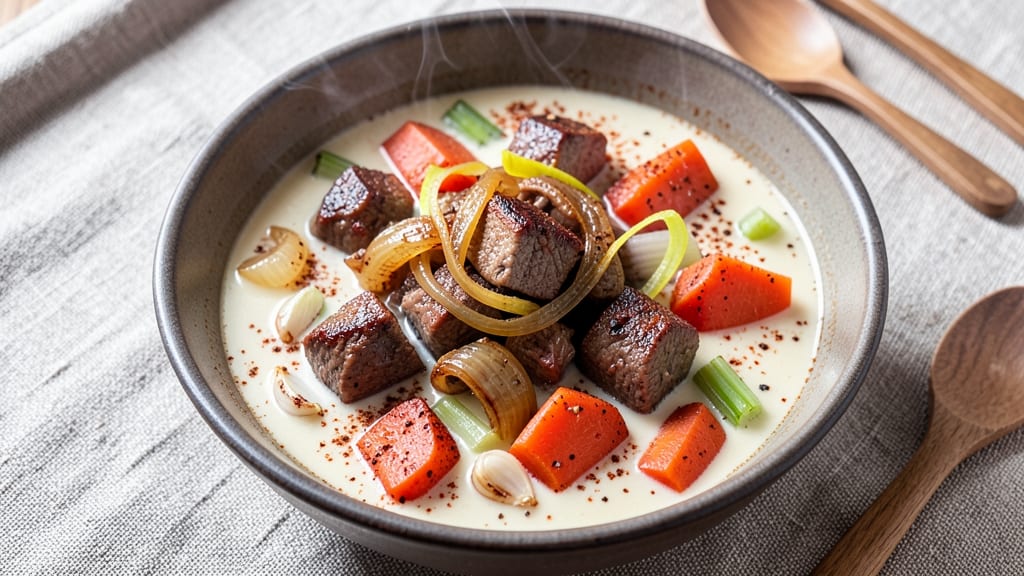
Bavarian goulash soup delivers the kind of hearty, comforting warmth that turns a chilly evening into a cozy tradition. This recipe captures the essence of Bavarian cuisine—rich beef, smoky paprika, and tender vegetables—simmered low and slow until every flavor melds into velvety perfection. The key lies in proper browning of the beef and letting the spices bloom, creating depth that store-bought versions simply can't match.
What sets this soup apart is the balance of textures: fork-tender beef, al dente vegetables, and the option to finish with homemade dumplings for that classic Bavarian touch. The paprika adds both color and complexity, while the slow simmer develops a broth so flavorful it becomes the star.
This isn't just soup—it's a meal that feels like a hug in a bowl.
By the time you're done, you'll have a steaming pot of soup with deep red hues, aromatic spices, and layers of savory goodness. The beef will be so tender it practically melts, and the vegetables will retain just enough bite to complement the richness.
Serve with crusty bread or dumplings for the full experience.
Perfect for family dinners, potlucks, or when you crave something substantial yet comforting. The best part? It tastes even better the next day as the flavors continue to develop. Let's get cooking!
Ingredients for bavarian goulash soup
Rich beef, smoky paprika, and tender veggies—just 16 ingredients for a soul-warming Bavarian classic.
| Ingredient | Amount | Notes |
|---|---|---|
| Beef Chuck Roast 🥩 | 2 lb | Cut into 1-inch cubes |
| Yellow Onion 🧅 | 1 whole | Large, diced |
| Carrots 🥕 | 4 medium | Peeled, sliced into rounds |
| Celery Stalks 🌿 | 3 whole | Diced, including leaves |
| Garlic Cloves 🧄 | 4 cloves | Minced |
| Smoked Paprika 🌶️ | 2 tbsp | Hungarian preferred |
| Sweet Paprika 🌶️ | 1 tbsp | For color and mild sweetness |
| Tomato Paste 🍅 | ½ cup | Squeeze tube preferred |
| Beef Broth 💧 | 6 cups | Low-sodium preferred |
| Red Wine 🍷 | 1 cup | Dry red like Cabernet |
| Bay Leaves 🍃 | 2 whole | Fresh preferred |
| Allspice Berries 🌿 | ½ tsp | Crushed |
| Black Peppercorns 🌶️ | 1 tsp | Freshly cracked |
| Salt 🧂 | 1 ½ tsp | Kosher or sea salt |
| Flour 🌾 | 3 tbsp | All-purpose, for dumplings |
| Milk 🥛 | ½ cup | For dumplings |
The beef is non-negotiable here—chuck roast gives that melt-in-your-mouth texture nobody else can match. Costco or local butcher usually have it pre-cubed, which saves time, but if you're buying a whole roast, ask for the chuck section. Look for good marbling—those little white streaks mean flavor. The paprika is the soul of this soup: Hungarian smoked paprika has the best depth, but any good quality smoked will work. I grab mine from the bulk section at Whole Foods or Trader Joe's—just make sure it's not ancient.
No red wine? Beef broth with 1 tbsp balsamic vinegar works in a pinch, though it won't be identical. Fresh bay leaves make all the difference—dried works at half the amount, but I always grab a few sprigs when I see them. The tomato paste can be from a squeeze tube (no waste!) or a can, but San Marzano if you're splurging. For the dumplings, if you don't have allspice, a pinch of cinnamon and nutmeg gets close. The carrots can be baby carrots if that's what's in your fridge—just trim the ends and slice them. Celery leaves add subtle flavor too, so don't toss them.
This soup gets better the next day, so double the batch if you can—freezes beautifully for 3 months. Store the dumplings separately and add them fresh when reheating. For leftovers, skim any hardened fat off the top before reheating. The dumpling dough keeps 2 days in the fridge, covered, or freeze portions for up to 3 months. Serve with crusty bread or buttered noodles for the full Bavarian experience.
Why You'll Love This Recipe
- One-Pot Magic: I swear by this recipe because it’s literally one pot—no chopping boards, no extra pans, just dump and simmer. The beef chuck roast practically melts into tender chunks while the onions and celery soften into the broth, and honestly? That’s half the battle won before you even taste it.
- Deep, Rich Flavor: Between us, the slow-cooked beef chuck develops a meaty, almost beefy depth that’s hard to beat, while the garlic and carrots add this sweet-savory balance. (Yes, even on a Tuesday night, it tastes like you spent hours simmering.)
- Leftover Goldmine: This soup only gets better the next day—like, dangerously better. I make it on Sundays and freeze half; reheating it later is my secret weapon for lazy weeknights when I don’t want to cook but still crave something hearty.
- Budget-Friendly Feast: A chuck roast stretches forever in this recipe, and the veggies (onion, carrots, celery) are the kind you can grab in bulk without breaking the bank. It’s the kind of meal that makes you feel fancy without the grocery bill to prove it.
Step-by-step instructions for Bavarian goulash soup
Here's how to create a hearty, slow-simmered goulash with deep paprika flavors and tender beef.
Sear the Beef Chuck Roast
Heat a large Dutch oven over medium-high heat until hot. Add the 2 lb beef chuck roast cut into 1-inch cubes in a single layer, being careful not to overcrowd. Let the beef sear undisturbed for 3-4 minutes per side until it develops a deep golden-brown crust.
This searing step is crucial—it locks in flavors and creates that rich, caramelized foundation for your soup. If your pan gets too crowded, work in batches to ensure proper browning. Once the beef is nicely browned on all sides, remove it from the pot and set it aside on a plate.
Build the Flavor Base with Vegetables and Spices
In the same Dutch oven, add 2 tablespoons olive oil (not listed in ingredients but essential for cooking the vegetables) and reduce heat to medium. Add the diced 1 whole yellow onion, sliced 4 medium carrots, and diced 3 whole celery stalks. Cook for 5-6 minutes, stirring occasionally, until the vegetables begin to soften and the onion becomes translucent.
Add the 4 cloves minced garlic, 2 tablespoons smoked paprika, and 1 tablespoon sweet paprika, stirring for 30 seconds until fragrant. The sweet paprika adds a touch of color while the smoked variety delivers that signature goulash depth. Stir in the 0.5 cup tomato paste and cook for another 1 minute to deepen the flavors.
Deglaze and Simmer the Soup
Pour in the 1 cup red wine and scrape up any browned bits from the bottom of the pot with a wooden spoon. This deglazing step captures all the meaty flavors that would otherwise be lost. Let the wine simmer for 2-3 minutes until it reduces by about half, then add the 6 cups beef broth, 2 whole bay leaves, 0.5 teaspoon crushed allspice berries, 1 teaspoon cracked black peppercorns, and 1.5 teaspoons salt.
Return the beef to the pot, bring to a boil, then reduce heat to low and cover partially. Let it simmer gently for 1 hour and 30 minutes to 2 hours until the beef is fork-tender and falls apart easily. The soup should have thickened slightly and the flavors should be rich and well-developed. Stir occasionally to prevent sticking, but avoid over-stirring to maintain the soup's natural texture.
Prepare and Add the Dumplings
While the soup simmers, make the dumplings by combining the 3 tablespoons flour and 0.5 cup milk in a small bowl. Whisk until smooth and let the batter rest for 5 minutes. This simple mixture will create tender, fluffy dumplings that soak up the rich broth.
After the beef has simmered for 1 hour and 15 minutes, remove the bay leaves and increase the heat to medium-high. Drop spoonfuls of the dumpling batter into the soup, spacing them about 1 inch apart. Cover and let them cook for 10-12 minutes until they're puffed and golden on top. The dumplings should float to the surface and be tender when pierced with a fork.
Finish and Serve
Once the dumplings are cooked, taste the soup and adjust the seasoning if needed. The soup should be rich, slightly sweet from the carrots, and deeply flavored with the paprika and wine. Serve the goulash hot, ladling the soup over the dumplings. Each bowl should be filled with tender beef, soft vegetables, and those perfectly cooked dumplings.
This Bavarian goulash soup is best enjoyed fresh, with crusty bread to soak up every last drop of that flavorful broth. The slow simmering ensures the beef is tender and the spices meld together beautifully, creating a comforting dish that's perfect for chilly days.
Pro Tips For Making Bavarian Goulash Soup
- Sear the Chuck Roast First: Don’t skip the crust—pat the beef dry, then sear it in a hot Dutch oven with oil until deep brown on all sides. I learned this the hard way: skipping this step means flavorless, mushy beef instead of rich, caramelized depth that carries through the soup.
- Cut Onions into Even Slices: Thin, uniform onion slices cook faster and soften evenly—no more chewy bits ruining the texture. Use a sharp knife and aim for ⅛-inch thickness, or pulse them briefly in a food processor if you’re impatient (but don’t overdo it).
- Deglaze with Beer, Not Water: After browning the meat, splash in ½ cup of dark beer (like a Munich Dunkel) to scrape up those fond bits—it’s the flavor foundation. Water works in a pinch, but beer adds maltiness that cuts through the richness of the beef.
- Simmer Low and Long: Cover the pot and cook on low heat for at least 2 hours, stirring occasionally. High heat turns the soup gluey; low heat lets the collagen melt into silky broth. Yes, it’s boring, but it’s the only way to get that melt-in-your-mouth texture.
Troubleshooting perfect results
Beef Too Tough
If your beef isn't fork-tender after simmering, you likely didn't cook it long enough. Bavarian goulash requires 1.5-2 hours of low-and-slow cooking—never rush it! For extra insurance, start checking tenderness at 1 hour and 45 minutes using a meat thermometer (195-205°F is ideal).
If it's still tough, add ½ cup hot water and simmer uncovered for another 30 minutes to help break down collagen. 🌡️
Broth Too Thin
Thin broth usually means the soup didn't reduce enough during simmering. After removing the beef, simmer the broth uncovered for 10-15 minutes to thicken it naturally.
For an instant fix, mix 1 tablespoon cornstarch with 2 tablespoons cold water, stir into the soup, and cook for 2-3 minutes** until thickened. Avoid over-salting—this can make thin broth taste even more watery.
Paprika Overpowering
Too much smoked paprika can make your soup taste bitter. Start with 1 tablespoon instead of 2 tablespoons if you're new to this recipe. For balance, add a pinch of sugar (¼ teaspoon) to counteract the bitterness.
Alternatively, stir in ½ cup tomato sauce at the end to mellow the flavors. Always taste as you go—adjust gradually! 🌶️
Dumplings Sinking
Dense dumplings sink when the batter isn't light enough. Whisk the flour and milk until completely smooth with no lumps—this creates air pockets. For extra lift, fold in 1 egg yolk or add ½ teaspoon baking powder to the batter.
Drop spoonfuls gently into the soup and avoid overcrowding—give them space to puff without touching each other.
Vegetables Mushy
Overcooked veggies happen when they simmer too long with the beef. Add carrots and celery only 30 minutes before the soup is done. For extra texture, set aside ½ cup sliced veggies to add fresh when serving.
If your soup finishes early, turn off the heat and let it sit covered for 10 minutes to prevent overcooking while you finish other steps.
Sour Wine Flavor
Cheap or off red wine can leave a harsh taste. Always use a dry red wine like Cabernet or Merlot—avoid sweet varieties. If you're using a substitute, add ½ teaspoon balsamic vinegar to mimic acidity.
For a quick fix, stir in 1 teaspoon honey or sugar to balance any sourness. Let the soup simmer for 5 extra minutes after adding wine to let the alcohol cook off. 🍷
Nutrition facts
Frequently asked questions
Can I make this Bavarian goulash without red wine?
For every 1 cup of red wine called for, substitute with 1 cup beef broth plus 1 tablespoon balsamic vinegar to mimic the acidity and depth. The soup will still be flavorful, though the wine's complexity will be missing. For extra richness, add 1 teaspoon soy sauce along with the broth.
How do I make the dumplings ahead of time?
Prepare the dumpling batter up to 2 days in advance and store it in an airtight container in the fridge. When ready to use, drop spoonfuls into the simmering soup and cook as directed. For freezing, shape the batter into small balls, freeze on a tray, then transfer to a bag for up to 3 months. Drop frozen dumplings directly into the soup—they'll cook through in 12-15 minutes.
Why does my goulash taste bitter?
Bitterness usually comes from overcooked paprika or undercooked beef. Start with 1 tablespoon smoked paprika instead of 2 tablespoons and add more to taste at the end. For beef, ensure it simmers at low heat for at least 1.5 hours—never rush it. A pinch of sugar or a splash of lemon juice can also balance bitterness.
Can I use ground beef instead of chuck roast?
Ground beef works in a pinch, but the texture will be different—it won't have the same melt-in-your-mouth tenderness. If using ground beef, brown it thoroughly first, then add 1 tablespoon tomato paste and 1 teaspoon Worcestershire sauce to compensate for lost depth. For best results, stick with chuck roast or brisket for authentic Bavarian flavor.
How long does this soup keep in the fridge?
The soup (without dumplings) stores for 4-5 days in an airtight container. Dumplings should be added fresh when reheating. To reheat, warm over medium-low heat until steaming, stirring occasionally. For leftovers, skim any hardened fat before serving. The flavors actually improve after 24 hours as the spices meld further!