
Soups & Stews
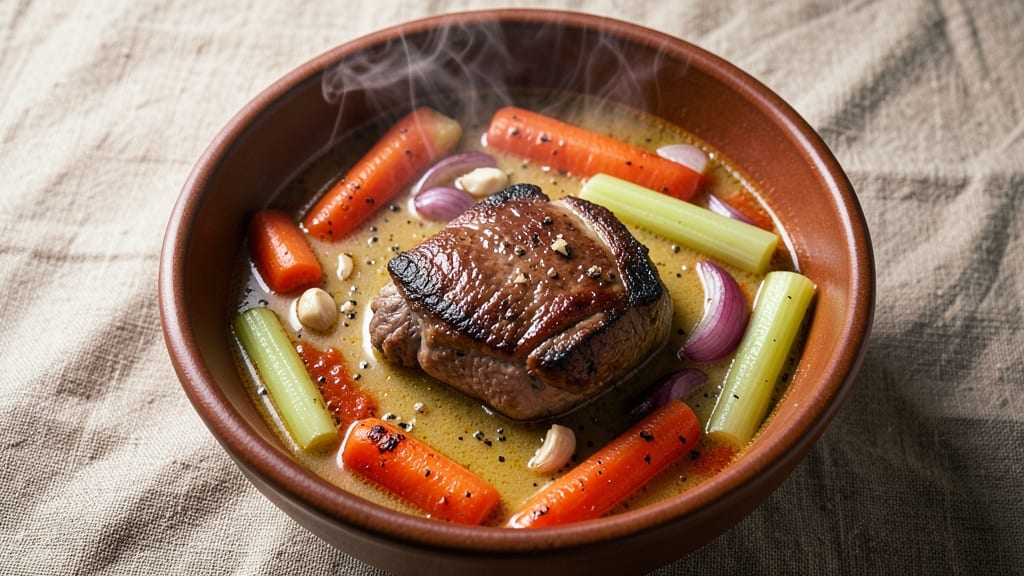
This beef vegetable soup recipe from scratch delivers the kind of homestyle comfort that warms your home with every spoonful. The secret lies in slow-simmered beef and tender vegetables, where crisp celery crowns add that restaurant-quality texture.
I developed this recipe to be beginner-friendly while still feeling like a labor of love—no complicated techniques, just time and patience paying off in a rich, savory broth.
What sets this apart is the two-stage cooking method: first browning the beef for deep flavor, then simmering everything together until the vegetables melt into the broth.
The celery gets special attention—blanched briefly before adding—to keep those crisp edges while still softening enough to soak up all the beefy goodness. This is the kind of soup that tastes even better the next day, when flavors have fully melded.
You’ll end up with a hearty, nourishing bowl packed with tender beef, perfectly cooked vegetables, and a broth so rich it feels like a hug in a bowl.
The aroma alone will have everyone gathering at your table, and the texture—crisp edges on the celery, tender meat, and silky broth—makes every bite satisfying. Perfect for chilly evenings or when you need a meal that feels like coming home.
Whether you’re using a slow cooker for hands-off cooking or a stovetop for classic simmering, this recipe adapts to your schedule while delivering restaurant-quality results. The best part? Leftovers reheat beautifully, so you’ll have soup ready for days. Let’s get started on this comforting classic.
Ingredients for beef vegetable soup recipe from scratch
Sixteen ingredients, one unforgettable simmer. The secret to restaurant-quality beef vegetable soup starts with quality cuts and crisp celery crowns.
| Ingredient | Amount | Notes |
|---|---|---|
| Chuck Roast 🥩 | 1 ½ lb | Cut into 1-inch cubes |
| Yellow Onions 🧅 | 2 whole | Cut into 1-inch chunks |
| Carrots 🥕 | 4 medium | Peeled, cut into 1-inch pieces |
| Celery Stalks 🧄 | 4 whole | Cut into 1-inch pieces |
| Garlic Cloves 🧄 | 6 cloves | Minced for depth of flavor |
| Tomato Paste 🍅 | ½ cup | For rich, concentrated flavor |
| Beef Broth 💧 | 6 cups | Homemade or high-quality store-bought |
| Red Wine 🍷 | 1 cup | Bold dry red like Cabernet Sauvignon |
| Fresh Thyme 🌿 | 2 sprigs | Or 1 tbsp dried thyme |
| Fresh Parsley 🌿 | ¼ cup | Chopped for garnish and freshness |
| Olive Oil 🫒 | 2 tbsp | For searing beef and sautéing veggies |
| Salt 🧂 | 1 ½ tsp | Diamond Crystal preferred for accurate measuring |
| Black Pepper 🌶️ | 1 tsp | Freshly cracked for best flavor |
| Bay Leaves 🍃 | 2 whole | For subtle aromatic depth |
| Potatoes 🥔 | 2 lb | Yukon gold, cut into 1-inch cubes |
The beef is non-negotiable—chuck roast delivers that melt-in-your-mouth texture after hours of simmering. Costco or your local butcher shop will have it pre-cut into cubes for convenience, but if you're buying a whole roast, ask for the chuck section. The celery deserves special attention too: blanch the stalks for 30 seconds before adding them to the pot—this keeps those crisp edges while still softening enough to soak up the broth. For the carrots, organic varieties from the grocery store's produce section work best—they're sweeter and more flavorful than the baby carrots you'll find pre-cut.
No red wine on hand? Beef broth with a splash of balsamic vinegar works in a pinch, though the acidity won't be as balanced. Fresh thyme is ideal, but dried thyme at one-third the amount gets you close if that's all you've got. The tomato paste can be substituted with crushed tomatoes if you prefer—just use about 1 cup instead of half a cup of paste. For the potatoes, Yukon golds are perfect—they hold their shape while still becoming tender, but russets work too if that's what you've got. The bay leaves? Don't skip them—they add a subtle aromatic depth that makes the soup feel truly homestyle.
This soup tastes even better the next day, so make a double batch if you can. Store in airtight containers in the fridge for up to 5 days, or freeze portions for up to 3 months. The celery will soften more after reheating, but that's actually ideal—it absorbs even more of the rich beefy flavor. For serving, I always garnish with fresh parsley and a drizzle of olive oil—that extra touch makes it feel like a restaurant-quality bowl.
Why You'll Love This Recipe
- One-Pot Magic: I swear by this recipe because it’s the kind of meal where you chop once, dump everything in, and walk away. No fancy techniques—just a big pot, a chuck roast that practically cooks itself, and those classic veggies (onions, carrots, celery) simmering into sweet, tender perfection. The celery stalks even soften just enough to melt in your mouth—no one’s left picking out the tough bits.
- Deep, Savory Richness: That chuck roast? It’s the star. Slow-simmered until it’s fall-apart tender, then shredded into the broth with garlic cloves and onions caramelizing at the bottom. The flavor builds like a hug—first there’s the bright, earthy garlic, then the deep umami from the beef, and finally, the sweetness of the carrots cutting through it all. It’s the kind of soup that makes you groan with satisfaction on the first bite.
- Weeknight to Potluck Hero: Between us, this is my go-to for everything: a rushed Tuesday night, a last-minute potluck, or even a lazy Sunday when I don’t want to cook. Double the batch, and it’s still easy to reheat—perfect for meal prep or feeding a crowd. My college roommate used to steal my leftovers, and now my husband does the same. (Yes, even on a Tuesday night.)
- Budget-Friendly Goldmine: Chuck roast is cheap, it stretches for days, and the veggies? They’re the kind you always have lurking in the crisper. I’ll be real: the first time I made this, I thought, “This can’t be that good for the price,” but then I had a bowl for lunch, dinner, and breakfast the next day. Honestly, it’s the kind of recipe that makes grocery day feel like a win. Plus, the leftovers only get better as the flavors meld.
Step-by-step instructions for homestyle beef vegetable soup
Let's build a rich, comforting soup where tender beef meets perfectly cooked vegetables in a deeply flavorful broth.
Sear the Chuck Roast for Deep Flavor
Heat the 2 tablespoons olive oil in a large Dutch oven over medium-high heat until shimmering. Pat the 1.5 lb chuck roast dry with paper towels and season generously with 1 teaspoon salt and ½ teaspoon black pepper. Add the beef to the pot in a single layer, working in batches if needed, and sear for 3-4 minutes per side until deeply browned and crispy in spots.
This searing step creates the Maillard reaction that forms the flavor foundation. Don't rush it—you want that rich, caramelized crust. Once browned, transfer the beef to a plate and set aside. You'll notice the pot has beautiful browned bits stuck to the bottom—this is called fond, and we'll deglaze it next to capture all that flavor.
Build the Aromatic Base with Vegetables
In the same Dutch oven, add the 2 whole yellow onions cut into chunks, 4 medium carrots cut into pieces, and 4 whole celery stalks cut into chunks. Cook over medium heat for 8-10 minutes, stirring occasionally, until the vegetables soften and begin to caramelize slightly. Add the 6 cloves minced garlic and cook for another 30 seconds until fragrant.
Here's where the magic happens—the vegetables should be tender but not mushy. If you notice any sticking, add 2 tablespoons water and scrape up those flavorful browned bits from the bottom. This step develops the soup's complex, layered taste that makes it so satisfying. The potatoes will join later, so we want these vegetables to be partially cooked but still holding their shape.
Develop the Rich Broth Base
Stir in the 0.5 cup tomato paste and cook for 1 minute until it darkens slightly. Pour in the 1 cup red wine and scrape up any remaining browned bits from the bottom of the pot. Let the wine simmer for 2-3 minutes until it reduces by half and the alcohol smell dissipates.
Next, add the 6 cups beef broth, 2 sprigs fresh thyme, 2 whole bay leaves, and the remaining ½ teaspoon salt and ½ teaspoon black pepper. Return the seared beef to the pot, along with any accumulated juices. Bring everything to a gentle boil, then reduce the heat to low and cover partially. Let it simmer for 1 hour, skimming off any foam that rises to the surface.
Add Potatoes and Finish Cooking
After the initial hour of simmering, add the 2 lb potatoes cut into cubes. The potatoes should cook for 20-25 minutes until fork-tender. You'll know they're done when you can easily pierce them with a fork and they're soft all the way through. If the soup seems too thick, add ½ cup water to reach your desired consistency.
Taste the soup and adjust seasoning if needed. The potatoes should be tender but still hold their shape slightly—this ensures they don't turn to mush. The beef should be fork-tender, pulling apart easily. If you prefer your beef more shredded, you can remove it and shred it with forks before returning it to the pot for another 10 minutes of warming.
Garnish and Serve Warm
Remove the 2 sprigs thyme and 2 bay leaves from the soup. Stir in the 0.25 cup chopped fresh parsley just before serving. Ladle the soup into bowls, garnishing each serving with additional parsley if desired. Serve immediately with crusty bread to soak up every last drop of that rich, flavorful broth.
The key to this soup is patience—letting everything simmer together allows the flavors to meld beautifully. The celery crowns should be tender but still hold their shape slightly, adding a pleasant texture contrast. Each spoonful should deliver tender beef, perfectly cooked vegetables, and a deeply satisfying broth that makes this homestyle soup truly comforting.
Pro Tips For Making Beef Vegetable Soup Recipe From Scratch
- SEAR THE ROAST FIRST: Chuck roast needs a good crust to stay tender—don’t skip the sear. Pat it bone-dry with paper towels, then hit the pot with high heat until deep brown in spots. I used to rush this, and the beef turned out tough. Take your time; it’s worth it.
- CHOP VEGETABLES UNIFORM: Onions, carrots, and celery should be cut to the same size—about ½-inch chunks. This ensures even cooking and prevents some veggies from turning to mush while others stay crunchy. I learned this the hard way when my celery turned to sludge while the carrots stayed whole.
- DON’T BOIL THE GARLIC: Add minced garlic after the soup simmers, not at the start. Raw garlic burns fast and turns bitter—wait until the liquid is gently bubbling, then stir it in. Sounds weird, but it works: the flavor stays bright, not harsh.
- USE COLD WATER, NOT HOT: Start with cold water in the pot—it prevents the meat from cooking too fast on the surface and turning tough. Add the roast, bring to a boil, then reduce to a simmer. I was skeptical until I tried it; the beef stays fork-tender without falling apart.
Best sauces and condiments for this recipe
Classic Homemade Gravy
This rich, velvety gravy transforms your soup into a hearty meal. After removing the beef from the pot, strain the broth through a fine-mesh sieve into a clean saucepan.
Whisk in 2 tablespoons cornstarch mixed with ¼ cup cold water until smooth, then simmer over medium heat for 3-4 minutes until thickened. Stir in 1 tablespoon butter and 1 teaspoon Worcestershire sauce for depth.
Pour this gravy over individual bowls of soup—it adds a luxurious finish that makes every bite feel special. 🥄
Creamy Garlic Yogurt Swirl
For a cooling contrast, blend ½ cup plain Greek yogurt with 1 clove minced garlic, 1 tablespoon lemon juice, and ½ teaspoon salt. Dollop spoonfuls of this mixture into each bowl of soup and gently swirl with a spoon.
The tanginess cuts through the richness, while the garlic adds another layer of flavor. Garnish with a sprinkle of fresh dill for a bright, herby touch. This works especially well with the crisp celery crowns.
Spicy Tomato Topping
Sauté 1 diced Roma tomato with ½ teaspoon red pepper flakes and 1 minced garlic clove in 1 teaspoon olive oil over medium heat for 3-4 minutes until softened. Mash slightly with a fork and spoon over the soup just before serving.
The acidity and heat balance the soup's richness, while the tomato adds a fresh, vibrant note. For extra depth, finish with a drizzle of balsamic glaze.
Crispy Fried Onion Garnish
For a crunchy texture, thinly slice 1 large yellow onion and fry in 2 tablespoons vegetable oil over medium heat for 8-10 minutes until golden and crisp. Drain on paper towels and sprinkle over the soup right before serving.
These onions add a satisfying crunch that contrasts beautifully with the tender beef and vegetables. Store extras in an airtight container for up to 1 week—they’re great on salads too!
Herbed Sour Cream Drizzle
Mix ¼ cup sour cream with 1 tablespoon chopped fresh chives, 1 teaspoon chopped fresh parsley, and a pinch of salt. Drizzle generously over the soup before serving. The cool, creamy texture balances the warm broth, while the herbs add a fresh finish.
This is a crowd-pleaser, especially for those who enjoy a touch of creaminess without overwhelming the dish. 💛
Lemon-Pepper Finishing Touch
Zest ½ lemon over each bowl of soup and sprinkle with ½ teaspoon freshly cracked black pepper. The bright citrus cuts through the richness, while the pepper adds a subtle kick. This simple garnish elevates the dish with minimal effort.
For an extra touch, add a few lemon wedges on the side so guests can squeeze fresh juice into their bowls as they eat.
Nutrition facts
Frequently asked questions
Why does the recipe call for chuck roast instead of ground beef?
The chuck roast delivers a superior texture and flavor. When slow-simmered, it becomes tender and rich, creating a hearty soup that feels luxurious. Ground beef would make the soup heavier and less elegant, while chuck roast breaks down beautifully into fork-tender pieces. For a quicker version, you could use stew meat instead—just increase the simmering time to 1 hour 15 minutes.
Can I make this soup in a slow cooker?
Brown the beef and sauté the vegetables as directed, then transfer everything to a 6-quart slow cooker. Add the remaining ingredients and cook on low for 7-8 hours or high for 4-5 hours. The slow cooker method actually enhances the flavor by allowing everything to meld together over time. Just skip the potato blanching step—they'll soften perfectly during cooking.
How do I keep the celery from turning mushy?
The secret is the 30-second blanch before adding to the pot. This preserves the celery's structure while still allowing it to soften slightly. If you forget to blanch, try adding the celery 15 minutes before serving instead of at the beginning. This gives it just enough time to soften without becoming limp. The crisp edges are what make this soup feel restaurant-quality!
Can I substitute any of the vegetables?
Certainly! Swap carrots for parsnips or turnips for a slightly different flavor. For more heartiness, add green beans or zucchini—just cook them for the last 10 minutes to keep them crisp. If you love mushrooms, add 8 oz sliced cremini mushrooms with the onions. The key is maintaining the vegetable-to-broth ratio for proper seasoning.
How can I make this soup spicier?
Add ½ teaspoon smoked paprika when browning the beef, or stir in 1 teaspoon cayenne pepper with the tomato paste. For heat with depth, include 1 chipotle pepper in adobo (minced) when sautéing the vegetables.