
Soups & Stews
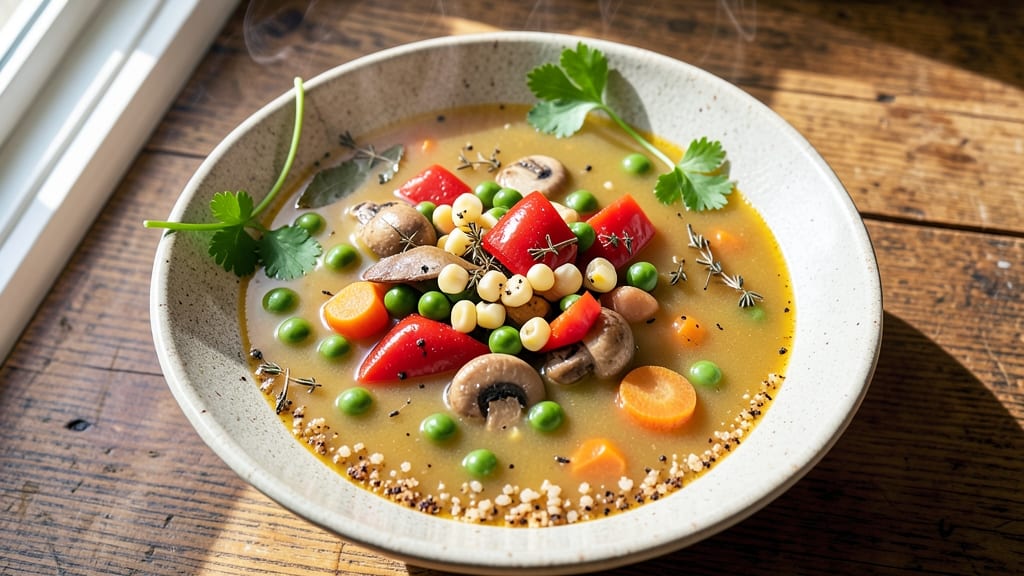
This 8-can vegetable soup recipe transforms pantry staples into a hearty, freezer-friendly meal that’s ready in under an hour. The beauty lies in its flexibility—swap any 8 cans of vegetables (beans, corn, carrots, tomatoes) for a soup that’s always packed with flavor and texture.
I developed this recipe during a particularly busy season when I needed a reliable, no-fuss dinner that could be prepped ahead and reheated without losing quality.
The secret to depth lies in building flavor through a simple broth base—bouillon cubes, garlic powder, and a splash of vinegar brighten the mix while herbs like thyme and bay leaves add aromatic complexity.
Unlike many canned soup recipes, this one simmers long enough to let flavors meld without turning mushy. The result? A rich, satisfying soup that’s equally at home on a chilly evening or as a freezer staple for lazy days.
What makes this recipe stand out is its versatility—use it as a standalone meal or pair it with crusty bread for dipping. The texture is perfect: tender vegetables hold their shape while the broth absorbs all the seasoning, creating a harmonious balance.
Best of all, it freezes beautifully, making it ideal for batch cooking.
Ready in 30 minutes and designed for minimal cleanup, this soup proves that comfort food doesn’t require complicated techniques. Whether you’re feeding a family or prepping for the week, this one-pot wonder delivers restaurant-quality results with zero fuss. Let’s get cooking!
Ingredients for 8 can vegetable soup
Pantry staples and 8 cans of vegetables transform into a hearty, freezer-friendly soup in one pot.
| Ingredient | Amount | Notes |
|---|---|---|
| Vegetable Broth 💧 | 4 cups | Low-sodium preferred for flavor control |
| Vegetable Cans 🥕 | 8 cans | Any mix of beans, corn, carrots, tomatoes |
| Garlic Powder 🧄 | 1 tbsp | Freshly ground preferred |
| Onion Powder 🧅 | 1 tbsp | For depth of flavor |
| Dried Thyme 🌿 | 1 tsp | Or 1 tbsp fresh thyme leaves |
| Bay Leaves 🍃 | 2 whole | Remove before serving |
| White Vinegar 🍋 | 1 tbsp | Brightens the broth |
| Vegetable Bouillon Cubes 🧂 | 2 cubes | Knorr or similar brand |
| Salt 🧂 | 1 tsp | Adjust to taste |
| Black Pepper 🌶️ | ½ tsp | Freshly ground preferred |
| Olive Oil 🫒 | 1 tbsp | For sautéing aromatics |
| Crusty Bread 🍞 | 6 slices | For serving or dipping |
The vegetable cans are the star here—any mix of beans, corn, carrots, or tomatoes works, but low-acid varieties like green beans or wax beans hold up best in the freezer. Trader Joe's and Costco often have great bulk options, and I always check the 'best by' date to avoid canned veggies that taste flat. For the bouillon cubes, Knorr Vegetable is my go-to—they dissolve smoothly and add just the right depth without overpowering. If you're using dried beans instead of canned, soak them overnight for even better texture.
No vegetable broth? Water plus an extra bouillon cube works in a pinch, though the flavor won't be as rich. Fresh thyme is ideal, but dried at one-third the amount is perfectly fine—just make sure it's labeled 'culinary' and not 'ornamental'. The white vinegar might seem odd, but it cuts through the canned veggie's metallic taste, brightening everything. For extra umami, add a dash of soy sauce or miso paste—it disappears into the soup but makes a huge difference. And if you're short on time, skip the sautéing step entirely—the soup still turns out delicious.
This soup freezes beautifully—portion into 2-cup containers for easy reheating. Label with the date, and it keeps for up to 3 months without losing quality. For serving, I like toasting the crusty bread with garlic butter while the soup reheats—sourdough or a good baguette works best. Leftovers reheat perfectly in the microwave or on the stovetop, though I always add a splash of water or broth to keep it from getting too thick. The longer it sits, the better the flavors meld—trust me on this.
Why You'll Love This Recipe
- No-Chop Necessary: I swear by this—just open cans, dump, and stir. The broth and seasonings do all the work while you sip your coffee or scroll through your phone.
- Hidden Depth: That pinch of garlic and thyme? It turns a basic canned mix into something real—earthy, warm, and way more complex than you’d expect from pantry staples.
- Budget Magic: Eight cans of veggies stretch for days—feed a family for under $10, and still have leftovers for lunches. (Yes, even on a Tuesday night.)
Step-by-step instructions for 8-Can vegetable soup
This hearty soup comes together in under 30 minutes using pantry staples.
Sauté Aromatics in Olive Oil
Heat the 1 tablespoon olive oil in a large pot over medium heat. Once shimmering, add the 1 tablespoon garlic powder and 1 tablespoon onion powder, stirring constantly for 30 seconds until fragrant. This step builds the flavor foundation—don't skip it or the soup will taste flat.
Add the 2 whole bay leaves and 1 teaspoon dried thyme, stirring for another 10 seconds to toast the spices. You'll notice the kitchen fills with an earthy aroma—this means the spices are releasing their oils and flavors. Keep the heat at medium to prevent burning while allowing the spices to bloom fully.
Deglaze with Vinegar and Add Broth
Pour in the 1 tablespoon white vinegar and stir vigorously for 1 minute. The vinegar brightens the flavors and helps dissolve any browned bits from the spices. You'll see the mixture bubble slightly—this is normal and indicates the acid is working.
Next, add the 4 cups vegetable broth and 2 vegetable bouillon cubes, stirring until the bouillon dissolves completely. Bring the mixture to a gentle boil over high heat, then immediately reduce to a simmer. This step ensures the broth is fully integrated and ready for the vegetables.
Add Vegetables and Simmer
Open all 8 cans of vegetable cans (beans, corn, carrots, tomatoes, or your preferred mix) and drain them, reserving 1 cup of liquid from the cans. Add the drained vegetables to the pot and stir gently to combine. Pour in the reserved 1 cup liquid to maintain moisture.
Return the soup to a gentle simmer and cook uncovered for 15-20 minutes, stirring occasionally. You'll see the vegetables soften and the flavors meld together. If the soup becomes too thick, add ½ cup water to reach your desired consistency. The bay leaves will infuse subtle herbal notes—remove them before serving.
Season and Finish
Taste the soup and adjust seasoning with 1 teaspoon salt and ½ teaspoon black pepper. Stir well to distribute the flavors evenly. The soup should be well-seasoned but not overly salty—remember, the bouillon cubes already contribute saltiness.
Let the soup sit off heat for 5 minutes to allow the flavors to settle. This resting period ensures the spices and vegetables fully meld, creating a cohesive taste. Serve hot with 6 slices crusty bread for dipping or alongside.
Pro Tips For Making 8 Can Vegetable Soup
- SAUTÉ THE SPICES FIRST: Dried thyme and powders burn faster than you’d think. Toss them into a dry pot over medium heat for 30 seconds before adding broth—just until the garlic and onion powders release their aroma. This avoids that sad, bitter aftertaste that ruins a whole pot.
- DRAIN AND RINSE THE CANS: That syrupy liquid in veggie cans? It’s basically sugar water. Drain and give the veggies a quick cold-water rinse to cut the cloying sweetness—especially with corn or carrots. Trust me, your soup won’t taste like a dessert.
- SIMMER LOW AND LONG: Skipping the 20-minute simmer? You’re missing flavor. After dumping everything in, keep it at a gentle bubble—just small ripples breaking the surface. This lets the thyme and powders infuse properly, not just sit there looking pretty.
- ADD A SPLASH OF ACID: Your cans are packed in brine or syrup, so the soup can taste flat. A tablespoon of lemon juice or vinegar brightens the whole thing—especially if you’re using heavy veggies like green beans or peas. Do it at the end, or the acid will cook off.
Troubleshooting your 8 can vegetable soup
Mushy Vegetables Fix
If your vegetables turn mushy during simmering, reduce the cook time to 10-12 minutes instead of 15-20. Tougher veggies like carrots or green beans hold up better than delicate ones like corn or peas.
For extra firmness, add ½ cup frozen peas in the last 5 minutes—they’ll thaw and stay bright. 🌱
Broth Too Thin?
Thin broth? Simmer uncovered for 5-10 extra minutes to reduce. If it’s still too watery, mash ½ cup of the drained beans (like white beans or chickpeas) into the pot—the starch thickens the soup instantly. For a smoother texture, blend 1 cup of soup and stir it back in. 🥄
Flat or Metallic Taste
Canned veggies can taste metallic or bland. Boost flavor by adding 1 teaspoon soy sauce or ½ teaspoon smoked paprika during simmering. A splash of lemon juice (instead of vinegar) brightens the broth without overpowering. For depth, toast ½ teaspoon cumin seeds in the olive oil before adding spices. 🌶️
Freezer Texture Issues
If thawed soup is grainy or watery, reheat it slowly on low heat, stirring often. For smoother texture, blend ½ cup of the soup before reheating.
To prevent ice crystals, freeze in flat containers (like Pyrex) and leave 1-inch headspace. Label with the date—it’s safe for 3 months! ❄️
Bitter or Overly Salty
Too salty? Add 1-2 cups of water or broth and simmer to dilute. For bitterness, stir in 1 teaspoon sugar or ½ teaspoon honey to balance. If using bouillon cubes, opt for low-sodium versions—they’re easier to adjust. Taste as you go! 🧂
Uneven Heating
Large pots can have hot spots. Stir every 2-3 minutes while simmering to distribute heat evenly. For extra insurance, place the pot on the back burner of your stove. If using an induction burner, a heavy-bottomed pot (like All-Clad) prevents hot spots. 🔥
Nutrition facts
Frequently asked questions
Can I use fresh vegetables instead of canned?
Yes, but you'll need to adjust the cooking time and prep work. Fresh veggies like carrots, celery, and potatoes should be chopped and sautéed first for 5 minutes before adding broth. Delicate veggies like zucchini or spinach go in during the last 5 minutes to prevent mushiness.
How do I make this soup spicier?
Add ½ teaspoon cayenne pepper or 1 teaspoon chili powder during the sauté step. For heat with depth, stir in 1 diced jalapeño or 1 tbsp hot sauce at the end. Top with fresh cilantro or a squeeze of lime for brightness.
What's the best way to reheat frozen soup?
Thaw overnight in the fridge, then reheat on the stovetop over medium-low heat, stirring often. For microwave reheating, use 50% power and stir halfway through. Always add 2-3 tbsp water or broth to prevent thickening. Stir in fresh herbs after heating.
Can I make this soup in an Instant Pot?
Sauté spices in 1 tbsp oil for 1 minute, then add broth, bouillon, and vinegar. Cook on High Pressure for 3 minutes, then add veggies and pressure cook for 1 more minute. Quick release, then adjust seasoning. The Instant Pot version is ready in 15 minutes total.
What if I don't have vegetable broth?
Use 4 cups water plus 3 bouillon cubes for a similar flavor. For extra richness, add 1 cup tomato sauce or ½ cup coconut milk at the end. The vinegar will still brighten the broth, balancing any flatness.