
Soups & Stews
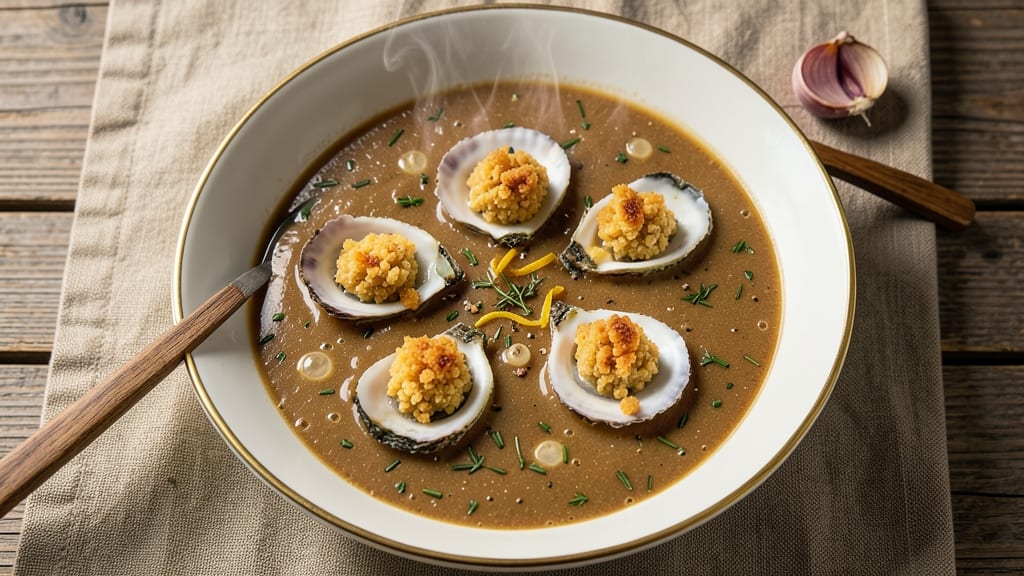
This Acme Oyster Rockefeller Soup transforms classic seafood flavors into a velvety, restaurant-worthy velout with golden bread crowns. The secret lies in perfectly seared oysters, a rich roux base, and crispy breadcrumbs that add texture without overpowering the delicate seafood.
I developed this recipe after years of refining techniques to balance creamy richness with the briny freshness of oysters—every spoonful delivers that luxurious restaurant experience at home.
The foundation begins with a proper roux—equal parts butter and flour cooked until nutty brown—before adding shallots, garlic, and thyme for aromatic depth. Fresh oysters are quickly seared in batches to maintain their natural sweetness, then folded into the velouté for a luxurious texture.
The crispy bread crowns, made from toasted breadcrumbs and butter, provide a satisfying crunch that contrasts beautifully with the creamy soup.
What you’ll end up with is a soup that’s both elegant and comforting—silky, flavorful, and topped with perfectly crispy bread crowns that stay crunchy even after dipping. The balance of creamy sauce, tender oysters, and aromatic herbs makes this dish feel special without requiring advanced techniques.
It’s the kind of recipe that elevates a weeknight dinner into something memorable.
Whether serving for a dinner party or a cozy night in, this soup delivers restaurant-quality results with minimal fuss. The key is patience—letting the roux develop properly and searing the oysters just until they’re tender ensures every bite is perfect. Here’s how to make it.
Ingredients for acme oyster rockefeller soup
Luxurious seafood soup with velvety texture and crispy bread crowns—elevate your weeknight dinner effortlessly.
| Ingredient | Amount | Notes |
|---|---|---|
| Fresh Oysters 🦪 | 1 ½ lb | Shucked, liquid reserved |
| Unsalted Butter 🧈 | ½ cup | European-style preferred |
| All-Purpose Flour 🌾 | ½ cup | For roux base |
| Shallots 🧅 | 4 whole | Finely minced |
| Garlic Cloves 🧄 | 4 cloves | Minced, fresh preferred |
| Fresh Thyme 🌿 | ¼ cup | Leaves only, chopped |
| Heavy Cream 🥛 | 2 cups | Full-fat for richness |
| Vegetable Stock 💧 | 4 cups | Homemade or high-quality |
| Dry White Wine 🍷 | ½ cup | Sauvignon Blanc preferred |
| Fresh Parsley 🌿 | 0.1 cup | Chopped, for garnish |
| Parmesan Cheese 🧀 | ¼ cup | Freshly grated |
| Baguette 🍞 | 1 whole | Crusts removed, torn |
| Diamond Crystal Kosher Salt 🧂 | 1 ½ tsp | For seasoning |
| Ground Black Pepper 🌶️ | ½ tsp | Freshly cracked |
| Lemon Zest 🍋 | 1 tsp | Bright, organic preferred |
The oysters are the heart of this dish, so prioritize freshness. Local seafood markets or high-end grocery stores like Whole Foods carry the freshest shucked oysters—look for plump, glossy shells that close tightly when tapped. The butter matters too: European-style (like Plugrá) has higher fat content, which creates a richer roux. Shallots should be firm and pale, not sprouting or discolored. For the wine, Sauvignon Blanc adds a crisp brightness that cuts through the creaminess, but any dry white will work. Fresh thyme and parsley should smell vibrant—dried herbs won't deliver the same aromatic depth.
No fresh oysters? Frozen shucked oysters work in a pinch, but thaw them thoroughly and drain well. Substitute shallots with 1/2 cup finely diced yellow onion if needed, though the flavor won't be identical. For a dairy-free version, replace the heavy cream with full-fat coconut milk, though the texture will be slightly lighter. The breadcrumbs for the crowns can be made from any sturdy bread—day-old sourdough adds a tangy note. If you're short on time, panko breadcrumbs work too, though they'll be less rustic. The lemon zest adds brightness—if you're out, a splash of fresh lemon juice at the end will do, but zest is ideal for that subtle floral note.
This soup tastes even better the next day as flavors meld. Store the base (without bread crowns) in an airtight container for up to 3 days—the bread crowns can be made fresh when serving. For longer storage, freeze the soup base (without oysters) for 2 months, then sear fresh oysters and assemble when ready to eat. The bread crowns crisp up beautifully when reheated in a dry skillet for 2-3 minutes. Garnish with extra parsley and a crack of black pepper just before serving—this is where the dish truly shines.
Why You'll Love This Recipe
- No-Fuss Roux Magic: I swear by that butter-and-flour roux—it’s the secret sauce here. Just melt the butter, whisk in the flour, and let it simmer until it smells like heaven. No fancy techniques, just pure, velvety base work.
- Briny Meets Buttery Bliss: That first bite? The briny oysters balanced by rich, toasted butter—it’s like the ocean and a bakery had a love affair. The shallots and garlic? They’re the flirty sidekicks making everything sing.
- Weeknight to Dinner Party: Honestly, this soup is my lazy night and my "impress the in-laws" dish. Same recipe, different vibes—just add crusty bread for casual, garnish with parsley for fancy. Works every time.
- Leftovers That Don’t Suck: Between us, most soups turn sad the next day. Not this one. The flavors deepen, and the roux keeps it creamy. I make a double batch, freeze half, and thank my future self later. Zero waste, all win.
Step-by-step instructions for acme oyster Rockefeller soup
Here's the refined method for crafting velvety oyster Rockefeller soup with signature crispy bread crowns.
Prepare the Oyster and Bread Components
Begin by shucking the 1.5 lb fresh oysters carefully, reserving all the briny liquid. I like to use a sturdy oyster knife and work on a damp towel to prevent slipping. Transfer the shucked oysters to a bowl and set aside the reserved liquid—it contains essential flavor that will be incorporated later.
While the oysters rest, prepare the bread crowns by removing the crusts from the whole baguette and tearing it into 1-inch pieces. Toss these with 1.5 tsp diamond crystal kosher salt and 0.5 tsp ground black pepper, then spread them evenly on a baking sheet. Toast in a 425°F oven for 8-10 minutes until they turn a deep golden brown and crisp. Keep them warm while you prepare the soup base.
Build the Velouté Base with Shallots and Wine
In a large Dutch oven, melt the 0.5 cup unsalted butter over medium heat until it foams. Add the 4 whole shallots and 4 cloves garlic cloves, cooking them gently for 8-10 minutes until they soften and turn translucent. This slow cooking ensures they caramelize slightly, adding depth to the soup.
Deglaze the pan immediately with the 0.5 cup dry white wine, scraping up all the browned bits from the bottom. This step is critical—those fond particles carry concentrated flavor. Let the wine reduce by half before adding the 4 cups vegetable stock. Bring the mixture to a gentle simmer and let it cook uncovered for 10 minutes to develop the base flavors.
Create the Roux and Incorporate Oysters
Reduce the heat to low and gradually whisk in the 0.5 cup all-purpose flour to form a smooth roux. Cook this mixture for 3-5 minutes, stirring constantly, until it turns a pale golden color. This ensures proper thickening without developing a bitter taste. Slowly pour in the 2 cups heavy cream, whisking vigorously to prevent lumps from forming.
Add the shucked oysters and their reserved liquid to the velouté, along with the 0.25 cup chopped fresh thyme and 1 tsp lemon zest. Simmer gently for 5-7 minutes until the oysters curl slightly and the soup thickens to a luxurious consistency. Taste and adjust seasoning with additional salt if needed—this step ensures the soup is properly balanced before finishing.
Finish with Cream and Garnish
Remove the soup from heat and stir in the 0.25 cup freshly grated parmesan cheese and 0.1 cup chopped fresh parsley. The cheese should melt completely, adding a nutty richness to the velouté. Ladle the soup into warmed bowls, placing 2-3 crispy bread crowns on top of each serving. The contrast between the creamy soup and crispy bread is what makes this dish extraordinary.
Serve immediately while the bread remains crisp and the soup is piping hot. The combination of tender oysters, velvety velouté, and golden bread crowns creates a luxurious dining experience that's both elegant and satisfying. Each spoonful should deliver a perfect balance of briny oyster, rich cream, and aromatic thyme.
Pro Tips For Making Acme Oyster Rockefeller Soup
- Sweat Shallots Low: I learned this the hard way—if you rush the shallots, they’ll burn before the garlic even gets a chance to sing. Keep the heat at a true simmer, not a sizzle, and let them cook for 8-10 minutes until they’re jammy and translucent. That’s when the flavor actually builds, not when they’re just browned.
- Shuck Oysters Fresh: Don’t use oysters that’ve been sitting in the fridge for days, even if they’re still "good." The fresher, the better—their briny snap is what makes this soup sing. Shuck them right before adding to the pot, and save the liquor (that’s the juice) for a splash at the end if you’re feeling fancy.
- Skip the Cold Butter: I was skeptical until I tried it: pull the unsalted butter out of the fridge 20 minutes before you need it. Cold butter makes a beater roux, and that’s the last thing you want in a creamy Rockefeller. Let it soften so it melts smoothly into the flour—your soup’s richness depends on it.
- Taste Before the Cheese: Yes, even if you’re impatient like me, stop before you add the cheese to taste the broth. The soup needs to be seasoned right—too much salt now means you’ll regret it later. A pinch of cayenne or a splash of lemon at this stage makes all the difference, and you won’t have to fix it after the cheese goes in.
Wine and beer pairings for this acme oyster rockefeller soup
White Wine Essentials
A crisp, dry Sauvignon Blanc is my go-to pairing for this soup—its bright acidity cuts through the creamy richness while complementing the briny oysters. Look for a bottle from New Zealand or Loire Valley with notes of citrus and green apple.
Serve slightly chilled (45-50°F) to enhance its refreshing qualities. 🍷
If you prefer something lighter, a Pinot Grigio from Alto Adige offers a clean, mineral finish that won’t overpower the dish. Avoid heavy white wines like Chardonnay—their buttery notes clash with the delicate oyster flavor. I always keep a bottle of Kim Crawford Sauvignon Blanc on hand for special occasions.
Red Wine Surprises
Yes, you can pair this soup with red wine—just choose carefully! A light-bodied Pinot Noir from Oregon or Burgundy works beautifully, with its red fruit notes and silky tannins. Serve it at 60-65°F to let its earthiness shine alongside the thyme and shallots. 🍇
Avoid bold reds like Cabernet Sauvignon—their intensity will dominate the soup’s delicate flavors. Instead, opt for a Gamay from Beaujolais, which offers a juicy, low-tannin profile that pairs surprisingly well with the creamy oyster texture.
Beer Pairings
For beer lovers, a Belgian Witbier like Hoegaarden is a fantastic match—its coriander and citrus notes balance the soup’s creaminess. Serve it well-chilled (40-45°F) to highlight its effervescence. Alternatively, a German Helles Lager offers a neutral, crisp backdrop that lets the soup’s flavors shine. 🍺
If you prefer something bolder, try a German Dunkelweizen—its malty sweetness and subtle spice complement the caramelized shallots and thyme. Just avoid heavy stouts or IPAs, which would overpower the dish.
Non-Alcoholic Options
A sparkling ginger beer like Feather's adds a refreshing fizz that cleanses the palate between spoonfuls. Its ginger notes also echo the lemon zest in the soup.
For a non-carbonated option, try a cucumber-mint infused water—muddle 4 cucumber slices and 6 mint leaves with 1 tbsp honey and 1 cup cold water for a bright, herbal sipper. 💧
Herbal teas like hibiscus or jasmine green tea served warm provide a comforting contrast to the creamy soup. The tartness of hibiscus enhances the oyster’s brininess, while jasmine tea’s floral notes complement the thyme.
Nutrition facts
Frequently asked questions
Can I substitute fresh oysters with frozen in this recipe?
Yes, but with care! Use shucked frozen oysters that have been fully thawed and drained well. The texture won't be identical to fresh, but they'll still work. For best results, sear them in batches for 1-2 minutes per side until just opaque—overcooking makes them rubbery.
Why does my soup look too thin even after thickening?
This usually happens if the roux wasn't cooked long enough or if you added liquid too quickly. For a proper velouté, cook the butter-flour mixture until it's a pale golden color (3-5 minutes) before adding cream. If it's still too thin, whisk in 1 tsp cornstarch mixed with 1 tbsp cold water to finish.
How do I make the bread crowns extra crispy?
Toast them at 425°F for 10-12 minutes until deep golden brown, stirring halfway. For extra crunch, spread them in a single layer and bake until they're almost too crisp to handle. Store any leftovers in an airtight container—they'll stay crisp for 2-3 days. Re-crisp in a dry skillet for 1-2 minutes before serving.
Can I make this soup ahead of time?
Prepare the soup base (without oysters) up to 3 days ahead and store it in an airtight container. When ready to serve, sear fresh oysters and reheat the soup gently. For the bread crowns, make them fresh or reheat in a 350°F oven for 5 minutes to restore crispness. The flavors actually improve overnight!
What's the secret to keeping the oysters tender?
Sear them in batches over medium-high heat for just 1-2 minutes per side until they curl slightly. Avoid overcooking—they should remain tender with a slight bite. Work quickly and keep them warm in a bowl while finishing the soup. The reserved oyster liquid adds briny depth, so don't skip it!