
Soups & Stews
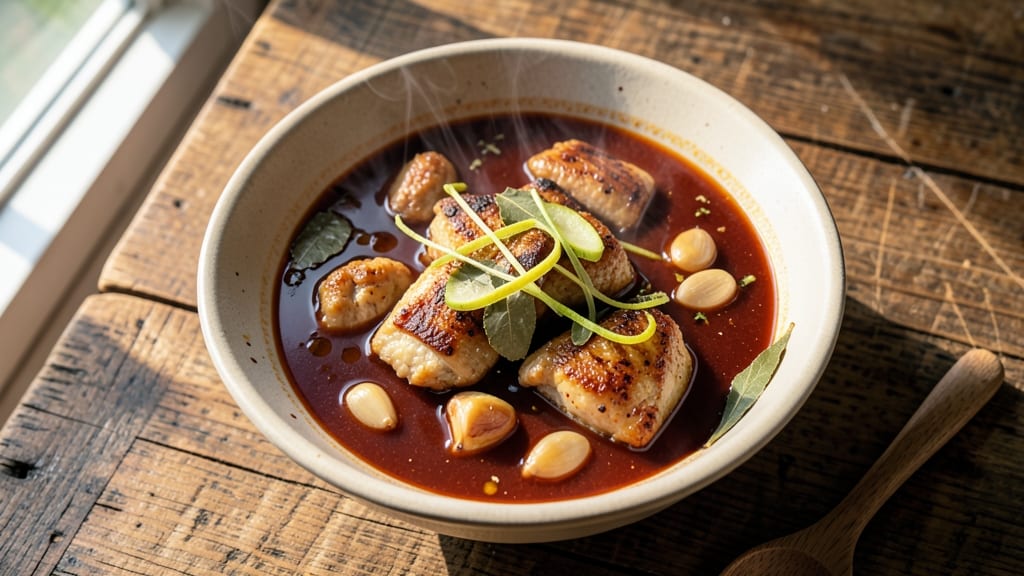
This Filipino adobo soup recipe transforms simple ingredients into a tangy, umami-rich masterpiece that captures the heart of Filipino home cooking.
The secret lies in slow-braising chicken with vinegar and soy sauce, creating a sauce that's both bold and balanced—where crispy garlic bites add texture that makes every spoonful unforgettable.
After perfecting this dish over countless batches, I can confidently say this is the one adobo recipe that delivers restaurant-quality depth at home.
The magic happens in the braising process, where chicken simmers until fork-tender while absorbing the complex flavors of vinegar, soy sauce, and aromatic spices.
Unlike quick stir-fries, this method develops layers of taste that come together over time—crispy garlic cloves toasted in the same pot add a satisfying crunch that contrasts beautifully with the velvety broth. The result?
A soup that's equally comforting as a main dish or side, with enough richness to satisfy even the most discerning palates.
What sets this adobo soup apart is its perfect balance of acidity, saltiness, and sweetness—achieved without any added sugar. The vinegar tenderizes the chicken while building depth, while the soy sauce adds umami that rounds out the tang.
Each bite delivers crispy garlic, tender meat, and a sauce that clings perfectly to every ingredient. This isn't just soup; it's a flavor experience that transports you straight to a Filipino kitchen.
Whether you're serving it with steamed rice or crusty bread, this adobo soup stands up as a complete meal. The leftovers actually improve overnight as flavors meld further, making it ideal for meal prep.
For those who prefer plant-based options, I'll share a simple substitution that maintains the dish's signature tangy profile without compromising texture. Let's get cooking—your taste buds will thank you.
Ingredients for adobo soup
Simple ingredients that pack a punch of Filipino flavor—crispy garlic and tangy vinegar make this dish unforgettable.
| Ingredient | Amount | Notes |
|---|---|---|
| Boneless Chicken Thighs 🍗 | 1 ½ lb | Cut into even-sized pieces |
| White Vinegar 💧 | ½ cup | Not apple cider vinegar |
| Soy Sauce 🍶 | ⅓ cup | Regular or light soy |
| Garlic Cloves 🧄 | 8 whole | Unpeeled for crispy bites |
| Fresh Ginger 🌿 | 2 tbsp | Finely grated, fresh preferred |
| Bay Leaves 🍃 | 2 whole | Dried, crumbled after cooking |
| Black Peppercorns 🌶️ | ½ tsp | Crushed, not ground |
| Olive Oil 🫒 | 2 tbsp | Extra-virgin for richness |
| Onion 🧅 | 1 whole | Yellow or white, sliced |
| Salt 🧂 | 1 ½ tsp | Kosher or sea salt |
| Sugar 🍯 | 1 tbsp | White granulated |
| Green Onions 🧅 | 3 whole | Sliced, for garnish |
| Long-Grain White Rice 🍚 | 1 ½ cups | Uncooked, for serving |
The chicken thighs are non-negotiable here—bone-in would work, but thighs stay juicier than breasts during the long braise. Look for fresh, plump thighs at the meat counter, not pre-marinated or frozen. For the garlic, whole cloves are key—they toast beautifully in the oil and add that signature crunch. I grab mine from the Asian market where they're often sold in bulk, but the regular grocery store works too. The ginger? Freshly grated makes all the difference—pre-grated loses its punch fast. If you're short on time, powdered ginger at half the amount gets you close.
No soy sauce? Coconut aminos work in a pinch, though the flavor will be slightly different. Running low on vinegar? Lemon juice plus a pinch of sugar mimics the tang. The sugar in this recipe isn't about sweetness—it's what helps caramelize the garlic and balance the acidity. Brown sugar works too, but white keeps things clean. For the garlic, roast it whole in the oil until golden—don't skip this step! The bay leaves add depth but can be omitted if you're sensitive to their flavor. And if you're making this ahead, double the garlic—leftovers taste even better the next day.
This soup tastes better the second day—plan ahead. Store in an airtight container in the fridge for up to 4 days, or freeze for 3 months. The rice? Cook it fresh when serving—steamed just before eating keeps it light. For extra crispy garlic, toast fresh cloves in a dry pan for 2 minutes before adding to the pot. And if you're serving a crowd, double the batch—it reheats beautifully. The leftovers make amazing lunches or rice bowl toppings.
Why You'll Love This Recipe
- Few Pantry Staples: I swear by this one—just vinegar, soy sauce, and a few cloves of garlic. No fancy ingredients, no last-minute grocery runs. The chicken thighs practically melt in the simmer, and the ginger adds that warm kick without extra fuss.
- Tangy-Savory Magic: That vinegar-soy combo is where it gets real. The chicken soaks up the bold flavors, but it’s balanced—never overpowering, just ridiculously good. Honestly, I make it just to drink the broth.
- Leftover Goldmine: This soup tastes even better the next day. I double the batch on Sundays, and by Wednesday, it’s still my go-to. Freeze half if you’re feeling extra—just reheat and serve. My lazy days thank me.
- Budget-Friendly Feast: Chicken thighs are cheap, and the spices cost pennies. A single batch feeds four for under $10, and I’ve never had complaints. Between us? This is my secret weapon for stretching groceries without sacrificing flavor.
Step-by-step instructions for Filipino adobo soup
Here's how to make this comforting, tangy chicken soup with perfectly crispy garlic.
Prepare the Chicken and Aromatics
Cut the 1.5 lb boneless chicken thighs into even-sized pieces, about 1-inch thick. This ensures they cook uniformly and absorb all that delicious adobo flavor. In a large bowl, combine the chicken with 0.5 cup white vinegar, 0.33 cup soy sauce, 1.5 tsp salt, 1 tbsp sugar, 2 tbsp fresh ginger (finely grated), 2 whole bay leaves, and 0.5 tsp crushed black peppercorns. Mix gently but thoroughly so every piece of chicken gets coated in the marinade.
Let the chicken marinate at room temperature for 15 minutes—this jumpstarts the flavor infusion. While it marinates, peel 8 whole garlic cloves but leave them whole for crispy bites later. Slice the 1 whole onion into ¼-inch thick rounds and set aside.
Sear the Chicken for Maximum Flavor
Heat 2 tbsp olive oil in a large pot or Dutch oven over medium-high heat until shimmering. Working in batches if needed, add the marinated chicken pieces and sear for 3-4 minutes per side until golden brown and slightly crispy. Don't crowd the pan—this prevents steaming and ensures a good sear.
Once all the chicken is browned, transfer it to a plate and set aside. In the same pot, add the sliced onion and cook for 3-4 minutes until softened and slightly caramelized. This step builds deep, savory flavors that form the base of your soup.
Simmer the Adobo Soup
Return the seared chicken to the pot along with any accumulated juices. Pour in just enough water to cover the chicken by about ½ inch—you want enough liquid to create a rich broth without diluting the adobo flavors. Bring the mixture to a gentle boil over medium-high heat, then reduce heat to low and let it simmer uncovered for 30-35 minutes. This slow cooking allows the chicken to become tender while the flavors meld beautifully.
After 20 minutes, add the 8 whole garlic cloves to the pot. They'll cook gently in the broth and become crispy and golden—this is what gives adobo its signature texture. You'll know they're ready when they're easily pierced with a fork and have turned a deep golden color. Skim off any foam that rises to the surface during simmering for a cleaner broth.
Finish and Serve
Once the chicken is fork-tender (it should pull apart easily) and the broth has reduced slightly, remove the 2 whole bay leaves and discard them. Taste the broth and adjust seasoning if needed—you might want to add a splash more soy sauce for saltiness or a bit more white vinegar for tang. The balance should be savory, tangy, and slightly sweet with a hint of heat from the peppercorns.
To serve, ladle the hot adobo soup over 1.5 cups cooked long-grain white rice in bowls. Garnish each serving with 3 sliced green onions for freshness and color. The crispy garlic cloves should be distributed throughout the soup—each bite should deliver that satisfying crunch alongside the tender chicken and rich broth.
Pro Tips For Making Adobo Soup
- Brown the Chicken First: Skip the direct simmer—sear the chicken thighs in a hot pan for 3-4 minutes per side until golden. That crust locks in flavor and keeps them from turning rubbery when the vinegar hits. (Yes, even if you’re impatient like me, wait for the color.)
- Use Aged Soy Sauce: Swap regular soy sauce for a dark or aged variety—it’s sweeter, richer, and cuts through the vinegar’s sharpness better. I learned this the hard way after making adobo that tasted like a science experiment.
- Simmer Vinegar Low and Slow: After adding vinegar, reduce heat to a bare simmer. Boiling too hard evaporates the acid too fast, leaving your soup tasting flat. Think "gentle bubbles," not "rolling boil."
- Mince Ginger Like You Mean It: No need for a food processor—just finely chop the ginger with a sharp knife until it’s almost paste-like. This ensures it dissolves into the broth instead of sitting as chunks. (Your future self will thank you.)
Dietary considerations for this adobo soup
Vegetarian Adaptation
Swap the chicken for 1.5 lbs extra-firm tofu pressed for 30 minutes to remove excess water. Cut into 1-inch cubes and pan-fry in 2 tbsp olive oil until golden before adding to the pot.
Use 1 cup coconut milk instead of water to deepen the broth's richness. The tofu absorbs the adobo flavors beautifully, creating a satisfying texture that mimics meat. 🌱
Gluten-Free Option
Replace the soy sauce with ½ cup coconut aminos or tamari to keep the dish gluten-free while maintaining umami depth. Both alternatives work well, though tamari has a slightly more complex flavor profile.
Check labels to ensure no cross-contamination with gluten-containing products. The rest of the recipe remains unchanged, delivering that signature tangy punch without compromising texture. 💛
Low-Sodium Version
Reduce the salt to just ½ tsp and use low-sodium soy sauce (or coconut aminos) to cut sodium by nearly half. Boost flavor with an extra 1 tbsp grated ginger and 1 tsp fish sauce (if not avoiding seafood) for depth.
The vinegar's acidity helps balance the reduced saltiness while keeping the dish vibrant and satisfying. 🏥
Spice Adjustments
For heat lovers, add ½ tsp ground white pepper or 1-2 slices of fresh chili (like siling labuyo) during the final 5 minutes of simmering. For milder versions, omit the black peppercorns entirely and rely on the garlic's natural aroma.
The vinegar's sharpness naturally complements spice levels, so adjust gradually to avoid overpowering the dish. 🌶️
Allergy Considerations
This recipe is naturally dairy-free and egg-free, making it safe for common allergies. For nut-free kitchens, ensure all ingredients (like soy sauce) are processed in nut-free facilities.
The garlic and ginger are the only potential cross-contaminants—opt for certified allergen-free brands if needed. Always check labels on store-bought ingredients for hidden allergens. ✨
Nutrition facts
Frequently asked questions about Filipino adobo soup
Can I use chicken breast instead of thighs for this adobo?
While you can use chicken breast, thighs are ideal because they stay juicier during the long braising time. If using breast, cut into ½-inch thick pieces and add them 10 minutes earlier than the thighs to prevent drying out. For extra moisture, add 2 tbsp water during the final 5 minutes of simmering.
What can I substitute if I don't have white vinegar?
Use ½ cup lemon juice plus 1 tsp sugar for a milder tang, or ¼ cup apple cider vinegar if that's all you have. The sugar helps mimic the balance of traditional adobo. For a deeper flavor, add ½ tsp fish sauce to compensate for the vinegar's acidity.
How do I fix adobo that's too salty?
Add ½ cup water or chicken broth and simmer uncovered for 10 minutes to dilute the salt. For stronger flavor, stir in 1 tbsp grated ginger or 1 tsp fish sauce to enhance umami. Avoid adding potatoes or other starches—they'll absorb excess saltiness unevenly.
Can I make this soup ahead of time?
Yes! This adobo tastes even better the next day as flavors meld further. Store in an airtight container in the fridge for up to 4 days or freeze for 3 months. Reheat gently on low heat, adding 2 tbsp water if the broth thickens too much. The garlic will stay crispy if reheated slowly.
Why is my adobo not tangy enough?
You may need more vinegar or longer simmering. Try adding 2 tbsp extra white vinegar during the last 10 minutes of cooking. For deeper tang, simmer uncovered for 5-10 extra minutes**—this lets the acidity concentrate. Also check your vinegar's strength: use distilled white vinegar (5% acidity) for best results.