
Soups & Stews
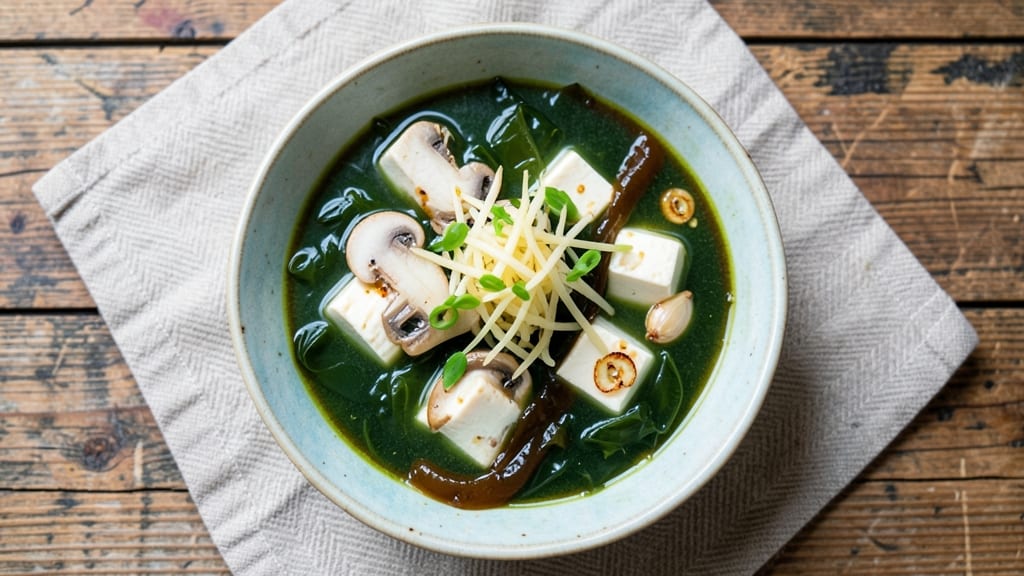
This umami-rich algae soup transforms sea vegetables into a silky, nutrient-packed elixir that rivals traditional broths. 💛 The key lies in properly preparing the algae—whether dried wakame, nori, or arame—through careful soaking and rinsing to unlock its natural briny depth.
What sets this recipe apart is how it balances earthy algae with complementary ingredients like mushrooms, tofu, and fresh herbs, creating a harmonious flavor profile that's both comforting and sophisticated.
The foundation begins with a vegan-friendly broth, where fermented miso or kombu (seaweed) serves as the umami backbone, while aromatics like ginger and garlic build complexity. Unlike conventional soups, this version relies on the algae's natural gelatinous qualities when simmered properly, resulting in that signature silky texture without added thickeners.
The process is methodical but rewarding—each step enhances the soup's depth while maintaining its clean, mineral-driven profile.
What you'll achieve is a soup that's equal parts nourishing and indulgent—rich enough to satisfy yet light enough for any meal. The algae contributes not just flavor but also a nutritional powerhouse of iodine, calcium, and antioxidants, making this more than just a dish.
Perfect for vegans, seafood lovers seeking plant-based alternatives, or anyone curious about sea vegetables, this recipe proves umami can be both elegant and accessible.
For those eager to experiment, variations abound: add coconut milk for a tropical twist, ferment the algae first for deeper funk, or incorporate local sea vegetables to customize the flavor. The beauty lies in its adaptability while maintaining that essential algae-forward essence. Let's create this transformative soup together.
Ingredients for algae soup
Four ounces of wakame and kombu transform into a velvety broth with mushrooms and tofu for hearty texture.
| Ingredient | Amount | Notes |
|---|---|---|
| Dried Wakame Seaweed 🌿 | 4 oz | Rinsed thoroughly before use |
| White Mushrooms 🍄 | 8 oz | Sliced into 1/4-inch pieces |
| Firm Tofu 🧀 | 1 lb | Pressed and cubed |
| Fresh Ginger Root 🌿 | 2 tbsp | Grated finely |
| Garlic Cloves 🧄 | 4 cloves | Minced finely |
| White Miso Paste 🍶 | 2 tbsp | Fermented for umami depth |
| Kombu Seaweed 🌊 | 1 sheet | Cut into strips |
| Vegetable Broth 💧 | 4 cups | Low-sodium preferred |
| Green Onion 🧅 | 2 whole | Sliced for garnish |
| Fresh Cilantro 🌿 | ¼ cup | Chopped for garnish |
| Sesame Oil 🫒 | 1 tbsp | For finishing |
| Rice Vinegar 🍶 | 1 tbsp | For brightness |
| Diamond Crystal Kosher Salt 🧂 | ½ tsp | For seasoning |
| Freshly Ground Black Pepper 🌶️ | ¼ tsp | For finishing |
The algae selection is critical—dried wakame and kombu from Asian markets or specialty stores deliver the most complex flavor profile. Look for wakame that's uniformly dark and free of debris, as this indicates higher quality. Kombu sheets should be pliable but not brittle; the Miyagi brand is a reliable choice. Fresh mushrooms and tofu are non-negotiable for texture; pre-shredded mushrooms lose their integrity when rehydrated. The miso paste should be white or red miso, not the sweet varieties, as these contain added sugar that can overpower the delicate algae flavors. For the broth, low-sodium vegetable broth prevents the soup from becoming too salty, though you can always adjust seasoning later.
No kombu? Dulse flakes at half the amount provide a similar mineral depth, though with a slightly different texture. Substituting wakame for arame works well, but adjust the soaking time—arame requires only 5 minutes versus wakame's 10-15 minutes. Fresh ginger and garlic can be swapped for pasteurized versions in a pinch, though fresh provides superior brightness. The tofu can be replaced with tempeh for a nuttier profile, but it requires longer cooking. For those without sesame oil, toasted sesame seeds sprinkled at the end achieve a similar aromatic finish. The rice vinegar adds necessary acidity; if unavailable, apple cider vinegar at half the amount suffices.
Store the kombu and wakame in airtight containers with silica packets to preserve freshness for up to 6 months. Fresh mushrooms and tofu should be used within 3-4 days for optimal texture. The finished soup reheats beautifully—simmer gently for 2-3 minutes to restore its silky consistency. Portion into glass containers for up to 5 days in the fridge or 3 months frozen. For meal prep, double the batch and freeze individual servings; thaw overnight in the fridge before reheating. The algae's natural gelatinous properties make this soup even more flavorful when reheated, as the flavors meld further.
Why You'll Love This Recipe
- No-Soak Needed: I just toss the dried wakame straight into the pot—no waiting, no fuss. The mushrooms and tofu absorb the broth while the seaweed rehydrates in minutes, not hours. Honestly, I’ve made it while scrolling through my phone.
- Umami Bomb: That first sip? Pure flavor payoff. The wakame’s briny depth meets the earthy mushrooms and crispy tofu edges, all brightened by fresh ginger and garlic. It’s the kind of taste that makes you pause mid-slurp.
- Meal Prep Gold: This soup keeps perfectly for days—better, even. I double the batch on Sundays, reheat portions all week, and still crave it. The tofu holds its texture, and the wakame stays tender. (Yes, even on a Tuesday night.)
- Budget Bright Spot: A single bag of dried wakame stretches for four bowls. Mushrooms and tofu are cheap staples, and a little ginger goes a long way. I’ve fed my whole family for under $10—no guilt, all flavor.
Step-by-step instructions for algae soup with silky texture
Here's how to transform sea vegetables into a velvety, umami-rich broth that balances earthy depth with delicate brightness.
🍳 Step 1: Prepare the Kombu and Wakame Foundation
Start by cutting the 1 sheet kombu seaweed into strips and placing them in a clean 4-quart pot. Add the 4 cups vegetable broth and bring to a gentle simmer over medium heat. The kombu will infuse the broth with natural glutamate—this is where the soup's signature umami begins.
Once simmering, add the 4 oz dried wakame seaweed (pre-rinsed) and reduce heat to low. Let it steep for 10 minutes—you'll notice the wakame softens and the broth develops a delicate sea aroma. Remove the kombu strips immediately after steeping (they're not meant to be eaten) but leave the wakame in for now. This initial infusion creates the soup's mineral backbone.
🍳 Step 2: Build the Umami Base with Miso and Aromatics
In a separate small bowl, whisk together the 2 tbsp white miso paste with ½ cup of the hot kombu broth until completely dissolved. This creates a smooth, fermented paste that will carry deep savory notes. Return this mixture to the pot and stir gently to combine.
Add the 8 oz sliced white mushrooms and 1 lb cubed firm tofu to the pot. Increase heat to medium-high and bring to a boil. Once boiling, reduce heat to medium-low and let it simmer uncovered for 12-15 minutes, stirring occasionally. The mushrooms should soften while the tofu absorbs the broth's flavors. Here's the thing—don't skip the simmering time. This develops the soup's complex texture and ensures the tofu becomes tender without falling apart.
🍳 Step 3: Develop Depth with Ginger and Garlic
While the soup simmers, prepare the aromatics by finely grating the 2 tbsp fresh ginger root and mincing the 4 cloves garlic. When the soup has simmered for 8 minutes, add these aromatics and stir well. The ginger will brighten the earthy flavors while the garlic adds a subtle sharpness that cuts through the richness.
Simmer for another 5-7 minutes until the garlic is fragrant but not browned. Taste the broth now—it should be deeply savory with a mineral tang. If it needs more brightness, add 1 tbsp rice vinegar now. The vinegar enhances the seaweed's natural sweetness while balancing the umami. This is the moment that matters: the soup should sing with layered flavors, not be one-dimensional.
⏰ Step 4: Finish with Texture and Garnish
Remove the pot from heat and stir in the 1 tbsp sesame oil. This adds a nutty richness that complements the sea vegetables. The oil should be fully incorporated but still visible as delicate streaks throughout the soup. Let it sit off heat for 5 minutes to allow the flavors to meld completely.
Just before serving, adjust seasoning with ½ tsp Diamond Crystal kosher salt and ¼ tsp freshly ground black pepper. Ladle the soup into bowls, then garnish each serving with ¼ cup chopped fresh cilantro and ½ whole sliced green onion. The cilantro adds freshness while the green onion provides a subtle crunch that contrasts the silky texture. Serve immediately while the broth is steaming hot—this ensures the tofu stays tender and the flavors are at their peak.
Pro Tips For Making Algae Soup
- SOAK WAKAME IN COLD WATER: I learned this the hard way—hot water turns dried wakame into sad, rubbery sludge. Use cold water (or just warm tap water) and let it sit for 10 minutes before even thinking about adding it to the broth. It’ll plump up like it’s supposed to, and you’ll actually taste that ocean-y depth instead of chewing on seaweed cardboard.
- SWEAT MUSHROOMS LOW AND SLOW: High heat makes mushrooms release too much water and turn mushy. Instead, start them on medium-low with a splash of water, cover the pan, and let them sweat for 5-6 minutes before adding garlic. The steam breaks down their fibers just enough to make them tender without turning to mush—no one wants sad, waterlogged mushrooms in their soup.
- CUT TOFU IN EVEN SLICES: Uneven tofu cooks unevenly, and that’s how you end up with one bite of perfect texture and the next like chewing on a sponge. Use a sharp knife and cut the firm tofu into ½-inch cubes or thin slabs—consistent size means consistent doneness. Pro move: Press it first (15 minutes under a weight) if you’re impatient, but don’t skip it if you want that satisfying bite.
- GINGER: GRATE, DON’T CHOP: Chopped ginger sinks to the bottom and burns before the soup’s done. Zest it first with a microplane or fine grater—this releases the flavor without the harsh, bitter bits. Add it to the broth early (with garlic) so it infuses properly, but strain it out if you’re serving the soup clear. (Yes, even if you’re impatient like me.)
Best sauces and condiments for this dish
Miso-Ginger Drizzle
Elevate your algae soup with a miso-ginger drizzle—simmer 1 tbsp white miso paste with 1 tbsp fresh ginger juice and 1 tsp honey (or agave) until smooth. Strain and drizzle over each bowl just before serving.
This adds a fermented depth that bridges the seaweed's mineral notes with a touch of sweetness. I love using Miyoko's Creamery miso for its clean, umami-forward profile. 💛
Chili Oil Finish
For a spicy kick, finish your soup with 1 tsp chili oil (like Lao Gan Ma) and a pinch of crushed Sichuan peppercorns. The oil's smoky heat contrasts the algae's earthiness, while the peppercorns add a subtle numbing tingle.
Start with ½ tsp chili oil and adjust to taste—this is especially bold but pairs beautifully with the soup's silky texture. 🌶️
Yuzu Kosho Swirl
Brighten the soup with a yuzu kosho swirl—mix 1 tsp yuzu kosho paste (or sub ½ tsp sriracha + ½ tsp citrus zest) with 1 tsp water to thin. Drizzle over the top for a citrusy, spicy lift.
The yuzu's tang cuts through the richness, while the kosho's heat adds complexity. I keep a jar of Miyoko's yuzu kosho on hand for this exact purpose. ✨
Sesame-Tahini Swirl
Add a nutty richness with a sesame-tahini swirl: whisk 1 tbsp tahini with 1 tsp toasted sesame oil and 1 tsp warm water until smooth. Drizzle over the soup and sprinkle with toasted sesame seeds.
This creates a creamy, aromatic finish that enhances the algae's umami. Use Kirkland Organic tahini for the best texture. 🌟
Lime Crema Garnish
For a refreshing contrast, blend ¼ cup vegan sour cream (like Kite Hill) with 1 tbsp lime juice and ½ tsp salt. Dollop on top of the soup and garnish with lime zest.
The crema adds a cool, tangy balance to the warm, earthy broth. This works especially well with spicier finishes. 💫
Nutrition facts
Frequently asked questions
What type of algae works best for this soup?
For this recipe, wakame and kombu are the star ingredients—they provide that signature umami depth and silky texture. Wakame's delicate sweetness pairs beautifully with the earthy mushrooms, while kombu infuses the broth with natural glutamate. If you can't find these, arame works well too, though it has a slightly firmer texture.
Can I make this soup without miso paste?
Yes! If you don't have miso, try 1 tbsp soy sauce or tamari for umami, or ½ tsp seaweed flakes (like dulse) for a more algae-forward flavor. For a fermented alternative, use 1 tbsp coconut aminos—it adds a subtle tang that complements the sea vegetables beautifully.
Why does my algae soup taste bitter?
Bitterness usually comes from overcooking the algae or using low-quality seaweed. Always rinse dried algae thoroughly before using, and never boil kombu—simmer gently to preserve its delicate flavors. If the broth tastes too strong, balance it with 1 tbsp rice vinegar or lemon juice and a pinch of sugar to mellow the bitterness.
How can I make this soup creamier?
For extra creaminess without dairy, blend ½ cup cooked mushrooms with ¼ cup vegetable broth and stir it back into the soup. Alternatively, add 2 tbsp silken tofu or cashew cream at the end—this keeps the vegan integrity while adding a luxurious mouthfeel. Avoid heavy creamers, as they can overpower the algae's natural flavors.
Can I prepare this soup ahead of time?
This soup actually tastes better the next day as the flavors meld further. Store in an airtight container in the fridge for up to 5 days. Reheat gently on the stove—never microwave—to preserve the silky texture. For longer storage, freeze portions for up to 3 months, thawing overnight in the fridge before reheating.