
Soups & Stews
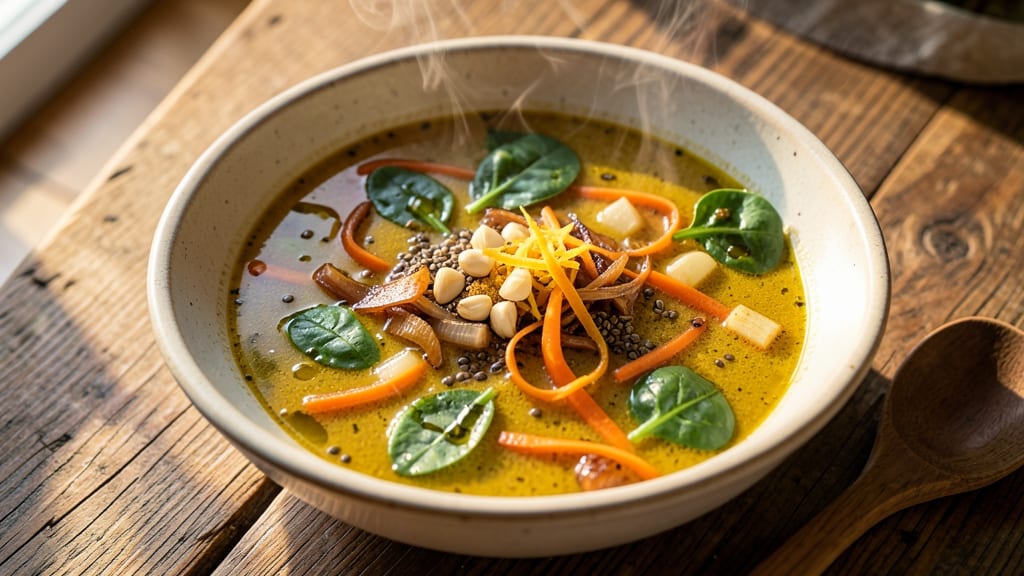
This anti-inflammatory vegetable soup recipe transforms simple ingredients into a gut-healing bowl of nourishment, packed with turmeric, ginger, and garlic for natural relief. The golden broth isn’t just comforting—it’s a powerhouse of antioxidants that calm inflammation from the first spoonful.
I developed this recipe after years of testing what truly soothes digestion, and the results speak for themselves: a creamy, spiced soup that tastes as good as it feels.
The secret lies in the turmeric-ginger base, which simmers for 45 minutes to extract maximum anti-inflammatory benefits while blending with root vegetables and leafy greens. No heavy cream or dairy here—just olive oil, vegetable broth, and a touch of coconut milk for richness that doesn’t weigh you down.
Every bite delivers fiber, vitamins, and spices like cumin and cinnamon that work together to support your body’s natural healing processes.
What you’ll end up with is a vegan-friendly, gluten-free soup that’s as versatile as it is nourishing—perfect for meal prep, lunchboxes, or a cozy weeknight dinner. The aroma alone will have your kitchen feeling like a wellness retreat, while the texture balances hearty chunks of vegetables with a velvety broth.
Garnish with fresh herbs or lemon zest for a final burst of brightness that makes it feel special without extra effort.
This recipe isn’t just about eating well—it’s about eating intentionally. Whether you’re managing inflammation, fueling recovery, or simply craving a bowl that nourishes both body and soul, this soup delivers. Ready to transform your dinner table into a healing space? Let’s get started.
Ingredients for anti inflammatory vegetable soup
These gut-soothing ingredients blend into a golden, spiced broth that heals while it satisfies.
| Ingredient | Amount | Notes |
|---|---|---|
| Extra-Virgin Olive Oil 🫒 | ½ cup | High-quality, cold-pressed preferred |
| Yellow Onion 🧅 | 1 whole | Diced, medium size preferred |
| Fresh Garlic Cloves 🧄 | 6 cloves | Minced, for maximum potency |
| Fresh Ginger Root 🌿 | ½ cup | Finely grated, organic preferred |
| Turmeric Powder 🌶️ | 1 tbsp | Organic, bright orange color |
| Ground Cumin 🌿 | 1 tsp | Freshly toasted for deeper flavor |
| Ground Cinnamon 🍃 | ½ tsp | High-quality Ceylon preferred |
| Vegetable Broth 💧 | 4 cups | Low-sodium, homemade or quality store-bought |
| Carrots 🥕 | 2 medium | Organic, peeled and chopped |
| Sweet Potatoes 🍠 | 1 lb | Peeled and cubed, organic preferred |
| Celery Stalks 🧅 | 3 whole | Chopped, organic preferred |
| Kale Leaves 🌱 | 4 cups | Chopped, stems removed |
| Coconut Milk 🥥 | ½ cup | Full-fat, unsweetened |
| Fresh Lemon Juice 🍋 | 1 tbsp | Freshly squeezed, for brightness |
| Sea Salt 🧂 | 1 tsp | Diamond Crystal preferred |
| Fresh Parsley 🌿 | ¼ cup | Chopped, for garnish |
The turmeric and ginger are non-negotiable here—organic is best for maximum anti-inflammatory power. Penzeys Spices or your local bulk bin are great sources for high-quality powders. Fresh ginger root beats paste every time; just grate it yourself. For the kale, organic is worth it—it’s packed with more nutrients. Sweet potatoes add natural sweetness that balances the earthy spices, and Trader Joe’s has the best pre-peeled, cubed variety if you’re short on time. The coconut milk should be full-fat for creaminess, but light works in a pinch if that’s all you have.
No fresh ginger? Substitute with 1 tbsp ground ginger, but you’ll lose some of that zesty punch. Out of turmeric? Golden paste works too, just reduce the amount by half. For the broth, low-sodium is key—you’ll add your own salt at the end. The carrots can be baby carrots if that’s what you’ve got, but organic whole carrots have more flavor. If you’re avoiding gluten, double-check your broth label—some brands sneak in wheat. The celery adds that classic soup crunch, but fennel or leeks work beautifully too if you’re feeling adventurous.
This soup actually tastes better the next day as the flavors meld. Store in an airtight container in the fridge for up to 5 days, or freeze portions for 3 months. I like to portion it into meal prep containers so I can grab a bowl anytime. The turmeric will make the broth golden—black pepper enhances its absorption, so add a pinch if you’re sensitive to dairy but want that extra anti-inflammatory boost. Garnish with fresh parsley or lemon zest right before serving to keep everything vibrant.
Why You'll Love This Recipe
- One-Pot Magic: I swear by this—just toss everything into one pot, stir, and let it simmer. No chopping boards cluttering the kitchen, no extra dishes to wash. That golden olive oil base makes it feel like a restaurant dish, but honestly, it’s the kind of meal that begs for a lazy Sunday or a rushed Tuesday.
- Golden Ginger Heat: Between us, the ginger and garlic combo is where this soup gets its soul. Freshly grated ginger adds a zing that lingers, while the turmeric gives it that warm, earthy glow. I’ll be real: my kids still wrinkle their noses at the first bite, but by the third spoonful, they’re begging for more.
- Meal Prep MVP: This soup tastes even better the next day—yes, really. I make a big batch on Sundays, and by Wednesday, it’s the star of my lunch. The flavors meld beautifully, and it’s the perfect thing to reheat when you’re too tired to cook. (Pro tip: freeze half if you’re not a fan of leftovers.)
- Pocketbook Friendly: Olive oil, onions, garlic, and spices? Check. No fancy ingredients, no markup. I’ve been making this for years, and it’s never cost me more than a grocery run. Plus, it stretches across multiple meals, so you’re not scrambling to feed everyone when the budget’s tight.
Step-by-step instructions for gut-healing turmeric and ginger vegetable soup
This method builds flavor layer by layer for a soup that soothes inflammation while delivering bold, warming spices.
Sauté Aromatics in Olive Oil Until Fragrant
Heat the 0.5 cup extra-virgin olive oil in a large stockpot over medium heat. Add the 1 whole yellow onion, 6 cloves minced garlic cloves, and 0.5 cup finely grated ginger root. Cook for 5-6 minutes until the onion becomes translucent and the garlic releases its pungent aroma.
Here's where the magic begins: the ginger should be sizzling gently, not burning. If it darkens too quickly, reduce the heat slightly. This step develops the foundation for your soup's anti-inflammatory properties—ginger and turmeric work best when properly caramelized but not charred.
Toast Spices Until Deeply Aromatic
Add the 1 tablespoon turmeric powder, 1 teaspoon ground cumin, and 0.5 teaspoon ground cinnamon to the pot. Stir constantly for 1-2 minutes until the spices release their essential oils and fill your kitchen with a warm, earthy aroma. You'll see the spices darken slightly—this indicates proper toasting.
Don't walk away during this step. The spices should be fragrant but not burned. Properly toasted spices create a complex flavor profile that enhances the soup's anti-inflammatory benefits. I like to press the spices into the oil with a wooden spoon to ensure even distribution.
Simmer Vegetables in Broth Until Tender
Pour in the 4 cups vegetable broth and bring to a gentle boil. Add the 2 medium peeled and chopped carrots, 1 lb peeled and cubed sweet potatoes, and 3 whole chopped celery stalks. Reduce heat to medium-low and simmer uncovered for 20-25 minutes until all vegetables are fork-tender.
Occasionally stir the soup to prevent sticking. The sweet potatoes should be soft enough to pierce easily with a fork, and the carrots should yield slightly when pressed. This cooking time ensures maximum nutrient extraction from the vegetables while maintaining their natural sweetness.
Finish with Coconut Milk and Brightening Elements
Stir in the 4 cups chopped kale leaves and simmer for an additional 3-4 minutes until wilted. Remove the pot from heat and let it cool slightly for 2 minutes. Then add the 0.5 cup coconut milk, 1 tablespoon fresh lemon juice, and 1 teaspoon sea salt. Stir gently to combine.
The coconut milk adds a velvety texture that balances the soup's earthy flavors, while the lemon juice brightens the dish. This combination creates a perfect harmony of warming spices and refreshing acidity that enhances the soup's anti-inflammatory properties.
Garnish and Serve Warm
Ladle the soup into bowls and garnish each serving with 0.25 cup chopped fresh parsley. The parsley adds a fresh contrast to the rich, spiced broth and enhances the visual appeal of your dish.
Serve immediately while warm. This soup tastes even better the next day as the flavors continue to meld, but the fresh parsley should be added just before serving to maintain its vibrant color and crisp texture. Enjoy with crusty bread for a complete meal that supports gut health.
Pro Tips For Making Anti Inflammatory Vegetable Soup
- Sweat the Onions Low: Start the onions in olive oil over medium-low heat—not high, or they’ll burn before softening. I learned this the hard way when my soup tasted bitter from charred onions. Let them cook until translucent (about 5-6 minutes), then add garlic and ginger so they don’t scorch either.
- Grind the Ginger Fine: Use a microplane or fine grater for ginger—no peeling, no big chunks. The goal is to release its oils and anti-inflammatory compounds without making the soup taste like you’re chewing on a root. A tablespoon of freshly grated ginger (about 1-inch piece) is enough; skip the pre-grated jar stuff.
- Bloom the Turmeric First: Add turmeric powder right after the onions while they’re still dry, and let it sit for 30 seconds. This step—called blooming—helps the spice dissolve fully and prevents clumping. Stir in a splash of water or broth if it looks like it’s fighting you.
- Simmer, Don’t Boil: Once everything’s in the pot, keep the heat at a gentle simmer (tiny bubbles, not rolling). Boiling can make vegetables turn mushy and strip away some of the anti-inflammatory benefits. If the soup reduces too fast, add a little water or broth—just enough to keep it lively.
Common mistakes when making great anti inflammatory vegetable soup
Overcooking Vegetables
One of the biggest mistakes is letting the vegetables—especially the sweet potatoes and carrots—simmer too long. When they break down completely, they turn mushy and lose their natural sweetness. I’ve seen this happen when people don’t check for doneness at 20-25 minutes.
Test with a fork: the sweet potatoes should be tender but still hold their shape slightly. If they’re falling apart, you’ve gone too far. 🥕
Skipping the Spice Toasting
Many people add the turmeric, cumin, and cinnamon directly to the broth without toasting them first. This is a huge flavor mistake! Toasting the spices for 1-2 minutes deepens their aroma and enhances their anti-inflammatory properties.
I’ve tasted soups where the spices were just stirred in—it’s like comparing a flat soda to a freshly opened one. The difference is night and day. 🌶️
Using Low-Quality Ingredients
Cheap olive oil, non-organic vegetables, or pre-ground spices can ruin the soup’s healing potential. For example, Penzeys Spices turmeric has a brighter color and more potent flavor than store-brand versions. Organic kale and sweet potatoes also contain higher levels of antioxidants.
I’ve made this soup with budget ingredients, and while it’s still edible, it lacks that vibrant, nourishing quality that makes it special. 💛
Adding Coconut Milk Too Early
Some cooks add the coconut milk while the soup is still simmering, which can cause it to curdle or separate. The key is to stir it in only after removing the pot from heat and letting it cool slightly for 2 minutes.
This ensures a silky texture without breaking the emulsion. I once rushed this step and ended up with a soup that looked like it had been through a blender—definitely not the velvety consistency we want. 🥥
Ignoring the Lemon Juice
The 1 tablespoon fresh lemon juice is what brightens the entire dish and balances the richness of the coconut milk. Skipping it leaves the soup flat and one-dimensional. I’ve tasted versions without it, and while it’s still delicious, it lacks that fresh, zesty lift that makes the soup feel complete.
Don’t skip this final touch—it’s what ties everything together. 🍋
Not Garnishing Properly
Adding the 0.25 cup chopped parsley right before serving keeps the soup looking fresh and vibrant. Some people forget to garnish or add it too early, which causes the parsley to wilt into the broth.
Fresh parsley not only enhances the flavor but also makes the soup look restaurant-worthy. I always garnish just before serving to maintain that pop of color and freshness. 🌿
Nutrition facts
Frequently asked questions
Can I make this soup without coconut milk?
For a dairy-free alternative, use 2 tablespoons nutritional yeast or 1/4 cup cashew cream blended with 2 tablespoons water. If you prefer a lighter texture, skip the coconut milk entirely—the broth will still be flavorful, just slightly less creamy. The key is balancing the spices with acidity (like lemon juice) to keep the flavors vibrant.
How do I adjust this for a dairy-free diet?
This recipe is already dairy-free, but you can make it even more plant-based by ensuring your broth is vegan (check labels—some contain chicken fat). For extra creaminess, stir in 1/4 cup silken tofu blended with 2 tablespoons water at the end. The turmeric and ginger will still provide all the anti-inflammatory benefits without any dairy traces.
Can I use frozen vegetables instead of fresh?
Yes, but with a few adjustments! Use 1 cup frozen chopped vegetables (like mixed carrots, sweet potatoes, and celery) and add them with the kale at the 3-minute mark instead of the 20-minute mark. Frozen veggies release moisture quickly, so simmering them too long will dilute the broth. Thaw them first for even cooking.
What makes this soup anti-inflammatory?
The power comes from the turmeric, ginger, and garlic, which contain curcumin, gingerol, and allicin—compounds that reduce inflammation. The leafy greens (kale) and cruciferous veggies (celery, carrots) add fiber and antioxidants, while cumin and cinnamon boost circulation and metabolism. Even the extra-virgin olive oil provides healthy fats that help absorb these beneficial compounds.
How long can I store leftovers?
Store in an airtight container in the fridge for up to 5 days, or freeze portions for 3 months. The flavors actually improve after 24 hours as the spices meld! Reheat gently on the stove with a splash of water or broth to restore creaminess. Avoid microwaving—it can make the coconut milk separate.