Soups & Stews
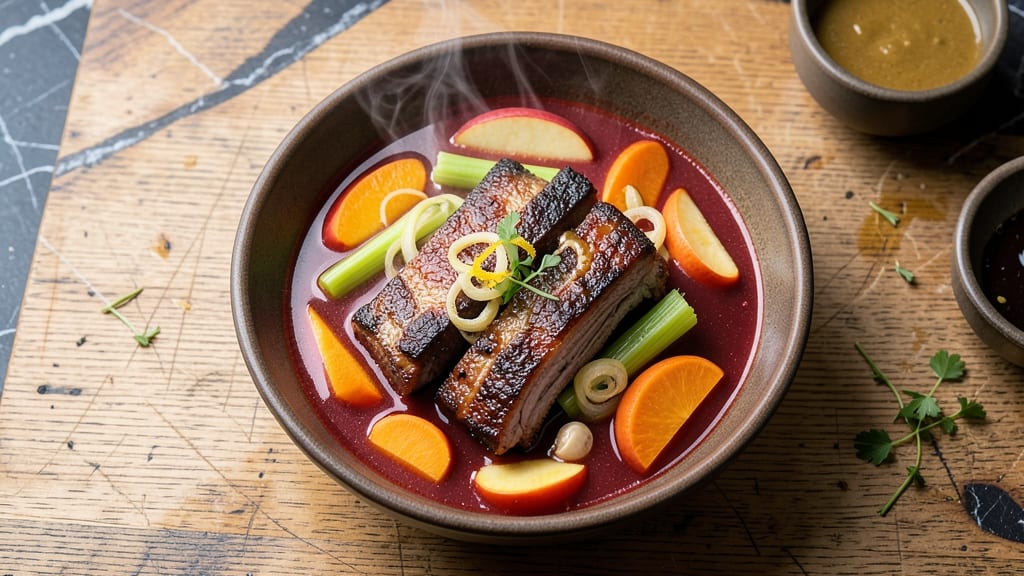
This apple carrot beef rib soup transforms humble ingredients into a deeply comforting bowl of slow-simmered perfection—where tender beef ribs meet sweet apples and earthy carrots in a broth that tastes like autumn in a pot.
The secret lies in braising the ribs low and slow, allowing their collagen to dissolve into a rich, velvety base while the apples caramelize into the broth, adding natural sweetness that balances the savory depth.
What sets this recipe apart is the perfect harmony of textures and flavors: fall-apart beef ribs, tender carrots that stay crisp, and apples that melt just enough to infuse the broth with subtle sweetness.
The slow simmer develops layers of umami from the beef, while aromatic herbs like thyme and bay leaves add complexity without overpowering. This isn’t just soup—it’s a one-pot meal that feeds a crowd and reheats beautifully, making it ideal for cozy weeknights or holiday gatherings.
The result is a soup so rich and satisfying, it’ll become your new go-to for chilly evenings. The beef ribs provide hearty protein, the carrots add natural sweetness and color, and the apples introduce a bright, cider-like depth that elevates every spoonful.
Whether you’re serving it with crusty bread or a sprinkle of fresh herbs, this soup delivers restaurant-quality comfort with minimal effort.
Best of all, this recipe scales effortlessly—double the ingredients for leftovers or halve it for a smaller gathering. The slow cooking process means flavors only get better with time, making it perfect for meal prep. Let’s get started on creating a bowl that’ll have everyone asking for seconds.
Ingredients for apple carrot beef rib soup
Six hearty ingredients create this soul-warming soup that tastes like autumn in a bowl.
| Ingredient | Amount | Notes |
|---|---|---|
| Beef Ribs 🥩 | 3 lb | Bone-in, meaty cuts preferred |
| Apples 🍎 | 2 medium | Sweet-tart variety like Honeycrisp |
| Carrots 🥕 | 1 ½ lb | Whole, unpeeled for nutrients |
| Yellow Onion 🧅 | 1 whole | Yellow or red, diced |
| Celery Stalks 🧅 | 3 whole | Trimmed, cut into chunks |
| Garlic Cloves 🧄 | 6 cloves | Fresh, smashed not minced |
| Fresh Thyme 🌿 | ½ ounce | Or 1 tbsp dried thyme |
| Bay Leaves 🍃 | 2 whole | Standard dried leaves |
| Beef Broth 💧 | 6 cups | Low-sodium preferred |
| Apple Cider Vinegar 🍏 | 2 tbsp | For brightness |
| Tomato Paste 🍅 | 1 tbsp | Smooth, not chunky |
| Kosher Salt 🧂 | 1 ½ tsp | Adjust to taste |
| Black Peppercorns 🌶️ | 1 tsp | Freshly cracked |
| Olive Oil 🫒 | 2 tbsp | For searing ribs |
| Fresh Parsley 🌿 | ¼ cup | Chopped, for garnish |
The beef ribs are the star—look for meaty cuts with good marbling at your local butcher or Costco for the best value. Bone-in ribs add incredible depth to the broth, so don't skimp. If you can't find fresh ribs, frozen works too—just thaw them overnight in the fridge. The apples should be sweet-tart varieties like Honeycrisp or Braeburn—they caramelize beautifully without turning mushy. Carrots? Buy the organic bunch—they're cheaper and you can leave the skins on for extra nutrients. Fresh thyme and bay leaves are non-negotiable here; dried works in a pinch but fresh gives that restaurant-quality aroma.
No fresh thyme? Dried works at one-third the amount, but toast it first in a dry pan for 30 seconds to wake up the flavor. Short on beef broth? Water plus 2 tbsp soy sauce gets you close, though it won't be as rich. Apple cider vinegar giving you pause? Substitute lemon juice if you've got it—just use half the amount. The tomato paste can be skipped entirely if you're avoiding it, but it adds that subtle umami depth. For the apples, if you can't find Honeycrisp, Granny Smith or Fuji work too—just adjust cooking time slightly. And if you're worried about the carrots getting too soft, add them later in the cooking process.
This soup tastes even better the next day as flavors meld together. Store leftovers in the fridge for up to 5 days, or freeze for 3 months—it reheats beautifully. I always make a double batch because it disappears fast. For freezing, portion into containers with some headspace—the broth expands when reheated. The ribs will be even more tender after a day or two of resting in the broth, so plan ahead if you're serving this as a centerpiece. Garnish with fresh parsley right before serving—it adds that pop of color and freshness that makes it look restaurant-worthy.
Why You'll Love This Recipe
- One-Pot Wonder: I swear by this recipe when I’m too tired to dirty multiple pots. The ribs, carrots, and apples all simmer together—no peeling, chopping, or separate steps. Just toss everything in, let it work its magic, and you’ve got a rich, hearty soup with almost no effort.
- Sweet-Savory Magic: That first bite? It’s like autumn in a bowl. The apples caramelize just enough to balance the deep, smoky beef ribs, while the carrots add natural sweetness. Honestly, my picky-eater husband finishes his first and asks for more before I even take a sip.
- Leftovers That Shine: This soup only gets better the next day. The flavors meld into something even richer, and it reheats like a dream. I make a big batch on Sundays because it’s my go-to for lunches all week—no sad, soggy leftovers here.
- Budget-Friendly Feast: Beef ribs might sound fancy, but they stretch across multiple meals when you pair them with humble veggies. Apples and carrots bulk it up, making this a filling, satisfying dish that won’t break the bank. Plus, it’s one of those rare recipes where the ingredients actually taste better together than apart.
Step-by-step instructions for apple carrot beef rib soup
This slow-simmered masterpiece delivers deep, savory-sweet flavors that'll have everyone asking for seconds.
Sear the Beef Ribs for Rich Flavor
Pat the 3 lb beef ribs completely dry with paper towels—this ensures maximum browning. Heat 2 tablespoons olive oil in a large Dutch oven over medium-high heat until shimmering. Working in batches if needed, add the ribs in a single layer and sear for 4-5 minutes per side until deeply browned and caramelized.
Here's the thing—don't crowd the pan or you'll steam instead of sear. You want that beautiful crust that'll dissolve into the soup later, creating layers of flavor. Once all ribs are browned, transfer them to a plate and set aside. You'll notice the aroma changing from raw to something irresistibly meaty—that's your first reward.
Build the Flavor Base with Vegetables
In the same Dutch oven, add the 1 whole yellow onion (diced), 3 whole celery stalks (cut into chunks), and 1.5 lb carrots (peeled and cut into large chunks). Cook for 5-6 minutes, stirring occasionally, until the vegetables begin to soften and the onion becomes translucent.
Add the 6 cloves garlic cloves (smashed) and 0.5 ounce fresh thyme (stripped from stems), cooking for another 1 minute until fragrant. This is where the magic happens—the vegetables release their natural sugars and meld with the browned bits from the ribs. Stir in the 1 tablespoon tomato paste and cook for 30 seconds to deepen the color and intensify the flavor.
Simmer the Soup with Apples and Herbs
Pour in the 6 cups beef broth and scrape up any browned bits from the bottom of the pot with a wooden spoon. Return the seared ribs to the pot, along with the 2 medium apples (peeled and cut into wedges), 2 whole bay leaves, and 1.5 teaspoons kosher salt. Bring to a gentle boil, then reduce heat to low and cover partially.
Simmer for 2-2.5 hours until the beef ribs are fork-tender and easily pull away from the bones. The apples should be completely tender and the broth should have thickened slightly. I know it's tempting to check constantly, but resist—this slow cooking is what creates that rich, velvety texture. The aroma alone will make your kitchen smell like a cozy autumn day.
Finish and Adjust Seasoning
Remove the ribs from the soup and let them cool slightly before shredding the meat from the bones with two forks. Return the shredded beef to the pot and stir in the 2 tablespoons apple cider vinegar and 1 teaspoon black peppercorns. Taste and adjust seasoning—you might need a bit more salt depending on your broth.
Simmer uncovered for another 10 minutes to let any excess liquid reduce slightly and the flavors meld. The soup should be rich and fragrant, with the sweetness of the apples balancing the savory beef. Here's the trick: if the soup seems too thin, let it reduce longer—there's no need for thickeners in this naturally hearty soup.
Serve with Fresh Garnish
Ladle the soup into bowls and garnish each serving with 1 tablespoon chopped fresh parsley**. The bright green color contrasts beautifully with the deep reds and browns of the soup, making it look as inviting as it tastes. Serve immediately with crusty bread to soak up every last drop of that flavorful broth.
Each spoonful delivers perfectly tender beef, sweet apples, and earthy carrots in a velvety broth that's both comforting and sophisticated. This isn't just soup—it's a celebration of slow cooking and balanced flavors that'll have your guests coming back for more.
Pro Tips For Making Apple Carrot Beef Rib Soup
- Brown the Ribs First: Skip the slow start—sear the beef ribs in a hot pot for 3-4 minutes per side before adding liquids. I learned this the hard way: ribs that simmer straight into broth stay tough and bland. That quick crust locks in flavor and keeps them tender.
- Slice Apples Thin: Cut the apples into ¼-inch slices, not chunks. Thicker pieces turn mushy and release too much liquid, drowning the broth’s depth. Thin slices hold shape, sweeten the soup gradually, and mimic the texture of traditional stewed apples.
- Don’t Overcrowd the Pot: Resist the urge to dump everything in at once—add carrots and celery in batches after the onions soften. I used to toss them all in together, and the broth took forever to develop color and flavor. Layering builds layers of taste.
- Use Two Apples: One apple won’t cut it—split the difference between tart (Granny Smith) and sweet (Honeycrisp). The tartness balances the richness of the beef, while the sweetness rounds out the broth. (Yes, even if you’re impatient like me, trust the combo.)
Common mistakes when making this recipe
Skipping the Sear
One of the biggest mistakes is skipping the sear on the beef ribs. That golden crust is where deep, caramelized flavors develop—it's what gives your soup its rich, complex taste. If you rush this step or don't sear at all, your broth will lack that essential depth.
I always take my time here, working in batches if needed, to get that perfect crust on every rib. 🔥
Overcrowding the Pot
When you add too many ribs to the pot at once, you'll steam them instead of searing, and the vegetables won't brown properly. This leads to a bland, watery soup.
I recommend searing ribs in batches—just 2-3 at a time—to ensure they get that beautiful crust. The same goes for the vegetables: give them space to develop flavor.
Not Scraping the Fond
The browned bits (fond) at the bottom of your pot are flavor gold. If you don't scrape them up when adding the broth, you're missing out on layers of umami. Always use a wooden spoon to deglaze with the broth—this is where the magic happens. I
Ignoring the Low-and-Slow Cook
This isn't a quick soup. Trying to rush the simmering process (under 2 hours) means the beef won't become tender, and the apples won't caramelize properly. The slow cook is what transforms tough cuts into melt-in-your-mouth goodness. I set a timer and walk away—this soup tastes even better when left to its own devices. ⏳
Forgetting to Taste and Adjust
Many home cooks forget to taste the soup before serving, leading to bland or overly salty results. Always taste as you go, especially after adding the vinegar. Adjust seasoning gradually—you can always add more salt, but you can't take it out.
I like to taste right after adding the apple cider vinegar to ensure the balance of sweet and tangy is perfect.
Using the Wrong Apples
Not all apples work here. Tart varieties like Granny Smith will make your soup taste bitter, while overly sweet apples like Fuji might overpower the beef. Stick to sweet-tart varieties like Honeycrisp or Braeburn—they caramelize beautifully and complement the savory beef.
I've learned this the hard way—trust me, the apple choice matters! 🍎
Nutrition facts
Frequently asked questions
Can I substitute beef ribs with another beef cut?
Yes, but choose wisely! Short ribs or chuck roast work well—they're more affordable and still tenderize beautifully. Beef shank would add even more richness, but it requires 3-4 hours of simmering. Avoid lean cuts like sirloin—they won't become tender enough for soup. If using chuck, cut it into 1.5-inch cubes for even cooking.
How do I make this soup in a slow cooker?
Transfer the seared ribs and sautéed vegetables to your slow cooker, then add all remaining ingredients except the parsley. Cook on low for 8 hours or high for 5-6 hours. The ribs will be extra tender from the extended cook time. Add the parsley at the end—it won't survive the slow cook.
Why does my soup taste too sweet?
This usually happens when using overly sweet apples or cooking too long. Try balancing with 1 extra tablespoon apple cider vinegar or a pinch of black pepper. For future batches, use slightly tart apples like Braeburn and reduce simmer time by 15 minutes. The sweetness should complement, not overpower, the savory beef.
Can I make this soup ahead of time?
This soup tastes even better the next day as flavors meld. Store in the fridge for up to 5 days or freeze for 3 months. Reheat gently on the stove—never microwave directly from frozen. The broth will thicken as it cools, so add a splash of water when reheating if needed.
What if I don't have apple cider vinegar?
No problem! Substitute with 1 tablespoon lemon juice or ½ teaspoon white vinegar. The acidity is what brightens the flavors. If you're avoiding vinegar entirely, add an extra ½ teaspoon salt to enhance the umami. The apples will still caramelize, but the broth will be slightly less tangy.