
Soups & Stews
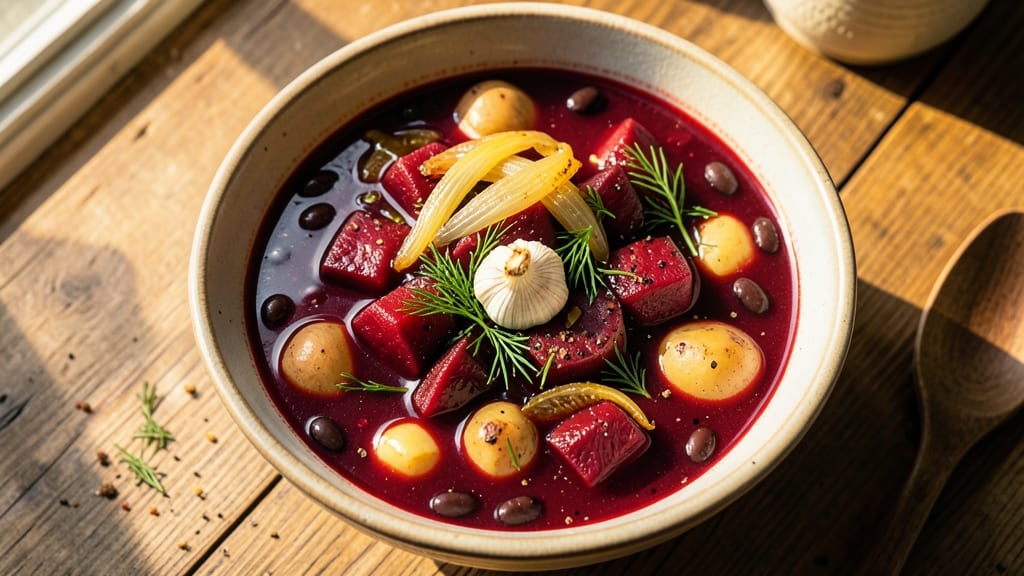
This Armenian borscht soup recipe transforms simple vegetables into a rich, velvety masterpiece with deep beetroot flavor and aromatic herbs. Unlike its Eastern European cousin, Armenian borscht relies on beans, potatoes, and a delicate balance of spices that create a subtly sweet, earthy profile.
The secret lies in slow simmering—allowing flavors to meld without overpowering the natural sweetness of the beets.
What sets this version apart is the velouté texture achieved through proper starch release from potatoes and beans, creating a naturally thickened broth without heavy cream. Traditional Armenian techniques include adding lemon juice at the end to brighten flavors and finishing with fresh herbs like dill or parsley for freshness.
This soup is hearty enough for winter meals but light enough for spring gatherings.
The result is a vibrant, comforting soup with layers of flavor—earthy beets, creamy potatoes, and tender beans—all bound together by a fragrant herb-infused broth. Each spoonful delivers a perfect balance of sweetness, acidity, and umami that defines Armenian home cooking.
The dish pairs beautifully with crusty bread or a dollop of yogurt for the ultimate meal experience.
While traditional recipes vary by region, this version stays true to Armenian roots while adapting for modern kitchens. The slow cooking process develops depth that can't be rushed, making it ideal for weekend preparation or meal prepping.
Whether you're serving family or guests, this borscht brings warmth and tradition to your table in every bowl.
Ingredients for armenian borscht soup
Simple vegetables and aromatic herbs create this velvety Armenian borscht masterpiece.
| Ingredient | Amount | Notes |
|---|---|---|
| Beets 🍠 | 2 lb | Medium-sized, peeled and cubed |
| Yellow Onions 🧅 | 2 whole | Medium, chopped |
| Garlic Cloves 🧄 | 4 cloves | Minced for depth |
| Russet Potatoes 🥔 | 2 lb | Peeled and cubed |
| Navy Beans 🌱 | 1 ½ cups | Cooked or canned, drained |
| Fresh Dill 🌿 | ½ cup | Chopped, stems removed |
| Fresh Parsley 🌿 | ¼ cup | Chopped, for brightness |
| Vegetable Oil 🫒 | ½ cup | For sautéing |
| Tomato Paste 🍅 | 2 tbsp | For umami depth |
| Apple Cider Vinegar 🍏 | 2 tbsp | For tangy balance |
| Salt 🧂 | 1 ½ tsp | Diamond Crystal preferred |
| Black Pepper 🌶️ | ½ tsp | Freshly ground |
| Ground Cumin 🌿 | ½ tsp | Toasted for warmth |
| Lemon Juice 🍋 | 2 tbsp | Freshly squeezed |
| Water 💧 | 6 cups | For broth base |
The beets are the soul of this soup—look for firm, deep red ones at the grocery store. Whole Foods or local farmers markets often carry the most vibrant varieties. If using canned beets, rinse them well to remove excess salt. Potatoes should be waxy (like Yukon Gold) for the best texture, but russets work in a pinch. The beans? Cooked from dry is ideal—they absorb flavors better than canned, but if you're short on time, no-bean-added or low-sodium canned beans work. Just remember to drain and rinse them thoroughly. For the fresh herbs, dill and parsley from the grocery store's refrigerated section are fine, but if you can find them at a farmers market, they'll have more flavor. Store fresh herbs in a jar of water in the fridge to keep them fresh longer.
No fresh dill? Dried dill at one-third the amount works, but the flavor won't be as bright. Substituting potatoes? Sweet potatoes add natural sweetness, but regular russets or Yukon Golds are traditional. For a deeper umami flavor, add 1 tbsp of soy sauce or a splash of Worcestershire (ensure it's vegetarian). The apple cider vinegar can be swapped for white vinegar, but it won't have the same fruity depth. If you're avoiding vinegar entirely, add an extra 1 tbsp of lemon juice at the end. For a creamier texture without dairy, blend in 1/2 cup of silken tofu at the very end—it dissolves seamlessly. The tomato paste is non-negotiable for that authentic Armenian depth, but if you're avoiding it, a handful of sun-dried tomatoes can add a similar richness.
This soup tastes even better the next day as the flavors meld. Store leftovers in an airtight container in the fridge for up to 5 days. For freezing, portion into 1-cup servings—it reheats beautifully and keeps for 3 months. The beets will soften further when reheated, so they're best enjoyed fresh. If you're prepping ahead, cook the beans and potatoes separately and add them to the broth when reheating. The fresh herbs should always be added at the end, so save those until serving. For a restaurant-quality finish, garnish with a dollop of vegan yogurt or a sprinkle of toasted pumpkin seeds. The soup pairs perfectly with crusty bread or a simple green salad.
Why You'll Love This Recipe
- One-Pot Magic: I swear by this recipe—just toss everything into a pot (beets, onions, potatoes, beans) and let it simmer. No fancy techniques, no extra bowls, and the flavors meld together like they’ve been cooking all day.
- Earthy Garlic Kiss: That raw garlic clove you crush into the broth? It’s the secret weapon. The beets give it a deep, sweet richness, while the garlic adds this bright, almost spicy punch—like a hug in a bowl.
- Weeknight to Potluck: Make a big batch on Sunday, and you’ve got lunch for the next three days. Or bring it to a gathering—it’s hearty enough for a main, but light enough for a side. My roommates still ask for seconds, even after three helpings.
- Budget-Friendly Powerhouse: Navy beans and potatoes stretch this soup into a full meal without breaking the bank. I’ve made it for under $2 a serving, and honestly? It’s some of the best soup I’ve ever had for the price.
Step-by-step instructions for Armenian borscht soup
This Armenian borscht delivers a rich, velvety beetroot base with vibrant herbs and earthy spices.
🍳 Step 1: Sauté Onions and Garlic for Depth
Heat the 0.5 cup vegetable oil in a large pot over medium heat. Add the 2 whole yellow onions, chopped, and cook for 8-10 minutes until soft and translucent, stirring occasionally. The onions should turn golden without browning—this prevents bitterness.
Push the onions to one side of the pot and add the 4 cloves garlic cloves, minced. Stir for 30 seconds until fragrant but not browned. Here's the thing—garlic burns quickly, so keep an eye on it. The aroma should fill your kitchen, signaling it's ready for the next step.
🍳 Step 2: Build the Beetroot Base
Add the 2 lb beets, cubed, to the pot and stir to coat in the onion-garlic mixture. Pour in the 6 cups water and bring to a boil over high heat. Once boiling, reduce to medium-low heat and simmer uncovered for 20 minutes, stirring occasionally. You'll see the beets soften and release their deep red color into the broth.
This simmering step is critical—it extracts maximum flavor and color. If the soup reduces too much, add a splash of water to maintain the proper consistency. The beets should be fork-tender by the end of this time.
🍳 Step 3: Incorporate Potatoes and Beans
Add the 2 lb russet potatoes, cubed, and the 1.5 cups navy beans to the pot. Stir gently to combine, then return to a simmer over medium heat. Cook for 15-20 minutes until the potatoes are tender and the beans are heated through. You'll know they're done when a knife slides in easily and the potatoes have a creamy texture.
During this time, the soup should develop a thick, velvety consistency. If it becomes too thick, add a little more water—just enough to reach a smooth, spoonable texture. The potatoes should be fully cooked but still hold their shape slightly.
🥘 Step 4: Add Aromatics and Acid Balance
Stir in the 2 tbsp tomato paste and 2 tbsp apple cider vinegar, mixing well to combine. Add the 1.5 tsp salt, 0.5 tsp black pepper, and 0.5 tsp ground cumin, then simmer for 5 minutes to allow the flavors to meld. The vinegar adds a bright tang that cuts through the richness of the beets and potatoes.
This is where the Armenian character of the soup shines. The cumin adds warmth, the vinegar provides acidity, and the tomato paste deepens the umami. Taste the soup now—it should be rich, slightly tangy, and deeply flavorful. Adjust the seasoning if needed, but it should be well-balanced at this stage.
🥘 Step 5: Finish with Herbs and Brightness
Remove the pot from heat and stir in the 0.5 cup fresh dill and 0.25 cup fresh parsley, chopped. Add the 2 tbsp lemon juice and let the soup sit for 5 minutes to allow the herbs to infuse. The lemon juice brightens the flavors and adds a refreshing finish. The herbs should be distributed evenly throughout the soup.
Serve the Armenian borscht warm, garnished with additional fresh dill and parsley if desired. The soup should have a velvety texture with vibrant red beets, tender potatoes, and a harmonious blend of herbs and spices. Each spoonful should deliver a perfect balance of earthy, tangy, and fresh flavors.
Pro Tips For Making Armenian Borscht Soup
- Peel Beets After Cooking: DESCRIPTION: Raw beets stain like a toddler’s art project, but cooked ones peel cleanly with a spoon. Simmer the whole beets until fork-tender (about 20 minutes), then cool briefly—the skins slide off effortlessly. (Yes, even the stubborn ones.)
- Sweat Onions Low and Slow: DESCRIPTION: Armenian borscht needs onions that caramelize without burning. Cook them over medium-low heat for 10–12 minutes, stirring often—just until they’re soft and golden, not crispy. Rushed onions taste sharp; patient onions taste like home.
- Soak Beans Overnight (Or Not): DESCRIPTION: Navy beans soften faster if soaked 4+ hours, but desperate? Skip it and simmer them 45–60 minutes with a pinch of baking soda (yes, it works). The trade-off: longer cook time vs. zero prep. Your call, but don’t skip the salt at the end.
- Crumble Garlic, Don’t Mince: DESCRIPTION: Raw garlic cloves in borscht? Too harsh. Lightly crush them with the flat of your knife first, then sauté until fragrant but not browned. This keeps the flavor mellow and spreads it evenly—no bitter aftertaste, just depth. (Trust me, you’ll taste the difference.)
Pro cooking tips for this dish
Slow Cooking Secrets
Armenian borscht thrives on patience—simmering at medium-low heat for 15-20 minutes after adding potatoes and beans is non-negotiable. I swear by using a 6-quart Dutch oven because it maintains even heat distribution. If your pot is too small, the soup will reduce too quickly, making it overly thick.
Keep a 1-cup ladle nearby to add water as needed, but avoid over-diluting—the natural starch from potatoes should create that signature velvety texture. 🌡️
Beet Color Magic
The vibrant red hue comes from properly cooked beets—simmer them for 20 minutes until they're fork-tender but still hold shape. Overcooking turns them mushy and dulls the color. I like to test doneness by piercing a cube with a fork; if it glides in smoothly, they're perfect.
For extra depth, add 1 tsp beet powder (found in health food stores) to the broth if you want to intensify the color without extra beets. 🍠
Herb Timing Matters
Fresh herbs should always go in at the end—5 minutes off heat before serving. This preserves their bright flavors. I chop dill and parsley stems separately and add them whole for a more rustic look, then finely chop the leaves for distribution.
Pro tip: Toast 1 tsp whole cumin seeds in a dry pan for 30 seconds before grinding them—this adds a nutty depth that ground cumin can't match. ✨
Acid Balance Tricks
The apple cider vinegar and lemon juice are your flavor anchors. If your soup tastes flat, add another ½ tbsp vinegar or 1 tbsp lemon juice at the end. For a smoky twist, I sometimes add ½ tsp smoked paprika with the cumin.
The key is balance—too much acid makes the beets taste sharp, while too little leaves the soup bland. Taste as you go! 🍋
Texture Control
For that perfect velvety consistency, mash ½ of the potatoes against the pot's side with a wooden spoon during the last 5 minutes of cooking. This releases starch naturally without needing flour or cornstarch.
If your soup is too thick, stir in ¼ cup cold water and simmer for 2 more minutes. The goal is a spoon-thick texture that coats the back of a spoon but still flows smoothly. 🥄
Nutrition facts
Frequently asked questions
Is Armenian borscht the same as Eastern European borscht?
Not at all! Armenian borscht (or lavash borsh) is vegetarian-focused, featuring beans, potatoes, and beets with a velvety texture. Eastern European versions often include meat like beef or pork, plus sour cream. The Armenian version relies on herbs like dill and parsley for brightness, while Eastern borscht uses more vinegar and sometimes beets are cooked separately for a brighter color.
Can I make this soup without beets?
Replace the beets with 2 cups of cooked butternut squash or 2 cups of roasted carrots for natural sweetness. The key is maintaining the soup's earthy depth—add 1 tsp beet powder (available at health stores) if you want to keep the color, or use 1 tbsp tomato paste for umami. The potatoes and beans will still create that signature velvety texture.
How do I prevent the soup from getting too thin?
Use waxy potatoes (like Yukon Gold) instead of russets—they release starch more naturally. During the last 5 minutes of cooking, mash half the potatoes against the pot's side to thicken the broth. If it's still too thin, simmer uncovered for 5 more minutes to reduce naturally. Avoid adding flour or cornstarch—it can make the soup taste heavy.
What's the best way to store leftovers?
Store in an airtight container in the fridge for up to 5 days. For freezing, portion into 1-cup servings—it reheats beautifully! The beets soften further when reheated, so enjoy fresh within 3 months. Always add fresh herbs and lemon juice when reheating to restore brightness. Pro tip: Cook the beans and potatoes separately if prepping ahead, then add them to the broth when reheating.
Can I make this soup in an Instant Pot?
Yes! Sauté the onions and garlic first, then add all ingredients except herbs and lemon. Cook on High Pressure for 8 minutes, then quick-release. Stir in herbs and lemon at the end. The Instant Pot version finishes faster, but the flavors develop differently—expect slightly less depth in the beets. Adjust seasoning after cooking, as pressure cooking can concentrate flavors differently.