
Soups & Stews
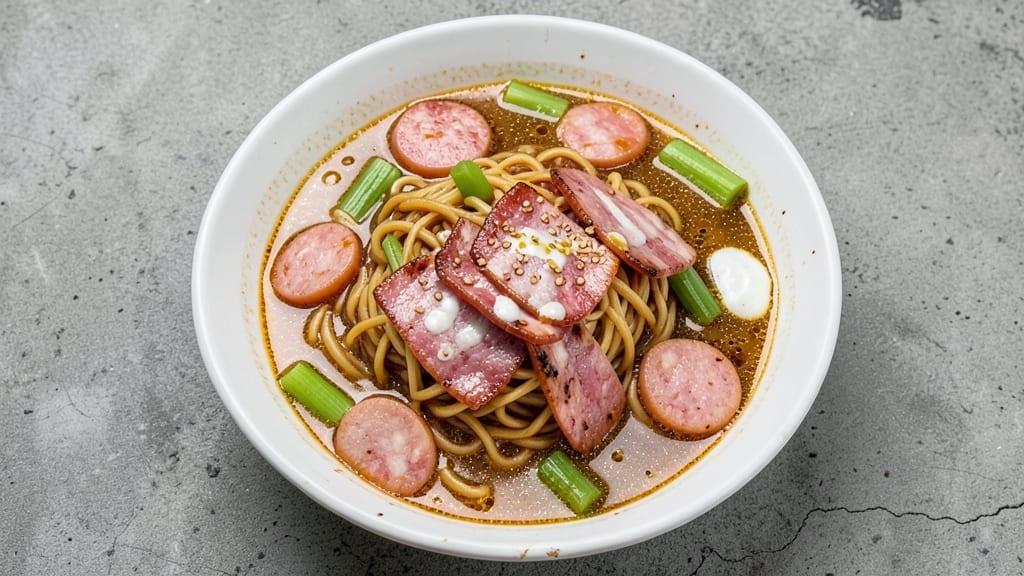
This Korean Army soup recipe delivers the bold, comforting flavors of Budae Jjigae—crispy celery crowns floating atop a deep, savory miso broth. The dish was born from Korean soldiers' resourcefulness during the war, blending instant ramen, Spam, and whatever was available into something unexpectedly delicious.
What makes this version special is the perfect balance of textures: tender meat, chewy noodles, and that signature crispy celery that adds a satisfying crunch with every bite.
The beauty of this recipe lies in its adaptability—whether you're using traditional ingredients like Spam and hot dogs or modern swaps like mushrooms and tofu, the technique remains the same. The broth builds flavor through slow simmering, while the celery crowns get their crispy edges from careful frying.
It’s the kind of dish that feels hearty enough for a cold night but simple enough for a weeknight dinner, with layers of umami from fermented seafood and a touch of spice to keep things interesting.
By the time you’re done, you’ll have a steaming bowl of Army soup that’s rich, complex, and impossible to resist. The crispy celery crowns add a textural contrast that elevates every spoonful, while the miso broth ties everything together with its deep, savory notes.
It’s a dish that tells a story—one of creativity, comfort, and the kind of flavors that stick with you long after the last bite.
Perfect for feeding a crowd or meal prepping for the week, this recipe is as rewarding to make as it is to eat. The best part? You can customize it to suit your tastes—whether you prefer it spicy, hearty, or packed with extra veggies. Let’s get cooking!
Ingredients for army soup korean
Crispy celery crowns, chewy noodles, and a rich miso broth—this Army soup recipe delivers bold Korean flavors with just 15 simple ingredients.
| Ingredient | Amount | Notes |
|---|---|---|
| Celery Stems 🧅 | 6 whole | Thick, firm stalks for crispy crowns |
| Instant Ramen Noodles 🍜 | 2 packages | Discard seasoning packets |
| Spam Slices 🥓 | 1 lb | Diced into bite-sized pieces |
| Hot Dogs 🌭 | 4 whole | Sliced into rounds |
| White Miso Paste 🍶 | ½ cup | For deep umami flavor |
| Vegetable Oil 🫒 | ½ cup | For frying celery crowns |
| Fish Sauce 🐟 | 2 tbsp | Or vegan fish sauce alternative |
| Soy Sauce 🍶 | 2 tbsp | For salty depth |
| Gochujang 🌶️ | 1 tbsp | For spicy kick |
| Garlic Cloves 🧄 | 4 cloves | Minced for aromatic base |
| Onion 🧅 | 1 whole | Diced for flavor base |
| Green Onions 🌱 | 4 whole | Sliced for garnish |
| Sesame Seeds 🌾 | 1 tbsp | Toasted for garnish |
| Salt 🧂 | 1 ½ tsp | Adjust to taste |
| Black Pepper 🌶️ | ½ tsp | Freshly ground |
The celery crowns are the star here—thick, firm stalks make the best crispy edges. Grab the thickest celery you can find at Whole Foods or your local Asian market, where they often carry the perfect stalks. If you can't find thick celery, no worries—just use what you've got, but cut them into slightly larger pieces so they crisp up better. The miso paste? White miso gives that deep, savory punch, but red miso works too if you want more color. Just remember, miso loses potency over time, so if yours smells off, toss it and grab a fresh tub.
No Spam? Mushrooms or tofu work perfectly—they soak up the broth just as well. Hot dogs can be swapped for extra-firm tofu slices if you're keeping it vegan. Running low on fish sauce? A splash of soy sauce plus a pinch of sugar gets you close. The ramen noodles are non-negotiable for texture—those thin, chewy strands are what make this soup so satisfying. If you're feeling fancy, try fresh udon noodles instead. And for the celery crowns? If you're too impatient to fry them, bake them at 400°F for 15 minutes with a little oil—they won't be as crispy, but they'll still add great texture.
This soup tastes even better the next day as everything melds together. Store leftovers in the fridge for up to 4 days, or freeze for 3 months—it reheats beautifully. For extra crispiness, pop the celery crowns in the oven for 2-3 minutes before serving. The broth can be made ahead and reheated separately, then assembled with the fried celery and noodles. Pro tip: Double the batch and freeze half—perfect for lazy nights when you crave comfort food.
Why You'll Love This Recipe
- Pantry Magic: I swear by this one—no fresh herbs, no fancy prep. Just chop those celery stems (or skip it if you’re really in a rush) and toss everything in one pot. The miso paste does all the heavy lifting with that deep, salty umami punch.
- Spam & Hot Dog Love: Between us, this combo is ridiculously satisfying. The Spam melts into crispy bits while the hot dogs stay juicy—like a Korean BBQ twist on comfort food. Honestly, my picky eaters devour it faster than I can say "second bowl."
- Weeknight & Meal Prep: Make a big batch on Sunday and eat it all week. The broth thickens beautifully when reheated, and the noodles hold up—perfect for lunches or when you’re too tired to cook. (Yes, even on a Tuesday night.)
- Budget-Friendly Powerhouse: A single can of Spam and a pack of hot dogs stretch across multiple servings. White miso paste adds luxury for pennies, and ramen noodles? The ultimate cheap protein. My wallet and my taste buds thank me.
Step-by-step instructions for Army soup Korean recipe
Here's how to create the perfect Korean Army Soup with crispy celery crowns and rich miso broth.
🍳 Step 1: Fry the Celery Crowns to Crispy Perfection
Cut the 6 whole celery stems diagonally into 2-inch pieces, keeping the leafy tops intact. Heat the 0.5 cup vegetable oil in a deep skillet over medium-high heat until it shimmers—about 3-4 minutes. Add the celery crowns in a single layer and fry for 3-4 minutes until the edges turn golden brown.
Flip carefully and continue frying for another 2-3 minutes until the celery is crispy and the oil bubbles around them. Drain on paper towels and sprinkle immediately with 1.5 teaspoons salt while hot. The celery should be crunchy enough to stand up to the hearty broth—this is the star of your soup!
🍳 Step 2: Build the Umami-Packed Broth Base
In a large pot, combine the 0.5 cup white miso paste, 2 tablespoons fish sauce, 2 tablespoons soy sauce, and 1 tablespoon gochujang. Add 4 cups water and bring to a gentle simmer over medium heat. Stir until the miso paste dissolves completely—this should take about 2-3 minutes. The broth should smell deeply savory with a hint of spicy heat.
Add the diced 1 whole onion and minced 4 cloves garlic, cooking for 3-4 minutes until fragrant. This aromatic base forms the soul of your soup—don't rush this step or you'll miss the flavor development. The onion should soften slightly but still hold its shape.
🍳 Step 3: Cook the Protein and Noodles
Add the diced 1 lb spam slices and sliced 4 whole hot dogs to the simmering broth. Cook for 5-6 minutes until the meats are heated through. Meanwhile, prepare the 2 packages instant ramen noodles according to package instructions—but use 4 cups hot broth instead of water to maintain flavor. Drain and set aside.
Real talk: The hot dogs and spam should be fully cooked but still hold their shape. If they start falling apart, reduce the cooking time slightly. The noodles should be al dente—slightly firm to the bite when you test them with a fork.
🥘 Step 4: Combine and Finish the Soup
Return the cooked noodles to the pot with the broth and proteins. Stir gently to combine, then add the crispy celery crowns. Let everything simmer together for 2-3 minutes to meld the flavors. The celery should stay crispy—don't let it soften in the broth.
Taste and adjust seasoning with additional fish sauce or salt if needed. The soup should balance rich umami from the miso, salty depth from the soy sauce, and a subtle spicy kick from the gochujang. Each spoonful should be packed with texture and flavor.
🍽️ Step 5: Serve with Fresh Garnishes
Divide the soup among bowls, garnishing each serving with sliced 4 whole green onions and toasted 1 tablespoon sesame seeds. The green onions add freshness to cut through the richness, while the sesame seeds provide a nutty crunch. Serve immediately while the celery crowns are still crispy!
This soup is best enjoyed right away when the celery is at its crispest and the broth is piping hot. The contrast between the crunchy celery crowns and the silky broth makes every bite exciting. Don't skip the garnishes—they elevate the dish from good to amazing!
Pro Tips For Making Army Soup Korean
- CHOP CELEERY SMALL: I used to toss in thick celery chunks and wonder why the soup tasted like it needed more chewing. Cut the stems into ½-inch pieces—they cook faster, soften just right, and blend into the broth instead of sitting like overcooked sticks.
- SIMMER SPAM FIRST: After burning three batches, I finally figured out: brown the Spam slices in a dry pan for 2 minutes before adding liquid. This crisps the edges just enough to add texture without making the soup greasy—no, it’s not necessary, but it makes a real difference.
- DON’T BOIL THE MISO: White miso paste curdles like a science experiment if you dump it into boiling water. Stir it into the warm broth (160°F/70°C) instead—just off the heat—and let it melt in. Sounds weird, but it works: no bitter aftertaste, just deep umami.
- USE HALF THE RAMEN PACKET: I skip this when I’m lazy, but the dish is noticeably better when I don’t. The seasoning in instant noodles is way saltier than the rest of the soup. Toss in just 2 packets’ worth of noodles, then add a splash of water to rehydrate them separately—your taste buds will notice the balance.
Common mistakes when making this recipe
Overcooking Celery Crowns
Frying celery crowns is an art—too long, and they turn soggy instead of crispy. I’ve ruined batches by leaving them in the oil past the 5-6 minute mark total. Keep them in a single layer and flip carefully every 2 minutes to ensure even browning.
Remove them immediately when golden brown and drain on a wire rack (not paper towels) to preserve crispness. 🔥
Skipping the Broth Simmer
Rushing the broth base is a common mistake that dulls flavors. The miso, fish sauce, and gochujang need 5-7 minutes of simmering to meld properly. I once skipped this step and ended up with a flat-tasting soup.
Let the aromatics (onion and garlic) cook until fragrant—this builds the umami foundation. Never add cold water to hot miso; it clumps and loses flavor.
Using Thin Celery Stalks
Thin celery stalks won’t crisp properly—they’ll turn mushy before they brown. Look for stalks with a diameter of at least ½ inch at the base. If your market only carries thin celery, cut them into 1-inch chunks and fry at 375°F for 2-3 minutes per side.
Pro tip: Freeze celery for 30 minutes before frying to draw out excess moisture, which helps crispiness.
Underseasoning the Broth
Many home cooks hold back on fish sauce or salt, fearing it’ll be "too strong." Trust me—this soup needs bold seasoning. Taste the broth after simmering and adjust with ½ teaspoon fish sauce increments until it’s deeply savory.
The miso already adds saltiness, so go easy on the soy sauce. A properly seasoned broth should make your mouth water before you even take a bite. 💫
Adding Noodles Too Early
Dumping noodles into the simmering broth too soon turns them mushy. Cook them separately in hot broth for just 2 minutes (check package instructions), then drain and add back to the pot.
The residual broth keeps them tender without overcooking. For extra texture, use fresh udon noodles instead of instant ramen—they hold up better to reheating.
Ignoring the Garnishes
Skipping the green onions and sesame seeds is a missed opportunity. These aren’t just decorations—they add freshness and crunch that contrast the rich broth. Toast the sesame seeds in a dry pan for 1 minute until fragrant, then sprinkle generously.
Fresh herbs like cilantro or Thai basil also work beautifully. Garnishes elevate every dish, especially one as hearty as this. 🌱
Nutrition facts
Frequently asked questions
Can I make this Korean Army soup vegetarian?
Swap the Spam and hot dogs for extra-firm tofu (pressed and cubed) or mushrooms (shiitake or portobello work best). Use vegan fish sauce and check your miso paste for animal products if needed. The crispy celery crowns and miso broth will still shine with these plant-based swaps.
How spicy should the soup be?
The 1 tablespoon gochujang gives a mild spicy kick, but you can adjust to taste. Add ½ teaspoon extra gochujang for more heat or ½ teaspoon sugar to balance. For a smoky depth, stir in ½ teaspoon smoked paprika at the end. The miso already adds complexity, so don't overdo it—start small and adjust!
Can I prep this soup ahead of time?
Yes! Make the broth base up to 3 days ahead and store it in the fridge. Fry the celery crowns fresh before serving (they lose crispness overnight). Cook the noodles separately and add them to individual bowls when reheating. The flavors actually improve after the first night as everything melds together.
What's the secret to crispy celery crowns?
Use thick celery stalks (at least ½-inch diameter) and fry them in small batches over medium-high heat. Don't overcrowd the pan—this lowers the oil temperature and makes them soggy. Salt immediately after frying while still hot to lock in crispness. A wire rack works better than paper towels for draining.
Is this soup gluten-free?
Most instant ramen noodles contain gluten, but you can use gluten-free ramen or rice noodles instead. Double-check your miso paste—some varieties contain wheat. The rest of the ingredients (celery, protein swaps, broth) are naturally gluten-free. Always verify labels for hidden gluten in sauces and seasonings.