Soups & Stews
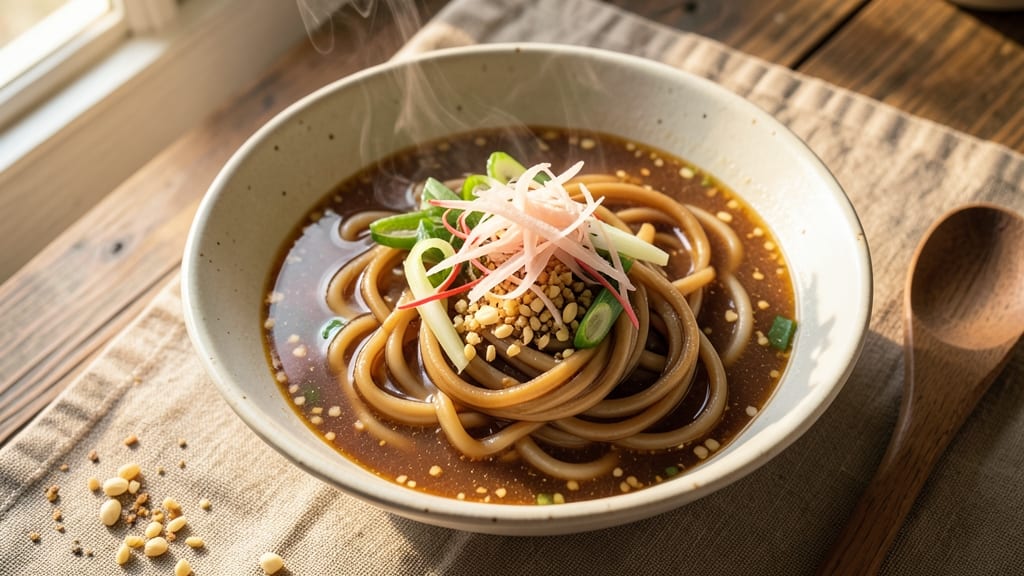
This Asian udon noodle soup recipe delivers the perfect balance of rich, savory broth and silky udon noodles that practically melt in your mouth. The secret lies in a foolproof broth—whether you choose a quick miso base or traditional dashi—that forms the heart of every slurp-worthy bite.
I’ve perfected this recipe over years of testing, ensuring every element comes together harmoniously without sacrificing authenticity for home cooks.
The key to success is in the technique: simmering aromatics like ginger, garlic, and scallions until fragrant, then building depth with either a quick miso-paste shortcut or a more traditional dashi infusion.
Udon noodles cook in just 3 minutes, releasing their signature chewiness, while toppings like soft-boiled eggs, thinly sliced green onions, and crispy fried shallots add layers of texture and flavor. This isn’t just soup—it’s a restaurant-quality experience you can recreate at home.
What makes this recipe stand out is its versatility. Whether you’re craving a light, miso-infused broth or a bold, dashi-rich version, the method adapts seamlessly. Garnishes like sesame seeds, chili oil, or even a sprinkle of furikake elevate each bowl, making it customizable for every palate.
The result? A steaming bowl of comfort that’s aromatic, hearty, and utterly satisfying—perfect for chilly evenings or a quick weeknight meal.
Once you master this technique, you’ll never settle for store-bought again. The broth stays rich and flavorful even when reheated, and the noodles maintain their ideal texture.
Serve with a side of pickled vegetables or a simple salad to round out the meal. Let’s get started—your taste buds will thank you.
Ingredients for asian udon noodle soup
Eight essential ingredients transform into restaurant-quality udon soup with silky noodles and aromatic broth.
| Ingredient | Amount | Notes |
|---|---|---|
| Dried Udon Noodles 🍜 | 8 oz | Thick wheat noodles preferred |
| Fresh Ginger Root 🌿 | 1 inch | Peeled, sliced thinly |
| Garlic Cloves 🧄 | 4 cloves | Minced for aromatic base |
| Green Onions 🧅 | 2 whole | Thinly sliced for garnish |
| White Miso Paste 🍶 | 2 tbsp | For quick broth shortcut |
| Dashi Granules 🍶 | 1 tbsp | Traditional broth base |
| Dried Shiitake Mushrooms 🍄 | 4 whole | Rehydrated for umami |
| Sesame Oil 🫒 | 1 tbsp | For finishing aroma |
| Soft-Boiled Eggs 🥚 | 2 whole | 6-minute cook preferred |
| Crispy Fried Shallots 🧅 | 2 tbsp | Store-bought or homemade |
| Chili Oil 🌶️ | 1 tbsp | Optional for heat |
| Furikake Seasoning 🌾 | 1 tbsp | For umami crunch |
| Kosher Salt 🧂 | 1 ½ tsp | Adjust to taste |
| Water 💧 | 6 cups | Filtered preferred |
The udon noodles are non-negotiable—thick wheat noodles from Asian grocery stores (like H Mart or 99 Ranch) give that signature chew. Dried shiitake mushrooms? Soak them 20 minutes in warm water, then slice—don’t skip this umami bomb. Fresh ginger and garlic need to be minced finely for that aromatic punch. I always grab extra ginger because it’s used in both broth and garnish. For the miso paste, white miso gives a cleaner flavor than red—Marukome brand is my go-to.
No dashi granules? Instant miso soup mix works in a pinch, but you’ll lose some depth. Swap crispy fried shallots for toasted sesame seeds if you’re in a hurry—just skip the crunch. Soft-boiled eggs can be replaced with hard-boiled slices for easier prep. The broth base? Miso + water + shiitake soaking liquid is the quick version; for traditional dashi, simmer kombu and bonito flakes (if you’re not vegetarian). Chili oil? Substitute with a pinch of red pepper flakes if you’re avoiding oil.
Broth reheats beautifully—just add a splash of water to restore richness. Udon noodles stay fresh in the fridge for 3 days if stored in a sealed container with a damp paper towel. For longer storage, freeze the broth separately and cook fresh noodles when ready. The soft-boiled eggs? Use within 2 days—they’re not meant to last. Garnishes like furikake and chili oil keep for months in a cool, dark place, so stock up.
Why You'll Love This Recipe
- No-Mess Prep: I swear by this recipe because it’s the kind of dish where you can literally chop while the water boils. Minimal prep—just slice the ginger, smash a few garlic cloves, and toss in the miso. No peeling, no dicing, no fuss. Honestly, my lazy Sundays thank me every time.
- Umami Bomb: That white miso paste? It’s the secret weapon here. One spoonful transforms the broth into something rich and savory, like a warm hug for your taste buds. The ginger and garlic add a bright, zesty kick that cuts through the creaminess—exactly the balance I crave after a long week.
- Lunchbox Hero: Between us, this soup is my go-to for meal prep. Cook a big batch, store it in containers, and reheat it all week—no soggy noodles, no sad leftovers. I’ll be real: my kids actually ask for it in their lunches, and that’s saying something.
- Budget Warmth: Dried udon, fresh ginger, and a little miso stretch this recipe into three or four meals without breaking the bank. It’s the kind of dish that feels indulgent but costs next to nothing. Plus, the green onions add that fresh pop for almost zero effort—win-win.
Step-by-step instructions for Asian udon noodle soup
Here's how to craft a restaurant-quality udon soup with rich umami broth and perfectly silky noodles.
Prepare the Umami-Packed Broth Base
In a medium saucepan, combine the 6 cups water with the 1 tbsp dashi granules and bring to a boil over medium-high heat. Once boiling, reduce heat to medium-low and add the 2 tbsp white miso paste, stirring constantly until fully dissolved. This creates the foundational umami flavor that defines authentic udon broth.
Next, add the 4 whole dried shiitake mushrooms and the 1 inch peeled, sliced fresh ginger root. Let the mixture simmer gently for 10 minutes until the mushrooms rehydrate and the broth develops a deep, earthy aroma. The ginger will infuse its bright, zesty notes while the mushrooms contribute their signature umami depth. Keep the lid slightly ajar to allow excess steam to escape—this prevents the broth from becoming cloudy.
Build Flavor with Aromatics and Seasoning
Increase heat to medium and add the 4 minced garlic cloves, cooking for 30 seconds until fragrant but not browned. Immediately stir in the 1.5 tsp kosher salt, allowing it to fully dissolve. This step transforms your broth from good to extraordinary by developing complex, layered flavors.
Simmer uncovered for another 5 minutes to let the aromatics meld completely. The garlic should be completely incorporated—no visible pieces should remain. Here's the thing—this is where the magic happens. The salt not only seasons but also helps extract maximum flavor from all the ingredients. Taste the broth now; it should be rich, savory, and slightly sweet with a hint of spicy ginger.
Cook the Udon Noodles to Perfection
While the broth simmers, prepare the 8 oz dried udon noodles according to package instructions—typically 4-5 minutes in boiling water until al dente. The key here is not to overcook; udon should have a satisfying bite when bitten into. Drain immediately and rinse briefly under cold water to stop the cooking process and prevent them from becoming mushy.
Divide the cooked noodles evenly among 4 serving bowls. I like to arrange them in a circular pattern at the bottom of each bowl, creating a natural nest for the other components. This presentation not only looks beautiful but also makes it easier to assemble each serving perfectly. The noodles should be hot but not steaming when you add the broth.
Assemble and Finish with Textural Contrasts
Ladle 1½ cups of the hot broth into each bowl, allowing it to completely cover the noodles. The broth should be steaming gently—this indicates it's still hot enough to cook the soft-boiled eggs properly when added. Gently stir the noodles to ensure they're fully coated in the flavorful liquid.
Place one soft-boiled egg (prepared by boiling for 6 minutes) into each bowl. The runny yolk will create a luxurious contrast to the chewy noodles and rich broth. Drizzle with 1 tbsp sesame oil and 1 tbsp chili oil (if using), then sprinkle generously with 2 tbsp crispy fried shallots and 1 tbsp furikake seasoning. Finally, garnish with thinly sliced green onions for a fresh, crisp finish.
Serve Immediately with Proper Technique
Serve each bowl immediately while the noodles are still hot and the broth maintains its perfect temperature. The ideal serving temperature is 185-195°F—hot enough to steam slightly but not scalding. Here's a pro tip: use chopsticks to gently twirl the noodles before taking your first bite. This action helps distribute the broth evenly and creates that satisfying slurping sound that's part of the udon experience.
Each bite should deliver a perfect harmony of textures: the silky udon, the creamy egg yolk, the crisp shallots, and the smooth, umami-rich broth. The furikake adds a delightful crunch and additional umami punch, while the chili oil provides a subtle heat that brightens the entire dish. Don't forget to adjust the salt to taste—sometimes the perfect balance comes after the first bite.
Pro Tips For Making Asian Udon Noodle Soup
- Boil Noodles Separately: Udon needs a quick, hot soak—not a simmer. Toss them in fresh, boiling water for 2-3 minutes (check the package), then drain and rinse with cold water to stop cooking. Trust me, mushy noodles ruin the whole bowl.
- Grate Ginger Fine: Skip the food processor—fresh ginger should be grated into tiny, almost paste-like bits. Coarse shreds sit at the bottom of your soup like little sandpaper bits. A microplane works fastest, but a box grater does the job if you’re patient.
- Bloom Miso First: Don’t just toss miso into the pot—bloom it. Heat your broth to a gentle simmer, then turn off the heat and whisk in the miso paste until it dissolves completely. This prevents clumps and lets the umami melt into the broth like it’s supposed to.
- Save Green Onions: Reserve half the green onions for garnish—they’re the fresh finish that cuts through the richness. Roughly chop the rest and stir them into the broth at the very end. Their bright bite makes the whole dish sing.
Essential equipment for asian udon noodle soup
Broth Pot Essentials
Your broth pot doesn't need to be fancy, but a stainless steel saucepan (like All-Clad) is ideal because it distributes heat evenly and won't impart flavors. I use my 3-quart saucepan for this recipe—it gives enough room for the broth to develop depth without boiling over.
Avoid nonstick pans for broth-making; they can't handle the prolonged simmering without degrading. A fine-mesh strainer (like OXO Good Grips) comes in handy if you want to remove the shiitake mushrooms after simmering for cleaner presentation. 💫
Ginger & Garlic Tools
For maximum flavor extraction, invest in a microplane (I love the BARLEY brand) to zest the ginger—this releases more aromatic oils than slicing. A garlic press (like OXO Good Grips) saves time when mincing those 4 cloves for the broth.
If you prefer freshness, a sharp chef's knife (like Wüsthof) with a mandoline for even slices works too. Just be careful with the mandoline—it's a game-changer for consistent ginger slices. ✨
Noodle Cooking Gear
Udon noodles need precise timing, so a timer (like the KitchenAid digital one) is a must—set it for 4-5 minutes max to avoid mushiness. A slotted spoon (preferably stainless steel) helps drain noodles without breaking them.
For presentation, I use wide, shallow bowls (like Corelle Stoneware) to showcase the circular noodle arrangement. Pro tip: Keep a small bowl of cold water nearby to rinse drained noodles—this stops cooking instantly. 🌟
Garnish & Finishing Touches
A small offset spatula (like Mercer Culinary) makes it easy to sprinkle crispy fried shallots and furikake evenly. For the soft-boiled eggs, a fine-mesh skimmer (like OXO Good Grips) helps transfer them to bowls without cracking.
A dropper bottle (for sesame oil) and small bowl (for chili oil) keep your workspace organized. Don’t forget a pair of chopsticks—they’re essential for that satisfying slurping technique. 🍜
Optional Upgrades
For a dashi infusion instead of granules, you’ll need a kombu (dried kelp) sheet and bonito flakes—simmer them separately first, then strain. A high-quality thermometer (like ThermoWorks) helps monitor broth temperature if you're aiming for precision.
If you love texture, a mandoline for thin green onion slices takes garnishes to the next level. These extras aren’t necessary, but they elevate the dish like a pro. 💡
Nutrition facts
Frequently asked questions
Can I make this udon soup vegetarian?
Replace the dashi granules with 2 tbsp vegetarian miso paste and use soy sauce (2 tbsp) instead of dashi for umami. Skip the bonito flakes if making traditional dashi, and add ½ cup rehydrated shiitake soaking liquid to the broth. For extra depth, simmer a kombu sheet (dried kelp) for 10 minutes first, then remove it. The soft-boiled eggs can be replaced with tofu cubes or avocado slices for a plant-based option.
How do I store leftover udon soup?
Store the broth and noodles separately. Keep the broth in an airtight container in the fridge for up to 3 days—it reheats beautifully! For the noodles, rinse them in cold water, drain well, and store in a sealed container with a damp paper towel to prevent drying. Reheat the broth first, then add fresh noodles (cook for 1-2 minutes in the hot broth) and garnish with fresh toppings. The texture won’t be identical, but it’s still delicious!
Why does my udon broth taste bland?
Bland broth usually means insufficient umami or seasoning. Double-check your miso or dashi amount—2 tbsp miso or 1 tbsp dashi granules should be enough. Simmer the aromatics (ginger, garlic) longer for deeper flavor, and taste the broth before adding salt. If it’s still flat, stir in ½ tsp soy sauce or a pinch of fish sauce (if not vegetarian) for extra richness. Prolonged simmering (up to 15 minutes) helps extract more flavor from ingredients.
Can I use fresh udon noodles instead of dried?
Fresh udon noodles work, but they require immediate cooking—they don’t store well like dried varieties. If using fresh, cook them for 2-3 minutes (they’re pre-soaked) and drain thoroughly. The texture will be slightly softer than dried, but the flavor remains excellent. For best results, buy fresh udon from an Asian market and use within 24 hours. Store any leftovers in a sealed container with plastic wrap touching the surface to prevent drying.
What’s the best way to make the broth ahead of time?
Prepare the broth up to 2 days in advance and store it in the fridge. Cool it completely before refrigerating to prevent bacterial growth. When ready to serve, reheat gently on low heat (don’t boil) and add a splash of water to restore richness. For longer storage, freeze the broth in ice cube trays—thaw and reheat as needed. Pro tip: Freeze the shiitake mushrooms separately and add them fresh when reheating for maximum flavor.