
Soups & Stews
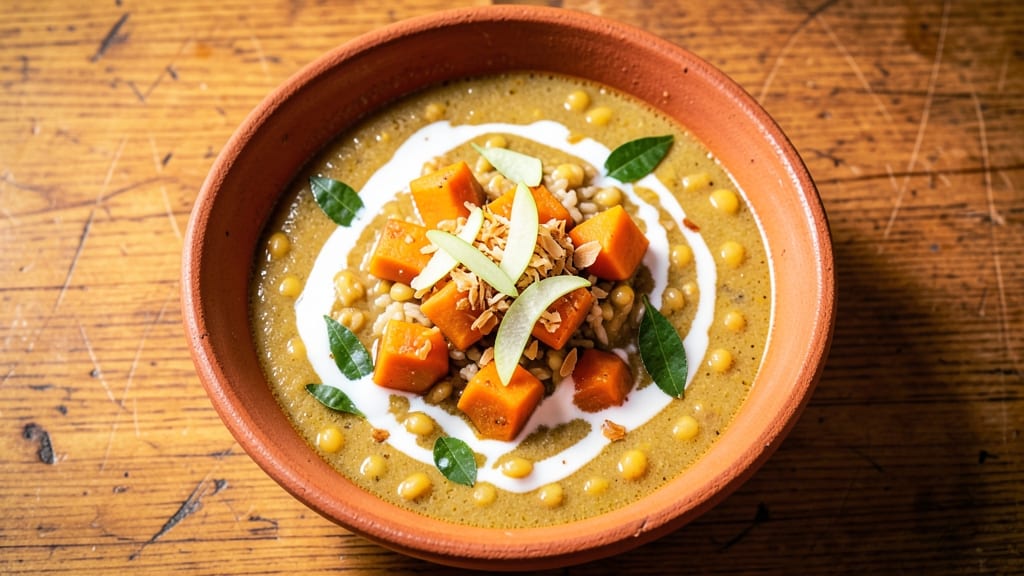
This Attukal Pongal soup recipe transports you to Kerala's sacred Attukal Temple grounds, where fragrant turmeric rice and lentils create a dish steeped in tradition. The aromatic blend of ginger, black pepper, and curry leaves transforms simple ingredients into a velvety, spiced broth that's both comforting and deeply flavorful.
It's the perfect balance of earthy pumpkin, creamy coconut milk, and the warm embrace of Kerala's spice traditions.
The beauty of this recipe lies in its simplicity—just a few key ingredients that work together to create a dish rich in cultural significance. Simmered to perfection, the soup delivers tender rice and lentils infused with turmeric's golden hue and the subtle heat of Kerala's signature spices.
The coconut milk adds a luxurious creaminess that rounds out the flavors, making each spoonful feel like a taste of tradition.
What makes this Attukal Pongal soup truly special is its versatility. Serve it alongside steamed rice for a complete meal, or pair it with crispy appam for a Kerala-inspired breakfast. The dish is hearty enough for a family dinner but light enough for a comforting lunch.
Its aromatic profile and satisfying texture make it a staple in Kerala's culinary repertoire, perfect for those seeking an authentic taste of South India.
The cooking process is straightforward, with each step building layers of flavor that culminate in a fragrant, spiced soup. Whether you're preparing it for a special occasion or a weeknight dinner, this recipe delivers the warmth and tradition of Kerala in every bowl.
The spices and ingredients are easy to find, ensuring that anyone can recreate this beloved dish in their own kitchen.
Ingredients for attukal soup
Simple ingredients that create a fragrant, velvety soup with Kerala's signature flavors.
| Ingredient | Amount | Notes |
|---|---|---|
| Short-Grain White Rice 🍚 | ½ cup | Uncooked, washed thoroughly |
| Yellow Lentils (Moong Dal) 🌾 | ½ cup | Split, rinsed well |
| Fresh Coconut Milk 🥥 | 1 can (13.5 oz) | Full-fat for creaminess |
| Pumpkin (or Butternut Squash) 🎃 | 1 ½ cups | Cubed, peeled |
| Fresh Ginger 🌿 | 1 inch | Peeled, sliced thin |
| Curry Leaves 🌿 | ¼ cup | Fresh, lightly crushed |
| Ground Turmeric 🌶️ | 1 tsp | Freshly ground preferred |
| Black Peppercorns 🌶️ | ½ tsp | Crushed lightly |
| Vegetable Oil 🫒 | 2 tbsp | Refined for neutral flavor |
| Coconut Oil 🥥 | 1 tbsp | For authentic flavor |
| Salt 🧂 | ½ tsp | Adjust to taste |
| Fresh Cilantro 🌿 | ¼ cup | Chopped, for garnish |
| Asafoetida (Hing) 🌶️ | ¼ tsp | Optional, for depth |
The curry leaves are non-negotiable—they carry that unmistakable South Indian aroma. Indian grocery stores carry them dried, but fresh is ideal. If you can't find them, dried curry powder at half the amount works in a pinch. The turmeric should be vibrant yellow, not dull—look for freshly ground if possible. Coconut milk matters too: full-fat canned brands like Thai Kitchen give the best creaminess, but avoid the light versions. For the ginger, fresh is essential—dried lacks the bright zing this dish needs. Store-bought pumpkin works, but fresh or frozen cubes taste richer.
No fresh curry leaves? Dried curry powder at half the amount is your backup. Skip the asafoetida if you're sensitive to its strong aroma—it's traditional but not mandatory. For the rice, jasmine or basmati works if you can't find short-grain. The lentils should be split moong dal, but yellow split peas are a decent substitute if that's what you have. Coconut milk substitutes? Cashew cream or extra coconut cream both work well. Want more heat? Add a pinch of cayenne or red pepper flakes at the end—just don't let it simmer too long or the flavors will turn bitter.
This soup tastes even better the next day as flavors meld. Store in an airtight container for 4-5 days in the fridge. Freezes beautifully for 3 months—portion into containers before freezing for easy reheating. The coconut milk will separate when refrigerated, so stir well before reheating. For serving, garnish with fresh cilantro and a drizzle of coconut milk. Pairs perfectly with steamed rice or crispy appam, just like in Kerala.
Why You'll Love This Recipe
- One-Pot Magic: I swear by this recipe when I’m too tired to scrub pots—just toss everything in one vessel, simmer, and let the rice and moong dal soften together. The coconut milk blends right in without extra stirring, and by the end, you’ve got a creamy, hearty soup with zero cleanup stress.
- Ginger-Coconut Zing: That fresh ginger isn’t just for show—it’s the secret weapon here. Shred it thin, fry it until fragrant, and watch it wake up the pumpkin and coconut milk with a bright, spicy kick. Honestly, the first spoonful makes me forget I’m eating a soup, not a dessert.
- Leftover Hero: Between us, this soup improves overnight. The rice thickens just enough to make it almost like a porridge, while the moong dal keeps it light. I’ll make a big batch on Sundays, and by Wednesday, it’s still the star of my lunch—no reheating tricks needed.
- Budget Comfort: Moong dal and short-grain rice are my pantry’s best friends, and coconut milk stretches further than you’d think. Swap butternut for pumpkin if it’s cheaper, and suddenly you’ve got a restaurant-worthy dish for half the cost. (Yes, even on a Tuesday night.)
Step-by-step instructions for Attukal Pongal soup
This traditional South Indian dish transforms simple rice and lentils into a fragrant, comforting soup.
Prepare the Rice and Lentil Base
In a medium saucepan, combine the 0.5 cup short-grain white rice and 0.5 cup yellow lentils (moong dal) with 3 cups water. Bring to a boil over medium-high heat, then reduce to a simmer. Cook uncovered for 15-18 minutes until the rice is tender and the lentils are soft but not mushy.
Stir occasionally to prevent sticking, especially after the initial boil. The mixture should thicken slightly as it cooks, forming a cohesive base. This foundational step creates the signature texture of Attukal Pongal—creamy yet light. If the water level drops too low before cooking completes, add ½ cup water to maintain consistency.
Build the Aromatic Spice Base
In a separate small pan, heat 1 tablespoon coconut oil over medium heat. Add the 1 inch fresh ginger and 0.25 cup curry leaves, cooking for 1-2 minutes until the ginger softens and the curry leaves release their fragrant oils. Remove from heat and set aside.
In the same pan, add 1 tablespoon vegetable oil and heat until shimmering. Add the 1 teaspoon ground turmeric and 0.5 teaspoon crushed black peppercorns, stirring for 30 seconds until the spices bloom and fill your kitchen with their warm aroma. This spice infusion is the soul of the soup—don't skip letting them toast properly.
Combine and Simmer the Soup
Transfer the cooked rice-lentil mixture to a large pot. Add the prepared ginger-curry leaf mixture and the spice-infused oil, stirring gently to combine. Pour in the 1 can (13.5 oz) fresh coconut milk and 1.5 cups pumpkin (or butternut squash), then bring to a gentle simmer over medium-low heat. Stir occasionally for 10-12 minutes until the pumpkin softens and the flavors meld together.
The soup should develop a rich, golden color from the turmeric and a subtle sweetness from the pumpkin. Add the 0.5 teaspoon salt and 0.25 teaspoon asafoetida (hing) if using, stirring well. The asafoetida adds an umami depth that's characteristic of traditional Attukal Pongal. Taste and adjust seasoning if needed—this is where you can customize the balance of flavors to your preference.
Finish with Fresh Herbs
Remove the pot from heat and let the soup rest for 5 minutes. Stir in the 0.25 cup fresh cilantro, reserving a few sprigs for garnish. The cilantro adds a bright, fresh contrast to the rich coconut and spiced base. For the perfect presentation, ladle the soup into bowls and garnish with the reserved cilantro sprigs and a drizzle of the remaining coconut milk.
Serve immediately while warm. The soup should be creamy yet light enough to sip, with each spoonful delivering a harmonious blend of earthy lentils, fragrant rice, sweet pumpkin, and aromatic spices. This dish is traditionally enjoyed with a side of crispy papad or warm, fluffy appam for dipping.
Pro Tips For Making Attukal Soup
- Soak the Rice Properly: I learned this the hard way—don’t just rinse the short-grain rice. Soak it for at least 20 minutes in warm water before cooking. This keeps the soup’s texture creamy and prevents the rice from turning mushy later, especially when mixed with the coconut milk.
- Grate Ginger Like You Mean It: Fresh ginger is non-negotiable here, but grating it too finely turns the soup bitter. Use a box grater for medium-thick shreds—enough to taste the zing without overpowering the pumpkin and coconut. (Yes, even if you’re impatient like me.)
- Simmer Pumpkin Low and Slow: After burning three batches, I finally figured out: medium-low heat is your friend. Pumpkin releases starch fast—if you boil it hard, the soup turns gluey. Keep it at a gentle simmer, stirring occasionally, until it’s fork-tender but not falling apart.
- Temper the Coconut Milk: Sounds weird, but it works: heat the coconut milk separately until just steaming, then whisk it into the soup at the end. This prevents curdling and lets the creamy flavor meld without breaking the lentils’ texture. (Your future self will thank you.)
Troubleshooting this dish
Grainy Texture Fix
If your rice and lentils turn out too grainy, you likely didn't cook them long enough. The key is simmering uncovered for the full 15-18 minutes—don't rush this step.
For extra creaminess, mash 2-3 rice grains with a fork before combining with other ingredients. This helps create a smoother base while keeping the dish authentic. 💡
Spice Burn Prevention
Over-toasting your spices can make the soup bitter. Bloom the turmeric and black pepper for just 30 seconds—no longer! Remove the pan immediately when you smell their aromatic oils.
If you notice burnt notes, stir in ½ teaspoon sugar or 1 teaspoon coconut milk to balance the flavor. Freshly ground spices are less likely to burn than pre-ground ones.
Pumpkin Overcooking
Soft pumpkin is perfect, but mushy ruins the texture. Add the 1.5 cups pumpkin cubes during the final 10 minutes of simmering. If your pumpkin cooks too fast, reduce heat to low and cover with a lid. For extra control, use frozen pumpkin cubes—they cook more evenly. 🎃
Coconut Milk Separation
If your soup looks curdled, it's likely from overheating or old coconut milk. Always use full-fat canned coconut milk (like Thai Kitchen) and stir gently on medium-low heat.
For a quick fix, whisk in 1 tablespoon cornstarch mixed with 2 tablespoons water to restore creaminess. Avoid boiling—just simmer gently.
Weak Flavor Profile
Need more depth? Toast the curry leaves and ginger for an extra 30 seconds before adding to the soup. A pinch of asafoetida (hing) amplifies umami—use it even if you skipped it initially.
For heat, add ¼ teaspoon cayenne at the end (don't simmer it or it'll turn bitter). Freshly ground spices always taste stronger than pre-ground.
Lentil Overcooking
Mushy lentils mean your soup will be gluey. Cook the moong dal until just tender (15-18 minutes max) and drain any excess water before combining with other ingredients.
If they're already too soft, stir in 1 tablespoon coconut milk to balance the texture. For future batches, reduce water by ½ cup if your stove runs hot.
Nutrition facts
Frequently asked questions
What makes Attukal Pongal soup different from regular rice and lentil soup?
This dish gets its unique character from Kerala's signature spices like curry leaves and asafoetida (hing), combined with coconut milk for creaminess and pumpkin for natural sweetness. The rice-lentil base is cooked separately to maintain texture, then blended with aromatic oils and spices for that authentic South Indian flavor profile.
Can I make this soup without coconut milk?
Yes, but the texture will be lighter. Replace the 1 can coconut milk with 1 cup cashew cream or ½ cup extra coconut cream for richness. For a dairy-free version, use ½ cup unsweetened almond milk plus 1 tablespoon coconut oil—just know the flavors will be more subtle. The dish will still taste delicious, just with a different mouthfeel.
How do I know when the rice and lentils are perfectly cooked?
They're done when the rice is tender but still holds its shape (about 15-18 minutes) and the lentils are soft but not mushy. Test by tasting a grain—it should be firm to the bite. If they stick together, you've overcooked them. For extra creaminess, lightly mash 2-3 rice grains with a fork before combining with other ingredients.
What's the best way to store leftovers?
Store in an airtight container in the fridge for 4-5 days or freeze for 3 months. The coconut milk may separate when refrigerated—just stir well before reheating. For serving, garnish with fresh cilantro and a drizzle of coconut milk to restore that restaurant-fresh look. The flavors actually improve overnight as the spices meld!
Can I make this soup spicier?
Add ¼ teaspoon cayenne pepper or ½ teaspoon red chili powder at the very end (don't simmer it or it'll turn bitter). For heat lovers, toast ½ teaspoon mustard seeds with the spices for a smoky kick. Remember, Kerala spices build flavor gradually—start with less if you're new to spicy dishes.