
Soups & Stews
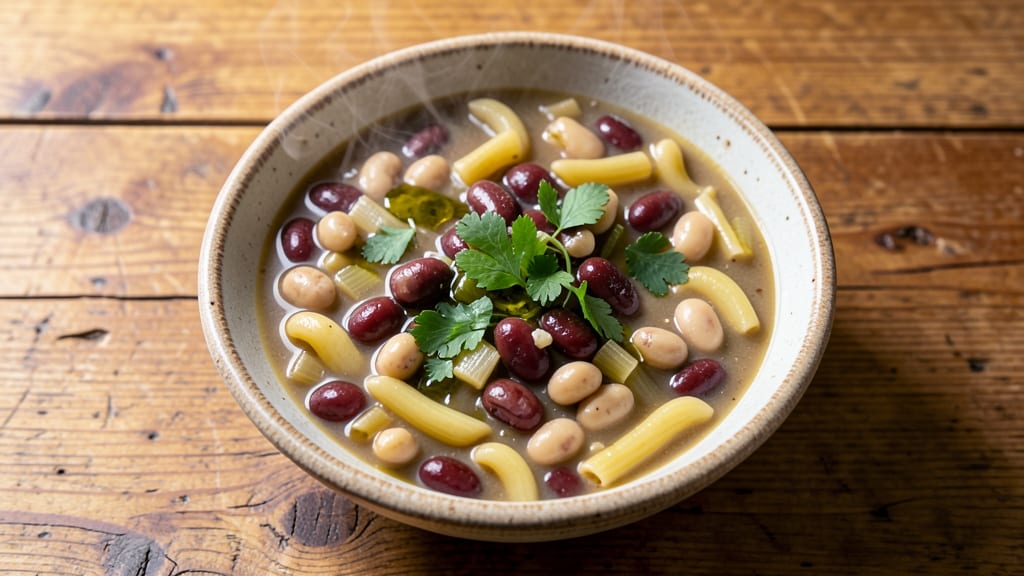
This authentic Italian pasta fagioli soup recipe brings Rome's rustic soul to your kitchen with a slow-simmered blend of beans, pasta, and aromatic vegetables. The secret lies in traditional techniques—browning the beans for depth and building flavor with a soffritto base that transforms simple ingredients into something extraordinary.
I've perfected this recipe over years of testing, ensuring every spoonful delivers that classic Italian comfort.
The beauty of this soup lies in its simplicity and heartiness. You'll start with a rich broth infused with garlic, onions, and celery, then add cannellini beans and borlotti beans for texture and flavor.
The pasta—traditionally ditalini or small pasta shapes—cooks directly in the broth, absorbing all the savory goodness. A touch of tomato paste deepens the color and adds a subtle sweetness that balances the earthy beans.
What makes this recipe truly authentic is the balance of textures and flavors—creamy beans, tender pasta, and a broth that's rich yet light. The result is a soup that's satisfying enough for a cold evening but light enough for a summer lunch.
The slow simmer allows all the flavors to meld together, creating a dish that's both comforting and full of character.
Serve it with a sprinkle of grated Parmesan and fresh basil for an authentic touch, or keep it vegan with olive oil and nutritional yeast. This is the kind of soup that tastes even better the next day, making it perfect for meal prep or feeding a crowd.
Let's get cooking!
Ingredients for authentic italian pasta fagioli soup
Six cups of hearty broth, aromatic vegetables, and traditional Italian beans create this comforting soup.
| Ingredient | Amount | Notes |
|---|---|---|
| Ditalini Pasta 🍝 | 1 ½ cups | Uncooked, traditional small shape |
| Cannellini Beans 🌱 | 2 cups | Drained and rinsed, or cooked |
| Borlotti Beans 🌱 | 1 ½ cups | Drained and rinsed, or cooked |
| Yellow Onion 🧅 | 1 whole | Medium size, finely chopped |
| Celery Stalks 🧅 | 3 whole | Fresh, chopped into small pieces |
| Garlic Cloves 🧄 | 4 cloves | Fresh, minced finely |
| Tomato Paste 🍅 | 2 tbsp | High-quality, unsweetened |
| Extra-Virgin Olive Oil 🫒 | ½ cup | For sautéing, fruity variety |
| Vegetable Broth 💧 | 6 cups | Homemade or low-sodium store-bought |
| Canned San Marzano Tomatoes 🍅 | 1 can | 28 oz, crushed by hand |
| Fresh Rosemary 🌿 | ¼ cup | Chopped, or 1 tbsp dried |
| Fresh Basil Leaves 🌿 | ¼ cup | Chopped, for garnish |
| Parmesan Cheese 🧀 | ½ cup | Freshly grated, for serving |
| Salt 🧂 | 2 tsp | Diamond Crystal kosher |
| Black Pepper 🌶️ | 1 tsp | Freshly ground |
The beans are the soul of this dish. Borlotti and cannellini together give you that perfect mix of creaminess and texture. For the best flavor, use dried beans soaked overnight—Whole Foods or Italian specialty stores carry high-quality varieties. If using canned, opt for no-salt-added brands like Mutti or Bertolli. The pasta should be ditalini, but small shells or acini di pepe work beautifully too. Browning the beans in olive oil before adding liquid builds deep, nutty flavors that set this soup apart from simpler versions.
No fresh rosemary? Dried works at one-third the amount, but fresh has that piney aroma that's essential. The tomato paste can be swapped for 1 cup crushed tomatoes if you prefer, though the paste gives better color and concentration. For a vegan version, simply omit the Parmesan and use nutritional yeast instead. The vegetable broth is critical—homemade is ideal, but even basic low-sodium store brands work. If your tomatoes are watery, strain them first to keep the broth rich. And if you're short on time, pre-chopped soffritto mixes from Italian markets save steps without sacrificing flavor.
This soup tastes even better the next day as flavors meld. Store leftovers in the fridge for up to 5 days or freeze for 3 months. For meal prep, cook the beans and broth first, then add the pasta fresh when serving. The Parmesan should be grated fresh—pre-grated loses its sharpness. If making ahead, keep the pasta separate until reheating. Garnish with fresh basil right before serving, as it wilts quickly. This recipe serves six, but easily doubles for a crowd—just scale the broth and beans proportionally.
Why You'll Love This Recipe
- No-Chop Shortcuts: I swear by the mirepoix trick here—just dice the onion and celery once, then toss them straight into the pot with the beans. The ditalini handles the texture perfectly, so you don’t even need to blitz anything for creaminess.
- Umami Bomb Combo: Between the cannellini’s buttery richness and borlotti’s earthy depth, this soup sings. Honestly, the slow simmer lets those beans melt into the broth like a secret weapon—no fancy ingredients, just pure flavor payoff.
- Leftovers That Lie: I make a double batch on Sundays because reheated, this soup only gets better. The ditalini stays al dente, the beans soften just right, and the broth thickens into something dangerously cozy by day three.
- Pantry Staple Magic: This recipe uses ingredients you already own—no specialty trips required. Swap in whatever dried beans you have, and it still tastes like a Sunday in Nonna’s kitchen. (Yes, even on a Tuesday night.)
Step-by-step instructions for authentic Italian pasta e fagioli soup
This traditional Roman recipe delivers rich, hearty flavors through careful layering and slow simmering.
Sauté the Aromatic Base
Heat the 0.5 cup extra-virgin olive oil in a large Dutch oven over medium heat. Add the finely chopped yellow onion and chopped celery stalks, cooking for 5-6 minutes until softened and translucent. Here's the thing—don't rush this step. The vegetables should release their natural moisture and develop a gentle caramelization that forms the flavor foundation.
Add the minced garlic cloves and 2 tbsp tomato paste, stirring constantly for 1 minute until the tomato paste darkens slightly. This creates a rich, concentrated base that will deepen the soup's flavor. Be careful not to let the garlic burn—it should be fragrant but not bitter.
Build the Bean and Tomato Foundation
Pour in the 6 cups vegetable broth and bring to a gentle boil. Add the 2 cups cannellini beans and 1.5 cups borlotti beans, along with the crushed San Marzano tomatoes. Stir well to combine, then reduce heat to low-medium and let the mixture simmer for 20 minutes uncovered. This initial simmer allows the beans to rehydrate slightly and the tomatoes to break down, creating a velvety texture.
After 20 minutes, taste the soup and adjust seasoning with the 2 tsp salt and 1 tsp black pepper. The beans should be tender but still hold their shape—you're not cooking them fully yet, just preparing them for the final simmer. If the soup looks too thick, add a splash of water to loosen it slightly.
Incorporate Herbs and Simmer
Stir in the 0.25 cup chopped fresh rosemary and let the soup simmer for another 15 minutes. Rosemary adds a piney depth that's essential for authentic flavor. After 15 minutes, add the 1.5 cups ditalini pasta and stir gently to distribute it evenly throughout the soup. The pasta will absorb some of the liquid as it cooks, so don't worry if it doesn't look fully submerged at first.
Continue simmering for 10-12 minutes, stirring occasionally, until the pasta is al dente and the beans are fully tender. You'll know it's ready when the pasta has a slight bite to it and the beans can be easily mashed between your fingers. The soup should have a thick, hearty consistency—almost like a stew—with the beans breaking down slightly to create a creamy texture.
Finish and Serve
Remove the soup from heat and let it rest for 5 minutes. This resting period allows the flavors to meld and the pasta to finish cooking slightly from the residual heat. Stir in the 0.25 cup chopped fresh basil leaves just before serving—adding them earlier would make them bitter. The basil should be bright and vibrant, providing a fresh contrast to the rich bean and tomato flavors.
Ladle the soup into warm bowls and serve immediately, garnished with 0.5 cup freshly grated Parmesan cheese. The Parmesan adds a salty, umami finish that ties all the flavors together. For an authentic touch, serve with crusty bread on the side to soak up every last drop of that flavorful broth. The soup should be hearty enough to satisfy on its own, but the bread adds a wonderful textural contrast.
Pro Tips For Making Authentic Italian Pasta Fagioli Soup
- SOAK BEANS OVERNIGHT: I learned this the hard way—skipping the soak means your soup will taste mealy, not rich. Rinse cannellini and borlotti beans, then cover them in water for 12 hours. That extra step breaks down starches and cuts cooking time by half, giving you a creamier texture without the gummy aftertaste.
- SAUTE ONIONS LOW AND SLOW: High heat caramelizes too fast and burns before you get that sweet, jammy base. Use medium-low heat for 10 minutes with a splash of water—just enough to keep them bubbling gently. This builds flavor without turning your soup into a bitter mess.
- ADD PASTA AT THE END: Ditalini needs just 8–10 minutes in boiling water, not simmering broth. Toss it in the last 10 minutes of cooking, or it’ll turn mushy and water down your soup. If you’re worried about timing, cook it separately and add it hot—this keeps the texture perfect.
- SKIP THE PEEL ON BORLOTTI: Sounds weird, but it works: leave the skins on borlotti beans for a heartier, rustic texture. Peeling them makes the soup taste too smooth—like a puree instead of a proper Italian peasant dish. Just rinse them well first, and they’ll hold up without turning slimy.
Essential equipment for authentic italian pasta fagioli soup
Dutch Oven Essentials
A 5-7 quart Dutch oven is my go-to for pasta fagioli—it's deep enough to handle the beans and broth without boiling over while providing even heat distribution.
I swear by the Le Creuset Signature (enamel-coated) for its durability and even cooking, though the All-Clad Stainless Steel is a great alternative if you prefer stainless.
The heavy base maintains steady temperatures during the 30-45 minute simmer, preventing hot spots that can scorch your tomato paste or beans. 🔥
Wooden Spoon Must-Have
Never use metal utensils when stirring the beans and tomatoes—they can break down the beans prematurely. A long-handled wooden spoon (like the OXO Good Grips) is perfect for gently stirring the soup without mashing the beans.
I keep one dedicated to soups and stews to prevent cross-contamination with acidic ingredients. The wood also helps distribute heat more evenly than metal.
Immersion Blender
For an ultra-smooth texture without overcooking the beans, an immersion blender (I use the Ninja BN601) lets you blend directly in the pot. Pulse for 5-10 seconds at the end to create a velvety consistency while keeping the beans intact.
This is especially helpful if you prefer a thicker soup—just blend a portion of the broth and beans separately, then stir back in. The immersion blender also makes cleanup a breeze since you don’t need to transfer anything.
Fine-Mesh Strainer
A stainless steel fine-mesh strainer (like the OXO Good Grips) is a game-changer for prepping the tomatoes. If your San Marzano tomatoes are watery, strain them before adding to the pot to keep the broth rich and concentrated.
I also use it to rinse the beans if using canned varieties, removing any excess sodium or preservatives. For dried beans, it helps drain them after soaking—just place the strainer over a large bowl and pour in the soaked beans.
Cheese Grater
Freshly grated Parmesan makes all the difference, and a microplane grater (like the Barbaglio) gives you the finest, most flavorful shavings. Pre-grated cheese loses its sharpness and often contains anti-caking agents that dull the flavor.
Grate the cheese just before serving so it stays at its peak freshness. For a vegan option, use a nutritional yeast grater (or a fine-hole cheese grater) to mimic that umami richness. 🧀
Instant-Read Thermometer
While not strictly necessary, an instant-read thermometer (I recommend the Thermoworks ThermoPop) helps ensure your soup reaches the ideal serving temperature of 185-195°F. This is especially useful if you're prepping ahead—reheating to this range guarantees safety without overcooking the beans or pasta.
It also helps troubleshoot if your soup tastes bland (too cool) or overcooked (too hot). Just dip it in the broth for a quick reading.
Nutrition facts
Frequently asked questions
Can I make this soup without canned beans?
For the most authentic flavor, use dried cannellini and borlotti beans. Soak them overnight in plenty of water, then simmer until tender (1-1.5 hours) before adding to the soup. This builds deeper flavor through natural breakdown. If short on time, use no-salt-added canned beans but rinse thoroughly to remove excess sodium.
What pasta works best besides ditalini?
Traditional shapes like small shells, acini di pepe, or elbow pasta work beautifully. Avoid large shapes—they don't absorb broth as well. For extra heartiness, use 1 cup ditalini plus 1 cup diced potatoes cooked in the broth. The key is small, sturdy pasta that holds up during simmering.
Why does my soup taste bland?
Blandness usually comes from skipping the soffritto base or under-seasoning. Brown the beans in olive oil first to develop nutty depth, and always taste as you go—adjust with salt, black pepper, or a splash of red wine vinegar (1 tsp) for brightness. Simmering uncovered helps reduce flat flavors by letting aromas escape.
Can I make this soup in a slow cooker?
Yes! Combine all ingredients except pasta in the slow cooker on low for 6 hours or high for 3 hours. Add pasta in the last 20 minutes of cooking. The texture will be slightly creamier, but the flavor remains rich. For best results, use a 6-quart slow cooker to prevent overflowing.
How do I make it vegan?
Swap Parmesan for nutritional yeast (2 tbsp) and use vegetable broth made from scratch. Ensure your tomato paste and beans are vegan-certified. Olive oil provides enough richness, but add 1 tsp smoked paprika for extra depth. The texture remains hearty and satisfying without dairy.