Soups & Stews
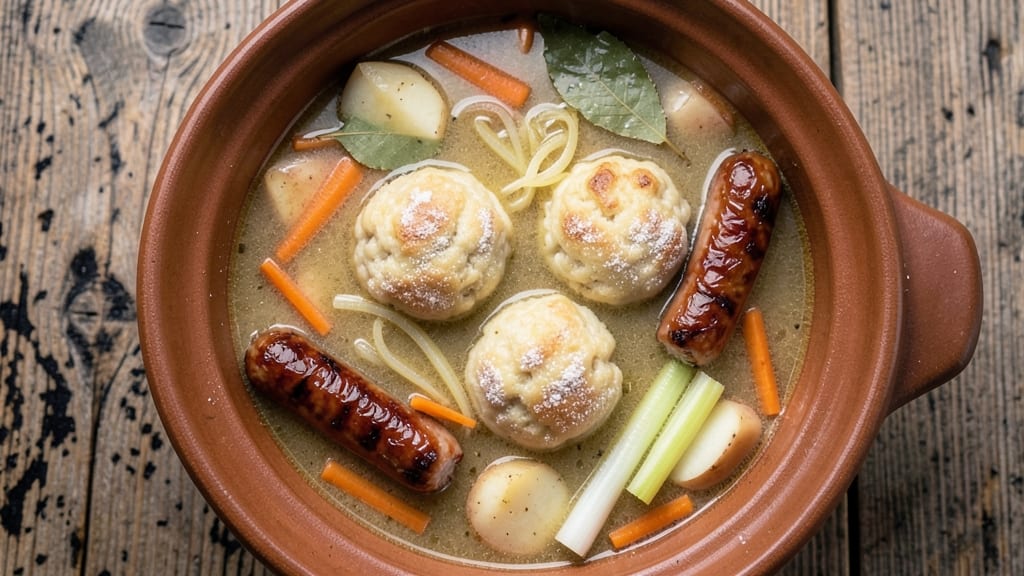
This authentic knoephla soup recipe brings hearty German comfort to your table with tender dumplings floating in rich, savory broth. The secret lies in perfectly formed knoephla—soft yet sturdy dumplings that absorb the broth’s deep flavors without falling apart.
I’ve refined this recipe through years of testing, ensuring each bite delivers that classic German restaurant experience at home.
The foundation starts with a flavorful broth—traditional German sausage, potatoes, and vegetables simmered until the flavors meld into something deeply comforting. While the broth builds, the knoephla dough comes together with just flour, eggs, and a touch of butter, shaped into small, rounded dumplings that puff slightly as they cook.
The key is gentle handling; overworking the dough or boiling too vigorously will ruin their delicate texture.
What you’ll end up with is a steaming bowl of knoephla soup that’s equal parts satisfying and nostalgic—soft dumplings soaking up the savory broth, punctuated by tender sausage and hearty vegetables.
The aroma alone will transport you to a cozy German kitchen, where this dish has been a staple for generations. Serve with a sprinkle of fresh parsley and crusty bread to soak up every last drop.
Perfect for chilly evenings or family gatherings, this recipe scales easily to feed a crowd while maintaining its rustic charm. The dumplings can be made ahead and dropped into the broth at the end, ensuring a hands-off finish.
Let’s bring this classic to life—step by step, with the care it deserves.
Ingredients for authentic knoephla soup
Fresh sausage, hearty veggies, and tender dumplings—this is your authentic German comfort in a bowl.
| Ingredient | Amount | Notes |
|---|---|---|
| German Bratwurst Sausages 🌭 | 1 ½ lb | Fresh, not pre-cooked |
| Yellow Onions 🧅 | 2 whole | Medium size, diced |
| Carrots 🥕 | 4 whole | Medium size, chopped |
| Celery Stalks 🧄 | 3 whole | Trimmed, chopped |
| Russet Potatoes 🥔 | 2 lb | Yukon gold works too |
| Bay Leaves 🌿 | 2 whole | Dried, standard size |
| All-Purpose Flour 🌾 | 2 cups | For knoephla dough |
| Large Eggs 🥚 | 4 whole | Room temperature |
| Unsalted Butter 🧈 | ¼ cup | Cold, cubed |
| Salt 🧂 | 1 ½ tsp | Kosher or sea salt |
| Black Pepper 🌶️ | ½ tsp | Freshly ground |
| Fresh Parsley 🌿 | ¼ cup | Chopped, for garnish |
| Beef Broth 💧 | 6 cups | Homemade or quality store-bought |
| Chicken Broth 💧 | 2 cups | For depth of flavor |
The bratwurst makes all the difference. Johnsonville or Appelgate are my go-tos—they’ve got that classic German flavor. If you can’t find fresh, pre-cooked bratwurst works in a pinch, but fresh is always better. For the broth base, Knudsen or Swanson are solid store-bought options, but homemade is worth the extra time. The potatoes? Russets or Yukon Golds hold up best during simmering. Look for firm, unbruised tubers—they’ll break down just right.
No fresh parsley? Dried works at half the amount, but fresh is ideal for garnish. Swapping the bratwurst? Italian sausage adds a different twist, but keep it mild. The knoephla dough is simple—just flour, eggs, and butter—but the cold butter cubes are key for tender dumplings. If you’re short on time, pre-shredded cheese (though not traditional) can add richness to the broth. For the broth itself, vegetable broth can replace half the chicken broth if you prefer a lighter option.
The broth keeps for 5 days in the fridge, but the dumplings are best made fresh—though you can prep the dough ahead and shape them just before adding to the pot. Freeze the dough in a ziplock for up to 3 months. The full soup reheats beautifully—just warm gently on the stove. I always make double batches because leftovers taste even better the next day. Store in airtight containers with a splash of broth to keep the dumplings moist.
Why You'll Love This Recipe
- One-Pot Wonder: Between us, this soup is ridiculously simple—just brown the bratwurst, toss in the chopped veggies and potatoes, cover with broth, and let it simmer. No fancy techniques, no stress. My daughter even helps chop the celery (she’s terrible at it, but the soup doesn’t care).
- Sausage-Potato Magic: That first bite of tender bratwurst and buttery potatoes falling apart in a rich broth? Chef’s kiss. The onions caramelize just enough to sweeten the whole thing, while the celery and carrots add that earthy depth you’d expect from a proper German stew.
- Weeknight to Potluck: Make it for yourself when you’re too tired to think, or double the batch for a picnic or holiday gathering. The flavors only get better the next day—honestly, the leftovers are my favorite part. (Yes, even on a Tuesday night.)
- Budget-Friendly Feast: A few sausages, a bag of potatoes, and some basic veggies stretch into six bowls of hearty goodness. I’ve fed a crowd of six for under $15 using this recipe—no fancy ingredients, just pure, satisfying comfort food.
Step-by-step instructions for authentic knoephla soup
Here's how to make this hearty German classic with tender dumplings and rich broth.
Cook the Bratwurst and Vegetables
In a large Dutch oven, add the 1.5 lb German bratwurst sausages and cook over medium heat for 5-6 minutes until browned on all sides. Remove them from the pot and set aside. In the same pot, add 2 tablespoons of the beef broth to deglaze, scraping up any browned bits from the bottom.
Add the diced 2 whole yellow onions, chopped 4 whole carrots, and chopped 3 whole celery stalks to the pot. Cook for 8-10 minutes, stirring occasionally, until the vegetables begin to soften. Add the 2 whole bay leaves, the 6 cups beef broth, and the 2 cups chicken broth. Bring to a gentle boil, then reduce heat to medium-low and let it simmer for 15 minutes.
Prepare the Knoephla Dough
While the broth simmers, combine the 2 cups all-purpose flour, 1.5 teaspoons salt, and 0.5 teaspoon black pepper in a large mixing bowl. Make a well in the center and add the 4 whole large eggs. Using a fork, gradually incorporate the eggs into the flour mixture until a soft dough forms. The dough should be slightly sticky but hold together when pressed.
Turn the dough onto a lightly floured surface and knead gently for 1-2 minutes until smooth. Divide the dough into 12 equal portions and roll each portion into a smooth ball about 1.5 inches in diameter. Set aside on a floured plate.
Cook the Potatoes and Add Dumplings
Add the 2 lb russet potatoes, peeled and cut into 1-inch chunks, to the simmering broth. Cook for 15-20 minutes, or until the potatoes are tender and the broth has thickened slightly. The potatoes should be fork-tender but not falling apart.
While the potatoes cook, bring a separate pot of salted water to a gentle boil. Carefully add the knoephla dough balls to the boiling water and cook for 3-4 minutes, or until they float to the surface. Using a slotted spoon, transfer the cooked knoephla to the soup pot.
Finish and Serve
Return the bratwurst sausages to the pot and let the soup simmer together for an additional 10 minutes. This allows all the flavors to meld and the dumplings to absorb the rich broth. Taste and adjust seasoning if needed, adding a bit more salt or pepper as necessary.
Ladle the soup into bowls and garnish each serving with the chopped 0.25 cup fresh parsley. Serve immediately with crusty bread on the side. The knoephla should be soft and pillowy, the broth rich and flavorful, and the bratwurst juicy and perfectly cooked.
Pro Tips For Making Authentic Knoephla Soup
- Parboil the Potatoes First: I learned this the hard way—tossing whole Russets into the soup pot and expecting them to soften evenly is a fantasy. Instead, cut them into 1.5-inch chunks and boil for 5 minutes before adding to the broth. This guarantees they’ll finish cooking without turning to mush while keeping their shape for those perfect dumpling pockets.
- Sweat the Aromatics Low: After burning three batches of onions and celery, I finally figured out: low and slow is non-negotiable. Cook the diced onions, carrots, and celery in butter (or oil) over medium-low for 10 minutes until the onions are translucent and the celery’s edges just soften. Rushing this step makes the soup taste raw and bitter—your future self will notice.
- Prick the Bratwurst: Yes, even if you’re impatient like me, resist the urge to skip this. Use a fork to poke 4-6 small holes in each sausage before browning them. This keeps them from bursting in the soup, letting the flavors infuse the broth instead of creating a greasy mess. (And trust me, you’ll taste the difference.)
- Reserve the Broth: This isn’t the prettiest method, but it’s the tastiest. After browning the sausages, remove them and set aside. Strain the rendered fat and juices through a fine-mesh sieve, then return the clarified liquid to the pot. It adds depth to the broth without making it greasy—like a flavor multiplier. (Your dumplings will thank you.)
Pro cooking tips for authentic knoephla soup
Broth Perfection
Start with a deep, flavorful broth—this is the soul of your knoephla soup. Deglaze the Dutch oven with 2 tablespoons of beef broth after browning the bratwurst to capture all those meaty bits.
Use a mix of 6 cups beef broth and 2 cups chicken broth for depth, and don’t skip the bay leaves—they infuse subtle earthy notes. Simmer the veggies (onions, carrots, celery) for 8-10 minutes before adding broth to soften them without overcooking. 🌿
For extra richness, I often add 1-2 slices of bacon along with the bratwurst—render the fat first, then remove it before adding broth. The fat adds a smoky depth that pairs perfectly with the dumplings. If you’re using store-bought broth, opt for low-sodium to control seasoning better.
Dumpling Mastery
The knoephla dough is simple but requires gentle handling. Work quickly to avoid over-kneading—just 1-2 minutes of kneading is enough to smooth the dough. Shape each ball into 1.5-inch spheres with slightly flattened tops; this helps them hold together while cooking.
Use cold butter cubes in the dough for tenderness—they melt into the flour, creating pockets of richness. 🧈
When boiling the dumplings, use gentle simmering water—rolling boils will tear them apart. They’re done when they float to the surface after 3-4 minutes. Transfer them directly to the soup with a slotted spoon to avoid breaking.
Pro tip: If the dough feels too dry, add 1 tablespoon of milk to the mix for extra softness.
Potato Timing
Add the potatoes last—they need 15-20 minutes to tenderize in the broth, but they’ll break down if left too long. Cut them into 1-inch chunks for even cooking.
If the broth seems too thin after adding potatoes, let it simmer uncovered for 5-10 minutes to reduce slightly. The dumplings will soak up excess liquid naturally. 🥔
For a creamier texture, mash ½ of the potatoes before adding them to the broth. This thickens the soup without needing extra starch. If you’re short on time, parboil the potatoes for 5 minutes before adding them to the soup to cut down on simmering time.
Final Touches
Return the bratwurst to the pot for the final 10 minutes of simmering—this ensures they’re fully cooked and infused with the broth’s flavors. Taste and adjust seasoning with salt and pepper right before serving.
The dumplings should be soft but still hold their shape; if they’re too mushy, reduce simmering time next batch. 🌭
Garnish with fresh parsley just before serving to brighten the dish. For extra flair, drizzle each bowl with a tiny spoonful of caramelized onions or a sprinkle of crumbled bacon. Serve with crusty rye bread to soak up every last drop of that rich broth.
Nutrition facts
Frequently asked questions
What makes knoephla dumplings different from other German dumplings?
Knoephla dumplings are unique because they're made with a simple dough of flour, eggs, and butter, shaped into small, rounded balls with slightly flattened tops. Unlike spaetzle (which is scraped through a board) or knödel (which often includes bread or potatoes), knoephla have a delicate, pillowy texture that absorbs broth beautifully without falling apart. The key is gentle shaping and careful boiling—no overworking the dough!
Can I make knoephla dough ahead of time?
Yes! You can prepare the dough up to 24 hours ahead and store it in an airtight container at room temperature. For longer storage, wrap the dough in plastic wrap and freeze it for up to 3 months. Just thaw it completely before shaping the dumplings. The dough will be slightly firmer after refrigeration, so add 1 tablespoon of milk if needed to restore softness.
Why did my knoephla turn out dense instead of soft?
Overworking the dough or using too much flour are common culprits. The dough should be just sticky enough to hold together—no need to knead vigorously. Another issue could be boiling the dumplings too vigorously (rolling boils tear them apart) or not using cold butter (warm butter makes them greasy). For extra tenderness, try adding 1 tablespoon of milk to the dough if it feels too dry.
What's the best way to reheat leftover knoephla soup?
Gently reheat the soup on the stove over medium-low heat, stirring occasionally, until warmed through. Avoid high heat—it can make the dumplings tough. If the broth seems too thick, add 1-2 tablespoons of water or broth to loosen it. For best results, reheat only what you plan to eat immediately, as the dumplings absorb liquid and may become mushy if left sitting.
Can I substitute the bratwurst with another protein?
For a vegetarian version, use smoked tofu or hearty mushrooms (like portobello) instead of sausage. If you prefer poultry, try shredded chicken or turkey—just add it at the end to warm through. For a meatier option, Italian sausage or kielbasa work well, though they'll slightly alter the traditional German flavor profile.