
Soups & Stews
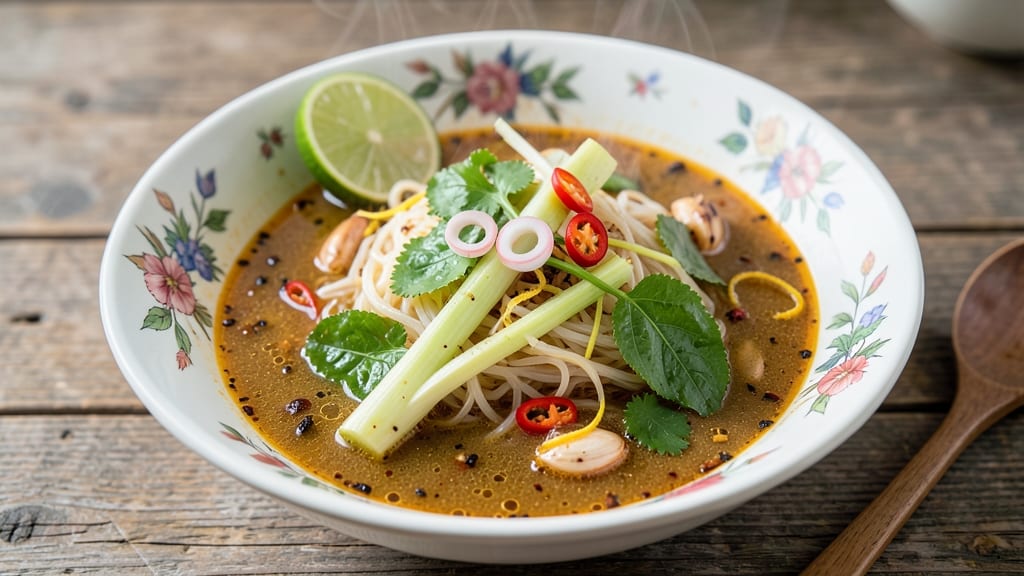
This authentic Thai noodle soup recipe brings the vibrant flavors of Bangkok to your kitchen—fragrant lemongrass, creamy coconut milk, and a balance of sweet, sour, and spicy that’s impossible to resist. The secret lies in simmering aromatic pastes and fresh herbs, transforming simple ingredients into a bowl of restaurant-quality comfort.
I’ve perfected this version after years of testing, ensuring every spoonful delivers the depth of real Thai street food.
The broth is where the magic happens—slow-cooked with galangal, kaffir lime leaves, and chili, then enriched with coconut milk for that signature velvety texture. Thin rice noodles soak up the flavor while remaining tender, and the protein (whether shrimp, chicken, or tofu) cooks just until tender.
This isn’t a quick weeknight meal; it’s a labor of love that rewards patience with bold, complex flavors.
What sets this recipe apart is the harmony of ingredients: the bright tang of lime, the heat of fresh chili, and the earthy depth of cilantro and Thai basil. Each component plays a role, creating a soup that’s as nourishing as it is delicious.
The result? A steaming bowl that’s perfect for chilly evenings or whenever you crave a taste of Thailand.
Serve it with extra lime wedges, crushed peanuts, and a sprinkle of bean sprouts for texture. The instructions walk you through every step—from building the paste to balancing the broth—so you’ll end up with a dish that tastes like it came from a bustling Bangkok market. Let’s get cooking.
Ingredients for authentic thai noodle soup
Fragrant lemongrass and galangal kick off this Thai noodle soup adventure—just a few fresh ingredients transform into restaurant-quality comfort.
| Ingredient | Amount | Notes |
|---|---|---|
| Thin Rice Noodles 🍜 | 8 oz | Rice vermicelli or pad thai noodles |
| Lemongrass 🌿 | 3 whole | Stalks, bruised and cut into 2-inch pieces |
| Galangal 🍃 | 2 inches | Fresh root, peeled and sliced thin |
| Kaffir Lime Leaves 🍋 | 4 whole | Bruised and torn into pieces |
| Fresh Chili 🌶️ | 2 whole | Bird's eye or Thai chili, finely chopped |
| Garlic Cloves 🧄 | 6 cloves | Peeled and smashed |
| Shallots 🧅 | 4 whole | Peeled and sliced thin |
| Coconut Milk 🥥 | 1 ½ cups | Full-fat for creaminess |
| Chicken or Tofu 🍗 | 1 lb | Boneless chicken thigh or firm tofu |
| Fish Sauce 🍶 | 2 tbsp | Red Boat brand preferred |
| Palm Sugar 🍯 | 2 tbsp | Or substitute brown sugar |
| Lime Juice 🍋 | ½ cup | Freshly squeezed |
| Fresh Cilantro 🌿 | ½ cup | Chopped for garnish |
| Thai Basil Leaves 🌿 | ¼ cup | For garnish |
| Crushed Peanuts 🥜 | ¼ cup | For topping |
The galangal and lemongrass are non-negotiable for that authentic Thai aroma. Asian markets carry them fresh—look for firm, vibrant roots with no dark spots. If you can't find galangal, extra ginger at half the amount works in a pinch, though it won't be identical. The kaffir lime leaves? Freeze extras in a bag—they'll last months and keep that incredible citrusy punch. I always grab a few extra stalks of lemongrass because they make the broth sing, and you can use the leftovers in curries too. For the chili, bird's eye if you can handle the heat, or swap for serrano peppers.
No fish sauce? Soy sauce plus a dash of sugar mimics the umami, though it won’t be exactly the same. The coconut milk needs to be full-fat for that creamy texture—Thai Kitchen brand is my go-to, but any canned coconut milk works. For the protein, chicken thighs stay juicier than breasts when simmered, but tofu holds up beautifully too. The palm sugar is worth tracking down at an Asian market—it caramelizes beautifully, but brown sugar works in a bind. And if you're using tofu, press it first to avoid a watery broth. The noodles? Rice vermicelli is ideal, but pad thai noodles work too.
Broth keeps for 3 days in the fridge—taste even better the next day as flavors meld. Freeze portions for up to 3 months by storing in airtight containers. The noodles cook in minutes, so keep them separate until serving. Garnishes like cilantro, Thai basil, and crushed peanuts can be prepped ahead and stored in the fridge for up to 5 days. I like to portion the toppings into small containers so they're ready to go when I am. The lime juice should be fresh-squeezed—it brightens everything up, and those bottles of lime juice just don't cut it.
Why You'll Love This Recipe
- No Chopping Chaos: I swear by this recipe because the prep is ridiculously simple—just bruise the lemongrass and galangal (no knife skills needed), toss in the lime leaves whole, and let the broth work its magic. The noodles cook in minutes, and honestly? That’s half the battle won.
- Herb-Packed Punch: Between us, the combo of galangal and kaffir lime leaves is next-level—earthy, citrusy, with just enough heat from the fresh chili to wake up your taste buds. It’s the kind of flavor that makes you slow down and savor every slurp.
- Leftover Hero: This soup actually tastes better the next day—yes, really. The noodles soften perfectly, the broth deepens, and it’s my go-to for quick lunches. Just reheat, add a splash of water, and you’ve got a meal ready in under 5 minutes.
- Budget-Friendly Feast: I make this for a crowd because it’s cheap but feels fancy—lemongrass and galangal stretch far, and the noodles are a steal. Plus, it’s the kind of dish where everyone asks for seconds, so you’re basically feeding them for pennies. Win-win.
Step-by-step instructions for authentic Thai noodle soup
Here's how to craft this fragrant, restaurant-quality Thai noodle soup at home.
Prepare the Aromatic Base
In a large pot, combine the 3 whole lemongrass (bruised and cut into 2-inch pieces), 2 inches galangal (peeled and sliced thin), 4 whole kaffir lime leaves (bruised and torn), 2 whole fresh chili (finely chopped), 6 cloves garlic (peeled and smashed), and 4 whole shallots (peeled and sliced thin). These aromatic ingredients form the soul of your soup—don't skip bruising them as it releases essential oils that infuse the broth.
Add 1.5 cups coconut milk and bring to a gentle simmer over medium heat. Let it cook uncovered for 10 minutes, stirring occasionally, until the aromatics soften and the mixture develops a rich, golden hue. The coconut milk should begin to separate slightly—this is normal and adds depth to the flavor. Keep the heat low to prevent burning the delicate galangal and lemongrass.
Build the Broth and Season
Add 1 lb chicken or tofu to the pot. If using chicken, choose boneless thigh meat for juiciness. Let it simmer gently for 15-20 minutes until the chicken is cooked through (internal temperature 165°F) or the tofu is heated through and slightly tender. The broth should now be fragrant with layers of lemongrass, galangal, and coconut milk.
Stir in 2 tbsp fish sauce and 2 tbsp palm sugar, adjusting to taste. The fish sauce adds umami depth while the palm sugar balances the acidity. Let the broth simmer for another 5 minutes to allow the flavors to meld completely. You'll notice the aroma intensify—this is your cue that the broth is developing its authentic Thai character.
Cook the Noodles
While the broth simmers, prepare the 8 oz thin rice noodles by soaking them in warm water for 10-15 minutes until pliable but still slightly firm to the bite. Drain and set aside. Overcooking them will turn them mushy—you want them to finish cooking in the hot broth.
Add the drained noodles to the pot and stir gently to distribute them evenly. Let them cook in the broth for 3-4 minutes until they're tender but still hold their shape. The noodles should float just below the surface, and you should see them slightly thicken as they absorb the broth. Taste the broth now—it should be rich, slightly sweet, and tangy with a hint of spice.
Finish with Lime and Garnish
Remove the pot from heat and stir in 0.5 cup lime juice. This brightens the entire dish, cutting through the richness of the coconut milk and adding that signature Thai tang. The soup should immediately take on a more vibrant color and a refreshing acidity. Let it sit for 2 minutes to allow the lime to fully integrate.
Divide the soup among bowls and garnish each serving with 0.5 cup fresh cilantro, 0.25 cup Thai basil leaves, and 0.25 cup crushed peanuts. The peanuts add a delightful crunch that contrasts beautifully with the silky noodles. Serve immediately while the aromas are at their peak—this dish tastes best fresh from the pot.
Adjust and Serve
Taste your soup one final time and adjust the seasoning if needed. You might want to add a bit more fish sauce for saltiness, palm sugar for sweetness, or lime juice for acidity. The beauty of this recipe is its flexibility—each bowl can be personalized to taste.
This authentic Thai noodle soup delivers all the complex flavors you'd find in a street-side stall: fragrant lemongrass, creamy coconut milk, spicy chili, and umami-rich fish sauce. The balance of textures—silky noodles, tender protein, crunchy peanuts, and fresh herbs—makes every bite satisfying. Enjoy it immediately while the broth is steaming hot and the aromas are at their peak.
Pro Tips For Making Authentic Thai Noodle Soup
- Bruise the Galangal: I learned this the hard way—slicing galangal thinly and tossing it in whole won’t release its citrusy punch. Use the flat side of your knife to smash it lightly before cutting into ½-inch chunks. This breaks down the fibers, so the broth actually tastes like Thailand, not like you skipped the spice market.
- Simmer Low and Slow: The broth needs time—at least 20 minutes—to meld lemongrass and kaffir lime leaves into something magical. Start with a rolling boil, then drop the heat to a whisper and let it bubble gently. I used to rush it, and the flavors were always flat. Patience here makes the difference between "meh" and "wow."
- Soak Noodles Separately: Thin rice noodles turn to mush if they sit in hot broth too long. Soak them in warm water (not boiling) for 5–7 minutes until pliable, then drain and add them to the soup just before serving. This keeps them chewy, not soggy—trust me, your bowl will thank you.
- Toast the Chili Dry: Fresh chili peppers lose their heat and depth when boiled raw. Char them over a gas flame (or under a broiler) for 30 seconds per side until slightly blackened. Then slice and add them to the broth. The smoky edge cuts through the soup’s richness—it’s the upgrade no one talks about.
Regional styles of this recipe
Bangkok Street Style
This version keeps it simple like the vendors in Bangkok’s bustling markets. Use rice vermicelli noodles instead of egg noodles for that authentic texture, and focus on a light broth with 1 cup coconut milk instead of the full 1.5 cups—just enough to add creaminess without heaviness.
I like to add 1-2 tbsp of shrimp paste to the aromatic base for that unmistakable street food funk. Serve it in small bowls with extra lime wedges and a sprinkle of crushed dried shrimp on top for a true Bangkok experience. 🌶️
Northern Thai Khao Soi
For a Northern Thai twist, replace the coconut milk with 1 cup coconut cream and add 1 tbsp of turmeric to the broth for a golden hue. Use egg noodles instead of rice noodles, and top with a crispy fried egg and pickled mustard greens.
The key difference is the broth—simmer it longer with chili paste until it’s rich and slightly spicy. This version is heartier and perfect for cooler weather. 🥥
Southern Thai Tom Yum Noodle
Southern Thailand’s version is all about tangy, spicy broth. Reduce the coconut milk to ½ cup and increase the lime juice to ⅔ cup.
Add 3-4 slices of lemongrass and 1 stalk of galangal to the broth, along with 1 tbsp of shrimp paste and 1 tbsp of palm sugar. The broth should be bright, acidic, and packed with heat—almost like a Tom Yum Goong soup but with noodles.
Garnish with extra Thai basil and chili slices for a fiery finish. 🍋
Isaan-Style Spicy Noodle
Isaan cuisine brings a rustic, bold flavor to noodle soups. Use 1 lb of pork shoulder instead of chicken, and add 1 tbsp of fermented soybean paste (tauco) to the broth for a deep, funky umami.
Include 1 tbsp of fish sauce and 1 tsp of sugar to balance the heat. Top with crushed peanuts and fresh herbs like coriander and mint. This version is heartier and more rustic, perfect for those who love bold, unapologetic flavors. 💪
Vegetarian Pad See Ew
For a vegetarian take, swap the protein for extra-firm tofu and mushrooms like shiitake or oyster. Use 1 tbsp of soy sauce instead of fish sauce, and add 1 tsp of white pepper for a distinct aroma.
The noodles should be flat rice noodles (like those used in Pad See Ew), and the broth should be slightly sweeter with 1 extra tbsp of palm sugar. Garnish with green onions and sesame seeds for a lighter, yet equally satisfying bowl. 🌱
Nutrition facts
Frequently asked questions
What makes this Thai noodle soup recipe authentic?
This recipe stays true to Thai flavors by using key aromatics like lemongrass, galangal, and kaffir lime leaves—ingredients that define Thai cuisine. The balance of fish sauce for umami, palm sugar for subtle sweetness, and lime juice for tang creates that signature Thai harmony. Even the garnishes (Thai basil, crushed peanuts) reflect street food traditions.
Can I substitute any ingredients if I can't find them?
For galangal, use extra ginger (half the amount). Skip kaffir lime leaves and add extra lime zest instead. No fish sauce? Mix soy sauce + ½ tsp sugar. For coconut milk, use half-and-half in a pinch, though the flavor won't be identical. The most critical swap is the noodles—stick to rice vermicelli for authenticity.
How do I adjust the spice level?
Start with the 2 whole fresh chili as written for mild heat. For medium spice, add 1 extra chili or 1 tsp chili flakes. For fiery heat, use 3-4 chili or 1 tbsp chili paste. Always taste the broth before adding noodles—you can't remove heat later! Adjust with lime juice (brightens) or sugar (balances).
Why do the noodles turn mushy?
Over-soaking or overcooking causes mushiness. Soak noodles for 10-15 minutes in warm water (not boiling), then drain and rinse with cold water to stop cooking. When adding to broth, cook for only 3-4 minutes—they should finish cooking in the hot liquid. If they're still firm, let them sit 1 more minute off heat.
Can I make this soup ahead of time?
Broth keeps for 3 days refrigerated (flavors improve!) or 3 months frozen. Reheat gently on low heat—never boil. Noodles must cook fresh (they turn to mush when reheated). Prep garnishes (chop herbs, crush peanuts) ahead and store separately. Assemble bowls just before serving for the best texture.