
Soups & Stews
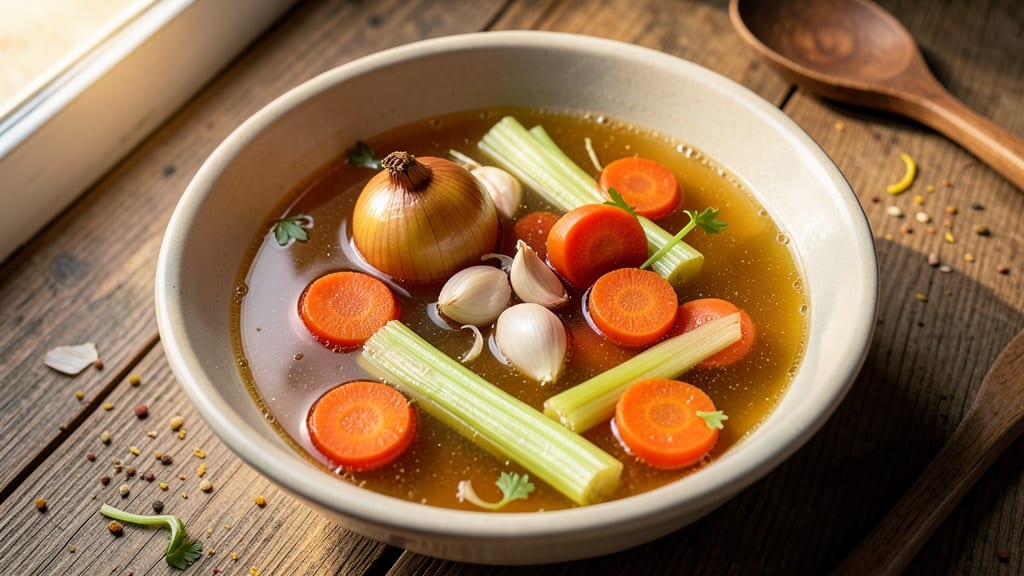
This basic broth soup recipe transforms simple ingredients into a deeply flavorful one-pot meal that builds layers of umami through homemade broth. The secret lies in simmering aromatic vegetables and bones (or mushrooms for vegetarian) until the liquid develops that rich, savory depth that store-bought stocks can't match.
I've perfected this method over years of testing—it's the foundation I return to when I need comfort food that feels both nourishing and restaurant-worthy.
The beauty of this recipe is its adaptability—start with a one-pot base that simmers for hours, allowing flavors to meld while you handle other tasks. You'll begin with onions, carrots, and celery (the classic "holy trinity" of soup building), then add your choice of protein or vegetables.
The broth develops its signature depth as it reduces, creating a velvety texture that coats every ingredient. For maximum flavor, I recommend using a combination of chicken bones and vegetable scraps if you're not vegetarian, but a well-seasoned mushroom base works beautifully too.
What you'll end up with is a soup that's far more complex than its simple ingredients suggest—golden, aromatic broth with tender vegetables and protein that practically melts in your mouth.
The texture is perfect: not too thin, not too thick, with just enough body to hold the vegetables while still being light enough to sip. This is the kind of soup that warms you from the inside out, especially on chilly evenings when you need something hearty but not heavy.
The best part? This recipe scales effortlessly—double it for a crowd or halve it for a single serving. Garnish with fresh herbs, a drizzle of olive oil, or a sprinkle of grated cheese for added richness.
Leftovers keep well in the refrigerator for up to 4 days, making it an ideal meal prep option. Let's get started—your kitchen will soon be filled with the comforting aroma of homemade soup.
Ingredients for basic broth soup
Simple pantry staples and aromatic vegetables create this deeply flavorful broth soup.
| Ingredient | Amount | Notes |
|---|---|---|
| Yellow Onion 🧅 | 1 whole | Chopped into half-moons |
| Carrots 🥕 | 3 medium | Peeled and chopped into chunks |
| Celery Stalks 🥬 | 3 whole | Chopped into 1-inch pieces |
| Garlic Cloves 🧄 | 4 cloves | Minced for depth of flavor |
| Chicken Bones 🍗 | 2 lb | Or 1 lb chicken thighs for meatier broth |
| Vegetable Scraps 🥬 | 2 cups | Optional for extra umami |
| Dried Bay Leaves 🌿 | 2 whole | For aromatic depth |
| Fresh Thyme 🌿 | 1 tbsp | Or 1 tsp dried thyme |
| Fresh Parsley 🌿 | ¼ cup | Chopped for garnish |
| Salt 🧂 | 1 ½ tsp | Kosher or sea salt |
| Black Peppercorns 🌶️ | ½ tsp | Crushed for warmth |
| Russet Potatoes 🥔 | 2 medium | Cubed for heartiness |
| Extra-Virgin Olive Oil 🫒 | 2 tbsp | For sautéing vegetables |
| Water 💧 | 8 cups | Enough to cover ingredients |
The chicken bones are the flavor foundation here—look for fresh, uncooked bones at your butcher or grocery store's meat counter. If you're vegetarian, swap them for cremini mushrooms (4 oz) or extra vegetable scraps. The onions, carrots, and celery form the classic 'holy trinity'—buy organic if possible to avoid dirt buildup, but regular works fine too. For thyme, fresh is ideal but dried works at one-third the amount. I always grab extra parsley—half goes in the pot, half gets torn over the top at the end.
No chicken bones? Substitute with 1 lb chicken thighs for a meatier broth, or 1 block of firm tofu for vegetarian. Running low on bay leaves? Dried oregano at half the amount works in a pinch. The potatoes can be swapped for green beans or zucchini if you prefer lighter veggies. For extra richness, add 1 tbsp tomato paste when you add the broth. And if you're using vegetable scraps, carrot tops and celery leaves add great flavor too—they're free if you compost!
This soup tastes even better the next day as flavors meld. Store in an airtight container for up to 5 days in the fridge. For longer storage, freeze portions for up to 3 months. I like to portion it into soup jars so I can grab and heat directly. The broth reduces as it cooks, so add water gradually if it gets too thick. Garnish with fresh herbs or a drizzle of olive oil before serving.
Why You'll Love This Recipe
- Pantry Magic: I swear by this recipe when I’ve got nothing but onions, carrots, and celery staring back at me from the crisper. No fancy ingredients—just the holy trinity of veggies and chicken bones (even store-bought ones work) to build that deep, savory base. It’s the kind of soup that proves you don’t need a recipe to feel like you’ve fed your family well.
- Umami Bomb: That slow simmer? It pulls every last bit of flavor from the bones and garlic until your broth tastes like it’s been simmering for hours—even if it’s just 45 minutes. The carrots and celery soften into sweet, melt-in-your-mouth strands, and the onion? It disappears into rich, caramelized goodness. Honestly, I’ll take this over any pre-made broth any day.
- Leftovers That Shine: This soup only gets better the next day. I make a big batch on Sundays (because, let’s be real, roasting chicken means bones), and by Wednesday, it’s transformed into something even more complex. Freeze half for those nights when you’re too tired to cook—just reheat and add a splash of water. It’s my secret weapon for lazy days.
- Budget-Friendly Staple: Chicken bones are cheap, and the veggies? They’re the kind of ingredients you always have lying around. Between us, this is how I stretch a single chicken into three meals without breaking the bank. Plus, the broth itself becomes the star of future soups, grains, or even rice dishes. It’s the kind of recipe that makes me feel like I’m winning at life.
Step-by-step instructions for basic broth soup
Here's how to build rich, flavorful soup from scratch in one pot.
Sauté the Vegetable Base
Heat the 2 tablespoons extra-virgin olive oil in a large stockpot over medium heat. Add the chopped yellow onion, chopped carrots, and chopped celery stalks all at once. Cook for 8-10 minutes until the vegetables soften and the onion becomes translucent.
I like to stir occasionally but not constantly—this helps develop deeper caramelization in the vegetables. You'll notice the mixture releases moisture as it cooks, which is perfect for building flavor. If the vegetables start sticking, reduce heat briefly to medium-low and let them cook until they release from the pot.
Add Aromatics and Brown the Bones
Push the sautéed vegetables to one side of the pot and add the minced garlic cloves to the empty space. Cook for 30 seconds until fragrant—this prevents the garlic from burning. Then add the 2 pounds chicken bones and 2 cups vegetable scraps to the pot, spreading them out evenly.
Increase heat to medium-high and let the bones brown for 5-7 minutes. You'll see golden spots forming on the bones and a rich, nutty aroma developing. This browning step is crucial for deep umami flavor. If the bones aren't browning evenly, gently stir them with a wooden spoon to ensure even color development.
Simmer the Broth
Pour in the 8 cups water and add the 2 whole dried bay leaves, 1 tablespoon fresh thyme, 1.5 teaspoons salt, and 0.5 teaspoon crushed black peppercorns. Bring to a boil over high heat, then immediately reduce to a gentle simmer. Skim off any foam that rises to the surface with a fine-mesh skimmer.
Let the broth simmer uncovered for 1.5 hours. You'll know it's developing properly when the liquid becomes clear and golden, and the aroma fills your kitchen. I like to check occasionally but avoid stirring too much—this keeps the broth clean and prevents cloudiness. The longer it simmers, the more flavorful it becomes.
Add Potatoes and Finish Cooking
After 1.5 hours, add the cubed russet potatoes to the pot. Return to a simmer and cook for another 20-25 minutes until the potatoes are fork-tender. You'll see them float to the surface when they're nearly done—give them a gentle stir to ensure even cooking.
Taste the broth and adjust seasoning if needed. The potatoes should be soft enough to pierce with a fork but still hold their shape. Once done, remove the dried bay leaves and chicken bones from the broth using tongs. Strain the broth through a fine-mesh sieve if you prefer a smooth texture, or leave it slightly cloudy for a rustic feel.
Garnish and Serve
Return the strained broth to the pot and stir in the 0.25 cup chopped fresh parsley. Ladle the hot soup into bowls and serve immediately. The broth should be rich and flavorful, with the potatoes adding hearty texture. For extra depth, you can add a drizzle of olive oil or a sprinkle of freshly cracked black pepper on top.
This one-pot method captures all the umami depth of homemade broth while keeping the process simple. The aromatics and slow simmer create layers of flavor that store-bought broth can't match. Enjoy your comforting, homemade soup!
Pro Tips For Making Basic Broth Soup
- Char the Bones First: I learned this the hard way—skipping the sear on chicken bones means a broth that tastes more like watered-down chicken juice. Get your pot screaming hot, add the bones in a single layer, and let them brown deeply for 10-15 minutes before adding anything else. The crust forms flavor you can’t get any other way.
- Cut Celery in Half Lengthwise: Whole celery stalks float like buoys and won’t release their good stuff. Split them down the middle before chopping, so the fibrous core breaks open and infuses the broth properly. Yes, it looks messy, but your soup will taste richer—trust me, I’ve done both.
- Don’t Rush the Simmer: A rolling boil burns off delicate flavors faster than you can say "salt to taste." Keep the heat low enough that you see just the occasional tiny bubble at the edge of the pot. Patience here makes the difference between "meh" broth and something you’d happily drink straight from the pot.
- Use Cold Water, Not Hot: Dumping cold water into a hot pot might feel counterintuitive, but it prevents the bones from cooking too fast and turning rubbery. Start with cold water, bring it to a simmer, then adjust heat to maintain that gentle bubble. Your bones will thank you with better texture—and so will your taste buds.
Creative variations of this dish
Vegetarian Mushroom Base
Swap the chicken bones for 8 oz cremini mushrooms (chopped) and 1 block extra-firm tofu (cubed) to create a rich vegetarian broth. Sauté the mushrooms first with the onions, carrots, and celery until deeply browned—this builds umami without meat.
Add 1 tbsp soy sauce when you pour in the water for extra depth. The tofu will break down into the broth, creating a hearty, protein-packed alternative. 🌱
Spicy Tomato Twist
Stir in ½ cup crushed tomatoes and 1 tsp smoked paprika when you add the potatoes. The acidity brightens the broth while the paprika adds warmth. For extra heat, add ½ tsp cayenne pepper or a pinch of red pepper flakes.
Top with fresh basil and a drizzle of balsamic glaze for a restaurant-worthy finish. This works especially well with white beans added at the end.
Creamy Corn Chowder
Add 2 cups corn kernels (fresh or frozen) and 1 cup heavy cream (or coconut milk for dairy-free) along with the potatoes. Stir in ½ cup shredded cheddar cheese at the very end for a velvety texture.
Garnish with crispy fried onions or chives for crunch. The sweetness of the corn balances the savory broth beautifully. This version feels like a cozy hug in a bowl! 🌽
Asian-Inspired Ginger-Lime
Infuse the broth with 1 tbsp grated fresh ginger and 2 slices lime zest while simmering. Add 1 tbsp fish sauce (or soy sauce for vegetarian) and 1 tsp honey to balance flavors.
Serve with rice noodles and top with thinly sliced scallions and cilantro. The citrus notes brighten the rich broth, making it perfect for a lighter dinner. 🍋
Hearty Lentil & Root
Add 1 cup dried brown or green lentils (rinsed) along with the potatoes. The lentils will soften as the broth simmers, adding protein and earthy texture. For extra depth, stir in 1 tsp ground cumin and ½ tsp cinnamon when you add the lentils.
Top with toasted pine nuts and fresh dill for a Middle Eastern-inspired twist. This version keeps well for days in the fridge. 🌿
Smoky BBQ Potato
Mix ½ cup BBQ sauce (like Sweet Baby Ray's) into the broth when you add the potatoes. Stir in ½ cup cooked pulled pork (or shredded jackfruit for vegetarian) and top with pickled red onions and crumbled bacon.
The smoky-sweet contrast is addictive. This is my go-to for game day gatherings—always a crowd-pleaser! 🔥
Nutrition facts
Frequently asked questions about basic broth soup
Can I use store-bought broth instead of homemade?
You can, but the flavor won't be as deep. Store-bought broth lacks the rich, developed umami from simmering bones and vegetables for hours. If you're short on time, use high-quality low-sodium broth and add extra aromatics like garlic, thyme, and bay leaves to boost flavor. For best results, simmer the homemade broth longer—2-3 hours if possible.
How do I prevent my broth from being too cloudy?
Cloudiness comes from tiny food particles and fat. Skim off foam during the first 15 minutes of simmering, then strain the broth through a fine-mesh sieve before adding potatoes. For extra clarity, chill the broth overnight—the fat will solidify on top and can be removed. If you prefer rustic texture, leave it slightly cloudy—it adds character!
What's the best way to store leftovers?
Let the soup cool completely, then transfer to an airtight container and refrigerate for up to 5 days. For longer storage, freeze portions in soup jars or freezer bags for up to 3 months. Reheat gently on the stove over medium-low heat, stirring occasionally. Avoid microwaving—it can make the broth watery.
Can I make this soup in an Instant Pot?
Yes! Sauté the vegetables and brown the bones as directed, then add all ingredients except potatoes. Seal the lid, set to high pressure for 30 minutes, then quick-release. Add potatoes and cook on sauté mode for 10 minutes until tender. The pressure cooker cuts simmering time but may yield slightly less flavor—extend to 45 minutes for deeper taste.
Why does my broth taste bland?
Bland broth often means insufficient simmering time or under-seasoning. Always simmer for at least 1.5 hours (longer is better). Taste the broth before adding potatoes—adjust with salt, black pepper, or a splash of soy sauce for umami. For extra depth, add 1 tsp fish sauce or Worcestershire sauce at the end. Fresh herbs like parsley or thyme brighten flavors too.