Soups & Stews
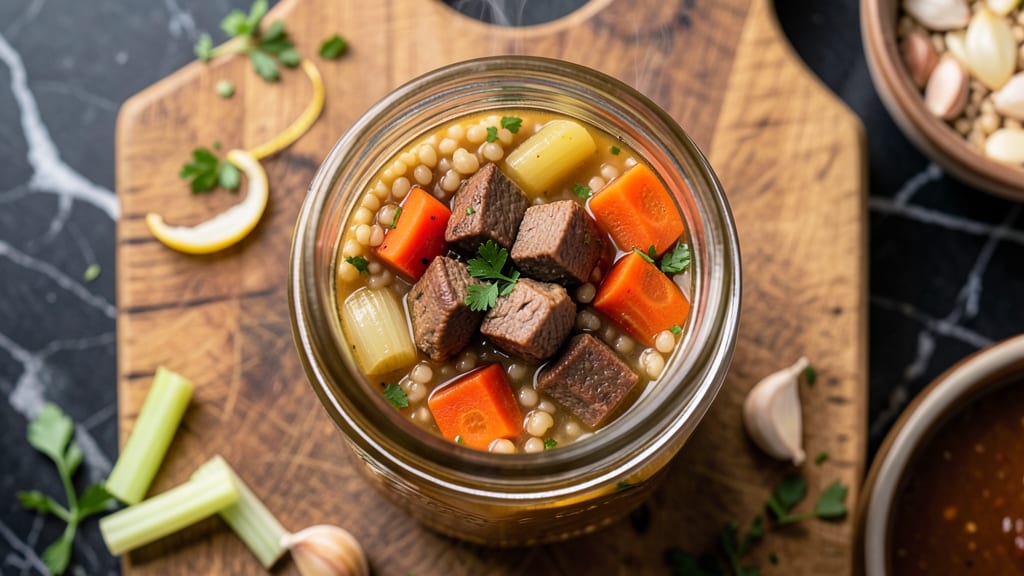
This beef barley soup canning recipe transforms hearty weeknight meals into pantry staples that last for months. The rich, savory broth and tender barley create a comforting texture perfect for cold weather, while the canning process preserves every flavor in sterilized glass jars.
I developed this method after years of perfecting the soup—balancing meaty depth with barley's satisfying chew and vegetables that soften just enough to melt into the broth.
The beauty of canning this soup lies in its simplicity: you'll simmer beef, vegetables, and barley until the flavors meld perfectly, then carefully package the hot soup into jars for safe, long-term storage. Pressure canning ensures the jars seal properly, maintaining both safety and quality.
What you end up with is a pantry-friendly version of your favorite soup—ready to warm up with just a few minutes of reheating whenever you need that cozy, home-cooked feeling.
This recipe delivers restaurant-quality comfort without the daily effort. The beef becomes fork-tender, the barley absorbs the rich broth, and the carrots and celery add natural sweetness that balances the savory notes.
Each jar holds the essence of a home-cooked meal, perfect for emergency pantries, gift-giving, or simply stocking up for winter. The process might require patience, but the reward is meals that taste like home, preserved for whenever you need them.
Whether you're a seasoned canner or trying this method for the first time, the step-by-step instructions will guide you through sterilizing jars, processing times, and storage tips to ensure your soup stays safe and delicious for up to a year.
Modern adaptations like pressure canning make the process more efficient, while traditional water bath methods work for those who prefer a slower approach. Let's get started on creating your pantry's new comfort staple.
Ingredients for beef barley soup canning
Twelve ingredients to transform your pantry into a cozy soup factory.
| Ingredient | Amount | Notes |
|---|---|---|
| Chuck Roast 🥩 | 4 lb | Cut into 1-inch cubes for even cooking |
| Pearl Barley 🌾 | 2 cups | Uncooked, rinsed well before adding |
| Carrots 🥕 | 4 medium | Peeled and sliced into 1-inch chunks |
| Celery Stalks 🧅 | 6 whole | Trimmed and cut into 1-inch pieces |
| Yellow Onion 🧅 | 1 whole | Peeled and quartered |
| Garlic Cloves 🧄 | 6 cloves | Peeled and smashed |
| Tomato Paste 🍅 | ½ cup | High-quality, no added salt |
| Beef Broth 💧 | 8 cups | Homemade or low-sodium store-bought |
| Dried Thyme 🌿 | 1 tbsp | Or 1 tbsp fresh, finely chopped |
| Bay Leaves 🍃 | 2 whole | Remove before serving |
| Black Peppercorns 🌶️ | 1 tsp | Freshly cracked |
| Salt 🧂 | 2 tsp | Adjust to taste after canning |
| Lemon Juice 🍋 | 2 tbsp | Freshly squeezed, for acidification |
| Canning Salt 🧂 | ½ tsp | For processing, not consumption |
The chuck roast is non-negotiable here—it's what gives your canned soup that deep, meaty richness. Costco sells it pre-cut for convenience, but if you're buying a whole roast, ask your butcher to cube it for you. Look for good marbling; that's where the flavor hides. Barley can be tricky—Pearl barley is the standard, but if you spot hull-less at the store, grab it. It cooks faster and keeps its shape better. The carrots and celery should be fresh, not rubbery—local farmers markets often have the best selection. For the tomato paste, San Marzano is ideal, but any high-quality paste works. Just avoid the kind with added salt—you'll control that.
No chuck roast? Beef stew meat works in a pinch, but it won't be as tender after canning. Short on barley? Wild rice or brown rice can substitute, but the texture will differ. The beef broth can be homemade (trust me, it's worth it), but if you're using store-bought, go for low-sodium to avoid over-salting your final soup. Fresh thyme is ideal, but dried at one-third the amount gets you close. The lemon juice is critical—it's what makes the canning process safe. If you're worried about flavor, use extra lemon juice and adjust seasoning after opening the jars. For the canning salt, Diamond Crystal is the gold standard—it dissolves completely and won't leave gritty residue.
This soup keeps for up to 1 year in a cool, dark pantry once canned. The jars should be stored upright to prevent warping. Before opening, check for proper seals—press the center of the lid. If it doesn't pop, it's sealed correctly. Once opened, transfer to the fridge and use within 5-7 days. The barley will thicken the soup as it sits, so add a splash of broth when reheating if it's too thick. I always make a double batch—one for the pantry, one for immediate meals. The extra effort means I always have soup on hand when winter hits.
Why You'll Love This Recipe
- Rich, Earthy Depth: That first bite? Caramelized onions and celery base with barley soaking up all the beefy goodness—it’s like a warm hug in a jar. Honestly, the umami from the roast and barley combo is dangerously satisfying.
- Canning Goldmine: Batch it, seal it, and boom—your pantry’s stocked for winter or lazy Mondays. The barley stays plump, the beef stays juicy, and you’ve just saved yourself from takeout nights.
- Budget-Friendly Powerhouse: Chuck roast on sale? Barley lasts forever? This soup stretches into three meals for the price of one. Between us, it’s my go-to when groceries feel tight but I still want flavor.
Step-by-step instructions for beef barley soup canning
Preserving this hearty soup is simpler than you think—just follow these precise steps.
Prepare the Meat and Vegetables
Cut the 4 lb chuck roast into 1-inch cubes for even cooking. In a large pot, combine the meat with the 8 cups beef broth, 1 whole yellow onion (quartered), 6 whole celery stalks (cut into 1-inch pieces), 4 medium carrots (sliced into 1-inch chunks), 6 cloves garlic (smashed), 0.5 cup tomato paste, 1 tbsp dried thyme, 2 whole bay leaves, and 1 tsp black peppercorns. Bring to a boil over medium-high heat until the broth froths.
Reduce heat to low and let it simmer uncovered for 2 hours, stirring occasionally. This slow cook ensures the meat becomes fork-tender and the flavors meld beautifully. Skim off any foam that rises to the surface during this time—it keeps the soup clear and clean-tasting.
Add Barley and Season
Rinse the 2 cups pearl barley thoroughly under cold water to remove any dust or debris. Add the rinsed barley to the pot and stir to combine. Simmer the mixture uncovered for another 30 minutes, or until the barley is tender but still has a slight bite.
Taste the soup and adjust seasoning with the 2 tsp salt if needed. The barley should absorb some of the broth, creating a thick, hearty consistency. If the soup is too thin, let it simmer uncovered for an additional 10-15 minutes to reduce slightly. Here’s the key: the barley should be tender but not mushy—this ensures the best texture in your canned soup.
Acidify and Prepare for Canning
Remove the pot from heat and stir in the 2 tbsp lemon juice. This acidification step is critical for safe canning—it helps prevent bacterial growth in the sealed jars. Let the soup cool to room temperature before proceeding. Skim off any remaining fat from the surface if desired, though it adds richness.
Once cooled, ladle the soup into clean, sterilized pint or quart jars, leaving 1-inch headspace at the top. This space allows for proper expansion during processing. Wipe the rims of the jars with a damp cloth to ensure a clean seal, then place lids and bands on the jars.
Process the Jars
Place the jars into a pressure canner and process them according to your altitude guidelines. For most areas, this means processing pint jars for 75 minutes and quart jars for 90 minutes at 10 pounds of pressure for a dial-gauge canner (or 11 pounds for a weighted-gauge canner). The pressure ensures the jars seal properly and the soup remains safe to store.
After processing, remove the jars and let them cool undisturbed for 12-24 hours. You’ll hear the lids pop as they seal—this confirms your hard work paid off. Label the jars with the date and store them in a cool, dark place for up to 12 months. When you’re ready to enjoy, simply open a jar, reheat, and savor the comforting flavors of homemade beef barley soup.
Pro Tips For Making Beef Barley Soup Canning
- SEAR THE ROAST FIRST: Don’t just toss the chuck roast into the pot raw—hit it with high heat in a Dutch oven or heavy pot until it’s deeply browned on all sides. I learned this the hard way: skipping the sear means flavor that’s more like "beef water" than rich, caramelized depth. Let it get good and crusty before adding anything else.
- SOAK THE BARLEY: Pearl barley swells up like a sponge, and if you skip soaking, you’ll end up with a soup that’s more grit than creamy texture. Toss it in cold water for at least 30 minutes (or overnight if you’re prepping ahead), then drain before adding to the pot. Trust me, your future self will notice the difference when spooning the soup.
- DON’T SKIP THE SKIM: After the roast has cooked for an hour or so, skim off the foam and fat that rises to the top—it’s not gross, it’s necessary. This keeps your soup from turning greasy and ensures the broth stays clear and rich. Use a ladle or a fine-mesh skimmer, and do it every 15 minutes for the first hour. (Yes, even if you’re impatient like me.)
- LOW AND SLOW WINS: This isn’t a race—simmer that soup at a steady, gentle bubble (think tiny ripples, not rolling waves) for at least 2.5 hours, ideally 3. The longer the beef breaks down, the more tender and flavorful it gets. I used to rush it, and the roast would turn out chewy. Patience here guarantees melt-in-your-mouth results.
Regional styles of these flavors
Classic New England Style
In New England, beef barley soup often includes a touch of molasses—about 1 tablespoon added during the simmering stage. This gives the soup a subtle caramel depth that pairs perfectly with the hearty beef and barley.
Locals also swear by adding a parsnip (about 1 cup diced) for natural sweetness. The soup is traditionally served with a dollop of sour cream and fresh parsley on top, adding a creamy contrast to the rich broth. 🌟
Southern Comfort Twist
Southern cooks often enhance their canned beef barley soup with smoked paprika (about ½ teaspoon) and a ham bone instead of plain beef. The ham bone infuses the broth with a smoky, savory depth that’s perfect for cold winter days.
Some versions also include collard greens (about 2 cups chopped) for a touch of Southern greens flavor. The soup is typically served with cornbread on the side, creating a complete meal. 🍖
Midwestern Heartland Approach
The Midwestern style leans into homemade broth and potatoes—about 2 cups diced potatoes added with the barley. This version often includes caramelized onions (about 1 cup) for extra richness. Locals also add a pinch of ground allspice (about ¼ teaspoon) for warmth.
The soup is a staple at family gatherings, often served with a side of crusty bread for dipping. 🥔
Pacific Northwest Adaptation
In the Pacific Northwest, the soup gets a local twist with wild mushrooms (about 1 cup sliced) and a splash of soy sauce (about 1 tablespoon) for umami depth. Some cooks also add fresh thyme and a bay leaf for brightness.
The region’s cooler climate makes this soup a winter favorite, often paired with sourdough bread and a glass of Pinot Noir. The mushrooms add an earthy flavor that complements the barley beautifully. 🍄
Appalachian Mountain Tradition
Appalachian-style beef barley soup often includes apples—about 1 cup diced tart apple—for a touch of sweetness that balances the savory broth. Some recipes also call for wild onions (about ¼ cup chopped) for a sharper, more robust flavor.
The soup is traditionally served with cornmeal biscuits, and some families add a dash of hot sauce for a spicy kick. This version is a testament to resourcefulness, using whatever’s available locally. 🍏
Nutrition facts
Frequently asked questions
Can I use pressure canning instead of water bath canning for this recipe?
Pressure canning is the recommended method for this hearty beef barley soup. It reaches higher temperatures (240°F+) that destroy harmful bacteria like Clostridium botulinum, which could survive in low-acid foods like soup. For pint jars, process at 10 pounds pressure for 75 minutes (or 90 minutes for quarts). This ensures both safety and that delicious, thick texture you love.
How do I know if my canned soup has sealed properly?
Check for a proper seal by pressing the center of the lid—it should pop back without suction. If the lid flexes or pops up, the jar didn't seal. Store unsealed jars in the fridge and use within 5 days. Another sign: the lid should be concave (curved inward) after cooling. If it's flat or bulging, the seal failed. Always check before storing long-term!
Can I add fresh herbs like parsley or dill after canning?
Fresh herbs should never be added after canning—they can introduce bacteria that spoil the sealed environment. Instead, add dried herbs (like thyme or bay leaves) during cooking, then remove them before canning. For fresh garnishes, add them just before serving. The lemon juice in the recipe already provides the acidity needed for safe preservation.
What's the best way to reheat canned beef barley soup?
Transfer the soup to a pot and heat over medium-low heat, stirring occasionally, until bubbling. Avoid high heat to prevent the barley from becoming mushy. If the soup seems too thick after reheating, add a splash of hot water or broth. For best texture, reheat only what you'll use immediately—leftover reheated soup thickens further when cooled.
Can I substitute pearl barley for another grain?
While pearl barley is traditional, you can use wild rice or brown rice (both take 45-50 minutes to cook). For quick-cooking grains like instant rice, reduce cooking time by half (about 15 minutes). Note that texture will differ—barley's chewiness is key to classic beef barley soup. If substituting, adjust processing times according to your altitude guidelines for grain-based soups.