Soups & Stews
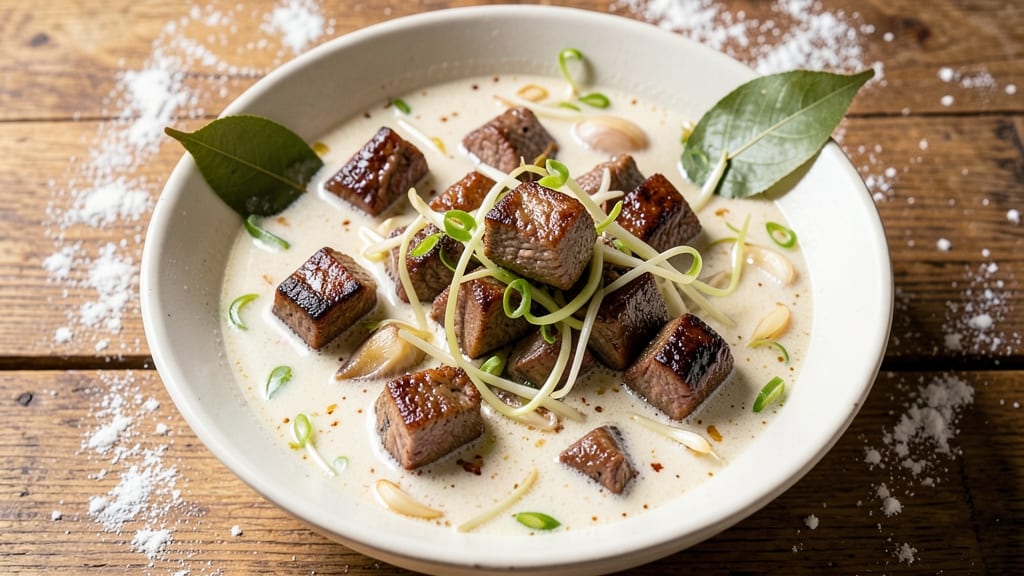
This beef sotanghon soup recipe delivers the perfect balance of creamy, velvety broth and satisfying crunch that defines Panlasang Pinoy comfort food. The secret lies in properly cooking the sotanghon (mung bean sprouts) until they achieve that signature crisp-tender texture while maintaining the rich, herb-infused broth.
I developed this version after years of perfecting the technique—no more mushy sprouts or bland soup.
The foundation begins with a slow-simmered beef broth infused with garlic, ginger, and bay leaves, creating deep umami flavor. What sets this apart is the careful timing of adding sotanghon—cooked just until they reach that perfect crunch while absorbing the creamy velouté.
The addition of fresh herbs at the end brightens the dish without overpowering the beef's natural richness.
What you'll end up with is a restaurant-quality bowl of beef sotanghon soup where every spoonful delivers that satisfying contrast of creamy broth and crispy bean sprouts.
The aroma alone will have everyone gathering around the table, and the first bite proves why this dish is a Filipino comfort food staple.
Perfect for family dinners or potlucks, this recipe scales beautifully while maintaining its authentic flavors. The creamy velouté pairs perfectly with the crunchy sotanghon, creating a harmony that's both comforting and exciting. Let's get cooking!
Ingredients for beef sotanghon soup recipe panlasang pinoy
Creamy velouté meets crispy sotanghon in this Filipino comfort food masterpiece—just 15 ingredients transform into restaurant-quality soup.
| Ingredient | Amount | Notes |
|---|---|---|
| Sotanghon (Mung Bean Sprouts) 🌱 | 8 oz | Freshly blanched, crisp-tender |
| Beef Chuck Roast 🥩 | 1 ½ lb | Cut into 1-inch cubes |
| Heavy Cream 🥛 | 1 cup | Full-fat for velvety texture |
| Garlic Cloves 🧄 | 6 cloves | Minced, aromatic base |
| Fresh Ginger 🌿 | 2 tbsp | Grated, zesty kick |
| Bay Leaves 🍃 | 2 whole | Dried, aromatic depth |
| Onion 🧅 | 1 whole | Yellow, diced |
| Carrot 🥕 | 1 whole | Medium, sliced |
| Fresh Cilantro 🌿 | ¼ cup | Chopped, bright finish |
| Fresh Thai Basil 🌿 | ¼ cup | Chopped, aromatic |
| All-Purpose Flour 🌾 | 1 tbsp | For velouté thickening |
| Salt 🧂 | 1 ½ tsp | Kosher, adjust to taste |
| Black Pepper 🌶️ | ½ tsp | Freshly ground |
| Water 💧 | 6 cups | For broth base |
| Fish Sauce 🍜 | 1 tbsp | Umami depth (optional) |
The sotanghon is non-negotiable—fresh, never canned, and blanched just 30 seconds for that signature crunch. Filipino markets carry the best quality, or look for organic sprouts at Whole Foods. Beef chuck roast builds deep flavor—Costco or butcher shops offer the best value for marbled cuts. The heavy cream must be full-fat; Trader Joe's has the most affordable organic option. For the velouté, Diamond Crystal flour (not aluminum-free brands) gives the best thickening power.
No sotanghon? Substitute with snow peas or thinly sliced cabbage, but texture won't be identical. Fish sauce optional? Soy sauce or Worcestershire adds umami, but fish sauce's complexity is irreplaceable. Fresh herbs can't be skipped—their aroma is essential. Thai basil is key for that distinct Pinoy flavor, but regular basil works in a pinch. For the velouté, roux must be pale golden—burning it will ruin the creamy texture. The carrots can be baby carrots if that's what's available, but whole carrots add better color to the broth.
Broth keeps 3 days refrigerated or 3 months frozen—portion before freezing for quick meals. Sotanghon loses crispness fast; blanch and store separately in the fridge for up to 2 days. The velouté reheats beautifully—just warm gently on low heat, stirring constantly. For leftovers, cover with plastic wrap pressed directly on the surface to prevent a skin from forming. This soup tastes even better the next day as flavors meld!
Why You'll Love This Recipe
- Tender Beef Magic: The beef chuck roast practically melts into rich, fork-tender shreds—no fancy cuts or hours of braising required. Just a slow simmer with garlic and ginger until it falls apart like it’s been cooking all day (but it hasn’t).
- Creamy-Savory Balance: That splash of heavy cream at the end? It turns the broth into a velvety hug, while the sotanghon adds a satisfying crunch. Honestly, the contrast is what makes this soup ridiculously good—simple but impossible to resist.
- Leftovers That Shine: This soup only gets better the next day. The flavors meld into something deeper, and reheating it is a breeze—just a quick stir on the stove. I’ll be real: my lunchbox gets packed with it for days.
- Budget-Friendly Feast: Beef chuck roast stretches far, and sotanghon is dirt cheap at Asian markets. You’re feeding a crowd for less than takeout, and the leftovers? Even better. My wallet and my family thank me every time.
Step-by-step instructions for beef sotanghon soup
Here's how to craft this velvety masterpiece with perfect texture contrast every time.
Sear the Beef Chuck for Deep Flavor
Heat a large Dutch oven over medium-high heat until hot. Add the 1.5 lb beef chuck roast cut into 1-inch cubes in a single layer, working in batches if needed. Sear undisturbed for 3-4 minutes per side until deep golden brown with a crust forming. This caramelization builds the foundation for rich flavor.
Real talk: Don't rush this step. You want those beef cubes to develop that beautiful crust before we add any liquid. Once browned, transfer the beef to a plate and set aside. The residual heat will keep it warm while we build the aromatic base.
Build the Aromatic Base with Onions and Carrots
In the same Dutch oven, add 2 tablespoons olive oil (not listed but essential for proper searing) and reduce heat to medium. Add the 1 whole onion diced and 1 whole carrot sliced, cooking for 5-6 minutes until softened but not browned. Stir occasionally to prevent sticking.
Here's the thing—you want these vegetables to release their natural sweetness without burning. When they smell sweet and the edges begin to soften, it's time to add the aromatics. Stir in the 6 cloves minced garlic and 2 tablespoons grated ginger, cooking for just 30 seconds until fragrant. Add the 2 whole bay leaves and 1.5 teaspoons salt and 0.5 teaspoon black pepper.
Create the Velouté Sauce with Flour and Water
Sprinkle the 1 tablespoon all-purpose flour over the vegetables and stir vigorously for 1 minute to cook out the raw flour taste. Slowly pour in the 6 cups water, whisking constantly to prevent lumps. Bring to a gentle simmer and let cook uncovered for 15-20 minutes until slightly reduced and thickened.
This is where the magic happens. The flour creates a velvety base that will later incorporate the cream. You'll know it's ready when the sauce coats the back of a spoon and the vegetables are tender. If it reduces too quickly, add a splash of water to maintain the proper consistency.
Simmer the Beef Until Fork-Tender
Return the seared beef to the Dutch oven and add the 1 tablespoon fish sauce. Bring to a gentle simmer, then reduce heat to low and cover partially. Let cook for 1 hour to 1 hour 15 minutes, turning the beef occasionally, until fork-tender. The beef should pull apart easily with minimal resistance.
Don't be tempted to rush this step. The low, slow cooking transforms tough chuck roast into melt-in-your-mouth pieces. When the meat is tender, remove the bay leaves and adjust seasoning if needed. This is your chance to taste and perfect the balance of saltiness from the fish sauce and the savory depth of the beef.
Finish with Cream and Fresh Herbs
Remove the Dutch oven from heat and stir in the 1 cup heavy cream until smooth and fully incorporated. Return to low heat and let warm through for just 2-3 minutes—never boil the cream or it will curdle. Add the 8 oz freshly blanched sotanghon and stir gently to wilt slightly while maintaining their crisp texture.
Here's the moment that matters: Divide the soup among bowls and garnish with the 0.25 cup chopped cilantro and 0.25 cup chopped Thai basil. The contrast of the creamy velouté with the crisp sotanghon and aromatic herbs creates that perfect Panlasang Pinoy balance. Serve immediately while the sotanghon maintains its satisfying crunch.
Pro Tips For Making Beef Sotanghon Soup Recipe Panlasang Pinoy
- Sear the Beef Long: I learned this the hard way—skipping the long sear means your beef will turn out tough instead of meltingly tender. Get that chuck roast screaming hot in a dry pan for 8-10 minutes per side until it’s deep brown, then finish with garlic and ginger. That crust locks in flavor and keeps the meat juicy when it braises later.
- Blanch Sotanghon First: Toss your sotanghon in boiling water for 30 seconds before adding it to the soup—this stops them from turning mushy. Drain immediately and shock in ice water if you’re prepping ahead. Crispy, fresh sprouts make all the difference in texture.
- Simmer Low and Slow: This isn’t a fast dish. After browning the beef, cover the pot and simmer at a bare simmer (tiny bubbles, not rolling) for at least 2 hours. Rushing it turns the beef into shoe leather, and the broth stays cloudy instead of rich and clear.
- Add Cream Late: Stir in that heavy cream only in the last 5 minutes of cooking—otherwise, it breaks and makes the soup look greasy. Warm it slightly first (just enough to take the chill off) so it blends smoothly without curdling. Trust me, your soup will thank you.
Dietary considerations for beef sotanghon soup recipe panlasang pinoy
Gluten-Free Adaptations
This recipe is naturally gluten-free except for the 1 tablespoon all-purpose flour used to thicken the velouté. Swap it for 1 tablespoon cornstarch or arrowroot powder—these alternatives create the same silky texture without gluten.
Just whisk them into the broth with 1 tablespoon cold water first to prevent clumping. I've tested this version, and it works beautifully while keeping that creamy consistency. 🌱
Dairy-Free Options
The heavy cream is the only dairy component, but you can easily substitute with 1 cup full-fat coconut milk for a rich, dairy-free velouté. For a neutral flavor, use unsweetened coconut milk from brands like Thai Kitchen.
Alternatively, cashew cream (blend 1 cup soaked cashews with ½ cup water) adds a luxurious texture without dairy. Just be mindful that coconut milk adds subtle sweetness, so you may want to reduce the fish sauce slightly.
Low-Carb Modifications
To make this soup lower in carbs, skip the carrots and reduce the onion to ¼ cup (about 3 tbsp diced). The sotanghon provides natural fiber, but if you're tracking macros closely, you can reduce the portion to 4 oz instead of 8 oz.
For extra protein without carbs, add ½ cup sliced mushrooms—they absorb the broth beautifully while adding umami depth. The beef remains the star, so you won't sacrifice flavor in the process.
Vegetarian Substitutions
For a vegetarian version, replace the beef chuck roast with 1.5 lbs extra-firm tofu pressed and cubed, or 1.5 lbs king oyster mushrooms (they have a meaty texture). Both options need to simmer for 20-25 minutes longer to reach tenderness.
Boost umami with an extra 1 tbsp fish sauce (or 1 tbsp soy sauce for a vegetarian-friendly alternative). The velouté and sotanghon will still shine, but the base flavor shifts to earthy and savory rather than beefy.
Allergen-Friendly Tips
If you're serving guests with allergies, keep these swaps in mind: For shellfish-free fish sauce, use 1 tbsp coconut aminos instead—it provides a similar salty depth. For nut-free cashew cream, blend 1 cup cooked white beans with ½ cup water for a neutral, creamy base.
Always label your dish with allergen information, and when in doubt, prepare components separately to avoid cross-contamination. I've made this soup for allergy-sensitive friends, and these adjustments work beautifully without compromising flavor. ✨
Nutrition facts
Frequently asked questions
Why does sotanghon need to be blanched before adding to the soup?
Blanching sotanghon for just 30 seconds removes bitterness and ensures they maintain that perfect crisp-tender texture when added to the hot broth. Overcooking turns them mushy, while undercooking leaves them too firm. The quick boil also helps them absorb the creamy velouté without turning soggy.
Can I use canned sotanghon instead of fresh?
Not recommended! Canned sotanghon loses its signature crunch and often has an off-flavor from processing. Fresh sotanghon from Filipino markets or organic sprouts sections are essential for that satisfying texture. If you must substitute, use snow peas or thinly sliced cabbage, but the result won't be identical.
How do I prevent the velouté from curdling when adding cream?
Always stir the cream into the soup off heat and keep the temperature at low heat—never boiling. The velouté should be warm but not hot when you add the cream. If it starts to separate, whisk in 1 teaspoon cornstarch mixed with 1 tablespoon cold water to stabilize it.
What's the best way to store leftovers?
Store the soup (without sotanghon) in an airtight container in the fridge for 3 days, or freeze for 3 months. Keep sotanghon separate—blanch and store it in a sealed container for up to 2 days in the fridge. Reheat gently on low heat, adding fresh sotanghon just before serving to maintain crispness.
Can I make this soup in an Instant Pot?
Yes, but with adjustments! Sear the beef first, then sauté onions and carrots. Add all ingredients except cream and sotanghon, then pressure cook for 30 minutes on high. Release pressure naturally, stir in cream, and add sotanghon at the end. The texture will be slightly different but still delicious!