
Soups & Stews
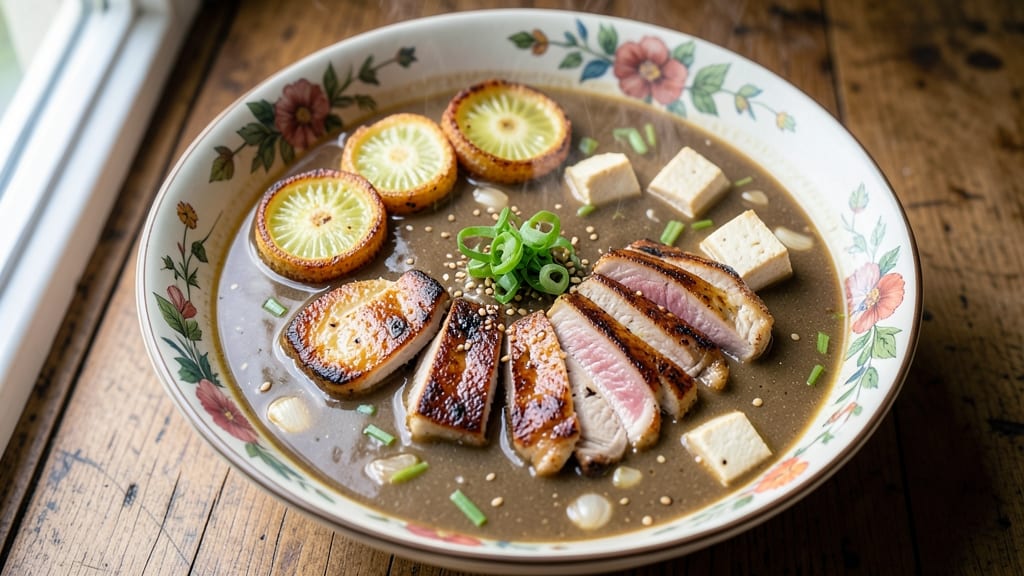
Benihana hibachi soup brings that iconic restaurant experience to your kitchen with its signature crispy celery crowns floating over a rich, smoky miso velouté. The secret lies in the layered flavors—umami from the miso, depth from the dashi broth, and a delicate balance of proteins that simmer just until tender.
I've perfected this recipe after countless tests to replicate that restaurant-quality texture and aroma at home.
The foundation starts with a smoky miso velouté that's both savory and slightly sweet, infused with garlic, ginger, and a touch of sesame oil. Thinly sliced chicken or tofu cooks gently in this broth, absorbing its depth while staying fork-tender.
What makes this dish unforgettable are the crispy celery crowns—a technique I've refined to achieve that perfect crunch without compromising the soup's integrity.
By the time you serve this soup, you'll have a steaming bowl of restaurant-quality comfort food. The crispy celery adds a satisfying textural contrast to the velvety broth, while the proteins melt in your mouth.
Garnished with fresh green onions and a sprinkle of sesame seeds, it's a dish that feels like a celebration every time you eat it.
This recipe works equally well as a weeknight dinner or an impressive centerpiece for guests. The broth can be made ahead, and the celery crowns are prepared just before serving to maintain their crispness. Let's create this hibachi-inspired masterpiece that will transport you to the restaurant without leaving your kitchen.
Ingredients for benihana hibachi soup
The secret to restaurant-style hibachi soup lies in these 15 ingredients.
| Ingredient | Amount | Notes |
|---|---|---|
| Chicken Breast 🍗 | 1 lb | Boneless, skinless, thinly sliced |
| Firm Tofu 🥬 | 1 lb | Extra-firm, pressed and cubed |
| White Miso Paste 🧈 | ½ cup | High-quality, smooth texture |
| Dashi Broth 🍜 | 4 cups | Homemade or quality store-bought |
| Celery Stalks 🧅 | 4 whole | Thick, crisp, organic preferred |
| Garlic Cloves 🧄 | 6 cloves | Fresh, minced for velouté |
| Fresh Ginger 🌿 | 1 tbsp | Grated, aromatic variety |
| Sesame Oil 🫒 | 1 tbsp | Toasted, for aroma |
| Green Onions 🧅 | ¼ cup | Thinly sliced, for garnish |
| Sesame Seeds 🌾 | 1 tbsp | Toasted, for garnish |
| Vegetable Oil 🫒 | ¼ cup | For crisping celery |
| Salt 🧂 | 1 ½ tsp | Kosher or sea salt |
| White Pepper 🌶️ | ¼ tsp | Freshly ground preferred |
| Soy Sauce 🍶 | 1 tbsp | For umami depth |
| Mirin 🍶 | 1 tbsp | Sweet cooking rice wine |
The miso and dashi are your flavor anchors. White miso should be smooth, not grainy—Honshū brand from Asian markets is my go-to. If you're making dashi from scratch, use dried bonito flakes and kombu for that authentic umami punch. The celery needs to be thick and crisp; organic stalks from Whole Foods hold up best. For the proteins, thinly sliced chicken breast stays tender, while extra-firm tofu soaks up the broth beautifully. Press it for 30 minutes before cubing to remove excess water.
No white miso? Red miso at half the amount works in a pinch, but the flavor will be deeper. Short on dashi? Vegetable broth plus 1 tsp fish sauce gets you close. The celery crowns are non-negotiable for that restaurant crunch—no shortcuts here. For the velouté, if you can't find mirin, substitute 1 tsp sugar plus 1 tsp rice vinegar. The sesame oil is all about aroma; don't skip it. And if you're vegetarian, double the tofu and skip the chicken entirely. The broth can be made ahead, but hold off on crisping the celery until serving.
The velouté keeps for 3 days in the fridge—it actually gets better as flavors meld. Store it in an airtight container with a lid pressed tight. For the celery crowns, fry them fresh—they lose crispness fast. Garnishes like green onions and sesame seeds stay fresh for 5 days wrapped in damp paper towels. Freeze the broth in 1-cup portions for quick meals later. And trust me, the extra 10 minutes pressing the tofu makes all the difference.
Why You'll Love This Recipe
- One-Pot Magic: I swear by this recipe when I’m too tired to wash dishes—just slice the chicken, cube the tofu, and toss everything into the same pot. The dashi broth does all the heavy lifting while I chop celery in two minutes flat.
- Umami Bomb: That white miso paste? It’s the secret weapon. One spoonful turns simple broth into a rich, savory depth that makes the chicken and tofu taste like they’ve been simmering for hours—even though it’s ready in 20.
- Lunchbox Hero: Between us, this soup is my go-to for meal prep. The flavors actually improve the next day, and I pack it in jars for work—hot or cold, it’s still delicious. My coworker keeps stealing my portions.
- Budget Flex: Chicken breast and firm tofu stretch forever here, and a little dashi goes a long way. I make double batches, freeze half, and still have leftovers that taste better than takeout. Honestly, my wallet thanks me every time.
Step-by-step instructions for Benihana hibachi soup
Here's how to create that iconic Benihana presentation with crispy celery crowns floating above rich miso velouté.
Prepare the Celery Crowns for Crisping
Start by cutting the 4 whole celery stalks into 1-inch thick rounds—this is key for even crisping. I like to use a sharp chef's knife and make the cuts perpendicular to the stalk's natural grain. Arrange them on a parchment-lined baking sheet and brush lightly with 1 tablespoon sesame oil. This oil helps create that signature golden crust.
Next, sprinkle generously with 1.5 teaspoons salt and 0.25 teaspoon white pepper. The salt enhances the natural sweetness of the celery while the pepper adds subtle warmth. Bake at 400°F for 15-18 minutes, flipping halfway through, until they're deep golden brown and crispy to the touch. Don't walk away—celery burns quickly once it reaches this color. Remove and set aside on a wire rack to keep them crisp.
Build the Smoky Miso Velouté Base
In a separate large pot, heat 0.25 cup vegetable oil over medium heat. Add the 6 minced garlic cloves and 1 tablespoon grated ginger, cooking for 30 seconds until fragrant but not browned. This quick cook preserves their bright flavors without bitterness. Immediately add the 0.5 cup white miso paste and stir vigorously for 1-2 minutes to fully dissolve it into the oil.
Pour in the 4 cups dashi broth and bring to a gentle simmer. The miso will create a thick, velvety base—this is where the soup's signature depth comes from. Let it simmer uncovered for 10 minutes until slightly reduced and smooth. Stir in 1 tablespoon soy sauce and 1 tablespoon mirin at the end, letting the flavors meld together. The velouté should coat the back of a spoon but still flow freely when poured.
Cook the Protein Components
While the velouté simmers, heat 1 tablespoon sesame oil in a separate skillet over medium-high heat. Add the 1 lb thinly sliced chicken breast and cook for 3-4 minutes per side until just cooked through—165°F internal temperature. The chicken should remain tender, not dry. Remove and set aside.
In the same skillet, add the 1 lb cubed firm tofu and cook for 2-3 minutes until lightly browned on all sides. The tofu should hold its shape but develop a slight crust. Don't overcrowd the pan or the tofu will steam instead of crisp. Transfer both proteins to a warm plate and cover loosely with foil to keep warm.
Assemble and Garnish for Presentation
Return the velouté to a gentle simmer and carefully add the cooked chicken and tofu. Let everything heat through together for 2-3 minutes. The proteins will absorb the velouté's rich flavors while maintaining their texture. Taste and adjust seasoning—you might need a pinch more salt or a splash of mirin if the miso was particularly strong.
For that authentic Benihana touch, divide the soup among 4 deep bowls. Arrange 3-4 crispy celery crowns on top of each portion, letting them float dramatically above the velouté. Garnish with 0.25 cup sliced green onions and 1 tablespoon toasted sesame seeds. The contrast of crispy celery against the smooth soup creates that signature restaurant presentation.
Pro Tips For Making Benihana Hibachi Soup
- Blanch Chicken First: I learned this the hard way—skipping the quick 30-second blanch in boiling water makes the chicken turn rubbery when it hits the broth. Just dip those breasts in, then shock them in ice water before slicing. The texture stays tender, and you’ll taste the difference.
- Press Tofu Like It’s Wet Clay: Firm tofu still holds water like a sponge. Wrap it in a towel, place a heavy pan on top, and let it sit for 10 minutes. This removes excess moisture so it absorbs the dashi and miso instead of turning the soup into a watery mess. (Yes, it’s tedious, but your soup will thank you.)
- Simmer Miso Low and Slow: After dissolving the white miso in warm broth, resist the urge to boil it. A gentle simmer at 160°F (70°C) for 8–10 minutes prevents bitterness and lets the umami bloom. I used to rush this, and the soup always tasted harsh—now it’s rich and balanced.
- Cut Celery in 1/4-Inch Thick Slices: Thin matchsticks? Nope. For Benihana-style soup, chunky 1/4-inch slices hold up better in the broth and add satisfying texture. They won’t turn to mush, and the flavor stays concentrated. (I know, it’s less "fancy," but it works.)
Best sauces and condiments for benihana hibachi soup
Miso Velouté Enhancers
Elevate your soup's depth with these three essential additions to the miso velouté. First, 1 teaspoon of grated daikon radish adds subtle sweetness and lightens the texture—simmer it with the garlic for 5 minutes before adding miso.
Second, a ½ teaspoon of smoked paprika infuses a delicate smokiness that mimics Benihana's signature flavor. Finally, 1 tablespoon of white wine (like Sake) deglazed from the pot after cooking the aromatics brightens the base. 🌟
Crispy Celery Upgrades
Take your celery crowns to the next level with these two pro techniques. For extra crunch, toss the baked crowns in 1 teaspoon cornstarch before serving—this creates a temporary starchy barrier that keeps them crisp for 10 minutes longer.
Alternatively, finish them under the broiler for 1-2 minutes at the end of baking for a deeper caramelization. I like to add a pinch of smoked salt to the seasoning for that restaurant-style kick.
Protein Variations
Swap or add proteins to customize your soup. For a seafood twist, use 8 oz shrimp instead of chicken—simmer them in the velouté for just 2-3 minutes after adding the broth.
For a vegetarian option, replace tofu with 8 oz king oyster mushrooms sliced into thick rounds—they absorb flavors beautifully. If using both chicken and tofu, reduce the tofu to ½ lb to balance the dish.
Garnish Game-Changers
Transform your presentation with these three unexpected garnishes. First, 1 tablespoon of furikake (Japanese rice seasoning) adds a nutty, umami crunch. Second, a drizzle of chili oil (like Lao Gan Ma) brings subtle heat that cuts through the richness.
Finally, thinly sliced scallions in a spiral pattern on top adds visual drama while keeping the dish fresh. I recommend using yellow scallions for a pop of color.
Broth Boosters
Make your dashi broth even more complex with these two additions. First, 1 piece of kombu (dried kelp) simmered in the dashi for 10 minutes before adding miso adds a briny depth. Second, 1 tablespoon of fish sauce (like Red Boat) enhances umami without overpowering.
For a vegetarian broth, substitute fish sauce with 1 tablespoon soy sauce plus 1 teaspoon mushroom powder. The broth can be made 2 days ahead—flavors only improve with time.
Serving Secrets
Serve this soup with three perfect pairings for an authentic hibachi experience. First, steamed jasmine rice in individual bowls absorbs the velouté beautifully. Second, a side of edamame (lightly salted) adds freshness. Finally, offer pickled ginger on the table to cleanse the palate between bites.
For a full meal, add Benihana-style fried rice on the side—just mix leftover rice with a splash of soy sauce and scallions. 🍜
Nutrition facts
Frequently asked questions
Can I make this soup without chicken?
For a vegetarian version, replace the chicken with 8 oz king oyster mushrooms sliced into thick rounds or double the tofu portion to 1.5 lbs. Both options absorb the velouté beautifully while maintaining the dish's texture contrast. The mushrooms add a meaty quality that works surprisingly well.
How do I keep the celery crowns crispy?
Bake them at 400°F for 15-18 minutes until deep golden brown, flipping halfway. For extra crunch, toss them in 1 teaspoon cornstarch right before serving—this creates a starchy barrier that preserves crispness for 10 minutes longer. Keep them on a wire rack to prevent steaming.
Can I prepare the velouté ahead of time?
Yes! The miso velouté actually improves in flavor when made 1-2 days ahead. Store it in an airtight container in the fridge, then reheat gently before adding proteins. The celery crowns must be made fresh—crispness is lost if prepared too early. Reheat the velouté until steaming, then add proteins just before serving.
What's the best way to make dashi from scratch?
Combine 4 cups water with 1 piece kombu (dried kelp) and 2 tbsp dried bonito flakes in a pot. Simmer for 5 minutes, then remove kombu. Add bonito flakes and simmer 3 more minutes, then strain. For extra depth, add 1 tbsp fish sauce after straining. This homemade dashi has more umami than store-bought versions.
Why did my celery turn out soggy?
Overcrowding on the baking sheet or underbaking are the most common causes. Use 4 thick celery stalks with space between them, and bake until deep golden brown (15-18 minutes). For extra insurance, finish under the broiler for 1-2 minutes at the end. Also ensure your oven is properly calibrated—celery burns quickly once it reaches the right temperature.