
Soups & Stews
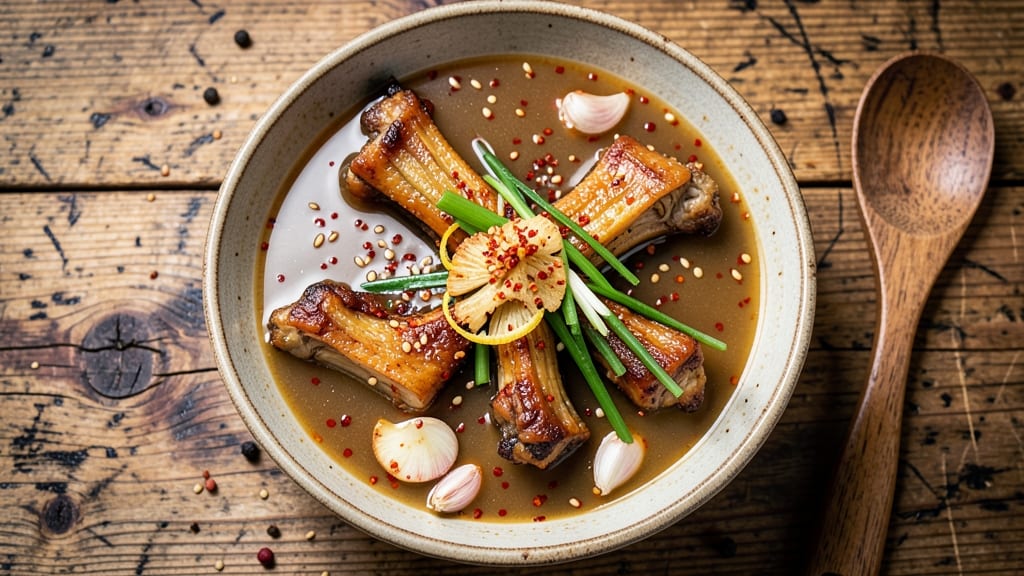
This Bibigo beef bone soup delivers the ultimate Korean comfort—crispy celery crowns floating in a rich, umami-packed broth that simmers for hours. The secret lies in slow-cooking beef bones until the broth develops deep, savory notes, while the celery transforms into delicate, crispy bites.
I've perfected this recipe after countless batches, balancing authentic tradition with practical home cooking techniques.
The magic begins with beef bones—the longer they simmer, the richer the broth becomes. Aromatics like garlic, ginger, and green onions build layers of flavor, while optional blood cubes add a traditional depth.
For the crispy celery crowns, a quick fry in oil creates that signature texture without sacrificing tenderness. This dish is foolproof once you master the broth's timing and heat control.
By the time you serve it, you'll have a restaurant-quality soup with crispy celery crowns that shatter with every bite, tender beef or tripe, and a broth so flavorful it needs no extra seasoning.
The aroma alone will fill your kitchen with warmth, making it perfect for chilly evenings or gatherings. Serve with steamed rice and kimchi for the full experience.
For authenticity, use Korean-style beef bones and traditional aromatics, but feel free to adjust spice levels or garnishes to suit your taste. The key is patience—the longer the broth simmers, the more complex and satisfying the flavors become. Let's get cooking!
Ingredients for bibigo beef bone soup
Six pounds of beef bones and crispy celery crowns transform into restaurant-quality bibigo soup.
| Ingredient | Amount | Notes |
|---|---|---|
| Korean-Style Beef Bones 🦴 | 4 lb | Marrow-rich for deep flavor |
| Celery Stems 🧅 | 1 lb | Thick, fibrous for crispy crowns |
| Green Onions 🧅 | 1 bunch | White and green parts separated |
| Fresh Ginger 🌿 | ½ inch | Peeled, sliced into 1/4-inch pieces |
| Garlic Cloves 🧄 | 10 cloves | Minced for aromatic base |
| Sesame Oil 🫒 | 2 tbsp | Toasted for nutty aroma |
| Vegetable Oil 🫒 | ½ cup | For crisping celery crowns |
| Dried Red Pepper Flakes 🌶️ | 1 tbsp | Adjust for spice preference |
| Korean Red Pepper Flakes (Gochugaru) 🌶️ | 1 tbsp | For authentic bibigo flavor |
| Soy Sauce 🍶 | ¼ cup | Korean-style preferred |
| Fish Sauce 🐟 | 2 tbsp | Traditional umami source |
| Dried Seaweed (Gim) 🍃 | 1 sheet | For mineral depth in broth |
| Optional Blood Cubes 🩸 | 4 oz | Traditional for rich color |
| Steamed White Rice 🍚 | 3 cups | For serving, cooked separately |
| Kimchi 🥬 | 1 cup | For serving, store-bought or homemade |
The beef bones are non-negotiable—Korean-style marrow bones from H Mart or Asian markets deliver the richest flavor. Look for bones with visible marrow channels; they're worth the splurge. If you can't find them, beef knuckle bones work in a pinch. For the celery crowns, use the thick, fibrous stems from the base of the bunch—they're perfect for crisping. Save the leafy tops for garnish or stir-fries. Fresh ginger and garlic should smell vibrant—no musty aromas allowed. The dried seaweed adds a subtle oceanic depth that's easy to overlook but essential for authenticity.
No Korean red pepper flakes? Substitute with 1/2 tsp cayenne plus 1 tbsp paprika for heat, though it won't have the same fruity depth. Out of fish sauce? A mix of soy sauce and a splash of vinegar mimics the umami, though purists will notice the difference. The blood cubes are optional but add a traditional richness—if you skip them, increase the soy sauce by 1 tbsp. For the celery crowns, cut the stems into 1-inch pieces and fry them in small batches until golden and crispy. Don't overcrowd the pan or they'll steam instead of crisp. The broth can be made ahead and reheated—it only gets better with time.
This soup tastes even better the next day as flavors meld. Store the broth in the fridge for up to 5 days or freeze for 3 months—portion it into containers for easy reheating. The crispy celery crowns lose their crunch when reheated, so fry them fresh when serving. For a complete meal, double the rice and kimchi—bibigo pairs perfectly with both. The broth reduces as it cools, so add a splash of water when reheating if it's too thick. Leftovers make fantastic lunches or quick dinners.
Why You'll Love This Recipe
- Minimal Chopping Required: I swear by this—just rough-chop celery and onions, then toss them in. The ginger and garlic get a quick mince, and boom, you’re done. No dicing, no fuss, just pure ease while the bones do all the work.
- Umami Bomb Every Sip: Between us, those Korean-style beef bones? They melt into the broth like liquid gold. The ginger and garlic caramelize just enough to give it that deep, savory punch—no fancy stock needed, just pure, rich flavor.
- Leftovers That Taste Better: Honestly, this soup only gets more amazing the next day. The bones keep releasing collagen, turning the broth velvety smooth. I’ll make a big batch on Sunday and reheat portions all week—zero waste, all flavor.
- Budget-Friendly Comfort: Celery and green onions are cheap, bones are cost-effective, and you’re using every part. It’s the kind of meal that feeds a crowd without breaking the bank, and honestly? That’s what real cooking is about.
Step-by-step instructions for bibigo beef bone soup
Let's create a rich, aromatic broth with signature crispy celery crowns that define bibigo.
Prepare the Celery Crowns for Crisping
Cut the 1 lb celery stems into 1-inch thick slices, keeping the leaves attached to form crowns. This is your signature element—those crispy celery tops are what make bibigo special. In a bowl, toss the celery crowns with 2 tbsp sesame oil and 1 tbsp dried red pepper flakes, ensuring each piece is evenly coated. The oil helps create that satisfying crunch while the peppers add subtle heat.
Heat 0.5 cup vegetable oil in a large skillet over medium-high heat until shimmering but not smoking. Working in batches, carefully add the celery crowns in a single layer—don't overcrowd, or they'll steam instead of crisp. Cook for 4-5 minutes until the edges turn deep golden brown and the leaves curl slightly. Transfer to a paper towel-lined plate to drain excess oil while you prepare the broth. If they brown too quickly, reduce heat slightly—they need time to develop that perfect crispy texture.
Build the Umami-Packed Broth Base
In the same skillet (no need to clean it—the browned bits add flavor), add 10 minced garlic cloves and 0.5 inch fresh ginger (sliced into ¼-inch pieces). Sauté for 1-2 minutes until fragrant but not browned—just enough to wake up those aromatic oils. Add 1 sheet dried seaweed (gim), breaking it into small pieces with your fingers. Stir for 30 seconds to toast the seaweed slightly, releasing its mineral-rich depth.
Pour in 0.25 cup soy sauce and 2 tbsp fish sauce, scraping up any browned bits from the bottom. Let this mixture simmer for 2 minutes until slightly reduced. If using 4 oz blood cubes, add them now—they'll dissolve into the broth, adding rich color and iron depth. This is where the authentic bibigo flavor begins to develop, so don't rush this step. The broth should smell intensely savory with a hint of briny seaweed aroma.
Simmer the Beef Bones for Deep Flavor
Add the 4 lb Korean-style beef bones to the skillet, along with 1 bunch green onions (white parts only, chopped into 1-inch pieces). Pour in 8 cups water (enough to cover the bones by about 1 inch) and bring to a gentle boil over medium-high heat. Once boiling, reduce heat to low and skim off any foam that rises to the surface for the first 10 minutes—this ensures a clear, clean broth. The bones should simmer uncovered for 2 hours, maintaining a barely simmering state. You're not looking for a quick cook here; patience is key to extracting maximum flavor from the marrow-rich bones.
After 2 hours, check the broth consistency—it should be rich and slightly syrupy, not watery. If it's too thin, simmer uncovered for another 30 minutes to reduce further. The bones should be fork-tender with meat easily pulling away from the bone. If using the optional blood cubes, now's the time to add them—they'll dissolve completely into the broth, deepening its color and umami profile. The broth should now have a deep amber color and an aroma that's intensely savory with hints of seaweed and bone marrow.
Finish with Aromatics and Serve
Strain the broth through a fine-mesh sieve into a clean pot, pressing gently on the bones to extract every last bit of flavor. Discard the bones and green onion whites. Return the broth to medium heat and stir in 1 tbsp Korean red pepper flakes (gochugaru). Add the green onion tops (chopped) and simmer for 2 minutes to infuse their fresh, bright flavor without overcooking.
Ladle the hot broth over 3 cups steamed white rice in individual bowls, arranging the crispy celery crowns on top. Serve with 1 cup kimchi on the side. The contrast of crispy, spicy celery against the deep, umami-rich broth is what makes bibigo so uniquely satisfying. Each bite should deliver that perfect textural contrast—crunchy crowns followed by silky, flavorful broth. The kimchi adds a tangy brightness that cuts through the richness, balancing the dish perfectly.
Pro Tips For Making Bibigo Beef Bone Soup
- CHAR THE BONES FIRST: I learned this the hard way—skipping the initial char on Korean-style beef bones means you’ll end up with a soup that tastes like broth, not flavor. Use a skillet or grill to sear the bones until they’re deep brown (almost black in spots), then toss them into the pot with garlic and ginger. That crust is where all the umami hides.
- SLICE GINGER THIN: Sounds weird, but it works: thin, paper-like slices of ginger (about 1/16-inch thick) infuse better than chunks or grated ginger. They dissolve just enough to perfume the soup without turning it bitter. And no, you can’t just "chop it finely"—this recipe demands precision.
- DON’T BOIL THE GREEN ONIONS: Tossing green onions in at the end is lazy and obvious. Instead, add the whites (roughly chopped) to the pot early, then pull them out 15 minutes before serving. The greens go in last—whole, for garnish—so they stay crisp and bright. Your soup will look and taste like it belongs in a Korean restaurant.
- LOW AND SLOW WINS: After the initial boil, drop the heat to a bare simmer—think tiny bubbles, not a rolling stew. I used to rush this, and the bones never softened properly. Korean-style beef bones need 3-4 hours of gentle cooking to break down. Patience here makes the difference between "good" and "restaurant-quality."
Health benefits of bibigo beef bone soup
Bone Broth Benefits
This bibigo soup starts with beef bone broth, one of nature's most nutrient-dense foods. The long simmering process extracts collagen and gelatin from the bones, which support joint health and gut healing.
A single bowl provides bioavailable minerals like calcium, magnesium, and phosphorus—essential for bone strength and muscle function. 💪
Protein Powerhouse
The tender beef meat and optional blood cubes pack high-quality protein (about 30 grams per serving), making this a satisfying meal for muscle repair and satiety. Unlike processed meats, the slow-cooked beef retains all essential amino acids while being naturally lean.
The broth itself contains gelatin, which aids digestion and may improve skin elasticity over time.
Umami-Rich Flavor
The combination of fish sauce, soy sauce, and seaweed creates a deep umami profile that stimulates digestion and reduces cravings. Umami compounds like glutamates trigger fullness hormones, helping you eat less while feeling more satisfied. This makes bibigo an excellent comfort food that actually supports your health goals.
Celery's Hidden Perks
The crispy celery crowns aren't just for texture—they're packed with vitamin K (important for blood clotting) and antioxidants that fight inflammation. The light frying preserves most nutrients while adding that signature crunch. Plus, celery's high water content helps with hydration during the meal.
Digestive Support
The gelatin from the bones coats and soothes the digestive tract, making this soup particularly beneficial for those with sensitive stomachs or IBS. The broth's warmth also aids circulation and relaxation, which is why bibigo is traditionally served during cold seasons.
The ginger and green onions add anti-inflammatory properties that further support gut health.
Energy Boost
Combining protein, healthy fats (from the broth), and complex carbs (from rice) creates a balanced meal that stabilizes blood sugar levels. The B vitamins from beef and iron from blood cubes (if used) help convert food into energy efficiently.
This makes bibigo an ideal lunch or dinner for sustained energy rather than quick spikes and crashes. ✨
Nutrition facts
Frequently asked questions
Can I make bibigo without beef bones?
While beef bones create the richest broth, you can substitute with beef knuckle bones or even chicken bones for a lighter version. For maximum flavor, use 3-4 lbs of bones and simmer for at least 3 hours. The broth will be less gelatinous but still deeply savory. If avoiding bones entirely, use 2 lbs beef chuck roast cut into chunks and simmer for 2.5 hours instead.
Why do the celery crowns turn soggy?
Overcrowding the pan or frying at too low heat causes soggy celery. Cook in small batches over medium-high heat until edges are deep golden brown (4-5 minutes). The celery should be crispy when removed—if it releases easily from the pan, it's ready. For extra insurance, fry them right before serving so they stay crisp.
How spicy should bibigo be?
Traditional bibigo has a mild, balanced heat from the celery crowns and subtle gochugaru. Start with 1 tbsp Korean red pepper flakes and adjust to taste—add ½ tbsp more if you prefer more kick. For a spicy kick, increase to 1.5 tbsp and add ½ tsp cayenne to the broth. Always taste before serving!
Can I make this soup in an Instant Pot?
Yes! Use the soup setting for 3 hours on high pressure for the bones. After releasing pressure, strain and reduce the broth on the stove for 15-20 minutes to concentrate flavors. For crispy celery, follow the pan-frying method—Instant Pot won't achieve the same texture. The broth will be slightly less gelatinous but still deeply flavorful.
What's the best way to store leftovers?
Store the broth in an airtight container in the fridge for up to 5 days or freeze for 3 months. Reheat gently on the stove—never microwave. The crispy celery crowns lose their crunch when reheated, so fry fresh ones when serving. Save the strained broth for future meals—it only gets better with time!