
Soups & Stews
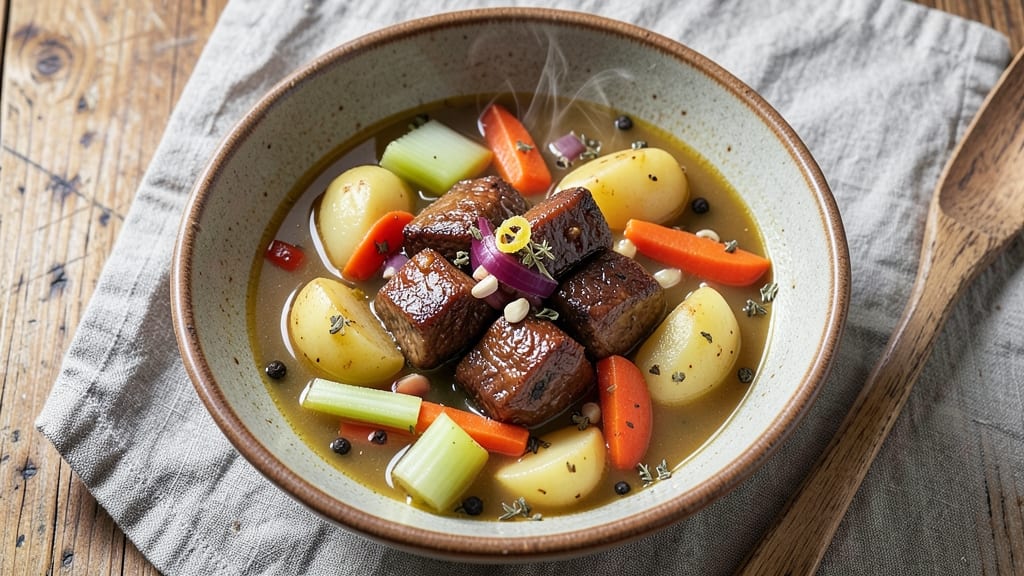
Bill Miller's Vegetable Beef Soup Recipe delivers the kind of soul-warming, slow-simmered comfort that turns ordinary weeknights into family gatherings. The secret lies in tender beef that practically melts in your mouth and vegetables that develop deep, caramelized flavors during the long cook. I've perfected this one-pot method over years of testing, ensuring every spoonful delivers that perfect balance of hearty beef, vibrant vegetables, and rich broth.
What sets this recipe apart is the two-stage cooking process: first searing the beef to develop deep flavor, then simmering everything together until the vegetables soften just enough to release their natural sweetness.
The result is a soup that's both rustic and refined—simple enough for weeknight dinners but impressive enough for company. The key ingredients include chuck roast for maximum tenderness, a mix of seasonal vegetables, and aromatics that build layers of flavor as they cook.
By the time you're done, you'll have a steaming pot of soup with fork-tender beef chunks, perfectly softened vegetables, and a broth so rich it coats every spoonful.
The aroma alone will have everyone gathering around the table, and the first bite delivers that satisfying combination of savory beef, sweet vegetables, and comforting broth. This is the kind of soup that tastes even better the next day as the flavors meld further.
Perfect for feeding a crowd or meal prepping for the week, this recipe scales beautifully while maintaining its depth of flavor. The one-pot method means minimal cleanup, and the long simmering time allows you to prepare other dishes or simply relax while dinner cooks itself.
Here's how to make it—step by step—for restaurant-quality results at home.
Ingredients for bill miller vegetable beef soup
Sixteen ingredients that transform into restaurant-quality vegetable beef soup with minimal effort.
| Ingredient | Amount | Notes |
|---|---|---|
| Chuck Roast 🥩 | 2 lb | Cut into 1.5-inch cubes for even cooking |
| Yellow Onion 🧅 | 1 whole | Diced, medium size preferred |
| Carrots 🥕 | 4 medium | Peeled, cut into 1-inch chunks |
| Celery Stalks 🧄 | 4 whole | Diced, including leafy tops |
| Russet Potatoes 🥔 | 4 medium | Peeled, cut into 1-inch cubes |
| Garlic Cloves 🧄 | 6 cloves | Minced, for deep flavor |
| Tomato Paste 🍅 | ½ cup | High-quality, no salt added |
| Beef Broth 💧 | 6 cups | Low-sodium preferred, homemade or quality brand |
| Red Wine 🍷 | ½ cup | Dry, bold variety like Cabernet Sauvignon |
| Fresh Thyme 🌿 | ¼ cup | Leaves only, stems removed |
| Fresh Parsley 🌿 | ¼ cup | Chopped, for garnish |
| Olive Oil 🫒 | ¼ cup | Extra-virgin for searing |
| Salt 🧂 | 1 ½ tsp | Diamond Crystal kosher salt |
| Black Pepper 🌶️ | 1 tsp | Freshly ground for best flavor |
| Bay Leaves 🌿 | 2 whole | Remove before serving |
The chuck roast is the foundation of this soup—its rich, fatty marbling ensures fork-tender beef. Costco sells excellent pre-cut chuck roast at a great price, but Whole Foods offers organic options if you prefer. Look for cuts with visible marbling; leaner beef will dry out during the long simmer. The carrots and potatoes should be firm with no soft spots, while the celery should have a crisp snap. Fresh thyme and parsley from the market add brightness, but dried will work in a pinch at one-third the amount. For the tomato paste, San Marzano is ideal, though any high-quality brand will do.
No red wine? Beef broth with a splash of balsamic vinegar replicates the depth perfectly. Fresh thyme unavailable? Dried thyme at one-third the quantity suffices. The tomato paste can be substituted with crushed tomatoes if you prefer, though it may dilute the richness. For a vegetarian twist, swap the beef for extra-firm tofu or hearty mushrooms. Pre-cut vegetables from the store save time, but fresh always tastes better. The bay leaves add subtle complexity—don't skip them, but remove before serving.
This soup tastes even better the next day as flavors meld. Store in an airtight container in the fridge for up to 5 days or freeze for 3 months. For reheating, simmer gently on the stove with a splash of broth or water. The beef and vegetables can be prepped ahead and refrigerated for 24 hours before cooking. Double the recipe—it reheats beautifully and makes an excellent meal-prep lunch. The aromatics develop fully after the initial simmer, so resist the urge to rush the cooking time.
Why You'll Love This Recipe
- One-Pot Magic: I swear by this recipe because it’s one pot—no chopping board chaos, no extra pans. Just dump in the chuck roast, onions, carrots, and celery, let it simmer, and boom. The potatoes melt in like they’re supposed to, and the broth reduces into something rich without me having to babysit it.
- Deep Umami Bomb: That slow-cooked chuck roast? It falls apart so easily, but it’s packed—like a flavor punch. The onions caramelize just enough to give it this sweet, savory depth, and the celery adds that earthy kick. Honestly, I’ll take this over takeout any day.
- Meal Prep MVP: Between us, this soup begs to be made in bulk. The flavors get better overnight, and it reheats like a dream—no weird textures or sad veggies. I freeze half of it right after making it, so when I’m too tired to cook, I’ve got a hearty, filling meal waiting.
- Budget-Friendly Powerhouse: Chuck roast is cheap, potatoes are cheap, and you’re not wasting anything. The veggies stretch the broth so well, and the leftovers? They’re even better the next day. I’ll be real: this is how I feed my family for a week without breaking the bank.
Step-by-step instructions for bill miller's vegetable beef soup
This hearty one-pot masterpiece delivers melt-in-your-mouth beef and vibrant vegetables through precise technique.
Sear the Chuck Roast for Deep Flavor
Pat the 2 lb chuck roast dry with paper towels and cut it into 1.5-inch cubes for even cooking. Heat 0.25 cup olive oil in a large Dutch oven over medium-high heat until shimmering. Working in batches, sear the beef cubes until deep golden brown on all sides, about 3-4 minutes per batch. This step develops the rich, caramelized foundation for your soup.
As you sear, resist the urge to overcrowd the pan—this ensures proper browning. Transfer the seared beef to a plate and set aside. You'll notice the beef releases easily when properly browned, signaling it's ready for the next stage. This initial searing transforms the tough chuck into tender, flavorful bites.
Build the Aromatic Vegetable Base
In the same Dutch oven, add 1 whole yellow onion, 4 medium carrots, 4 whole celery stalks, and 6 cloves garlic cloves—all prepped as specified. Cook over medium heat for 5-6 minutes, stirring occasionally, until the vegetables soften and the garlic becomes fragrant. This aromatic base forms the flavor backbone of your soup.
Here's where the magic happens: the vegetables release their natural sugars as they caramelize, creating a sweet, complex foundation. Stir frequently to prevent burning, especially the garlic which can scorch in seconds. The onions should turn translucent while the carrots and celery develop a slight golden hue—this indicates proper development.
Develop the Rich Sauce Foundation
Stir in 0.5 cup tomato paste and cook for 2 minutes until it darkens slightly and the raw taste disappears. Pour in 0.5 cup red wine and scrape up any browned bits from the bottom of the pot—this deglazing captures all the concentrated flavors. Let the wine simmer for 3-4 minutes until reduced by half.
This reduction process intensifies the wine's flavor while balancing the tomato paste's acidity. The sauce should coat the back of a spoon with a velvety texture. If you notice the mixture sticking, add 2 tablespoons beef broth to loosen it. The wine's alcohol will cook off completely, leaving behind just the rich, fruity essence that complements the beef.
Simmer the Soup to Tender Perfection
Return the seared beef to the pot along with 6 cups beef broth, 1.5 tsp salt, 1 tsp black pepper, and 2 whole bay leaves. Add 4 medium russet potatoes and 0.25 cup fresh thyme. Bring to a gentle boil, then reduce heat to low and cover partially. Simmer for 1 hour 15 minutes, stirring occasionally, until the beef is fork-tender and the potatoes are easily pierced with a knife.
The key to this step is patience—low and slow cooking breaks down the beef's connective tissue while allowing the vegetables to absorb the rich flavors. Check the seasoning after 45 minutes and adjust if needed. The soup should have a deep, aromatic scent that fills your kitchen, signaling proper development. Remove the bay leaves before serving as they can be bitter if overcooked.
Finish and Garnish for Restaurant-Quality Presentation
Stir in 0.25 cup fresh parsley and cook for an additional 2 minutes to brighten the flavors. Taste and adjust seasoning with additional salt or pepper if needed. Ladle the soup into bowls, ensuring each serving contains both beef and vegetables for balanced texture and flavor.
For presentation, I like to garnish each bowl with an extra sprinkle of fresh parsley and a drizzle of the reserved olive oil from searing. The parsley adds freshness while the oil enhances the soup's richness. Serve immediately with crusty bread to soak up every last drop of this comforting, restaurant-quality vegetable beef soup.
Pro Tips For Making Bill Miller Vegetable Beef Soup
- Brown the Chuck: DESCRIPTION: Don’t just toss that raw chuck roast into the pot—sear it first in batches over medium-high heat until deep brown on all sides. I used to skip this, and the soup always tasted like it needed more depth. A quick 3-4 minutes per side with a splash of broth to deglaze afterward makes a real difference.
- Cut Potatoes Evenly: DESCRIPTION: Russet potatoes take forever to cook if they’re chunky. Cut them into 1.5-inch cubes so they finish at the same time as the beef and carrots—no one wants mushy potatoes lurking at the bottom. (Yes, even if you’re impatient like me.)
- Salt the Potatoes Early: DESCRIPTION: Toss the chopped potatoes with a pinch of salt before adding them to the soup. It jumpstarts the seasoning and keeps them from turning bland later. I learned this the hard way after making a batch where the potatoes tasted like they’d been forgotten in the pot.
- Simmer, Don’t Boil: DESCRIPTION: Once everything’s in the pot, keep the heat low enough that you barely see bubbles—just a gentle simmer. Boiling toughens the beef and turns the veggies to mush. This recipe is designed for slow cooking, so let it work its magic at a steady 180°F (70°C) or so.
Flavor customization for these flavors
Spicy Kick
Add 1-2 teaspoons of cayenne pepper or 1 tablespoon of hot paprika when searing the beef for a slow-building heat that lingers.
For a smoky-spicy twist, swap ½ cup of the beef broth with smoked paprika-infused broth (simmer 1 tsp smoked paprika in ½ cup broth for 5 minutes before adding). I love finishing with crispy fried shallots for texture and a final heat boost. 🌶️
Herb Variations
Swap the thyme for rosemary (use ½ cup) for an earthy, piney depth that pairs beautifully with the beef. For a Mediterranean twist, add 1 teaspoon dried oregano and ½ teaspoon red pepper flakes during the simmer.
Fresh basil at the end brightens the soup with a citrusy note—just add ¼ cup chopped basil in the final 2 minutes of cooking.
Umami Boost
Deep umami flavors transform this soup into a restaurant-worthy dish. Stir in 1 tablespoon of soy sauce or 1 teaspoon of fish sauce with the tomato paste for a savory depth. For an extra layer, add 2 tablespoons of miso paste (white or red) when simmering the broth.
I also love adding ½ cup of mushrooms (shiitake or cremini) with the other vegetables—they soak up the broth and add meaty texture.
Creamy Twist
For a velvety texture, stir in ½ cup of heavy cream or ½ cup of coconut milk in the final 5 minutes of simmering. For a dairy-free option, blend 1 cup of the soup with ¼ cup of cashews until smooth, then stir it back in.
Garnish with toasted pine nuts or crumbled feta cheese for a luxurious finish. The creaminess balances the hearty beef perfectly.
Seasonal Veggie Swaps
Summer: Replace potatoes with zucchini and yellow squash (cut into ½-inch half-moons) and add 1 cup of corn kernels in the last 15 minutes of cooking. Fall: Swap carrots for sweet potatoes (peeled and cubed) and add ½ cup of diced butternut squash.
Winter: Include kale or Swiss chard (stemmed and chopped) in the final 10 minutes of simmering for a hearty, leafy texture.
Global Flavors
For a French bistro vibe, add 1 teaspoon of Dijon mustard and ½ cup of pearl onions (caramelized separately) to the soup. For an Italian touch, stir in ½ cup of crushed tomatoes and ½ teaspoon of dried basil with the tomato paste.
A Thai-inspired version swaps red wine for 1 cup of coconut milk and adds 1 tablespoon of fish sauce and 1 teaspoon of lemongrass paste (or 2 strips of fresh lemongrass, removed before serving).
Nutrition facts
Frequently asked questions
Can I use a different cut of beef instead of chuck roast?
While chuck roast is ideal for its marbling and tenderness, you can substitute with brisket or stew meat—both work well. Avoid lean cuts like sirloin as they'll dry out during the long simmer. For extra richness, try short ribs (trimmed of excess fat), though they'll require 20-30 extra minutes of simmering to become tender.
How do I make this soup more flavorful if I'm short on time?
Skip the wine and use 1 extra tablespoon of tomato paste plus 1 teaspoon of Worcestershire sauce for depth. For quick umami, add 1 teaspoon of soy sauce with the broth. Boost aromatics by sautéing 1 extra clove of garlic and 1 teaspoon of smoked paprika with the vegetables. The key is building layers—even small additions make a difference!
Can I make this soup in an Instant Pot or pressure cooker?
Sear the beef as directed, then add all ingredients except the potatoes. Pressure cook on high for 35 minutes, then quick-release. Add potatoes and cook another 5 minutes on high pressure. The beef will be even more tender, but the vegetables may break down faster. For best results, use 1 extra potato and adjust seasoning after cooking.
Why does my beef turn out tough instead of tender?
Overcooking is the most common culprit—chuck roast needs 1 hour 15 minutes max of simmering. Check doneness at 45 minutes with a fork. If it's still firm, extend by 15 minutes max. Another issue: not searing properly. The beef must develop a deep brown crust first to build flavor. Finally, using lean beef or not enough liquid can dry it out—stick to the 6 cups broth measurement.
How can I make this soup kid-friendly?
Remove the bay leaves and reduce thyme to 1 tablespoon. For milder flavor, omit the wine and use extra broth instead. Cut the beef into smaller pieces and add ½ cup of diced sweet potatoes for natural sweetness. Serve with buttered noodles on the side for dipping. The creamy texture and familiar veggies make it appealing while keeping the hearty elements.