
Sauces & Condiments
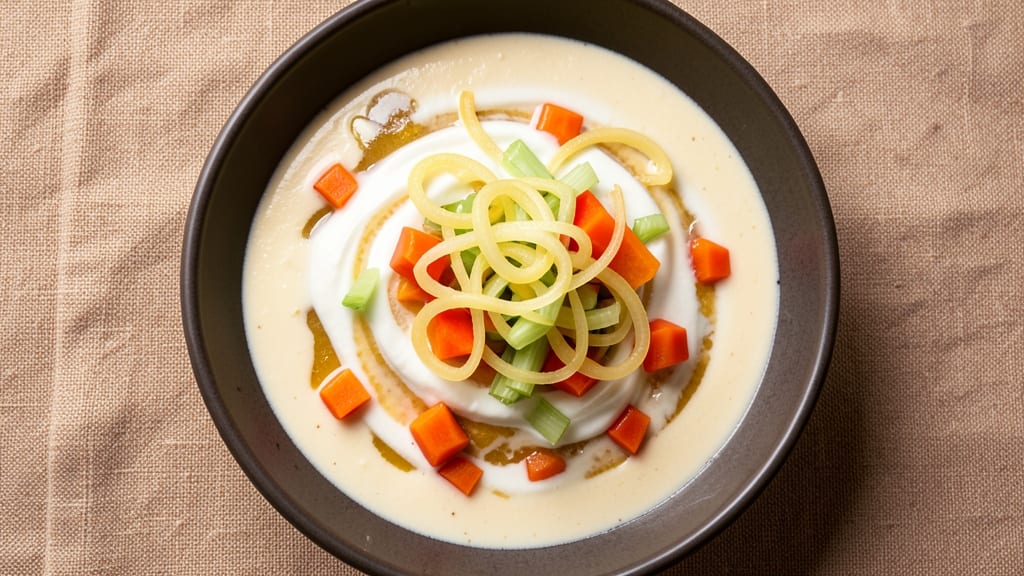
This cream of chicken soup sauce recipe transforms simple ingredients into a velvety, restaurant-quality sauce that elevates any dish. The secret lies in simmering rich chicken broth with aromatic vegetables until deeply flavorful, then blending it with cream for that signature smooth texture.
I developed this recipe after years of testing—it’s the kind of sauce that turns ordinary meals into something special, whether drizzled over pasta, mixed into mashed potatoes, or served alongside roasted chicken.
What sets this sauce apart is its balance of richness and depth. A touch of mustard adds subtle tang, while thyme and bay leaf infuse warmth without overpowering. The sauce thickens naturally as it simmers, creating a luxurious consistency that’s neither too thin nor gluey.
Best of all, it comes together in under 30 minutes, with minimal effort but maximum impact.
Once you taste the velvety finish and savory notes, you’ll never settle for canned again. The sauce keeps beautifully in the fridge for up to 5 days or freezes for 3 months, making it perfect for meal prep.
For extra depth, stir in sautéed mushrooms or a splash of white wine during cooking—simple adjustments that take it to the next level.
This isn’t just a sauce; it’s a flavor multiplier that turns basic ingredients into something extraordinary. Whether you’re a home cook looking to impress or a busy parent needing a quick weeknight solution, this recipe delivers professional results with ease. Let’s get started!
Ingredients for cream of chicken soup sauce
Twelve ingredients, one velvety sauce that transforms ordinary dishes into restaurant-quality creations.
| Ingredient | Amount | Notes |
|---|---|---|
| Chicken Broth 🍗 | 4 cups | Homemade or high-quality low-sodium |
| Heavy Cream 🥛 | 1 cup | Full-fat for velvety texture |
| Unsalted Butter 🧈 | 3 tbsp | Cold, cut into small cubes |
| Yellow Onion 🧅 | 1 medium | Diced, about 1 cup |
| Carrots 🥕 | 2 medium | Diced, about 1/2 cup |
| Celery Stalks 🌿 | 2 whole | Diced, about 1/2 cup |
| Garlic Cloves 🧄 | 3 cloves | Minced, fresh preferred |
| All-Purpose Flour 🌾 | 2 tbsp | For thickening, sifted |
| Dijon Mustard 🍯 | 1 tbsp | For subtle tang |
| Fresh Thyme Leaves 🌿 | 1 tsp | Or 1/4 tsp dried thyme |
| Bay Leaves 🌿 | 1 whole | Removed after simmering |
| Salt 🧂 | ½ tsp | Adjust to taste |
| White Pepper 🌶️ | ¼ tsp | Freshly ground preferred |
The chicken broth is non-negotiable—homemade or high-quality low-sodium makes all the difference. For the best flavor, simmer your own with chicken carcasses, or use Swanson or Pacific brand for store-bought. The heavy cream must be full-fat; anything lighter will compromise that signature velvety texture. Unsalted butter is essential here—European-style brands like Plugrá melt beautifully without overpowering. When selecting your vegetables, look for fresh, firm carrots and celery with vibrant color; wilted or discolored produce will yield a bland sauce. The onion should be sweet, not bitter—yellow or Vidalia work best.
No heavy cream? Coconut cream or half-and-half can substitute, though the texture will be slightly lighter. Short on thyme? Dried works at one-third the amount, but fresh is ideal. The Dijon mustard adds depth—Maille or whole-grain mustard are excellent choices. For extra richness, stir in 1/4 cup sautéed mushrooms during simmering. If you prefer a smoother texture, blend the sauce longer—immersion blender works best. The flour is crucial for thickening; King Arthur or Bob's Red Mill brands work reliably. Always sift it to avoid lumps, and whisk it into the cold butter first to create a roux.
This sauce reheats beautifully—simply warm over medium heat, stirring frequently to prevent scorching. Store in an airtight container in the fridge for up to 5 days, or freeze for 3 months in portion-sized containers. For meal prep, freeze in ice cube trays, then transfer to a bag; just pop out what you need. The sauce thickens as it cools, so thin with a splash of milk or broth if needed. Always taste before serving and adjust seasoning—white pepper adds warmth without color, while salt should be added gradually.
Why You'll Love This Recipe
- Pantry Magic: I swear by this—no fresh herbs, no fancy prep. Just broth, cream, and a handful of carrots simmered until tender. The onions caramelize right in the pot, adding depth without extra work.
- Velvet Smoothness: That first spoonful of butter and cream melting into the broth? Pure satisfaction. It’s rich but not heavy, with just enough carrot sweetness to balance the savory chicken base.
- Leftovers That Shine: Make a double batch and freeze half. Thaw it for quick pasta, dumplings, or even a creamy chicken pot pie. Honestly, it’s the kind of sauce that turns random meals into something special.
- Budget-Friendly Luxury: Heavy cream feels indulgent, but it’s a small splurge that stretches across multiple meals. Onions and carrots are cheap staples, and you’ll use every last drop before it disappears.
Step-by-step instructions for cream of chicken soup sauce
Here's how to craft a restaurant-quality sauce with depth and velvety texture using simple techniques.
Sauté the Aromatic Vegetables
Melt the 3 tablespoons unsalted butter in a medium saucepan over medium heat. Add the diced yellow onion, diced carrots, and diced celery stalks, stirring occasionally for 5-6 minutes until the vegetables soften and release their natural moisture.
This foundational step builds flavor through caramelization. You'll know they're ready when the vegetables lose their raw appearance and develop a slightly translucent quality. Add the 3 minced garlic cloves and cook for an additional 30 seconds until fragrant—this prevents the garlic from burning, which would impart bitterness to your sauce.
Build the Roux and Deglaze
Lower the heat to medium-low and sprinkle the 2 tablespoons all-purpose flour over the vegetables, stirring constantly for 1-2 minutes until a smooth, pale roux forms. This creates the thickening agent for your sauce and adds a subtle nutty flavor.
Slowly pour in the 4 cups chicken broth, whisking continuously to prevent lumps from forming. Add the 1 whole bay leaf, 1 teaspoon fresh thyme leaves, 0.5 teaspoon salt, and 0.25 teaspoon white pepper. Bring the mixture to a gentle simmer and let it cook uncovered for 10 minutes, stirring occasionally, until the vegetables are tender and the flavors meld together.
Finish with Cream and Mustard
Remove the bay leaf and stir in the 1 cup heavy cream and 1 tablespoon Dijon mustard. Simmer the sauce gently for another 5-7 minutes until it thickens to a velvety consistency that coats the back of a spoon. The mustard adds a subtle tang that balances the richness of the cream.
Taste and adjust the seasoning if needed—you might need a pinch more salt or pepper to complement the flavors. For an extra layer of depth, you can whisk in 1 tablespoon of cold butter at the end, which will create a silky texture as it melts into the hot sauce.
Strain and Serve
For a perfectly smooth sauce, strain it through a fine-mesh sieve into a clean saucepan. This removes any vegetable fibers and creates a silky texture. Return the sauce to low heat and keep it warm until ready to serve—this maintains its velvety consistency without breaking.
The sauce should be thick enough to coat the back of a spoon but still flow smoothly. Serve immediately over pasta, mashed potatoes, or as a base for casseroles. If storing, let it cool to room temperature before refrigerating in an airtight container for up to 3 days or freezing for up to 3 months.
Pro Tips For Making Cream Of Chicken Soup Sauce
- Sweat the Onions Low: I learned this the hard way—dancing onions over medium heat until they’re translucent and just starting to caramelize (about 8-10 minutes) builds real depth. High heat burns them fast, and you end up with bitter bits that ruin the creamy finish. Keep the lid off unless you’re impatient, but even then, resist the urge to crank the burner.
- Melt Butter Slowly: Unsalted butter deserves patience—add it to the pot in small batches (start with 2 tablespoons) and let it melt completely before stirring in the next. If you dump it all in at once, you’ll get a greasy, uneven sauce that separates later. This isn’t the prettiest method, but it’s the tastiest.
- Simmer, Don’t Boil: Once you add the heavy cream, drop the heat to a gentle simmer—just small, occasional bubbles at the edges. Boiling curdles the cream faster than you can say “second attempt,” and no one wants lumpy soup. If it’s too hot, pull it off the heat for 30 seconds and stir. Your future self will thank you.
- Strain for Smoothness: Skip the strainer if you’re lazy, but the sauce will taste noticeably better if you run it through a fine-mesh sieve after cooking. This catches onion strings and carrot fibers that turn the texture gritty. I know, I know—it’s an extra step, but it’s the thing that makes restaurant-style cream of chicken feel real.
Flavor customization for this dish
Classic Creamy Twist
For a richer, more decadent sauce, stir in 2 tbsp sour cream or 1 oz cream cheese during the final 5 minutes of simmering. This adds a subtle tang that balances the creaminess beautifully. I like to use full-fat sour cream like Kirkland Signature for the best texture. 🥛
Herb-Infused Variations
Swap out thyme for 1 tsp fresh tarragon or ½ tsp smoked paprika to add complexity. Tarragon brings an anise-like note that pairs wonderfully with chicken dishes, while smoked paprika adds a subtle smokiness.
For a Mediterranean twist, add 1 tsp dried oregano and a pinch of red pepper flakes.
Umami Boost Options
Add depth with 1 tbsp soy sauce or ½ cup sautéed mushrooms> during cooking. For extra richness, stir in 1 tsp fish sauce> (just a drop!) or 1 tsp Worcestershire sauce>. These umami enhancers elevate the sauce to restaurant-quality levels without overpowering. 🌶️
Spicy Kick Adjustments
For heat lovers, add ½ tsp cayenne pepper> or 1 tsp hot sauce> like Tabasco> during the final minutes of simmering. For a smoother heat, blend in 1 roasted red pepper> with the sauce. I recommend Penzeys brand> for high-quality spices and hot sauces.
Dairy-Free Adaptations
Replace the heavy cream with 1 cup coconut milk> for a dairy-free version. Use full-fat canned coconut milk for the best texture. For extra richness, stir in 1 tbsp nutritional yeast> which adds a cheesy flavor.
This works surprisingly well when paired with roasted vegetables or grilled chicken. 🥥
Wine & Broth Swaps
Replace 1 cup of broth> with ½ cup dry white wine> (like Sauvignon Blanc>) for a more sophisticated flavor. For a deeper, more complex sauce, use ½ cup chicken stock> and ½ cup red wine> (like Pinot Noir>).
Deglaze the pan after sautéing the vegetables with the wine for maximum flavor extraction.
Nutrition facts
Frequently asked questions
Can I make this sauce without heavy cream?
Yes! For a lighter version, substitute with ½ cup half-and-half plus ½ cup whole milk or 1 cup coconut milk for dairy-free. The texture will be slightly thinner but still delicious. For extra richness, whisk in 1 tbsp cornstarch mixed with 2 tbsp water at the end to thicken.
How do I prevent the sauce from breaking or curdling?
Never boil the sauce after adding cream—simmer gently on low heat to maintain its velvety texture. Stir constantly during the final 5 minutes of cooking, and avoid adding cold ingredients directly to hot sauce. For extra insurance, whisk in 1 tablespoon cold butter at the end to stabilize the emulsion.
What are the best ways to use this sauce?
This versatile sauce elevates mashed potatoes, pasta dishes, roasted chicken, or even grilled vegetables. Drizzle it over baked potatoes or use it as a base for creamy casseroles. For extra flair, mix it into mac and cheese or spoon it over steamed fish. The possibilities are endless!
Can I make this sauce ahead of time?
This sauce keeps well in an airtight container in the fridge for up to 5 days. For longer storage, freeze in portion-sized containers for up to 3 months. Thaw overnight in the fridge, then reheat gently on low heat, stirring frequently to restore its silky texture.
Why does my sauce taste bland?
Blandness often comes from using low-quality broth or insufficient seasoning. Always use homemade or high-quality low-sodium broth, and taste as you go—add more salt, pepper, or a splash of lemon juice if needed. For extra depth, simmer the vegetables longer (up to 15 minutes) to intensify their flavors.