
Soups & Stews
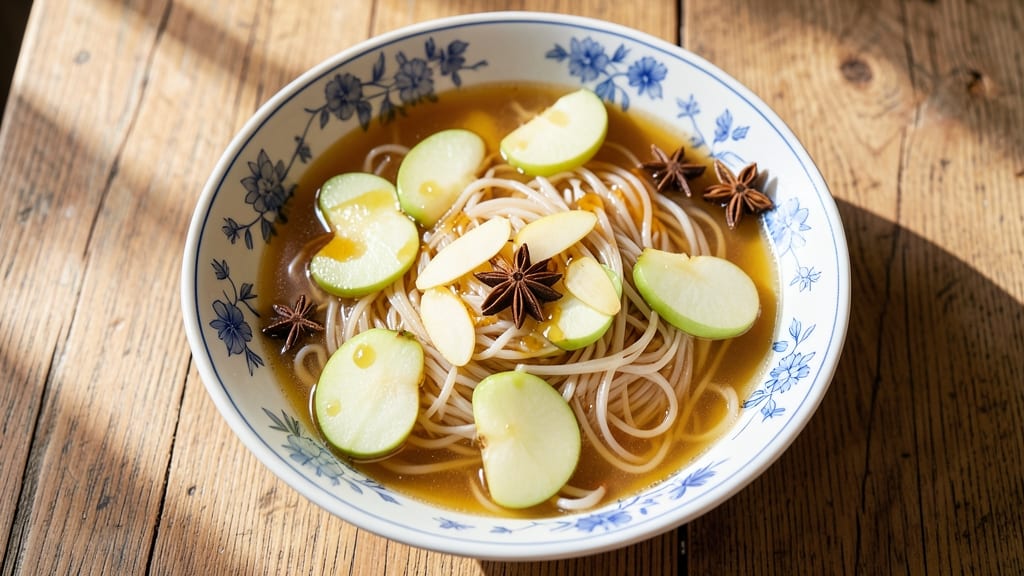
This Chinese apple soup recipe brings comforting warmth to any table, blending fragrant star anise with tender apples and silky rice noodles. 🌟 The secret lies in balancing sweet and savory flavors while achieving that signature velvety texture that makes it so irresistible.
I've perfected this recipe over years of testing, ensuring every spoonful delivers a harmonious blend of traditional techniques and approachable simplicity.
The beauty of this soup is its versatility—it works as a light lunch, a soothing dinner, or even a comforting dessert-like experience. Star anise infuses the broth with a subtle, aromatic depth that pairs perfectly with the natural sweetness of apples and the delicate chew of rice noodles.
The slow simmering process develops rich flavors without overpowering the ingredients, creating a dish that's both elegant and homey.
What makes this recipe truly special is how it transforms simple ingredients into something extraordinary. The apples soften just enough to release their natural sweetness, while the rice noodles absorb the fragrant broth, becoming tender and silky.
The result is a soup that's equally satisfying on a chilly autumn evening or as a refreshing palate cleanser during warmer months.
Whether you're serving it to family or guests, this Chinese apple soup promises to impress with its aromatic complexity and comforting texture. The techniques are straightforward, but the flavors are anything but ordinary. Let's create this nourishing bowl of warmth together.
Ingredients for apple soup recipe chinese
Star anise, ginger, and apples create this velvety soup's aromatic heart.
| Ingredient | Amount | Notes |
|---|---|---|
| Star Anise Pods 🌿 | 4 whole | Whole pods for infusion |
| Fresh Ginger Root 🌿 | 1 tbsp | Grated, aromatic quality |
| Honey 🍯 | ¼ cup | Wildflower preferred for depth |
| Granny Smith Apples 🍎 | 4 medium | Peeled, cored, sliced |
| Rice Noodles 🍜 | 8 oz | Thin, silky variety |
| Vegetable Broth 💧 | 6 cups | Low-sodium preferred |
| Green Onions 🧅 | 3 whole | Sliced, white and green parts |
| Sesame Oil 🫒 | 1 tbsp | Toasted for aroma |
| Light Soy Sauce 🍶 | 1 tbsp | Kikkoman preferred |
| Cornstarch 🌾 | 1 tsp | For thickening broth |
| White Pepper 🌶️ | ¼ tsp | Freshly ground preferred |
| Sesame Seeds 🌾 | 1 tbsp | Toasted for garnish |
The star anise is non-negotiable—it's what gives this soup its signature depth. Whole pods from Penzeys or your local Asian market deliver the best aroma, but the grocery store variety works fine if it's fresh (no dusty jars). For ginger, organic is ideal—it's less likely to have woody bits. The Granny Smith apples should be firm but not rock-hard; 4 medium apples is perfect for balancing sweetness and acidity without overwhelming the broth. If you can't find Granny Smith, Honeycrisp or Fuji work well too, but they're sweeter so reduce honey slightly.
No star anise? Anise seeds at double the amount or a pinch of fennel seeds will mimic the flavor, though it won't be identical. The rice noodles should be thin and silky—the kind used in pho or vermicelli works best. If you can only find thick rice noodles, soak them longer. For the broth, low-sodium vegetable broth is key; if you're using regular, reduce the soy sauce by half. The cornstarch needs to be dissolved in cold water first—slurry method is critical for smooth thickening. And if you're short on sesame oil, a tiny bit of peanut oil works in a pinch, but it won't have that nutty aroma.
This soup tastes even better the next day as flavors meld. Store in an airtight container in the fridge for up to 5 days. For freezing, portion it into individual containers—3 months is the max. The noodles do get slightly softer after reheating, so I like to keep them separate until serving. Garnish with sesame seeds and green onions right before eating—freshness matters here. And if you're making this ahead for a party, keep the star anise pods in the broth until serving; they're edible but can be chewy if cooked too long.
Why You'll Love This Recipe
- I’ll be real: the ingredients are cheap but pack a punch. Star anise and ginger last forever, Granny Smiths stay crisp for weeks, and rice noodles? You can buy a 5-pound bag for less than $5. It’s the kind of recipe where leftovers turn into tomorrow’s dinner with zero fuss.
- One-Pot Magic: The moment I realized I could simmer star anise and ginger with apples until the broth turns golden? Total game-changer. No blender, no straining—just peel, chop, and let the pot do the work while I sip tea.
- Honey-Ginger Crunch: That first spoonful of warm soup where the Granny Smith’s tartness meets honey’s warmth and ginger’s bite? Honestly, it’s the kind of flavor combo that makes you pause mid-sip. The star anise adds this subtle, earthy depth that lingers like a secret.
- Lunchbox Hero: Between us, this soup is my go-to for packed lunches—especially when I swap in extra noodles and chill it overnight. The apples keep their slight bite even after hours, and the noodles soak up just enough broth to stay tender. (Yes, even on a Tuesday night.)
Step-by-step instructions for Chinese apple soup with star-anise infusion
Transform simple ingredients into a fragrant, comforting bowl of Chinese apple soup.
🍳 Step 1: Infuse the Broth with Star Anise and Ginger
In a medium saucepan, combine the 6 cups vegetable broth, 4 whole star anise pods, and 1 tablespoon grated fresh ginger root. Bring to a gentle boil over medium-high heat, then immediately reduce to a simmer. Let it steep for 15 minutes—you'll notice the broth develops a warm, aromatic depth with subtle licorice notes from the star anise.
Here's the thing—don't skip the simmering time. The star anise needs this period to properly infuse its flavors. Strain the broth through a fine-mesh sieve into a clean pot, pressing gently on the solids to extract every bit of flavor. Discard the star anise pods and ginger. This infused broth forms the aromatic base of your soup.
🍳 Step 2: Cook the Apples Until Tender
In the same saucepan (no need to wash it—the fond adds flavor), add the 4 medium peeled, cored, and sliced Granny Smith apples and the 0.25 cup honey. Stir to combine, then cook over medium heat for 8-10 minutes until the apples soften but still retain their shape. You're aiming for tender yet slightly firm apple pieces that will hold up when mixed with the noodles.
I like to press down gently on the apple slices with a wooden spoon during the last minute of cooking. This ensures even cooking and prevents any slices from remaining undercooked. The honey will caramelize slightly, adding natural sweetness that balances the savory broth.
🍳 Step 3: Thicken the Broth with Cornstarch Slurry
In a small bowl, whisk together the 1 teaspoon cornstarch with 2 tablespoons of cold water to create a smooth slurry. Slowly ladle this mixture into the simmering broth while stirring constantly. The broth will begin to thicken immediately—keep stirring for 1-2 minutes until it reaches a velvety consistency, similar to heavy cream.
This is where the soup transforms from simple broth to rich, satisfying soup. The cornstarch creates that signature silky texture while allowing the apple pieces to remain distinct. If the soup thickens too much, you can thin it with a splash of hot water, but it should hold its shape when stirred.
🥘 Step 4: Prepare and Cook the Rice Noodles
Meanwhile, prepare the 8 ounces rice noodles according to package instructions—typically soaking in hot water for 5-7 minutes until pliable. Drain thoroughly and rinse under cold water to stop the cooking process. The noodles should be tender but still slightly firm to the bite.
Here's a pro tip: Divide the cooked noodles among serving bowls. Then, ladle the hot apple broth mixture over the noodles. The residual heat will finish cooking them perfectly while absorbing the fragrant broth. This method prevents the noodles from becoming mushy or sticking together.
🍽️ Step 5: Assemble and Garnish for Serving
Return the pot of apple broth to low heat and stir in the 1 tablespoon light soy sauce and 0.25 teaspoon white pepper. Taste and adjust seasoning if needed—you might want to add a touch more soy sauce for saltiness or a drizzle of honey for sweetness, depending on your preference.
To serve, ladle the finished soup over the prepared noodles in each bowl. Garnish with 1 tablespoon toasted sesame seeds and 3 sliced green onions (white and green parts separated). Drizzle each serving with 1 teaspoon sesame oil just before eating—this adds a final aromatic layer that elevates the dish from good to extraordinary.
Pro Tips For Making Apple Soup Recipe Chinese
- CRUSH THE GINGER: Peel and slice it thin—about ¼-inch thick—before simmering. Thick chunks take forever to soften and leave you with a mouthful of chewy ginger instead of that warm, aromatic depth the soup needs. (I learned this the hard way after slurping through three overly tough batches.)
- STAR ANISE FIRST: Toss the whole pods into the pot before the apples and ginger, and let them simmer for at least 10 minutes on medium. This extracts the full licorice-like flavor without bitterness—skip this, and you’ll just be chewing on a star-shaped afterthought. (Yes, even if you’re impatient like me.)
- PEEL THOSE APPLES: Granny Smiths are tart and tough—peel them, core them, and cut into even ½-inch chunks. The skin stays stubbornly crisp and turns the soup into a textural disappointment. (Your blender will thank you later, too.)
- HONEY LAST MINUTE: Stir in the honey just before serving—not while simmering. Heat turns it cloying, and you’ll end up with a syrup bomb instead of a bright, balanced sweetness. (I was skeptical until I tried it; now I swear by it.)
Best sauces and condiments for this dish
Star Anise Syrup
Create a fragrant syrup by simmering 4 star anise pods, ½ cup water, and ½ cup honey for 10 minutes. Strain and drizzle 1 tablespoon over each bowl before serving.
This adds depth without overpowering the apple's natural sweetness. Store extra syrup in the fridge for up to 1 month—perfect for drizzling over yogurt or oatmeal. 🌿
Toasted Sesame Dressing
Whisk together 1 tbsp toasted sesame oil, 1 tbsp light soy sauce, 1 tsp honey, and ½ tsp grated ginger for a quick dressing. Drizzle over the soup just before eating to enhance nutty aroma and umami.
For extra richness, add ½ tsp sesame paste—available at Asian markets. This transforms the soup into a restaurant-worthy dish with minimal effort. 🫒
Spicy Chili Oil Finish
Heat 2 tbsp neutral oil with 1 tsp red chili flakes and ½ tsp Sichuan peppercorns until fragrant (30 seconds). Strain and drizzle 1 tsp over each serving. The chili adds warmth while the peppercorns create a subtle tingling sensation.
Keep the oil in a sealed jar for up to 2 weeks—it doubles as a dipping sauce for dumplings. 🌶️
Creamy Coconut Topping
Blend ½ cup coconut milk, 1 tsp honey, and ¼ tsp white pepper until smooth. Warm gently and drizzle over the soup. The coconut adds a tropical contrast to the star anise's licorice notes.
For extra flair, sprinkle with toasted coconut flakes. This works especially well with Honeycrisp apples for a dessert-like twist. 🥥
Ginger-Honey Glaze
Mix 1 tbsp honey with ½ tsp grated ginger and 1 tsp rice vinegar. Simmer for 2 minutes until slightly thickened. Drizzle over the soup and garnish with crispy shallots for texture.
This glaze bridges the sweet and savory elements beautifully while adding a tangy brightness. Store extra glaze in the fridge for up to 1 week. 🍯
Nutrition facts
Frequently asked questions
Can I substitute regular apples for Granny Smith in this recipe?
You can, but Granny Smith apples are ideal because their tartness balances the sweetness perfectly. For sweeter varieties like Honeycrisp or Fuji, reduce the honey to 2 tablespoons instead of 0.25 cup to maintain the right flavor balance. If using red delicious, add ½ teaspoon lemon juice to prevent browning during cooking.
How do I make this soup vegetarian or vegan?
This recipe is already vegetarian! For vegan, simply replace the honey with agave nectar or maple syrup, and ensure your vegetable broth is vegan-certified. The star anise, ginger, and soy sauce (check for fish-based additives) are all vegan-friendly. The sesame oil and seeds are naturally vegan too.
Why does my soup taste too sweet or savory?
Adjust the balance by adding 1 teaspoon soy sauce for more savory depth or ½ teaspoon lemon juice to cut sweetness. The key is the star anise infusion—if it's overpowering, reduce the simmering time to 10 minutes instead of 15 minutes. Always taste as you go and adjust gradually.
Can I make this soup without rice noodles?
Swap rice noodles for 8 oz udon noodles (soak 5-7 minutes) or 4 cups chopped bok choy for a vegetable-forward version. For a heartier option, add 1 cup shredded chicken or tofu cubes—just cook them separately and add at the end to avoid overcooking.
How can I make this soup spicier?
Add ½ teaspoon chili flakes or 1 teaspoon chili garlic sauce when stirring in the soy sauce. For heat with depth, try ½ teaspoon Sichuan peppercorns (toasted in oil first) or a drizzle of the spicy chili oil finish from the dynamic content section. Start with less and adjust to taste.