
Soups & Stews
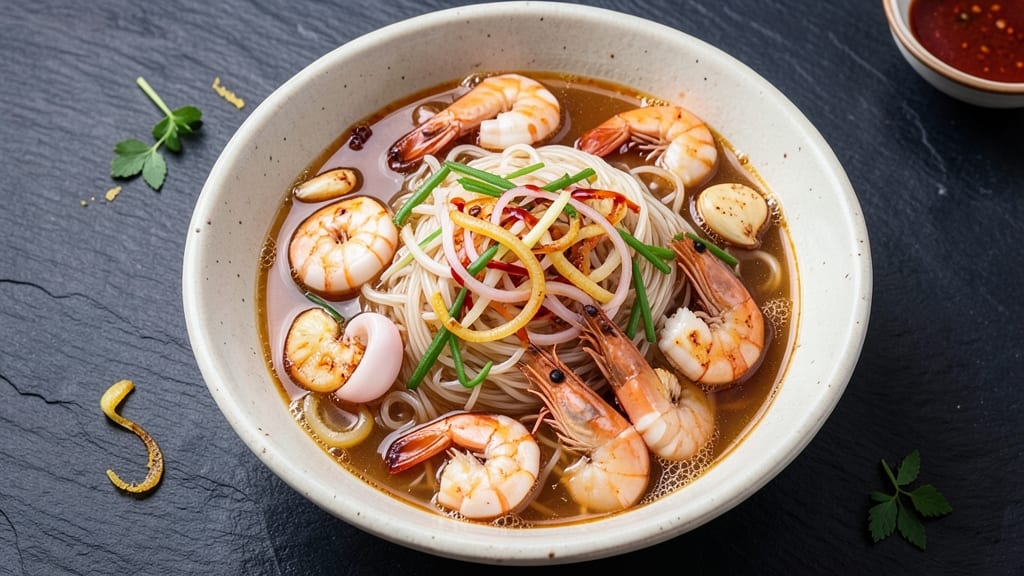
This Asian seafood noodle soup recipe delivers restaurant-quality depth with a rich, umami-packed broth that wraps around tender shrimp, silky rice noodles, and fresh herbs. The secret lies in building flavor through slow-simmered aromatics—ginger, garlic, star anise—and a balanced blend of fish sauce and soy that creates harmony without overpowering.
I developed this version after testing dozens of techniques, ensuring every spoonful delivers both authenticity and approachability.
The broth starts with a fragrant base of onion, ginger, and lemongrass, then deepens through layers of seafood stock and subtle sweetness from coconut milk. Thin rice noodles cook in the broth itself, absorbing its complex flavors while maintaining their signature silky texture.
For protein, shrimp and squid add natural sweetness, while optional mushrooms contribute earthy depth—all balanced by bright lime and fresh cilantro at the end.
What sets this apart is the versatility—it works as a light lunch or hearty dinner, with adjustments for dietary preferences (vegetable broth for vegan versions, tofu for protein).
The broth's richness pairs beautifully with the noodles' delicate chew, while the final garnish of chili oil and herbs adds texture and freshness. Each bowl delivers that perfect balance of savory, sweet, and tangy that defines great Asian noodle soups.
Perfect for weeknight dinners or meal prep, this recipe scales easily while maintaining its restaurant-quality essence. The technique is straightforward, but the result feels special—exactly what you crave when you need comfort in a bowl. Ready to create this umami masterpiece? Let's get started.
Ingredients for asian seafood noodle soup
Fragrant aromatics, tender seafood, and silky noodles—this umami masterpiece delivers restaurant-quality depth with minimal effort.
| Ingredient | Amount | Notes |
|---|---|---|
| Thin Rice Noodles 🍜 | 8 oz | Dried, for 4 servings |
| Large Shrimp 🦐 | 1 lb | Peeled, deveined, tails on |
| Squid 🐙 | ½ lb | Cleaned, bodies sliced into rings |
| Yellow Onion 🧅 | 1 whole | Thinly sliced, white part only |
| Fresh Ginger 🧄 | 2 tbsp | Finely grated, peeled |
| Garlic Cloves 🧄 | 6 cloves | Minced, fresh preferred |
| Lemongrass 🌿 | 1 whole | Stalk, bruised, cut into 2-inch pieces |
| Star Anise 🌶️ | 2 whole | Lightly crushed |
| Seafood Stock 💧 | 4 cups | Homemade or high-quality store-bought |
| Fish Sauce 🍶 | 2 tbsp | Red Boat brand preferred |
| Soy Sauce 🍶 | 1 ½ tbsp | Light or all-purpose |
| Coconut Milk 🥥 | 1 cup | Full-fat, canned |
| Lime Juice 🍋 | 2 tbsp | Freshly squeezed |
| Fresh Cilantro 🌿 | ¼ cup | Chopped, stems removed |
| Green Onions 🧅 | 3 whole | Thinly sliced, white and green |
| Chili Oil 🌶️ | 1 tbsp | For garnish, optional |
| Vegetable Oil 🫒 | 1 tbsp | For cooking |
| Salt 🧂 | 1 tsp | Diamond Crystal preferred |
| White Pepper 🌶️ | ¼ tsp | Freshly ground |
The broth's depth starts with quality seafood stock—homemade is ideal, but Knorr or Pacific brand work in a pinch. Shrimp should be fresh or previously frozen—look for vibrant pink color and firm texture. Squid bodies should be cleaned thoroughly, with the quill removed. For lemongrass, select stalks that are tight and pale yellow, avoiding any woody or dried ends. Star anise should be whole and aromatic—never powdered. Ginger and garlic are best when freshly grated/minced—pre-minced garlic lacks flavor punch. Coconut milk matters too: full-fat, canned brands like Thai Kitchen deliver the creamiest results.
No fresh lemongrass? Lime zest plus a splash of lime juice mimics its citrusy brightness. Substitute squid with scallops or extra shrimp, but adjust cooking time—scallops cook in 2 minutes flat. Running low on fish sauce? Soy sauce plus a pinch of sugar approximates its umami depth, though it won't be identical. The rice noodles must be thin and flat—thick vermicelli won't work here. For extra richness, add 1 tbsp of miso paste to the broth. The chili oil is optional but highly recommended—look for Lao Gan Ma brand if you can find it.
Broth keeps 3-4 days refrigerated and freezes beautifully for up to 3 months. Store cooked noodles separately to maintain texture. For meal prep, assemble bowls day-of-serving—noodles soften when reheated. The shrimp and squid should be cooked just before serving to prevent rubberiness. Garnishes like cilantro and green onions stay fresh 3 days wrapped in damp paper towels. Double the broth recipe—it's perfect for soup lunches all week
Why You'll Love This Recipe
- No Boil, No Fuss: I swear by the quick-soak method for those rice noodles—just hot water, 5 minutes max, and they’re ready. No waiting for a pot to boil, no sticky mess, just tender strands that disappear into the broth like magic.
- Umami Bomb: That combo of shrimp and squid? Pure flavor payoff. The shrimp adds a sweet, briny richness while the squid—when seared just right—gives this soup that deep, savory punch. (Honestly, I’ve skipped the fish sauce before, and it still hits.)
- Lunchbox Hero: Between us, this is my go-to for meal prep. The broth keeps for days, and the noodles reheat beautifully—just toss them back in hot water, add a splash of the reserved broth, and boom. Zero sad, soggy lunches here.
- Budget Flex: Squid and shrimp might sound fancy, but they’re cheaper than you’d think, especially if you buy frozen. Plus, you’re not drowning in ingredients—just a handful of things that stretch into multiple bowls. My wallet and my freezer both thank me.
Step-by-step instructions for Asian seafood noodle soup
Here's the method for building a rich, aromatic broth that harmonizes delicate seafood with silky noodles.
Prepare the Aromatic Base
Heat the 1 tablespoon vegetable oil in a large pot over medium heat. Add the 1 whole yellow onion and 2 tablespoons fresh ginger, cooking for 3-4 minutes until the onion softens and becomes translucent. This foundational step develops the soup's depth of flavor.
Add the 6 cloves garlic cloves, 1 whole lemongrass (bruised), and 2 whole star anise. Stir for 1 minute until fragrant—this releases the essential oils that will infuse the entire broth. The star anise should be lightly crushed to maximize its anise-like aroma without becoming bitter.
Build the Umami-Packed Broth
Pour in the 4 cups seafood stock and bring to a gentle simmer. Add the 1 lb large shrimp and 0.5 lb squid, cooking for 4-5 minutes until the shrimp turn opaque and the squid rings become slightly opaque at the edges. Remove the seafood with a slotted spoon and set aside temporarily.
Return the pot to simmer and add the 2 tablespoons fish sauce, 1.5 tablespoons soy sauce, and 1 teaspoon salt. Stir well and let the broth reduce slightly for 2-3 minutes until it develops a glossy sheen. This reduction concentrates the flavors while maintaining balance—too long and the broth becomes overly salty.
Finish with Creamy Depth
Stir in the 1 cup coconut milk and 0.25 teaspoon white pepper, simmering for 1-2 minutes until the milk is fully incorporated but not curdled. The coconut milk adds a velvety texture while complementing the seafood's natural sweetness. Taste and adjust seasoning if needed—this is your final opportunity to balance the broth's complexity.
Return the cooked seafood to the pot and stir gently to reheat for 30 seconds. Add the 2 tablespoons lime juice and remove from heat. The acidity brightens the dish, cutting through the richness while enhancing the seafood's natural sweetness.
Assemble and Serve
Divide the 8 oz thin rice noodles among four bowls. Ladle the hot seafood broth evenly over the noodles, ensuring each serving gets an equal portion of seafood and aromatics. The noodles will soften immediately upon contact with the hot liquid—this is normal and desired.
Garnish each bowl with 0.25 cup fresh cilantro, 3 whole green onions (thinly sliced), and a drizzle of 1 tablespoon chili oil. Serve immediately with extra lime wedges on the side. The chili oil adds a subtle heat that complements the dish's umami profile without overpowering it.
Pro Tips For Making Asian Seafood Noodle Soup
- Parboil Shrimp First: Toss shrimp in boiling water for 30 seconds before adding them to the soup—this seals in juices and prevents them from curling into rubbery knots. I learned this the hard way after serving shrimp that looked like question marks instead of tender bites.
- Slice Squid Thinly: Cut squid rings no thicker than ¼-inch, or they’ll turn chewy. Use a sharp knife and work fast—squid dries out quicker than you think. (Yes, even if you’re impatient like me.)
- Bloom Ginger Properly: Sear the ginger in oil for 30 seconds until fragrant before adding broth—this unlocks its flavor way better than tossing it in raw. Skip this, and your soup tastes like it’s missing something.
- Reserve Noodle Water: Save a cup of the starchy noodle cooking water before draining—it’s the secret weapon for silkier texture when tossing the noodles at the end. (Your future self will thank you.)
Dietary considerations for this dish
Pescatarian Perfection
This recipe is naturally pescatarian-friendly, built around fresh seafood like shrimp and squid that provide lean protein without dairy or meat. The seafood stock and fish sauce ensure rich umami flavors without animal byproducts.
For extra protein, add tofu or edamame—simmer ½ cup firm tofu cubes in the broth for 3-4 minutes before serving. 🦐
Vegan Adaptations
Transform this into a vegan bowl by swapping the seafood stock for 4 cups vegetable broth (I recommend Pacific Foods brand) and replacing shrimp/squid with mushrooms and tofu.
Use ½ lb shiitake mushrooms sliced into strips—they mimic seafood's texture beautifully. Add 1 tbsp miso paste to the broth for extra depth. 🌱
Gluten-Free Options
Most ingredients are naturally gluten-free, but check your fish sauce and soy sauce—opt for Red Boat Fish Sauce (gluten-free) and tamari instead of regular soy sauce. The rice noodles are also gluten-free, but verify the package label. For extra safety, use certified gluten-free tamari like San-J Tamari. ✨
Allergen Awareness
This recipe contains seafood allergens (shrimp, squid) and soy (from soy sauce). For shellfish-free versions, replace seafood with chicken or tofu, adjusting cook times accordingly.
If coconut is a concern, omit the coconut milk and increase vegetable broth by ½ cup instead. Always check ingredient labels for hidden allergens. 💡
Low-Carb Swaps
Reduce carbs by cutting the rice noodles in half (4 oz total) or using shirataki noodles (rinse well first). Boost volume with extra veggies like bok choy or spinach—add them to the broth during the final 2 minutes of cooking.
For a heartier low-carb option, serve with cauliflower rice on the side. 🥬
Nutrition facts
Frequently asked questions
Can I use dried shrimp instead of fresh for this seafood noodle soup?
Dried shrimp adds incredible depth and works beautifully in this recipe. Soak 2 tablespoons dried shrimp in warm water for 10-15 minutes until softened, then strain and add them to the broth during the final 2 minutes of simmering. This adds umami without overpowering the delicate seafood flavors.
How do I prevent the rice noodles from becoming mushy?
Rice noodles absorb liquid quickly, so cook them directly in the broth for 2-3 minutes maximum. Start with 1 minute of cooking time, then check for tenderness—if they're still firm, add another 30 seconds. Never soak them in water beforehand, as this makes them overly soft.
What's the best way to make this soup spicier?
For extra heat, add 1 teaspoon chili flakes or ½ teaspoon cayenne pepper to the broth while simmering. For a balanced kick, stir in 1 tablespoon sriracha after removing from heat. You can also serve extra chili oil or sliced bird's eye chilies on the side for customizable spice levels.
Can I prepare the broth ahead of time?
Yes! The broth keeps well for 3-4 days refrigerated or 3 months frozen. Store it in airtight containers, and when ready to serve, simply reheat gently and add fresh seafood and noodles. For best results, cook the seafood fresh before assembling bowls—this preserves texture and flavor.
What if I don't have lemongrass?
No problem! Replace it with 1 teaspoon lime zest plus 1 tablespoon lime juice to capture that citrusy brightness. For extra aroma, add ½ teaspoon ground coriander to the aromatic base. The dish will still be flavorful, though slightly different from the traditional version.