
Soups & Stews
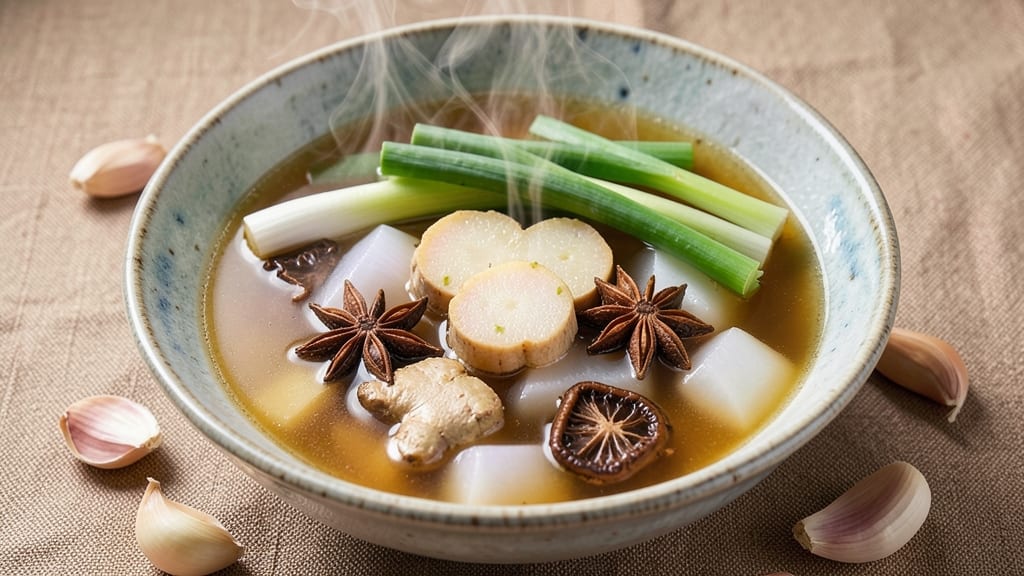
This Asian soup stock recipe transforms simple ingredients into a fragrant, umami-rich base that elevates every bowl. The secret lies in slow-simmering ginger, star anise, and aromatic vegetables—techniques rooted in traditional Chinese and Japanese methods.
Unlike instant broths, this version develops deep, layered flavors that turn ordinary soups into restaurant-quality meals.
What sets this stock apart is the balance of sweet, savory, and herbal notes, achieved through precise simmering times and ingredient ratios. Whether you're making chicken, pork, or vegetarian stock, the same method ensures a clean, aromatic liquid that forms the foundation of pho, ramen, or congee.
The key? Patience—letting flavors meld over 2 to 4 hours (or even longer for pressure-cooked versions) creates complexity store-bought versions can't match.
Once strained, this stock keeps beautifully in the fridge for 5 days or freezes for up to 3 months, making it the ultimate pantry staple. The variations are endless: add mushrooms for earthiness, lemongrass for brightness, or fermented black beans for funk.
For beginners, this recipe builds confidence—every batch improves as you refine your technique.
The result is a golden, fragrant liquid that smells like home—warm, inviting, and packed with potential. Perfect for weeknight dinners or holiday feasts, this stock proves that homemade always tastes better. Let's get simmering.
Ingredients for asian soup stock
Nine aromatic ingredients create a fragrant, umami-rich foundation for restaurant-quality soups.
| Ingredient | Amount | Notes |
|---|---|---|
| Fresh Ginger Root 🧄 | 3 inches | Unpeeled, sliced into thick coins |
| Star Anise Pods 🌟 | 4 whole | Whole pods for aroma infusion |
| Dried Shiitake Mushrooms 🍄 | 4 whole | Stems removed, torn into pieces |
| Daikon Radish 🥕 | 1 lb | Peeled, cut into 2-inch chunks |
| Green Onions 🧅 | 2 whole | White and green parts separated |
| Garlic Cloves 🧄 | 6 cloves | Smash lightly for deeper flavor |
| Cinnamon Sticks 🌿 | 2 whole | For subtle warmth and depth |
| Light Soy Sauce 🍶 | ¼ cup | For umami depth (Kikkoman preferred) |
| Cold Water 💧 | 8 cups | Filtered preferred for clarity |
| White Peppercorns 🌶️ | ½ tsp | Lightly toasted for aroma |
The ginger and star anise are non-negotiable—fresh ginger (not powder) provides the signature warmth, while whole star anise pods infuse layers of licorice-like depth. For shiitake mushrooms, dried is essential—they concentrate umami when rehydrated. Asian markets carry premium dried shiitake, but high-quality grocery stores often stock them too. Look for pods that are plump and unbroken; shriveled or discolored star anise loses its potency. Daikon radish adds natural sweetness—organic varieties from Whole Foods or Trader Joe's have the cleanest flavor profile without bitterness.
No fresh ginger? Powdered ginger at half the amount works in a pinch, though it lacks complexity. Substitute cinnamon sticks for cardamom pods if unavailable, but the flavor profile shifts slightly. For daikon radish, regular white radish or even parsnips can stand in, though texture differs. The soy sauce can be swapped for coconut aminos (1:1 ratio) for a gluten-free option. Green onion whites are more flavorful than greens—use both for balance. If you're short on time, pressure cooking reduces simmer time by 75%, though flavors develop differently.
This stock peaks after 3-4 hours of simmering—don't rush it. Strain through a fine-mesh sieve lined with cheesecloth for maximum clarity. Store in airtight containers; the liquid will settle slightly. Fridge life is 5 days, but it freezes beautifully for up to 3 months. For long-term storage, portion into ice cube trays before transferring to freezer bags. The aromatics can be reused once for a second, lighter batch—simmer them with fresh water and a splash of soy sauce. Always cool stock rapidly to prevent bacterial growth, especially when freezing.
Why You'll Love This Recipe
- No Pulsing Pot: I swear by the slow simmer—no need to babysit this. Toss in the star anise and ginger, cover with water, and let it work its magic while you prep dinner or even watch an episode. That deep, aromatic base builds itself, and honestly? The hardest part is remembering to stir it once.
- Umami Bomb: Between the shiitake mushrooms and daikon radish, this stock is ridiculously flavorful without needing fancy ingredients. The star anise adds this subtle licorice warmth that lingers, and the ginger? It’s bright but never overpowering—like a hug in a bowl. I’ll be real: I’ve used this stock for everything from ramen to braising, and it’s always the star.
- Weeknight Workhorse: This is my go-to for quick meals, sick days, or when I’m too tired to think. Freeze it in ice cube trays for instant flavor boosts in stir-fries, soups, or even marinades. (Yes, even on a Tuesday night.) The green onions at the end add freshness, but you can skip them if you’re using it as a base—it’s that flexible.
- Pantry Goldmine: I buy dried shiitake and star anise in bulk because they last forever and cost pennies. That daikon radish? It’s cheap and packs more flavor than a bag of pre-chopped veggies. Make a big batch, store it in the fridge for up to a week, and you’ve got a budget-friendly secret weapon for all your cooking. No waste, all reward.
Step-by-step instructions for Asian soup stock recipe
This aromatic stock builds depth through careful layering of flavors—each ingredient plays a role in creating a balanced, fragrant base.
Prepare the Vegetable Base
In a large stockpot, combine the 3 inches Fresh Ginger Root (sliced into thick coins) with the 1 lb Daikon Radish (cut into 2-inch chunks) and the 4 whole Dried Shiitake Mushrooms (torn into pieces). The daikon and shiitake will soften as they simmer, releasing their subtle sweetness and umami into the broth. Add the 6 cloves Garlic Cloves (lightly smashed) and the 2 whole Cinnamon Sticks to deepen the aromatic profile.
I like to give the vegetables a quick stir to ensure even distribution of flavors. This step ensures the ginger and daikon infuse the water before the aromatic spices take over. The cinnamon sticks will impart warmth without overpowering, while the garlic adds a sharp, savory note that complements the earthy shiitake.
Toast the Spices and Add Liquid
Lightly toast the 4 whole Star Anise Pods and 0.5 tsp White Peppercorns in a dry skillet over medium heat for 1-2 minutes until fragrant. This step enhances their natural oils and aroma—you’ll know they’re ready when the kitchen fills with a spicy, citrusy scent. Immediately transfer the toasted spices to the stockpot.
Pour in the 8 cups Cold Water and bring the mixture to a boil over high heat. Once boiling, reduce the heat to medium-low and let it simmer gently for 30 minutes. Skimming any foam that rises to the surface during this time ensures a clear, clean stock. The gentle simmer allows the spices and vegetables to release their flavors gradually, rather than extracting too quickly.
Simmer and Infuse the Stock
After the initial 30 minutes, add the 0.25 cup Light Soy Sauce to the pot. The soy sauce introduces umami depth and balances the earthy notes from the ginger and shiitake. Stir gently to incorporate it evenly. Return the heat to medium-low and continue simmering for another 45-60 minutes, uncovered. This longer simmering time allows the flavors to meld and develop complexity.
During this time, the stock should reduce slightly, intensifying its flavor. You’ll notice the aroma becomes richer and more layered—ginger’s warmth, star anise’s licorice-like sweetness, and the subtle heat of the white peppercorns. The daikon and shiitake will soften further, contributing to the stock’s body and texture. Avoid boiling vigorously, as this can make the stock cloudy.
Strain and Finish
Once the stock has simmered for a total of 1-1.5 hours, remove the pot from heat. Strain the stock through a fine-mesh sieve or cheesecloth into a clean bowl or pitcher, pressing gently on the solids to extract every last drop of flavor. Discard the used vegetables and spices—they’ve done their job.
The resulting stock should be a rich, golden liquid with a deep, aromatic scent. If you’re using it immediately, you can serve it hot or warm. For best results, let it cool to room temperature before refrigerating. This stock keeps well in the refrigerator for up to 5 days or can be frozen for up to 3 months, making it a versatile base for noodle soups, ramen, or braised dishes.
Pro Tips For Making Asian Soup Stock
- SIMMER LOW AND SLOW: Once the stock starts bubbling, drop the heat to the lowest setting that keeps it barely moving—no vigorous boiling. I learned this the hard way when my first batch turned bitter from aggressive simmering. The daikon and shiitake need time to release their sweetness, not scorch.
- TOAST THE STAR ANISE: Dry-toast the whole star anise pods in a clean pan for 30 seconds before adding them to the stock. This deepens their aroma and prevents them from floating like lazy buoys. (Yes, even if you’re impatient like me—just don’t burn them.)
- SOAK SHIITAKES FIRST: Rehydrate dried shiitake mushrooms in hot water for 10 minutes before using them in the stock. This guarantees they’ll break down properly and infuse the broth instead of turning into a chewy afterthought. (Skip this, and you’ll regret it later.)
- PEEK BEFORE YOU PEEK: After 30 minutes of simmering, skim off any foam or scum that rises to the top—it’s the stock’s way of saying, "I’m stressed." This keeps the broth clear and clean, especially when you’re using fresh ginger and daikon. (Your future self will thank you.)
Wine and beer pairings for this dish
Light Beer Pairings
A crisp Asahi Super Dry or Sapporo complements the ginger and star anise notes beautifully, balancing their warmth with a clean, refreshing finish. The subtle sweetness of these Japanese lagers mirrors the daikon radish’s natural sugars, while their light body prevents overpowering the delicate stock flavors.
I always reach for these when serving pho or miso soup—it’s like a breath of fresh air after every bite. 🍺
Sake for Depth
For a more sophisticated pairing, try a dry junmai sake like Dassai 23 or Hakkaisan. The sake’s clean, slightly nutty profile enhances the stock’s umami without clashing. Chill it to 45-50°F before serving—warmer sake can overpower the stock’s delicate aromatics.
I’ve found that sipping sake between bites of ramen helps cleanse the palate and highlights the stock’s complexity. 🍶
Fruity White Wine
A dry Riesling from Germany or a Pinot Grigio with citrus notes works surprisingly well, especially with vegetarian stock variations. The wine’s acidity cuts through the ginger’s heat, while its fruitiness complements the shiitake mushrooms.
Look for a 2022 Dr. Loosen Blue Slate Riesling—its crisp finish elevates the stock’s herbal undertones. 🍷
Spiced Beer Fusion
For adventurous drinkers, a wheat beer with chili like Blue Moon Chili Lime or Allagash White adds an unexpected but delicious contrast. The beer’s citrusy hop notes play off the star anise, while the chili echoes the white peppercorns.
Serve this pairing when using the stock in spicy soups like tom yum or spicy ramen. 🌶️
Non-Alcoholic Options
For a refreshing non-alcoholic match, try sparkling yuzu soda or Japanese melon soda. The citrusy brightness of yuzu enhances the ginger’s warmth, while the effervescence cleanses the palate.
I’ve also had great success with San Pellegrino Aranciata—its blood orange flavor pairs surprisingly well with the stock’s earthy depth. 💧
Nutrition facts
Frequently asked questions
Can I make this stock in a slow cooker instead of a stovetop?
Yes! Transfer all ingredients to your slow cooker and simmer on low for 6-8 hours or high for 3-4 hours. The slow cooker's gentle heat works perfectly for extracting flavors, though the stock may be slightly less concentrated. Skim foam occasionally and strain before using. For deeper flavor, add 1 extra inch of ginger since slow cooking reduces some aromatic intensity.
What's the best way to use leftover aromatics?
Rinse and dry the used ginger, star anise, and mushrooms—they can make a second batch of lighter stock! Simmer them with 6 cups fresh water and 1 tablespoon soy sauce for 30-45 minutes. This second infusion works well for simple soups or rice cooking. Never reuse soy sauce or salted ingredients as they'll make the stock too salty.
How do I adjust this for a vegetarian/vegan version?
Replace the shiitake mushrooms with 1 cup dried kombu seaweed (soaked 10 minutes) and add 1 tablespoon miso paste at the end of simmering. For extra umami, include 1 cup fermented black beans (rinsed). The daikon and ginger remain essential—they provide the signature sweetness and warmth that balances the savory notes.
Why does my stock look cloudy after straining?
Cloudiness usually means either overcooking (boiling too vigorously) or not straining thoroughly. For clearer stock, simmer at medium-low heat (small bubbles, not rolling boil) and strain through a double layer of cheesecloth. If it's still cloudy, chill it overnight—the fat will solidify and can be skimmed off before using.
Can I use this stock for cooking instead of just soups?
This aromatic stock works beautifully for steaming dumplings, braising tofu, or even as a rice cooking liquid. For stir-fries, reduce it by half first to concentrate the flavors. The ginger and star anise notes add depth to sauces—try using 1 cup reduced stock in your next pho broth or marinade for restaurant-quality results.