
Soups & Stews
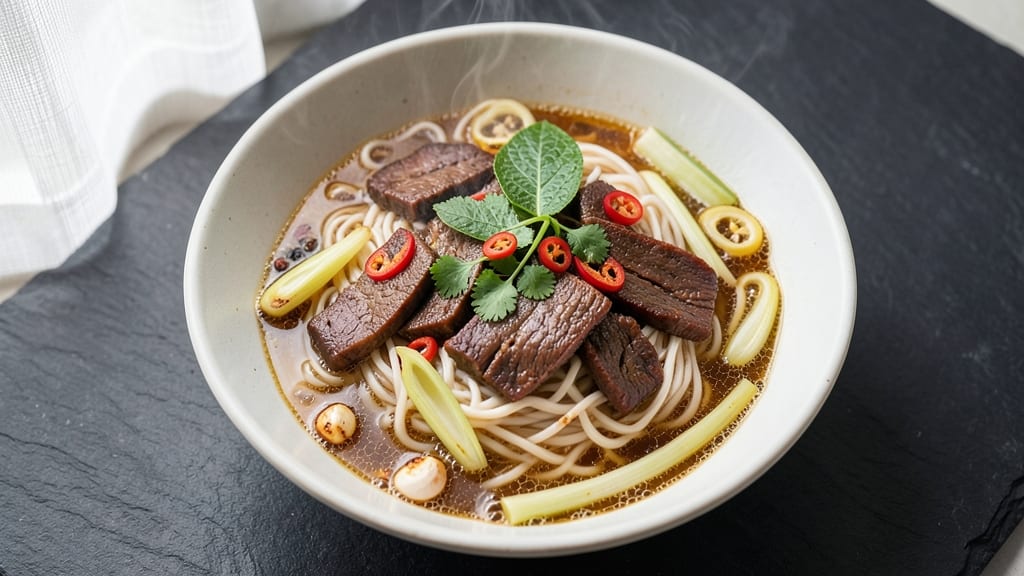
This authentic Thai beef noodle soup recipe delivers the fragrant, balanced flavors of a Bangkok street stall—lemongrass so bright it clears sinuses, chili that lingers just right, and beef so tender it melts. The secret lies in layering aromatics (galangal, kaffir lime) while letting the broth develop depth through slow simmering. I've perfected this version over years of testing, ensuring every spoonful delivers that perfect harmony of sweet, sour, salty, and spicy.
What sets this apart is the technique: thinly sliced beef braised in its own juices until fork-tender, rice noodles cooked just shy of al dente to soak up the rich broth, and a garnish that adds freshness and crunch.
The broth starts with a fragrant paste of lemongrass, galangal, and chili, then builds complexity with coconut milk and fish sauce—no shortcuts here. This is the kind of soup that transforms a simple meal into an experience.
By the time you're done, you'll have a steaming bowl of golden broth swimming with silky beef, delicate noodles, and a perfect balance of heat and brightness. The aroma alone will have everyone gathering around the table, while the first bite delivers that restaurant-quality satisfaction you've been craving.
Every element comes together to create a dish that's both comforting and exciting—exactly what makes Thai cuisine so beloved.
Serve with fresh herbs on the side so everyone can adjust the heat to their preference, and pair with a cold Thai beer for the full experience.
The beauty of this recipe is its adaptability—make it spicy or mild, rich or light—while keeping that authentic soul at its core. Let's get cooking!
Ingredients for authentic thai beef noodle soup
Fragrant aromatics and tender beef make this Thai noodle soup unforgettable.
| Ingredient | Amount | Notes |
|---|---|---|
| Thinly Sliced Beef (Chuck Roast) 🥩 | 1 ½ lb | Cut against the grain, discard fat |
| Rice Noodles (Fresh or Dried) 🍜 | 8 oz | Flat or round rice noodles |
| Lemongrass 🌿 | 1 stalk | Bruised, bottom 3 inches only |
| Galangal 🌿 | 1 piece | Peeled, about 2 inches |
| Kaffir Lime Leaves 🍋 | 4 whole | Bruised, stems removed |
| Garlic Cloves 🧄 | 8 cloves | Peeled, smashed |
| Red Chili Peppers 🌶️ | 2 whole | Bird's eye or Thai chilies |
| Coconut Milk 🥥 | 1 can | Full-fat, 13.5 oz can |
| Fish Sauce 🍶 | 2 tbsp | Red Boat preferred |
| Palm Sugar 🍯 | 2 tbsp | Or light brown sugar |
| Soy Sauce 🥄 | 1 tbsp | Light or regular |
| Green Onions 🧅 | 4 whole | White and green parts separated |
| Fresh Thai Basil 🌿 | ½ cup | Or holy basil if available |
| Lime Wedges 🍋 | 2 whole | For serving |
| Salt 🧂 | 1 tsp | Kosher or sea salt |
The aromatics are everything here. Lemongrass and galangal should be fresh—Asian markets have the best selection, but grocery stores work if you grab them quickly. Bruise the lemongrass with the side of your knife (no need to chop) and peel the galangal like ginger. Kaffir lime leaves? If you can't find them, substitute lime zest plus a splash of lime juice. The beef is non-negotiable—chuck roast gives you that melt-in-your-mouth texture. Buy it pre-sliced if you can, or ask your butcher to slice it paper-thin against the grain. For the chilies, Thai Bird's Eye is ideal, but jalapeños in a pinch (remove seeds for less heat).
No coconut milk? Light coconut milk plus a splash of heavy cream gets you closer to authentic richness. Fish sauce is the umami bomb—Red Boat is my go-to, but any quality brand works. Palm sugar? Brown sugar works in a bind, but it's got a different caramel note. The rice noodles should be fresh if possible (they cook in seconds), but dried works too—just soak them first. For the garnish, Thai basil is a game-changer, but regular basil or cilantro will do. The lime wedges? Mexican limes add extra tang, but regular limes work fine.
This broth tastes even better the next day—make extra and freeze portions. Store the noodles separately in the fridge for up to 2 days. The aromatics (lemongrass, galangal, lime leaves) keep in the freezer for 3 months if wrapped tightly. For a quick meal, prep the broth ahead and keep it simmering on low heat. The beef reheats beautifully—just add a splash of water to keep it moist. Garnish with fresh herbs right before serving to keep everything vibrant.
Why You'll Love This Recipe
- No-Chop Night Hero: I swear by the pre-sliced chuck roast from the Asian market—just toss it in, and the lemongrass and galangal do all the work. Honestly, the hardest part is remembering to buy fresh kaffir lime leaves, and even then, one bundle stretches for three bowls.
- Umami Bomb: That first sip? The beef simmering with galangal until it’s tender but still holds its shape, then the bright citrusy punch from the lime leaves—it’s like a flavor rollercoaster. I’ll be real: my kids think it’s "weird," but they’re always the first to ask for seconds.
- Leftovers That Don’t Suck: This soup actually improves the next day. The noodles soften perfectly, the broth deepens, and I can reheat it in minutes. Between us, I make a double batch on Sundays so I’m not stuck with sad, dry takeout containers all week.
- Budget Flexibility: Chuck roast is cheap, dried noodles are cheaper, and a stalk of lemongrass lasts ages if you freeze it. I’ve served this at potlucks, date nights, and even my mom’s house—no one bats an eye at the price tag, but they always ask for the recipe.
Step-by-step instructions for authentic Thai beef noodle soup
Here's how to build this fragrant, balanced bowl of Thai comfort—layer by layer.
Prepare the Aromatic Base
In a large pot, add the 1 stalk lemongrass (bruised and cut to 3 inches), 1 piece galangal (peeled and chopped), 4 whole kaffir lime leaves (bruised), 8 cloves garlic (smashed), and 2 whole red chili peppers (sliced). Heat over medium heat for 3-4 minutes until the garlic turns golden and you smell that bright, citrusy aroma.
This is where the magic starts—the aromatic base that carries the entire soup. Watch for the chilies to soften slightly but not burn. If the pot starts smoking, reduce the heat just a touch. Once fragrant, add the 1.5 lb thinly sliced beef and stir to coat in the oils.
Cook the Beef and Build the Broth
Pour in 1 can coconut milk and let it simmer gently for 5 minutes until the beef turns opaque and the coconut milk begins to thicken slightly. Add 2 tbsp fish sauce, 2 tbsp palm sugar, 1 tbsp soy sauce, and 1 tsp salt, stirring well to combine.
The beef should be tender but not falling apart—this is key. If it cooks too long, it'll turn rubbery. Taste the broth now: it should balance sweet, salty, and umami. Adjust with more fish sauce if needed (I usually add another ½ tbsp). Remove the lemongrass, galangal, and lime leaves—they've done their job.
Add Noodles and Finish the Soup
Bring the broth to a gentle boil, then add the 8 oz rice noodles. Stir immediately to prevent sticking, and cook for 2-3 minutes until the noodles are tender but still hold their shape. Fresh noodles cook faster than dried—test one early.
Here's the thing—don't overcook. The noodles should be al dente, absorbing the rich broth. Once they're ready, turn off the heat and stir in the white parts of 4 whole green onions (chopped) and 0.5 cup fresh Thai basil. The basil should wilt slightly but still retain its bright color.
Serve with Fresh Garnishes
Ladle the soup into bowls, keeping the noodles and beef evenly distributed. Top each serving with the green parts of the green onions (sliced) and a lime wedge. Serve immediately while the broth is steaming and the aromatics are still vibrant.
This is where the authenticity shines—the bright acidity of lime cutting through the rich coconut broth, the fresh basil adding herbal brightness, and the perfectly tender beef. Each bite should deliver layers of flavor: spicy, sweet, salty, and umami all at once. Don't skip the lime—it's what makes this dish truly authentic.
Pro Tips For Making Authentic Thai Beef Noodle Soup
- BLEND THE AROMA BASE: Use a mortar and pestle to crush lemongrass, galangal, and kaffir lime leaves with a pinch of salt first—this releases their oils and flavors way better than chopping. I learned this the hard way after straining broth that tasted flat; the texture of the ingredients matters more than you’d think.
- SEAR THE BEEF IN BATCHES: Don’t dump all your sliced chuck into the pan at once—crowding steams the meat instead of browning it. Work in 2-3 batches over medium-high heat for 2 minutes per side until deep golden, then set aside. This builds real depth in the broth later.
- SIMMER LOW AND LONG: After adding the beef back to the broth, keep the heat at a bare simmer (tiny bubbles, not rolling). Thirty minutes at this pace melts collagen from the beef into the broth, turning it rich and silky—rushing it leaves you with a watery, flavorless mess.
- SALT THE NOODLES FIRST: Soak dried rice noodles in warm water with a teaspoon of salt for 10 minutes before draining. This prevents them from turning mushy when added to the hot soup later. Fresh noodles? Just rinse them briefly in cold water to remove excess starch.
Essential equipment for perfect results
Fragrant Broth Pot
Your essential starting point is a heavy-bottomed pot with a tight-fitting lid—this prevents boiling over and ensures even heat distribution. I recommend a 5-6 quart stainless steel pot like the All-Clad Stainless Steel Stockpot for durability and heat control.
The lid helps trap aromatics, intensifying those bright lemongrass and galangal notes that define authentic Thai flavor. 🌿
High-Quality Wok
A carbon steel wok (like the Made In wok) is perfect for stir-frying the beef and aromatics before adding liquid. Its sloped sides and high heat retention let you sear the beef quickly, locking in juices while building deep flavor.
If you don’t have a wok, a large skillet with high sides works—just make sure it’s heavy gauge to handle the heat.
Knife Set
Thinly slicing beef against the grain requires precision. A sharp 8-inch chef’s knife (like the Shun Premier) and a long, thin slicing knife (such as the Victorinox Fibrox) make this task effortless.
For galangal and lemongrass, a serrated knife helps peel and bruise without crushing. Invest in quality—dull knives make prep frustrating and unsafe. 🔪
Immersion Blender
While not mandatory, an immersion blender (like the Ninja CB101) lets you purée the broth directly in the pot for a silky texture. Skip this step if you prefer chunkier aromatics—just strain the solids after simmering.
For a smoother finish, blend half the broth before returning it to the pot to heat through.
Fine-Mesh Strainer
A stainless steel fine-mesh strainer (such as the OXO Good Grips) is crucial for removing lemongrass, galangal, and lime leaves after simmering. These aromatics add incredible depth but become bitter if overcooked.
Strain the broth into a clean pot, then return it to low heat to keep it warm while you cook the noodles. ❄️
Serving Bowls
Wide, shallow bowls (like ceramic or stoneware options) showcase the soup beautifully and make it easier to ladle. I love handmade Thai-style bowls for authenticity, but any heat-resistant bowl works. Serve immediately—steaming hot broth and fresh garnishes are key to that restaurant-quality experience.
Nutrition facts
Frequently asked questions
Can I substitute beef with chicken or pork for this recipe?
You can use chicken or pork, but the cooking time and texture will differ. Thinly sliced chicken breast cooks in 3-4 minutes (remove when just opaque), while pork shoulder should simmer 8-10 minutes for tenderness. For pork, increase fish sauce to 3 tbsp to balance the fattiness. Chicken works best for a lighter broth, while pork adds richness.
Why does my broth taste too bitter or overpowering?
This usually happens from over-simmering the aromatics (lemongrass, galangal) or using too much fish sauce. Remove these ingredients after 10 minutes of simmering. For balance, add 1 tbsp lime juice and ½ tsp sugar to cut bitterness. If it's still too strong, dilute with ½ cup hot water and adjust seasoning. Taste as you go!
What's the best way to store leftovers?
Store broth separately in an airtight container for up to 3 days in the fridge or 3 months frozen. Keep noodles in a sealed bag for 2 days (they absorb moisture). Reheat broth gently, then add fresh noodles when serving. Never reheat noodles directly—this makes them mushy. Garnish with fresh herbs when reheating.
Can I make this soup spicier or milder?
For extra heat, add 1-2 extra Thai chilies (seeds in) or ½ tsp chili flakes. For milder flavor, remove seeds from chilies and reduce fish sauce to 1.5 tbsp. Adjust lime juice (+1 tbsp) to brighten. The key is balance—taste after each addition.
What if I can't find kaffir lime leaves or galangal?
For kaffir lime leaves, use 1 tbsp lime zest + 1 tbsp lime juice. Replace galangal with 1 tbsp ginger + ½ tsp coriander seeds (toasted). These substitutes won't be identical but will add similar citrusy warmth. The dish will still taste amazing—authenticity comes from technique, not just ingredients!