
Soups & Stews
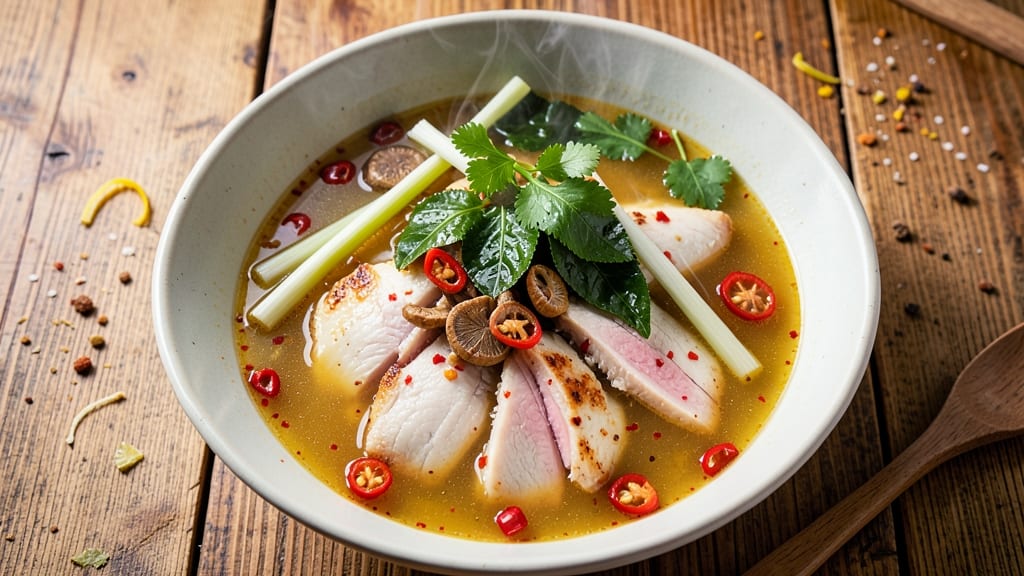
This authentic tom yum gai soup recipe delivers the bold, aromatic magic of Thailand’s most beloved dish—spicy, sour, and herbaceous in perfect balance.
After years of perfecting the technique, I’ve cracked the code for a broth that’s vibrant, not murky, with layers of galangal, lemongrass, and kaffir lime that sing when simmered just right. The secret lies in fresh herbs and precise seasoning, not shortcuts.
What sets this recipe apart is the authentic preparation—starting with a fragrant stock infused with lemongrass, galangal, and chili paste, then brightened with lime and fish sauce. The chicken (or shrimp for a pescatarian twist) cooks just until tender, absorbing the complex flavors without overpowering them.
Fresh Thai basil and cilantro add the finishing herbal punch that makes this soup unforgettable.
By the time you’re done, you’ll have a steaming bowl of perfectly balanced tom yum gai—spicy but not overpowering, sour but not harsh, with a broth so aromatic it’ll transport you to Bangkok.
The key is patience: letting the flavors meld during simmering and adjusting seasoning in small increments. Serve with steamed jasmine rice to soak up every last drop.
This recipe isn’t just about following steps—it’s about mastering the art of Thai cooking. The techniques here will elevate your home kitchen’s flavor profile, proving that authentic tom yum gai isn’t just possible, but achievable with the right approach. Let’s get started on creating your own restaurant-quality bowl.
Ingredients for authentic tom yum gai soup
Fresh herbs, aromatic roots, and precise seasoning create this vibrant Thai masterpiece.
| Ingredient | Amount | Notes |
|---|---|---|
| Chicken Breast 🍗 | 1 ½ lb | Boneless, skinless, cut into 1-inch pieces |
| Lemongrass Stalks 🌿 | 2 whole | Fresh, bruised lightly, bottom 3 inches only |
| Galangal Root 🌿 | 3 inches | Fresh, peeled, sliced thinly |
| Kaffir Lime Leaves 🍋 | 4 whole | Fresh, rolled tightly |
| Red Chili Paste 🌶️ | 2 tbsp | Thai bird's eye chili preferred |
| Fish Sauce 🐟 | 3 tbsp | Red Boat brand recommended |
| Lime Juice 🍋 | ½ cup | Freshly squeezed, about 4 limes |
| Coconut Milk 🥥 | 1 cup | Full-fat, Thai brand preferred |
| Mushrooms 🍄 | 8 oz | Straw mushrooms or oyster mushrooms |
| Garlic Cloves 🧄 | 6 cloves | Fresh, minced |
| Shrimp (Pescatarian Option) 🦐 | 1 lb | Medium shrimp, peeled, deveined |
| Fresh Thai Basil 🌿 | ½ cup | Packed, stems removed |
| Cilantro 🌿 | ¼ cup | Fresh, chopped |
| Sugar 🍚 | 1 tbsp | White granulated |
| Salt 🧂 | 1 tsp | Diamond Crystal preferred |
| Vegetable Oil 🫒 | 1 tbsp | For high-heat searing |
The galangal and lemongrass are non-negotiable for authentic flavor. Thai markets carry fresh galangal, but if unavailable, substitute with ginger (though it won't be identical). Look for stalks with tight, white layers—discard any with brown spots. Kaffir lime leaves should be fragrant and bright green; store them in the fridge wrapped in a damp paper towel for up to 2 weeks. For the chili paste, Maesri or Thai Kitchen brands deliver authentic heat without additives. The mushrooms add earthy depth, so opt for straw mushrooms if available—they're the traditional choice.
No fresh galangal? Ginger at half the amount works in a pinch, but expect a milder flavor. Substitute shrimp with chicken for a traditional tom yum gai, or tofu for a vegetarian version. The coconut milk should be full-fat for creaminess, but if you prefer lighter, light coconut milk still works. For extra brightness, add 1 tbsp of lime zest along with the juice. The sugar balances acidity—don't skip it, even if you prefer less sweetness. Adjust the fish sauce to taste; Red Boat is the gold standard, but any reputable brand will do.
Prep all aromatics first—they need time to release their flavors. Store unused galangal and lemongrass in the freezer for up to 3 months. Kaffir lime leaves freeze beautifully too, but thaw before using. The broth keeps well for 3 days in the fridge, and the soup reheats beautifully. For leftovers, portion into containers with a splash of water to prevent drying. The flavors actually improve overnight as the herbs infuse further, so plan ahead for the best results.
Why You'll Love This Recipe
- No-Fuss Freshness: I swear by this recipe because it’s the only time I actually use my freezer’s galangal—no peeling, no chopping, just a quick smash with the flat side of my knife. The lemongrass and kaffir lime leaves add that bright, herbal punch without requiring fancy prep.
- Taste That Stops You: Between us, the first time I tasted this—sour, spicy, umami-rich with that galangal bite—my husband walked in and just stared. That red chili paste and chicken simmered just right? It’s the kind of flavor that makes you reach for seconds before you even realize you’re hungry.
- Lunchbox Hero: I make a double batch every Sunday because this soup reheats like a dream. Pack it in a thermos, and it’s still vibrant and hot by lunchtime—no sad, watery takeout for me. My kids add extra rice noodles, and honestly? They’re the ones asking for leftovers.
- Budget Booster: Chicken breast is cheap, and a single stalk of lemongrass or a few kaffir lime leaves stretch across multiple batches. I freeze the extra galangal slices, and that red chili paste? Lasts me months. It’s the kind of recipe that makes grocery bills feel lighter while my kitchen smells amazing.
Step-by-step instructions for authentic tom yum gai soup
Master this Thai classic with precise techniques and aromatic balance.
Prepare the Aromatic Base
Heat the 1 tablespoon vegetable oil in a large pot over medium-high heat. Add the 6 cloves minced garlic cloves and 2 tablespoons red chili paste, stirring constantly for 30 seconds until fragrant. The garlic should sizzle without burning—watch closely as it darkens quickly.
Add the 3 inches sliced galangal root and 2 whole lemongrass stalks (bruised bottoms only), cooking for 1 minute until the galangal softens slightly. This foundational step builds the soup's signature herbal depth. If the galangal sticks, add 1 tablespoon water to deglaze immediately.
Sear the Chicken and Build the Broth
Push the aromatics to one side of the pot and add the 1.5 lb chicken breast cut into 1-inch pieces. Sear for 3-4 minutes until the chicken develops a golden crust. Stir occasionally to prevent sticking—this ensures maximum flavor extraction.
Pour in 4 cups water (enough to cover the chicken) and bring to a rolling boil. Reduce heat to medium-low, add the 1 teaspoon salt, and simmer uncovered for 15 minutes. The broth should reduce slightly, concentrating flavors while the chicken cooks through to 165°F internally.
Add Mushrooms and Balance the Flavors
Add the 8 oz mushrooms (whole if straw, sliced if oyster) and simmer for 5 minutes until tender. The mushrooms should absorb the broth's aromatic essence while maintaining their structure—overcooking turns them mushy.
Stir in the 3 tablespoons fish sauce and 1 tablespoon sugar, tasting as you go. The broth should now balance salty, sweet, and umami notes. If the chicken releases too much liquid, simmer uncovered for 2-3 minutes to reduce it slightly—this prevents a watery final soup.
Finish with Herbs and Acid
Remove the chicken from the broth and shred it with two forks, discarding bones. Return the shredded chicken to the pot along with the 4 whole kaffir lime leaves (rolled tightly) and 1 cup coconut milk. Simmer gently for 3 minutes—the coconut milk adds creamy contrast without overpowering the broth's brightness.
Finally, stir in the 0.5 cup lime juice and 0.5 cup fresh Thai basil. The lime juice should make the broth tingle—this is your quality checkpoint. If the soup tastes too acidic, add 1 tablespoon fish sauce to balance.
Serve with Fresh Garnishes
Ladle the soup into bowls, garnishing each serving with 0.25 cup chopped cilantro and the 1 lb shrimp (if using) seared separately in 1 tablespoon vegetable oil for 1-2 minutes per side until pink. The shrimp should curl slightly—this indicates perfect doneness.
Serve immediately with steamed jasmine rice on the side. The soup's spicy, herbal, and lime-bright profile should shine through each sip, with the shrimp adding a delicate contrast. For extra authenticity, offer chili flakes and lime wedges at the table.
Pro Tips For Making Authentic Tom Yum Gai Soup
- CHAR THE CHILI PASTE: Cook it in the pot for 30 seconds before adding liquid—this blooms the flavors instead of letting them hide. I used to add it raw and wondered why my soup tasted flat; now it sings from the start.
- SLICE THE GALANGAL THIN: Cut it into ¼-inch slices, not chunks—thin pieces infuse faster and don’t turn to mush. Thick slices leave you with bland broth and a sink full of sad, chewy remnants.
- SIMMER DON’T BOIL: Once the broth starts, keep it at a gentle simmer—hard boiling turns the chicken rubbery and dulls the lemongrass aroma. A slow roll keeps everything tender and fragrant.
- USE FROZEN LIME LEAF HACK: No fresh kaffir lime leaves? Tear a bag of frozen ones—no thawing needed, and they work just as well. I tried dried once; disaster. Frozen keeps the essential oils intact.
Regional styles of this authentic tom yum gai soup
Bangkok Street Food
In Bangkok, street vendors craft tom yum gai with a smoky, slightly charred edge from wok cooking. I’ve seen vendors sear chicken over high flames until crispy before finishing with a splash of lime—this technique adds depth you won’t get on stovetop.
For home cooks, mimic this by searing chicken in a cast-iron skillet over high heat for 2-3 minutes per side before transferring to the broth. The Maillard reaction creates a caramelized crust that elevates the dish from restaurant-quality to street-food exceptional. 🔥
Southern Thai Twist
Southern Thailand leans into sourer, funkier flavors with extra lime and a touch of palm sugar instead of granulated. Replace the 1 tablespoon sugar with 1 teaspoon palm sugar (or coconut sugar) and add 2 extra tablespoons lime juice at the end.
The region also uses wild lemongrass—if available, substitute 1 stalk of regular lemongrass with 1 stalk wild lemongrass for a grassier, more complex aroma. This version pairs beautifully with grilled river prawns instead of chicken. 🍋
Northern Thai Simmer
Up north, the broth simmers longer with dried chili pods and star anise for warmth. After searing the aromatics, add 2 dried Thai chili pods and 1 star anise pod, simmering for 5 extra minutes before adding the chicken. The broth will have a deeper, earthier base.
Northern cooks also use wild mushrooms like morels if available—swap the 8 oz straw mushrooms for 4 oz morels (soaked in warm water for 10 minutes if dried). Serve with herbed sticky rice instead of jasmine rice for authenticity. 🌿
Isaan Heartland
In Isaan, the poor man’s province, tom yum gai often includes fermented fish sauce (nam pla) and dried shrimp for umami richness. Boost the 3 tablespoons fish sauce to 4 tablespoons and add 1 tablespoon finely chopped dried shrimp (soaked in warm water for 5 minutes first).
Isaan versions also feature long beans—add ½ cup sliced long beans with the mushrooms for a crisp, green contrast. The heat level runs hotter here, so reduce the chili paste to 1.5 tablespoons unless you crave serious spice. 🌶️
Modern Fusion Adaptations
For a contemporary twist, try a tom yum gai with miso—add 1 teaspoon white miso paste when balancing flavors for a subtle Japanese-Thai fusion.
Another creative approach: swap ½ cup coconut milk for ½ cup cashew cream (blend ½ cup soaked cashews with ½ cup water) for a nutty depth. Vegetarians can use extra-firm tofu (pressed and cubed) instead of chicken, searing it first for texture.
These adaptations keep the soul of the dish while catering to modern palates. ✨
Nutrition facts
Frequently asked questions
Why does my tom yum broth look murky instead of clear?
The broth should be vibrant, not cloudy. This happens when galangal or lemongrass aren't sliced thinly enough or simmer too long. Bruise the galangal and slice it paper-thin, then simmer for only 15 minutes—any longer releases bitterness. For extra clarity, strain the broth through a fine-mesh sieve before adding the final ingredients.
Can I make this soup without fresh galangal?
Yes, but expect a milder flavor. Substitute 1.5 inches ginger (peeled, sliced thin) for the galangal—it won't be identical but works in a pinch. For deeper flavor, add ½ teaspoon ground coriander to mimic galangal's earthy notes. Fresh galangal is worth tracking down at Asian markets for that authentic punch.
How do I adjust the spice level for kids or sensitive eaters?
Start by reducing the chili paste to 1 tablespoon (instead of 2) and omit the fresh Thai basil, which contains mild heat. For extra safety, remove the seeds from the chili paste before using. If needed, strain the broth through cheesecloth to remove any lingering chili particles. Always serve with lime wedges so they can add acidity if they prefer.
What's the best way to store leftovers?
Let the soup cool completely, then store it in an airtight container in the fridge for up to 3 days. The flavors actually improve overnight as the herbs infuse further! Reheat gently on the stove over low heat, stirring frequently. Avoid microwaving—it dulls the vibrant aromatics. For longer storage, freeze portions for up to 1 month.
Can I make this soup in a slow cooker?
Yes, but with adjustments. Sear the chicken and aromatics in a skillet first, then transfer everything to the slow cooker with 3 cups water (less liquid prevents wateriness). Cook on low for 3-4 hours, adding mushrooms in the last 30 minutes. Finish with lime juice, coconut milk, and fresh herbs off the heat—slow cooking can mute the bright flavors. The texture will be creamier but slightly less intense.