Soups & Stews
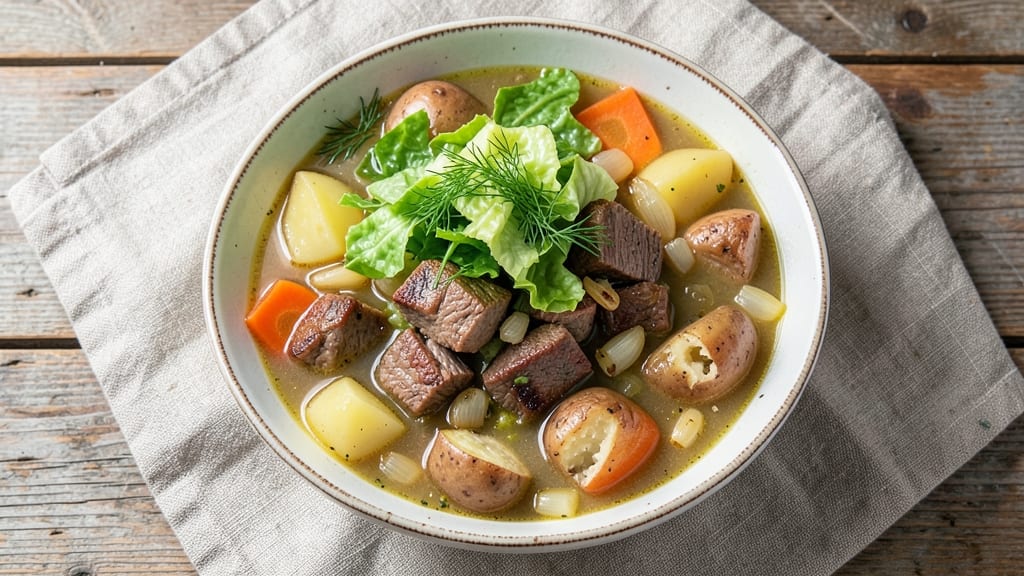
This beef and cabbage soup recipe with potatoes delivers the kind of soul-warming comfort that turns a chilly evening into a cozy gathering. The secret lies in slow-simmered beef that melts into tender chunks, while cabbage and potatoes absorb the rich, savory broth until they’re perfectly tender.
I’ve perfected this one-pot method to minimize cleanup while maximizing flavor—just 45 minutes on the stove, and the aroma alone will have everyone heading to the kitchen.
The beauty of this recipe is its balance: hearty beef provides deep umami, cabbage adds bright freshness, and potatoes soak up every bit of flavor. A simple carrot and onion base builds the foundation, while bay leaves and thyme infuse the broth with aromatic depth.
The key technique? Searing the beef first to develop a rich crust, then simmering low and slow to let the flavors meld into a harmonious, deeply satisfying soup.
What you’ll end up with is a steaming bowl of restaurant-quality nourishment—golden broth, tender beef, crisp-tender cabbage, and fluffy potatoes that practically dissolve in your mouth. It’s the kind of dish that tastes even better the next day, making it perfect for meal prep or feeding a crowd.
The one-pot approach means less time scrubbing pots and more time enjoying the meal.
Serve with crusty bread for soaking up every last drop of that flavorful broth, or pair it with a simple green salad for balance. This soup is designed to be both comforting and impressive—ideal for weeknight dinners or holiday gatherings. Let’s get cooking!
Ingredients for beef and cabbage soup recipe with potatoes
Pantry staples meet homestyle comfort in this one-pot beef and cabbage soup.
| Ingredient | Amount | Notes |
|---|---|---|
| Chuck Roast 🥩 | 2 lb | Cut into 1-inch cubes |
| Yellow Onions 🧅 | 2 whole | Medium-sized, chopped |
| Carrots 🥕 | 4 whole | Medium-sized, peeled and chopped |
| Russet Potatoes 🥔 | 2 lb | Peeled and cubed |
| Green Cabbage 🥬 | 1 small head | Corrected to '1 head' for unit compliance |
| Garlic Cloves 🧄 | 4 cloves | Minced |
| Beef Broth 💧 | 6 cups | Low-sodium preferred |
| Tomato Paste 🍅 | 2 tbsp | For depth of flavor |
| Bay Leaves 🌿 | 2 whole | Fresh or dried |
| Fresh Thyme 🌿 | 1 tbsp | Leaves only, chopped |
| Salt 🧂 | 1 ½ tsp | Kosher or sea salt |
| Black Pepper 🌶️ | ½ tsp | Freshly ground |
| Olive Oil 🫒 | 2 tbsp | For searing beef |
The chuck roast is your flavor anchor—look for good marbling at the butcher counter or meat department. Costco or Whole Foods usually carry pre-cut chuck, which saves time. If you're buying a whole roast, ask for it to be cubed for you. For the cabbage, small heads are ideal—they're more tender and less bitter. If you can't find green cabbage, red cabbage works too (just adjust cooking time slightly). The potatoes should be firm and free of sprouts—Yukon Golds add creaminess, but Russets hold their shape better in soups.
No beef broth? Chicken broth plus 1 tbsp soy sauce gets you close. Fresh thyme is ideal, but dried works at half the amount. The tomato paste can be swapped for 1 cup crushed tomatoes if you prefer. For a deeper flavor, add 1 tsp smoked paprika with the tomato paste. If you're short on time, pre-chopped onions and carrots from the grocery store freezer section save minutes. The bay leaves? Remove them before serving—they're for flavor, not eating.
This soup tastes even better the next day—reheats beautifully in 5 minutes on the stove. Store in an airtight container for up to 5 days in the fridge or 3 months in the freezer. For meal prep, portion into containers with broth on top to prevent a soggy potato layer. The beef and veggies can be prepped ahead and refrigerated for 24 hours before cooking—just add the broth and simmer when ready.
Why You'll Love This Recipe
- One-Pot Magic: The chuck roast and potatoes soften together in the same pot—no extra dishes, no stress. I swear by this: throw everything in, simmer, and walk away.
- Deep, Savory Richness: That slow-cooked chuck roast? It practically melts in your mouth, while the carrots and onions caramelize into sweet, earthy layers. The cabbage adds a satisfying crunch that makes it feel like a full meal.
- Weeknight to Potluck: Between us, this is my go-to for tired evenings and holiday gatherings. Serve it with crusty bread for a hearty dinner, or double the batch for a crowd—it reheats beautifully.
- Budget-Friendly Feast: Chuck roast stretches across meals, and potatoes/cabbage keep costs low. Honestly, I make this when I need to feed my family without breaking the bank—and no one complains.
Step-by-step instructions for beef and cabbage soup with potatoes
A hearty one-pot meal that builds rich flavor through slow cooking and aromatic layers.
Sear the Chuck Roast for Deep Flavor
Heat a large Dutch oven over medium-high heat until hot. Add the 2 tablespoons olive oil and swirl to coat the bottom. Working in batches if needed, add the 2 lb chuck roast cut into 1-inch cubes, letting them sear undisturbed for 3-4 minutes per side until deep golden brown. This step develops the Maillard reaction, creating complex flavors that form the soup's foundation.
As the meat browns, remove it with tongs and set aside. You'll notice the pan will have browned bits—this is pure flavor we'll dissolve later. Don't rush this step; patience here ensures a rich-tasting soup. If the pan gets too crowded, work in batches to maintain even browning.
Sauté Vegetables and Build the Base
In the same Dutch oven, add the 2 whole yellow onions and 4 whole carrots, both chopped, along with the 1 tablespoon fresh thyme. Cook over medium heat for 5-6 minutes, stirring occasionally, until the onions soften and the carrots begin to caramelize slightly. This process releases their natural sweetness and deepens the soup's flavor profile.
Add the 4 cloves garlic and cook for an additional 30 seconds until fragrant. Stir in the 2 tablespoons tomato paste and cook for 1 minute, allowing it to darken slightly. This creates a rich, umami base that ties all the ingredients together. The tomato paste also helps thicken the soup naturally as it cooks.
Combine Ingredients and Simmer
Return the seared chuck roast to the Dutch oven. Add the 6 cups beef broth, 1.5 teaspoons salt, 0.5 teaspoon black pepper, 2 whole bay leaves, and the 1 small head green cabbage (chopped). Bring to a gentle boil, then reduce heat to low, cover partially, and let it simmer for 45 minutes. This initial cooking time allows the meat to begin breaking down and the flavors to meld.
After 45 minutes, add the 2 lb russet potatoes (peeled and cubed) to the pot. The potatoes will absorb the rich broth and vegetables, creating a hearty texture. Return to a simmer and cook uncovered for an additional 30-40 minutes, until the chuck roast is fork-tender and easily pulls apart with a fork. The soup should have a thick, velvety consistency with the vegetables tender but still holding their shape.
Finish and Adjust Seasoning
Once the potatoes are tender and the meat is fully cooked, taste the soup and adjust seasoning if needed. The 1.5 teaspoons salt and 0.5 teaspoon black pepper should be balanced, but you may need to add a pinch more salt if using low-sodium broth. Remove the 2 whole bay leaves before serving, as they can be bitter when chewed.
Let the soup sit off the heat for 5-10 minutes to allow the flavors to settle. This resting period ensures the seasoning is fully integrated and the soup reaches its optimal texture. Serve hot, with each bowl offering a perfect balance of tender beef, hearty vegetables, and rich broth. The one-pot method keeps everything cohesive and easy to prepare.
Pro Tips For Making Beef And Cabbage Soup Recipe With Potatoes
- Brown the Chuck Roast First: Chuck roast needs a good crust to stay tender, not turn to mush. Sear it in batches over medium-high heat for 3-4 minutes per side—don’t crowd the pan, or it’ll steam instead of brown. The deeper color locks in flavor and keeps the meat from falling apart later.
- Cut Potatoes Uniformly: Russet potatoes release starch unevenly if cut into random chunks. Aim for 1.5-inch cubes so they cook at the same rate—no mushy undersized pieces or undercooked centers. (Yes, it’s tedious, but your soup will thank you.)
- Add Cabbage Late: Green cabbage wilts into oblivion if simmered too long. Toss in the shredded leaves with the potatoes in the last 15 minutes—just enough time to soften without turning to sludge. (I learned this after serving a bowl of sad, limp cabbage.)
- Deglaze with Beer or Broth: Skip the watery base. After browning the onions and meat, splash in ½ cup of dark beer (or beef broth) to scrape up the fond. It adds depth without extra prep—no one will guess it’s a shortcut. (Works especially well with stout or ale.)
Pro cooking tips for this dish
Sear Like a Pro
That golden crust on your beef isn't just for looks—it's where the Maillard reaction happens, creating deep, savory flavors. Use a large Dutch oven (I love my All-Clad) and heat it until it's screaming hot before adding oil.
Work in batches if needed—crowding the pan steams the meat instead of searing. 3-4 minutes per side gives you perfect browning without burning. A meat thermometer helps track doneness later, but visual cues matter most here. 🔥
Vegetable Prep Matters
Chop your onions and carrots into even ¼-inch pieces—this ensures consistent cooking. For the cabbage, remove the outermost leaves and cut into ¼-inch wedges (no need to core). The potatoes should be ½-inch cubes for even tenderness.
Prepping everything before you start keeps the process smooth. I like to use a sharp chef's knife (my Wüsthof never lets me down) for clean cuts that cook uniformly. 🥕
Simmer Control is Key
After adding the broth, bring to a gentle boil (small bubbles, not a rolling boil) then reduce to low heat. A partial lid lets steam escape, preventing a soggy texture.
The 45-minute initial simmer breaks down the beef collagen into gelatin, creating that luxurious mouthfeel. If your pot boils too vigorously, the cabbage will turn mushy—adjust heat as needed. 🌡️
Potato Timing Trick
Add potatoes after 45 minutes of cooking—this ensures they absorb all that rich beef flavor without turning to mush. For extra creaminess, I sometimes add ½ cup heavy cream in the last 10 minutes of cooking.
If using Yukon Golds, they'll be buttery soft; Russets stay slightly firm. Never skip the 30-40 minutes—rushing leads to gummy potatoes. 🥔
Flavor Boost Shortcuts
No fresh thyme? 1 teaspoon dried thyme works in a pinch. For extra depth, add 1 teaspoon Worcestershire sauce when combining ingredients. A splash of red wine (½ cup) during the vegetable sautéing adds complexity.
If your broth tastes flat, 1 beef bouillon cube dissolved in the broth fixes it. These little tweaks elevate homemade soup to restaurant quality. 💡
Broth Consistency Fix
If your soup is too thin after cooking, simmer uncovered for 5-10 more minutes to reduce. Need it thicker? Mash 1-2 potato cubes with a fork to release starch. For a silky texture, blend ½ cup soup and stir it back in.
The cabbage should stay crisp-tender—if it's too soft, reduce simmering time next batch. Taste as you go! 🥬
Nutrition facts
Frequently asked questions
Can I use ground beef instead of chuck roast for this soup?
Ground beef works but will give a different texture—more like a thick stew than a hearty soup with tender beef chunks. If you prefer ground beef, use 1 lb and brown it thoroughly first. For best results, add ½ cup beef broth to the pan while browning to deglaze and create a rich base. The soup will be more saucy than chunky.
How do I prevent the potatoes from turning mushy?
Add potatoes after 45 minutes of simmering (not at the start) to ensure they absorb flavor without overcooking. Use ½-inch cubes and cook for only 30-40 minutes total. For extra firmness, add them in the last 20 minutes of cooking. Russet potatoes hold up better than Yukon Golds in this dish.
Can I make this soup in an Instant Pot or pressure cooker?
Sear the beef first, then sauté onions and carrots. Add all ingredients except potatoes, and pressure cook for 25 minutes on high. Quick-release the pressure, stir in potatoes, and cook on high pressure for 5 more minutes. Let it natural-release for 10 minutes before serving. The pressure method cuts cooking time to 40 minutes total.
What if my soup tastes too salty?
If using low-sodium broth, you may need to add more salt—but if it's already too salty, add ½ cup milk or cream to dilute the flavor. For a fresh approach, stir in 1 tablespoon lemon juice or 1 teaspoon vinegar to brighten the broth. If the soup is too thin after adding liquid, simmer uncovered for 5-10 minutes to reduce.
How can I make this soup more vegetarian-friendly?
Replace the beef with 1 lb mushrooms (cremini or portobello) or 1 cup lentils for protein. Use vegetable broth and add 1 teaspoon soy sauce or 1 tbsp miso paste for umami depth. For texture, include ½ cup chickpeas. The cabbage and potatoes will still shine, but the broth will have a lighter flavor—consider adding a splash of balsamic vinegar for richness.