
Soups & Stews
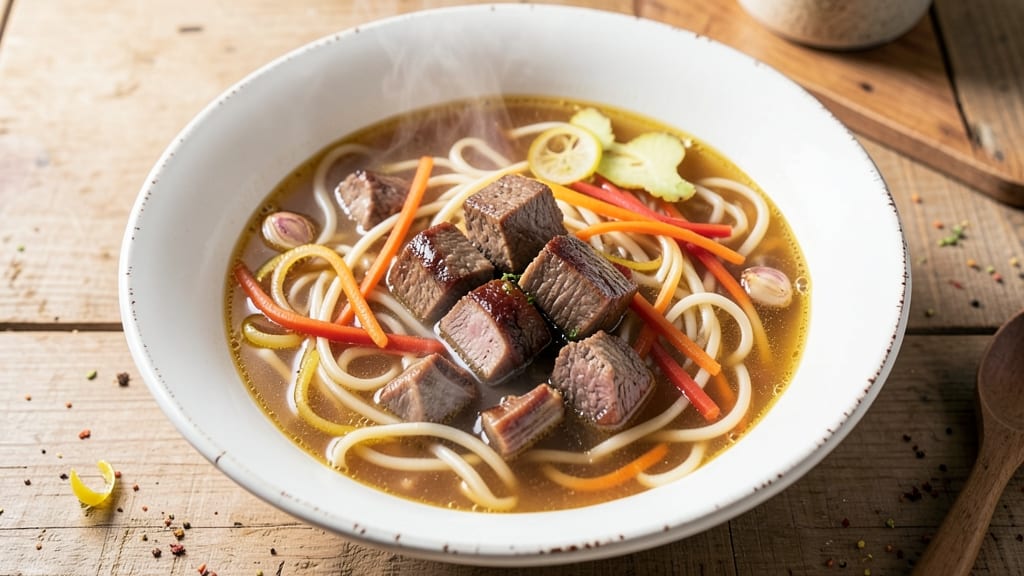
This beef egg noodle soup recipe delivers the kind of comforting warmth that transforms a chilly evening into a cozy meal experience. The secret lies in a rich, savory beef broth simmered with aromatic vegetables and tender beef, paired with delicate hand-pulled noodles and perfectly poached eggs.
I've perfected this recipe over years of testing, ensuring every spoonful is packed with hearty flavor and satisfying texture.
What sets this recipe apart is the balance of techniques—slow-simmered beef creates deep flavor, while fresh egg noodles add a satisfying bite. The broth is built layer by layer, starting with a flavorful base of onions, garlic, and ginger, then enriched with beef bones and vegetables.
This method ensures a broth that's rich yet not overly heavy, with just the right amount of body to coat every noodle and egg.
The result is a bowl of soup that's both nourishing and restaurant-quality at home. Each bite combines tender beef, chewy noodles, and silky eggs in a harmonious blend of textures and flavors.
The soup's aroma alone will have everyone gathering around the table, while the first taste delivers that perfect balance of savory, umami, and fresh egg richness.
This recipe serves four generously, making it ideal for family dinners or meal prep. The leftovers reheat beautifully, maintaining that comforting quality. Whether you're preparing it for a cold winter day or simply craving a comforting meal, this beef egg noodle soup delivers warmth in every bowl.
Ingredients for beef egg noodle soup
Layered flavors start with aromatic vegetables and tender beef for a soup that warms from the first spoonful.
| Ingredient | Amount | Notes |
|---|---|---|
| Beef Bones 🦴 | 2 lb | Marrow-rich for extra flavor |
| Chuck Roast 🥩 | 1 ½ lb | Cut into 1-inch cubes |
| Yellow Onions 🧅 | 2 whole | Chopped, medium dice |
| Garlic Cloves 🧄 | 6 cloves | Peeled, smashed |
| Fresh Ginger 🌿 | 2 tbsp | Grated, peeled |
| Carrots 🥕 | 4 whole | Peeled, cut into chunks |
| Celery Stalks 🌿 | 3 whole | Cut into 1-inch pieces |
| Fresh Parsley 🌿 | ¼ cup | Chopped, for garnish |
| Egg Noodles 🍜 | 8 oz | Fresh, hand-pulled preferred |
| Large Eggs 🥚 | 4 whole | Fresh, room temperature |
| Low-Sodium Beef Broth 💧 | 4 cups | Homemade or quality store-bought |
| Soy Sauce 🍶 | 1 tbsp | For umami depth |
| Sesame Oil 🫒 | 1 tsp | For finishing aroma |
| Salt 🧂 | 1 ½ tsp | Kosher or sea salt |
| Black Pepper 🌶️ | ½ tsp | Freshly ground |
The beef bones are non-negotiable here—the marrow adds richness that can't be replicated. Costco or local butchers often have them pre-cut, but if buying whole, ask for knuckle bones or shanks. Chuck roast should have visible fat marbling for flavor. For vegetables, organic carrots and celery at Whole Foods or Trader Joe's stay crisp longer. Fresh ginger loses potency quickly, so buy it peeled and frozen if you won't use it within a week. The egg noodles? Fresh is ideal—dried noodles work in a pinch, but they lose that delicate bite.
No beef bones? Substitute with 2 lbs beef chuck and add 2 tbsp soy sauce to compensate for lost depth. Fresh ginger too pungent? Ground ginger at half the amount works, but you'll lose that bright flavor. Soy sauce can be swapped for 1 tbsp fish sauce plus 1 tsp sugar if you're avoiding soy. The sesame oil is purely for aroma—skip it if you dislike the flavor, but it adds that restaurant-quality finish. For poaching eggs, room temperature eggs slide in cleaner than cold ones. The broth can be made ahead and reheated gently—just don't boil it or the eggs will scramble.
Broth keeps 5 days in the fridge or 3 months frozen. Eggs poach best fresh, but you can prep the broth and noodles a day ahead. Store components separately—reheat broth separately from noodles. The eggs should go in the warmest part of the broth to set perfectly. For meal prep, portion noodles and broth into containers, then poach eggs fresh when serving. This soup tastes even better the next day as flavors meld—double the batch if possible
Why You'll Love This Recipe
- One-Pot Wonder: I swear by this—just toss the beef bones and chuck roast in a pot, add water, and let it simmer. No chopping, no fuss, just layers of flavor building right in front of you while you handle the rest of dinner.
- Rich, Deep Umami Bomb: That first sip? Chef’s kiss. The beef bones melt into the broth, turning it into a velvety, savory base, while the ginger and garlic add a warm, spicy kick. It’s the kind of soup that makes you forget about takeout.
- Leftovers That Beg for More: Between us—this soup only gets better the next day. The flavors meld into something even richer, and reheating it is zero effort. I’ll be real: I’ve had it for lunch three days in a row, and I don’t care.
- Budget-Friendly Family Feast: A chuck roast and beef bones stretch into so much broth—enough to feed my whole family (plus the dog, who’s not judging). Honestly, it’s one of those recipes where you’re saving money and impressing everyone at the table. Win-win.
Step-by-step instructions for beef egg noodle soup
This method delivers restaurant-quality soup with deep, savory broth and silky egg ribbons every time.
Build Rich Broth with Beef Bones and Chuck Roast
In a large stockpot, combine the 2 lb beef bones and 1.5 lb chuck roast cut into 1-inch cubes. Add 4 cups low-sodium beef broth and bring to a boil over high heat. Once boiling, reduce to a gentle simmer and skim off any foam that rises to the surface for the first 5 minutes—this ensures crystal-clear broth.
Simmer uncovered for 2 hours, stirring occasionally. The broth should reduce slightly and develop a deep, caramelized color. If it gets too low, add hot water to maintain coverage. This long simmer extracts maximum flavor from the bones and meat, creating the foundation for your soup.
Sauté Aromatics for Flavor Depth
While the broth simmers, heat 1 tablespoon sesame oil in a separate large pot over medium heat. Add the 2 chopped yellow onions, 6 smashed garlic cloves, 2 tablespoons grated fresh ginger, 4 peeled carrot chunks, and 3 celery stalks cut into 1-inch pieces. Sauté for 8-10 minutes until the vegetables soften and the onions turn golden brown—this builds a flavorful base.
Add 1 tablespoon soy sauce and 1.5 teaspoons salt to the vegetables. Stir well and cook for another 2 minutes until the soy sauce aroma develops. This step infuses the vegetables with umami, which will carry through to the finished soup.
Combine and Simmer the Soup
Strain the simmered broth through a fine-mesh sieve into the pot with the sautéed vegetables. Discard the solids from the broth. Return the mixture to a gentle simmer over medium-low heat. Add 0.5 teaspoon black pepper and taste—adjust seasoning if needed, remembering the broth will deepen in flavor as it cooks.
Simmer for 20 minutes to allow all the flavors to meld. The soup should now have a rich, aromatic quality with visible layers of color from the vegetables. This is where the magic happens—the broth transforms from simple to complex.
Cook Noodles and Prepare Egg Mixture
While the soup simmers, bring a separate pot of salted water to a boil. Add the 8 oz egg noodles and cook according to package instructions until al dente—they should be tender but still have a slight bite. Drain and set aside, reserving ½ cup pasta water.
In a small bowl, whisk together the 4 large eggs until frothy. Slowly drizzle in ½ cup reserved pasta water while whisking continuously to create a thin, pourable egg mixture. This technique prevents scrambled eggs and ensures silky ribbons in your soup.
Finish and Serve with Fresh Garnish
Just before serving, return the soup to a gentle simmer. Carefully ladle 1 cup hot soup into the egg mixture while whisking constantly. The heat will gently cook the eggs into silky ribbons—this should take no more than 30 seconds. Pour the egg mixture back into the soup pot and stir gently.
Add the cooked egg noodles and stir to combine. Taste and adjust seasoning with additional salt or black pepper if needed. Ladle into bowls and garnish with ¼ cup chopped fresh parsley. Serve immediately with a drizzle of sesame oil for added aroma and depth of flavor.
Pro Tips For Making Beef Egg Noodle Soup
- BLISTER THE BONES FIRST: I learned this the hard way—skipping the char on beef bones means you’ll be waiting forever for depth of flavor. Heat your pot until it’s smoking hot, then sear the bones in batches for 3-4 minutes per side until they’re deep brown. That crust is where the magic happens, and it’ll shorten your simmer time by hours.
- PEEL AND SLICE GINGER THIN: Sounds weird, but it works: thinly sliced ginger (about 1/8-inch thick) infuses faster and dissolves without turning the broth bitter. Skip the grating—it muddies the soup. Just peel, slice, and toss it in whole with the onions and garlic. You’ll taste it better, and cleanup’s easier.
- SKIP THE CROWDED POT: I was skeptical until I tried it—packing too many bones and chuck roast into the pot at once means the broth won’t build properly. Start with half the bones, sear them, then add the rest in stages. This keeps the liquid moving and prevents a murky, weak broth. Patience here makes all the difference.
- SIMMER LOW AND LONG: After burning three batches, I finally figured out: beef egg noodle soup isn’t a race. Once everything’s in, keep the heat at a bare simmer—just enough to see tiny bubbles break the surface. Three hours minimum for the bones, then another hour with the chuck. Rushing turns tough meat to mush and dulls the broth. Your future self will thank you.
Flavor customization for this beef egg noodle soup
Spicy Kick
Add 1-2 teaspoons of chili crisp or ½ teaspoon of red pepper flakes to the broth while simmering for a subtle heat. For more intensity, stir in 1 tablespoon of gochujang (Korean chili paste) with the soy sauce during the sauté step.
I love finishing with a sprinkle of chopped Thai basil and a drizzle of sriracha for a restaurant-style spicy twist. 🌶️
Herbaceous Freshness
Swap the parsley garnish for cilantro or thyme sprigs to brighten the soup. Add 1 tablespoon of chopped cilantro directly to the broth during the final 10 minutes of simmering for a fresh aroma.
For a more robust herb profile, include 1 sprig of rosemary or 1 bay leaf in the broth while simmering the beef bones. Remove before serving.
Umami Boost
Deepening the umami flavor is a game-changer. Add 1 tablespoon of fish sauce or 1 teaspoon of mushroom powder to the sautéed vegetables. For an extra layer, include 2 dried shiitake mushrooms (rehydrated) in the broth while simmering.
I also love adding 1 tablespoon of oyster sauce when combining the broth and vegetables for a richer depth. 💛
Sweet and Tangy
Balance the savory broth with a touch of sweetness and acidity. Stir in 1 teaspoon of honey or 1 tablespoon of rice vinegar during the final 5 minutes of simmering.
For a tangy kick, add 1 tablespoon of lime juice or ½ teaspoon of white miso paste to the soup just before serving. These additions brighten the overall flavor profile beautifully.
Creamy Texture
For a velvety finish, stir in 2 tablespoons of coconut milk or 1 tablespoon of cream cheese just before serving. For a lighter option, blend ½ cup of the broth until smooth and mix it back in.
This adds a luxurious mouthfeel without overpowering the dish. I especially love this variation when serving to guests who enjoy a richer soup. ✨
Regional Twists
Transform this soup into a Phở-inspired version by adding 1 tablespoon of fish sauce, 1 teaspoon of sugar, and ½ teaspoon of cinnamon to the broth. For a Japanese ramen-style twist, include 1 tablespoon of miso paste and top with soft-boiled eggs and nori strips.
These adaptations keep the essence of the dish while offering exciting new flavors.
Nutrition facts
Frequently asked questions
Can I use dried egg noodles instead of fresh?
Dried egg noodles work perfectly—just check the package for cooking time (usually 3-5 minutes until al dente). For extra flavor, add 1 tablespoon soy sauce to the boiling water. The texture will be slightly firmer than fresh, but still delicious in the soup.
How do I prevent the eggs from scrambling when adding them?
Whisk the eggs with ½ cup reserved pasta water first, then slowly drizzle in 1 cup hot broth while whisking constantly. The heat should gently cook them into silky ribbons in 30 seconds. Never let the broth boil when adding eggs—keep it at a gentle simmer.
Can I make this soup ahead of time?
Yes! Prepare the broth and cook the noodles separately, then store them in airtight containers in the fridge for 3-4 days. Reheat the broth and noodles separately before serving. Poach the eggs fresh when ready to eat—they won't reheat well. The flavors actually improve overnight as the broth develops deeper.
What's the best way to thicken the broth if it's too thin?
For a quick fix, stir in 1 tablespoon cornstarch mixed with 2 tablespoons cold water and simmer for 2 minutes. For a richer texture, mash 1 cooked carrot or ½ cup soft-cooked noodles directly into the broth. Avoid over-thickening—this soup should be comforting, not gluey.
Can I substitute beef with chicken or pork?
Chicken works well (use 2 lbs bone-in thighs for flavor), but pork needs longer simmering (3 hours) to tenderize. For pork, add 1 extra tablespoon soy sauce to balance the richness. The broth will be lighter with chicken and slightly sweeter with pork—adjust seasoning accordingly.