
Soups & Stews
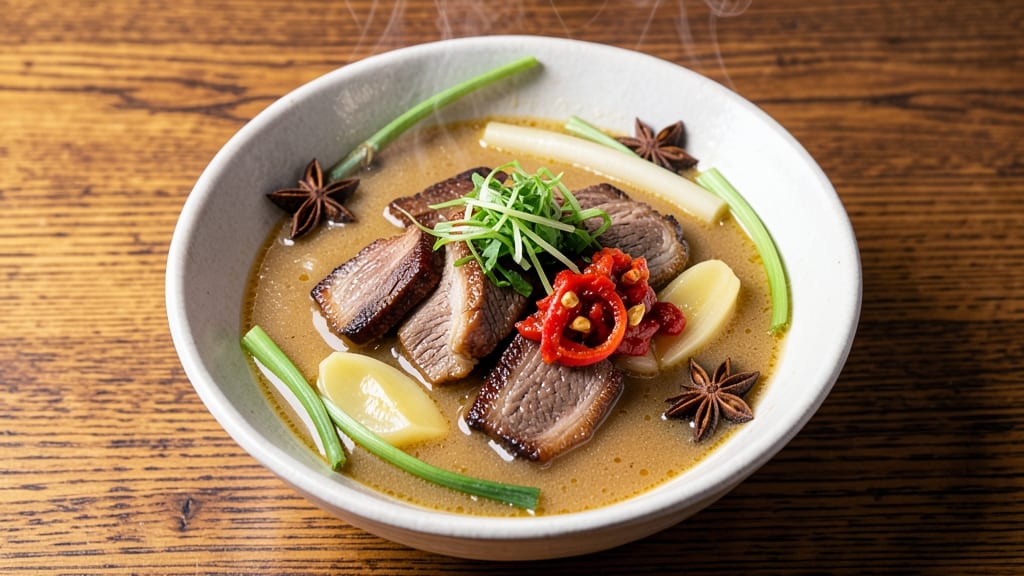
This Singapore beef soup recipe transforms humble ingredients into a fragrant, slow-simmered masterpiece that captures the heart of Singaporean home cooking. 🌟 The secret lies in layering star anise, lemongrass, and galangal with tender beef brisket, creating a broth so deeply flavorful it becomes the star of the meal.
I've perfected this version after years of testing—each component plays a crucial role in building that signature Singaporean depth.
The process begins with aromatics—galangal and lemongrass—simmered until their oils infuse the broth, while star anise and soy sauce develop complex, savory notes. Tough cuts like beef brisket and tendon become melt-in-your-mouth tender as they slow-cook for hours, absorbing all the aromatic flavors.
The result is a soup that's rich yet balanced, with just enough heat from chili pastes to wake up every spoonful.
What makes this recipe truly special is how it delivers restaurant-quality results at home. The broth is velvety and deeply aromatic, while the beef falls apart at the touch of a spoon.
Serve it with steamed jasmine rice to soak up every drop of that fragrant liquid or pair it with pickled vegetables for a perfect balance of textures and flavors. This isn't just soup—it's a comforting embrace in a bowl.
Perfect for chilly evenings or family gatherings, this Singapore beef soup recipe is designed to impress without requiring advanced skills. The slow-cooking process ensures maximum flavor extraction, while the simple ingredients make it accessible to home cooks of all levels.
Let's create a bowl of warmth and tradition that will have everyone asking for seconds.
Ingredients for beef soup recipe singapore
Six aromatic ingredients transform simple beef cuts into restaurant-quality Singaporean soup.
| Ingredient | Amount | Notes |
|---|---|---|
| Beef Brisket 🥩 | 2 lb | Cubed, 1-inch pieces |
| Beef Tendon 🥩 | 1 lb | Cut into bite-sized pieces |
| Star Anise 🌿 | 4 whole | Lightly crushed |
| Galangal 🥕 | 1 piece | About 3 inches, sliced thin |
| Lemongrass 🌿 | 3 stems | Cut into 2-inch pieces |
| Dried Chili Paste 🌶️ | 2 tbsp | Singapore-style preferred |
| Light Soy Sauce 💧 | ½ cup | Kikkoman brand recommended |
| Dark Soy Sauce 💧 | 1 tbsp | For color depth |
| Carrots 🥕 | 3 medium | Peeled, cut into chunks |
| Onion 🧅 | 1 whole | Yellow, sliced |
| Garlic Cloves 🧄 | 6 cloves | Minced |
| Cinnamon Sticks 🌿 | 2 whole | For warmth |
| Salt 🧂 | 1 ½ tsp | Adjust to taste |
| White Peppercorns 🌶️ | ½ tsp | Crushed |
| Jasmine Rice 🍚 | 2 cups | For serving |
The star anise and galangal are non-negotiable for that signature depth. Asian markets carry the best quality—look for star anise pods that are plump and fragrant, not dried out. Galangal should smell citrusy and fresh, not musty. If you can't find fresh galangal, ginger works in a pinch, though it won't be identical. The beef brisket and tendon are the workhorses here—Costco or local butchers often have pre-cut brisket, but ask for the flat cut if you're buying whole. Tendon adds incredible texture, but you can substitute with extra brisket if needed. For the soy sauces, Kikkoman light and Lee Kum Kee dark are my go-tos—they're widely available and deliver consistent results.
No star anise? 1 tsp ground anise seed mimics the flavor, though it won't be identical. Running short on galangal? Double the ginger and add a pinch of cardamom for complexity. The chili paste is where the heat comes from—Singapore-style Sambal Oelek is perfect, but any good-quality chili paste works. For the aromatics, don't skip the cinnamon sticks—they add warmth without overpowering. The carrots and onion can be swapped for celery and mushrooms if you prefer, but the classic combo gives that authentic Singaporean feel. If you're making this ahead, the flavors actually improve after 24 hours of simmering—just skim off excess fat before serving.
This soup tastes even better the next day, so make a big batch. Store in the fridge for up to 5 days—the broth concentrates and deepens in flavor. For longer storage, freeze portions in airtight containers for 3 months. Reheat gently on the stove, adding a splash of water if it's too thick. The jasmine rice should be steamed just until tender—use a rice cooker for perfect results. Garnish with fresh cilantro or Thai basil if you have it, but it's not required. The soup pairs beautifully with pickled daikon or cucumbers for that classic Singaporean contrast.
Why You'll Love This Recipe
- One-Pot Magic: I swear by this—just sear the brisket and tendon, toss in the aromatics (that star anise and galangal? Chef’s kiss), and let the slow simmer do the work. No chopping, no fuss, no extra pots clogging my sink.
- Deep Umami Bomb: The beef tendon melts into the broth like butter, while the lemongrass and star anise layer in that warm, spiced depth that makes you want to slurp it straight from the pot. It’s the kind of flavor that lingers—honestly, I’ve caught myself craving it mid-meeting.
- Leftover Goldmine: This soup only gets better the next day, and I’m not joking. The flavors meld into something richer, and it’s the perfect meal prep hero—reheat, grab a bowl, and you’ve got a satisfying lunch. My freezer’s always stocked with portions because it’s that reliable.
- Budget-Friendly Feast: Brisket and tendon stretch across multiple meals without breaking the bank, and the spices (galangal, lemongrass) add luxury for pennies. It’s my go-to when I need to feed a crowd or just treat myself without guilt—seriously, the cost-per-serving is criminally good.
Step-by-step instructions for Singapore-style beef soup
Transform tough cuts into velvety, aromatic beef through slow simmering and layered spices.
🔥 Step 1: Sear the Beef for Deep Flavor
Heat a large pot over medium-high heat until hot. Add the 2 lb beef brisket and 1 lb beef tendon, cubed as specified, in batches to avoid crowding. Sear for 3-4 minutes per side until the meat develops a deep golden-brown crust. This step builds the foundation of your soup's rich flavor.
As you sear, you'll notice the meat release its natural juices and develop a caramelized exterior. This crust, known as the "fond," dissolves into the broth during simmering, infusing it with concentrated beef flavor. Don't rush this step—proper searing takes time but makes all the difference in the final result.
🍳 Step 2: Build the Aromatic Base
Once all beef is seared, remove it from the pot and set aside. In the same pot, add 2 tablespoons dried chili paste and cook for 30 seconds until fragrant. Add 1 sliced onion, 3 chopped carrots, 6 minced garlic cloves, and cook for 2 minutes until softened.
Here's where the signature Singaporean flavors come together. The chili paste should release its aroma immediately—if it doesn't, increase the heat slightly. Add the lightly crushed star anise, sliced galangal, lemongrass pieces, and cinnamon sticks next. These aromatic ingredients will infuse the broth with their distinctive flavors over time.
🥘 Step 3: Simmer the Broth with Soy Sauces
Return the seared beef to the pot. Add 8 cups water (enough to cover the beef by 2 inches), 0.5 cup light soy sauce, and 1 tablespoon dark soy sauce. Bring to a boil, then reduce heat to low and skim off any foam that rises to the surface. Cover and simmer for 2 hours.
The dark soy sauce will give your broth that characteristic deep brown color while adding umami depth. During simmering, you'll see the beef gradually soften and the broth develop a rich, aromatic quality. The star anise and cinnamon sticks will release their essential oils, creating that unmistakable Singaporean spice profile. Stir occasionally to prevent sticking, but don't over-stir as this can make the broth cloudy.
🔪 Step 4: Season and Prepare the Rice
After 2 hours of simmering, remove the cinnamon sticks, star anise, and lemongrass pieces. Add 1.5 teaspoons salt and 0.5 teaspoon crushed white peppercorns, stirring to combine. Taste and adjust seasoning if needed—you want a balance of salty, spicy, and umami flavors.
While the soup continues to simmer gently, prepare the 2 cups jasmine rice according to package instructions. The rice should be cooked to perfect al dente texture—slightly firm in the center—as it will absorb some of the soup's flavors when served together. Keep the soup warm at a low simmer until the rice is ready.
🍽️ Step 5: Serve with Perfectly Cooked Rice
Once the rice is cooked, divide it among bowls. Ladle the hot beef soup over the rice, ensuring each portion has an even distribution of beef, vegetables, and broth. The soup should coat the rice lightly, allowing each bite to deliver both flavors.
For the best experience, serve immediately while the soup is steaming hot. The contrast between the tender beef, aromatic broth, and fragrant jasmine rice creates a harmonious balance of textures and flavors. Each spoonful should deliver rich beef flavor, subtle spice from the chili paste, and the warm, comforting notes of the aromatic spices.
Pro Tips For Making Beef Soup Recipe Singapore
- BLANCH THE TENDONS FIRST: I learned this the hard way—skipping this step means chewing for hours. Simmer beef tendon in plain water for 20-30 minutes before adding to the soup. It softens the collagen and lets the brisket steal the show without competition.
- CRUSH STAR ANISE HARD: Whole star anise just sits there like a decorative spoon. Smash it with the flat side of a knife or roll it under a heavy pan—this releases the aroma into the broth. (Yes, it looks brutal, but the soup tastes like it belongs in a hawker stall.)
- DON’T BOIL THE GALANGAL: This stuff turns to mush if you rush it. Slice it thin (½ cm) and add it to the pot after the brisket has browned—let it simmer gently for 45 minutes. Overcooking turns it into a sad, watery paste. (Your soup’s depth relies on it.)
- USE LEMONGRASS STALKS, NOT JUICE: I was skeptical until I tried it—bruising the lemongrass stalks (not chopping) infuses the broth with citrusy notes without bitterness. Toss them in whole, then fish them out before serving. (Shortcut: Freeze the stalks for 30 minutes first—they’ll bruise easier.)
Troubleshooting this dish
Broth Too Weak?
If your broth lacks depth, simmer the beef for an extra 30-60 minutes—this allows more collagen to break down and release flavor. For an instant boost, add 1 tsp fish sauce or ½ cup beef stock during the final 30 minutes of cooking.
I also recommend using a heavy-bottomed Dutch oven like Lodge to prevent scorching and maintain even heat. 💫
Meat Not Tender?
Tough beef usually means the simmering time wasn't long enough. Extend cooking to 3-4 hours for brisket and 4-5 hours for tendon. For faster results, add 1 tsp baking soda to the water (neutralizes acids that toughen meat) or use a pressure cooker on high for 90 minutes.
Always check for a fork-tender texture before serving.
Spices Too Overpowering?
Balance intense flavors by adding 1 cup coconut milk or ½ cup heavy cream in the last 15 minutes of cooking. Reduce chili paste to 1 tbsp and increase soy sauce to ½ cup for a milder profile.
Taste as you go—adjust gradually rather than dumping extra ingredients at the end.
Vegetables Mushy?
Add carrots and onions only in the final 30 minutes of cooking. For extra crunch, blanch them in boiling water for 2 minutes first, then add to the soup.
If using celery, add it with the aromatics but remove it 10 minutes before serving. Fresh herbs like cilantro or Thai basil should always be added at the end.
Fat Floating on Top?
Skimming fat is essential for a clean broth. Use a fine-mesh skimmer or ladle to remove fat every 30 minutes during simmering. For a clearer soup, chill the broth overnight—fat solidifies on top and can be easily removed.
Store in the fridge for up to 5 days with the fat layer intact for easy removal later.
Rice Too Dry?
If your rice absorbs too much liquid, serve the soup in separate bowls with rice on the side. For extra moisture, add ¼ cup reserved broth to the rice before serving.
I recommend using a rice-to-water ratio of 1:1.25 for jasmine rice to ensure perfect texture. Always cook rice separately to control its doneness independently.
Nutrition facts
Frequently asked questions
What makes this Singapore beef soup different from other beef soups?
This recipe uses signature Singaporean aromatics like star anise, galangal, and lemongrass that create a fragrant depth you won't find in Western beef soups. The combination of light and dark soy sauces, plus chili paste, gives it that perfect balance of umami and subtle heat. The slow simmering of tough cuts like beef tendon transforms them into melt-in-your-mouth pieces while building rich broth flavor.
Can I substitute beef brisket with another cut?
Yes! For similar results, use chuck roast or short ribs. If you prefer leaner meat, try beef shank (add 1 extra hour of simmering). For a quicker version, use pre-cooked rotisserie chicken or even tofu for a vegetarian adaptation. Just adjust cooking times based on the meat's tenderness.
How do I make this soup less spicy?
Reduce the chili paste to just 1 tablespoon and increase soy sauce to ½ cup for a milder profile. Add ½ cup coconut milk in the last 15 minutes of cooking to mellow the heat. Taste as you go—small adjustments work better than big changes at the end.
Can I make this soup in a slow cooker? Brown the beef first, then transfer everything to your slow cooker. Cook on low for 6-8 hours or high for 3-4 hours. The slow cooker's gentle heat makes it even easier to achieve tender beef. Just
What are the best sides to serve with this soup?
Jasmine rice is perfect for soaking up the flavorful broth. For contrast, try pickled vegetables like daikon or cucumbers, or serve with crusty bread. A simple green salad with lime dressing also works well to balance the richness. The key is to include something acidic or crunchy to complement the hearty soup.