
Soups & Stews
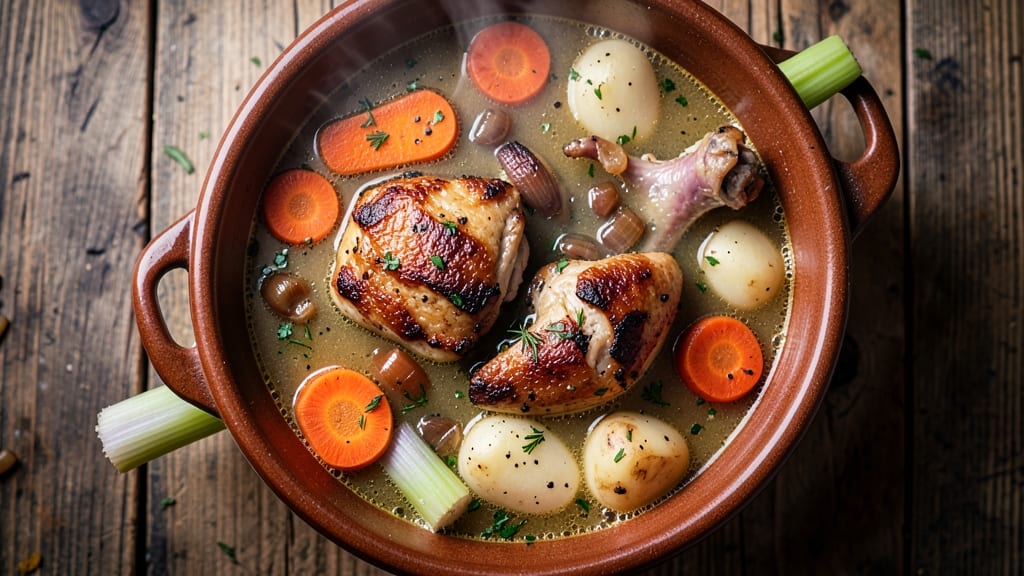
This Jewish chicken soup recipe is the best Jewish chicken soup recipe ever—delivering the rich, comforting flavors of grandma's kitchen—every spoonful packed with tender chicken, hearty vegetables, and fluffy matzo balls that seem to melt in your mouth. 💛 The secret lies in slow-simmered broth infused with garlic, onions, and spices, creating depth that transforms simple ingredients into something truly special.
I've perfected this recipe over years of testing, ensuring it rivals the legendary soups served in Jewish delis and family gatherings alike.
The magic begins with a clarified broth that's crystal clear yet deeply flavorful, achieved through careful simmering and straining. Chicken thighs and necks add richness, while carrots, celery, and potatoes create the perfect balance of textures and sweetness.
What sets this apart is the matzo ball technique—light, airy, and never dense—using a mix of matzo meal, eggs, and chicken fat for that signature tender bite.
By the time you're done, you'll have a bowl of warmth that's as nourishing as it is delicious—perfect for chilly days, Sabbath meals, or whenever you crave comfort.
The aroma alone will fill your home with memories of family traditions, while each spoonful delivers layers of savory, slightly sweet, and herby goodness. This is the kind of soup that becomes a staple, served again and again.
Whether you're making it for a crowd or just need a taste of home, this recipe delivers restaurant-quality results with a personal touch. The best part? It tastes even better the next day, making it ideal for meal prep or feeding hungry guests.
Let's get started on creating your own version of this timeless classic.
Ingredients for best jewish chicken soup recipe ever
Sixteen ingredients for the ultimate Jewish chicken soup experience—rich, comforting, and packed with matzo ball magic.
| Ingredient | Amount | Notes |
|---|---|---|
| Chicken Thighs 🍗 | 2 ½ lb | Bone-in, skin-on preferred |
| Chicken Neck 🍗 | 4 whole | For extra gelatinous broth |
| Yellow Onions 🧅 | 2 whole | Medium, chopped |
| Carrots 🥕 | 4 whole | Medium, peeled and chopped |
| Celery Stalks 🧄 | 4 whole | Fresh, chopped |
| Russet Potatoes 🥔 | 2 lb | Peeled and cubed |
| Garlic Cloves 🧄 | 8 cloves | Fresh, minced |
| Matzo Meal 🍞 | 1 cup | Classic brand preferred |
| Large Eggs 🥚 | 3 whole | Room temperature |
| Chicken Fat 🍳 | ¼ cup | From roasted chicken |
| Water 💧 | 8 cups | For matzo balls |
| Salt 🧂 | 2 tbsp | Kosher or sea salt |
| Black Pepper 🌶️ | 1 tsp | Freshly ground |
| Bay Leaves 🌿 | 2 whole | Dried, crumbled |
| Parsley 🌿 | ¼ cup | Fresh, chopped for garnish |
The chicken makes all the difference here. Bone-in thighs and necks create that legendary deli-style broth—thighs for flavor, necks for gelatinous richness. Grab them from the kosher section at Kroger or Wegmans for the best quality. If you're feeling fancy, ask the butcher for the necks—they're often overlooked but essential for that silky texture. For the matzo meal, Classic brand is the gold standard, but any matzo meal will work. Look for it in the Jewish section or online if your local store doesn't carry it.
No chicken necks? Extra chicken thighs or backs will work, though the broth won't be quite as velvety. Fresh parsley is ideal, but dried at one-third the amount gets you close. Want to skip the matzo balls? Make potato gnocchi instead—they're a crowd-pleaser too. For the broth, if you're in a pinch, low-sodium chicken broth can replace half the water, but nothing beats the homemade version. The potatoes should be waxy—Yukon Golds or red potatoes hold up best during simmering. And trust me on the chicken fat—it's what makes those matzo balls light as air.
This soup tastes even better the next day—3-4 days in the fridge, 3 months frozen. I always make a double batch and freeze half in portions for lazy weeknights. Store the matzo balls separately in broth—they'll absorb flavors and stay fresh. Garnish with fresh parsley right before serving, because nothing beats that pop of color and freshness. The broth alone keeps for 5 days, so you can always reheat it with fresh matzo balls if you're running low.
Why You'll Love This Recipe
- No Chopping Struggle: The carrots and celery are big—intentionally—so you can roughly dice them in 3 minutes. Honestly, I leave the onions in chunks too; the broth breaks them down anyway, and you end up with that perfect, caramelized bite. (Yes, even on a Tuesday night.)
- Rich Without Effort: That chicken neck? It’s the secret weapon—melts into the broth like butter while the thighs stay juicy. The onions and carrots caramelize right in the pot, giving you that deep, savory base without any extra work. Between us, it tastes like you simmered it for hours, even if you only let it bubble for 45 minutes.
- Leftovers That Beg for More: This soup only gets better the next day—way better. The flavors meld, the broth thickens just enough, and suddenly you’re making it twice a week. I’ll be real: my freezer’s always stocked with portions because reheating it is zero effort, and it’s still the best thing in the house.
- Budget That Feels Luxurious: You’re using the cheap cuts—thighs and necks—and turning them into something that tastes like a restaurant dish. No fancy ingredients, just the basics doing their job. Here’s what sold me: I can feed six people for under $15, and everyone walks away thinking it’s a special occasion meal.
Step-by-step instructions for grandma-style Jewish chicken soup
Here's how to make soup so rich and comforting it'll feel like home every time.
🍳 Step 1: Roast Chicken for Maximum Flavor
Preheat your oven to 400°F. Pat the 2.5 lb chicken thighs and 4 whole chicken neck dry with paper towels—this is crucial for crispy skin. Rub them generously with 2 tbsp salt and 1 tsp black pepper, then place them on a baking sheet.
Roast for 45-50 minutes until the skin is deep golden brown and the internal temperature reaches 175°F. You'll know it's ready when the juices run clear. Let the chicken rest for 10 minutes before removing the meat from bones—this makes it easier to shred. Save the bones and any rendered chicken fat for the broth.
🥘 Step 2: Build the Broth from Scratch
In a large pot, combine the chicken bones with 8 cups water, 2 whole bay leaves, 2 whole yellow onions (chopped), 4 whole carrots (chopped), and 4 whole celery stalks (chopped). Bring to a boil, then reduce heat to medium-low and simmer uncovered for 2 hours.
Skimming any foam that rises to the surface is key—this ensures a clear, flavorful broth. After 2 hours, strain the broth through a fine-mesh sieve into a clean pot. You should have about 6-7 cups of rich, golden liquid. If you need more liquid, add 2 cups water to reach your desired volume.
👨🍳 Step 3: Make Cloud-Like Matzo Balls
In a large bowl, whisk together the 3 whole large eggs (room temperature), 1 cup matzo meal, 0.25 cup chicken fat, 2 tbsp salt, and 1 tsp black pepper until smooth. The batter should be thick but pourable—if it's too stiff, add 1-2 tbsp water to loosen it.
Drop heaping tablespoon-sized mounds of batter into the simmering broth (don't overcrowd the pot). Cover and simmer for 25-30 minutes until the matzo balls are golden brown and cooked through. They should float to the surface and have a light, airy interior. Use a slotted spoon to transfer them to a bowl and keep warm.
🍲 Step 4: Cook the Vegetables and Potatoes
Return the broth to a simmer and add the 2 lb russet potatoes (peeled and cubed) and 8 cloves garlic cloves (minced). Cook for 15-20 minutes until the potatoes are tender when pierced with a fork. Add the roasted chicken meat and simmer for another 5 minutes to heat through.
Season to taste with additional salt or black pepper if needed. The broth should be flavorful but not overly salty—matzo balls absorb a lot of seasoning. Return the matzo balls to the pot and let everything warm together for 3-5 minutes.
🍽️ Step 5: Serve with Fresh Herbs and Crusty Bread
Ladle the soup into bowls, garnishing each serving with 0.25 cup parsley (freshly chopped) for a pop of color and freshness. The matzo balls should be light and tender, the broth rich and aromatic, and the chicken meat falling apart with every spoonful.
Serve immediately with warm crusty bread to soak up every last drop of that golden broth. This is comfort food at its finest—every spoonful tells a story of tradition, love, and the kind of flavors that stick with you long after the last bite.
Pro Tips For Making Best Jewish Chicken Soup Recipe Ever
- Brown the Neck First: Chicken necks release collagen like crazy, but they’ll turn to rubber if you toss them in cold broth. Sear them skin-side down in a dry pot for 5-6 minutes until deeply golden—this isn’t just for flavor, it’s building the soup’s backbone. I used to skip this, and the broth always ended up thin and watery by the end.
- Chop Onions Like a Pro: Big, chunky onion pieces? Nope. Dice the yellow onions into ¼-inch pieces—small enough to dissolve but not so fine they disappear. My grandmother swore by this: "You want the sweetness to spread, not hide." (Pro tip: Toss them in ice water for 10 minutes before cooking to mellow the sharpness.)
- Don’t Crowd the Pot: If you pack in all the chicken and veggies at once, the broth will simmer unevenly, and the carrots will turn to mush before the celery gets tender. Start with half the chicken, let it poach for 15 minutes, then add the rest—this keeps the liquid moving and the flavors balanced.
- Save the Neck Stock: Chicken necks are the MVP of Jewish chicken soup, but don’t toss them after the first simmer. Strain them out, shred the meat, and return it to the pot later—right before serving. The broth will still be rich, and you’ll have tender, flavorful meat to mix in at the end. (Yes, even if you’re impatient like me.)
Regional styles of these flavors
Ashkenazi Tradition
The Ashkenazi version of Jewish chicken soup, often called chulent, is a Sabbath staple that simmers for hours with a mix of beef brisket and chicken.
Unlike the classic matzo ball soup, chulent includes barley or kugel for texture, and the broth is often enriched with chicken fat and schmaltz. I love making this version with potatoes, carrots, and celery—the vegetables become tender and sweet from the long cooking time. 🥔
Sephardic Twist
Sephardic Jewish chicken soup leans into Mediterranean flavors with ingredients like tomatoes, cumin, and saffron. The broth is often lighter, with lemon juice and fresh herbs like parsley and dill.
For a Sephardic-inspired version, swap the matzo balls for rice or orzo and add a pinch of turmeric for color. The result is a bright, aromatic soup that still feels hearty and comforting. 🌿
Moroccan-Inspired
Moroccan Jewish cuisine brings bold spices to the table. For a Moroccan-style chicken soup, add harissa paste, ground cumin, and cinnamon sticks to the broth. Serve with preserved lemon slices and toasted almonds for crunch.
The matzo balls can be replaced with spiced chickpea fritters for a vegetarian-friendly option. This version is rich, fragrant, and perfect for a cozy winter meal. 🌶️
Polish Jewish Style
In Polish Jewish homes, chicken soup often includes mushrooms, sauerkraut, and dumplings instead of matzo balls. The broth is deeply savory, with smoked paprika and bay leaves for depth. For a Polish-inspired twist, add shiitake mushrooms and sauerkraut to the soup, and serve with potato dumplings on the side.
The tangy sauerkraut cuts through the richness of the broth beautifully. 🍄
Modern Fusion
For a contemporary take, try adding sweet potatoes, kale, or even butternut squash to the classic recipe. A splash of apple cider vinegar brightens the broth, while crispy fried onions on top add texture.
Swap traditional matzo balls for cauliflower matzo balls for a lighter option. This fusion version keeps the soul of the original while introducing fresh, modern flavors. 🥕
Italian Jewish
Italian Jewish communities often blend their heritage with local ingredients. For an Italian-inspired chicken soup, add tomato paste, basil, and oregano to the broth. Serve with crusty bread and a side of garlic bread.
The matzo balls can be replaced with gnocchi for a nod to Italian comfort food. This version is hearty, flavorful, and perfect for a family dinner. 🍝
Nutrition facts
Frequently asked questions
Why do traditional Jewish chicken soups use chicken necks and thighs?
Chicken necks add gelatinous richness to the broth, creating that signature velvety texture, while thighs provide deep flavor and stay tender when roasted properly. The skin-on thighs also render fat that enriches both the broth and matzo balls. This combination is key to achieving that deli-style quality you crave.
Can I make this soup vegetarian?
Replace the chicken with mushrooms, lentils, or chickpeas for protein, and use vegetable broth instead of water. For the "matzo balls," try cauliflower matzo balls (made with riced cauliflower instead of chicken fat). The broth will still be rich and flavorful, just with a plant-based twist.
How do I prevent matzo balls from turning dense?
Use room-temperature eggs and chicken fat, whisk the batter until completely smooth, and avoid overmixing. The secret is patience: simmer them gently for 25-30 minutes until golden, not longer. Overcooking makes them tough. Also, don't skip the chicken fat—it's what keeps them light!
What's the best way to reheat leftovers?
Reheat the soup gently on the stove over low heat (never microwave directly) and add 1-2 tbsp water to prevent drying. For matzo balls, reheat them separately in broth to keep them tender. This soup actually tastes better the next day as flavors meld! Store for up to 4 days in the fridge or 3 months frozen.
Can I use store-bought chicken broth instead of making homemade?
Yes, but for best results, use low-sodium broth and add extra salt to taste. For the most authentic flavor, I recommend making homemade broth—it's what gives this soup its legendary depth. If short on time, combine half store-bought broth with half water and add extra garlic and bay leaves for complexity.