
Soups & Stews
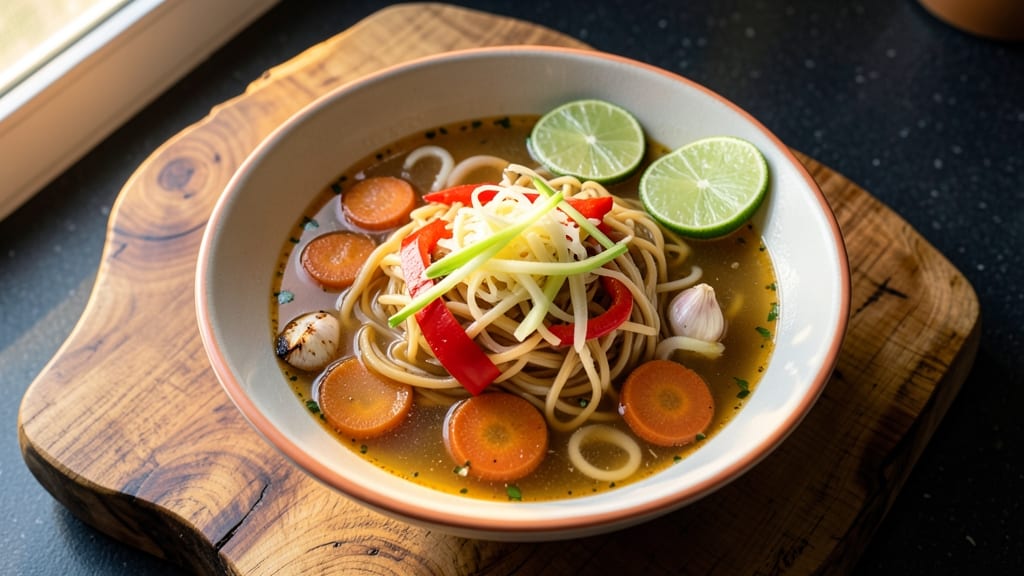
This Asian vegetable noodle soup recipe delivers restaurant-quality comfort in a single bowl, blending fragrant ginger-lime broth with silky rice noodles and crisp-tender vegetables. The secret lies in slow-simmering aromatic vegetables and fresh herbs, creating a broth so flavorful it transforms simple ingredients into something extraordinary.
What sets this recipe apart is the balance of bright citrus notes against warm, earthy spices—perfect for any season.
The foundation begins with a vegetable-based broth that builds depth through caramelized onions, garlic, and ginger, then brightens with lime juice and fish sauce (or vegetarian alternative). Silky rice noodles absorb the fragrant liquid while maintaining their delicate texture, while stir-fried vegetables add crunch and color.
This method ensures every spoonful delivers layers of umami, tang, and freshness without requiring meat or fish.
By the time you assemble the bowl, you'll have a harmonious dish where each element complements the others—creamy noodles, crisp vegetables, and a broth so aromatic it lingers long after the last bite.
The dish is vegetarian-friendly but easily adaptable with shrimp or tofu for added protein. Garnishes like fresh cilantro, lime wedges, and chili oil elevate it to restaurant quality.
Ready in under 45 minutes, this soup is ideal for weeknight dinners, meal prep, or serving guests. The technique is straightforward yet transformative, proving that simple ingredients can create something truly special when prepared with care. Let's get started on this fragrant, comforting bowl of goodness.
Ingredients for asian vegetable noodle soup
Fragrant broth, silky noodles, and vibrant vegetables transform simple ingredients into restaurant-quality Asian vegetable noodle soup.
| Ingredient | Amount | Notes |
|---|---|---|
| Vegetable Broth 🥕 | 4 cups | Homemade or low-sodium store-bought |
| Carrots 🥕 | 2 medium | Fixed: 2 medium whole |
| Yellow Onion 🧅 | 1 whole | Yellow or white preferred |
| Garlic Cloves 🧄 | 4 cloves | Freshly minced for optimal aroma |
| Fresh Ginger 🌿 | 2 tbsp | Finely grated, peeled |
| Lime Juice 🍋 | 2 tbsp | Freshly squeezed, seeds removed |
| Vegetarian Fish Sauce 🍶 | 2 tbsp | Or coconut aminos for umami |
| Rice Noodles 🍜 | 8 oz | Rice vermicelli or flat noodles |
| Baby Bok Choy 🥬 | 2 whole | Or sub with spinach or napa cabbage |
| Mushrooms 🍄 | 1 cup | Shiitake or cremini, sliced |
| Bell Pepper 🌶️ | 1 whole | Red or yellow, sliced thin |
| Fresh Cilantro 🌿 | ¼ cup | Chopped, for garnish |
| Sesame Oil 🫒 | 1 tsp | Toasted, for finishing |
| Soy Sauce 🍶 | 1 tbsp | Low-sodium preferred |
| Brown Sugar 🍚 | 1 tsp | Lightly packed |
The broth is where depth begins. Low-sodium vegetable broth forms the base, but the real magic happens with caramelized onions, garlic, and ginger—slow-cooked until fragrant. Fresh ginger is non-negotiable here; the freeze-dried stuff lacks the zing. For the best quality, grab organic ginger from the produce section at Whole Foods or a well-stocked Asian market. The vegetarian fish sauce (or coconut aminos) adds umami without animal products—Red Boat or Annie Chun's are reliable brands. If you can't find vegetarian fish sauce, a mix of soy sauce and a dash of miso works in a pinch, though the balance won't be identical.
No bok choy? Baby spinach or napa cabbage holds up just as well in the broth. Mushrooms should be shiitake or cremini for meaty texture—white button mushrooms work, but they lack depth. The bell pepper can be swapped for Thai eggplant or zucchini, though the color contrast will differ. For the noodles, rice vermicelliudon or soba noodles, they’ll add a different texture. The lime juice needs to be fresh—bottled juice lacks the bright acidity. If you’re prepping ahead, zest the lime first and store it separately to preserve freshness. The sesame oil should be toasted; heat it gently in a pan until fragrant, then cool before using.
This soup tastes even better the next day as flavors meld. Store the broth and noodles separately in airtight containers for up to 5 days—reheat the broth first, then add noodles and veggies. For longer storage, freeze the broth in ice cube trays and transfer to a bag; thaw overnight in the fridge. The fresh herbs and sesame oil should be added post-cooking. Garnish with extra cilantro, a drizzle of chili oil, and lime wedges just before serving. The dish reheats beautifully, making it perfect for meal prep—just add a splash of water if the noodles seem dry.
Why You'll Love This Recipe
- No-Chop Nightmare: I swear by this one when I’m too tired to julienne carrots or mince garlic. Just rough-chop the veggies—no fancy techniques, no peeling if you’re lazy (I won’t judge)—and let the broth do the work. That ginger? Thinly slice it, toss it in whole, and it’ll perfume the whole pot like a spa day for your taste buds.
- Umami Bomb: Between us, the onion and garlic caramelize right into the broth while you’re stirring, and that’s where the magic happens. The broth turns from basic to ridiculously good—deep, savory, with just enough bite to make you want to slurp it straight from the pot. (Yes, even on a Tuesday night.)
- Leftover Goldmine: This soup tastes better the next day, honestly. The flavors meld overnight, and reheating it is a sin if you don’t have a packed lunch ready. I make a double batch on Sundays, and by Wednesday, I’m still eating it—no sad, wilted leftovers here.
- Budget-Friendly Flex: Carrots, onion, garlic, ginger—these are the ingredients that don’t break the bank, and they stretch into meals for days. Swap in whatever veggies you have (spinach? mushrooms? zucchini?) and it’s still a winner. My wallet and my freezer both thank me for this one.
Step-by-step instructions for Asian vegetable noodle soup
Here's the method for building layers of aromatic broth and tender vegetables.
Build the Fragrant Broth Base
In a medium saucepan, combine the 4 cups vegetable broth, 2 tbsp fresh ginger, 4 cloves garlic cloves, and 1 tbsp soy sauce. Bring to a gentle simmer over medium heat until small bubbles form around the edges. The ginger should release its essential oils within 3-4 minutes, filling your kitchen with that signature Asian aroma.
While the broth heats, peel and finely slice the 2 medium carrots into ¼-inch rounds and thinly slice the 1 whole yellow onion. Add these to the simmering broth along with the 1 cup mushrooms and 1 whole bell pepper cut into ½-inch strips. Let everything cook for 5 minutes until the vegetables begin to soften slightly but remain vibrant in color. This ensures they retain their texture while infusing the broth with sweetness.
Balance Flavors with Umami and Sweetness
Reduce the heat to low and stir in the 2 tbsp vegetarian fish sauce and 1 tsp brown sugar. The fish sauce will deepen the savory notes while the brown sugar subtly rounds out the acidity from the lime juice we'll add later. Let the broth simmer uncovered for 8-10 minutes until it reduces slightly and the flavors meld together. You'll know it's ready when the aroma becomes rich and complex—almost like walking through an Asian market.
Here's where the magic happens: add the 2 tbsp lime juice and taste immediately. The acidity should brighten the broth without overpowering the other flavors. If it needs more balance, add another ½ teaspoon of brown sugar or a splash of water to adjust the consistency. The broth should coat the back of a spoon but remain liquid enough to properly coat the noodles later.
Prepare the Vegetables for Perfect Texture
While the broth simmers, separate the 2 whole baby bok choy into individual leaves and trim the thick stems into ½-inch pieces. Set aside. For the rice noodles, rinse the 8 oz rice noodles under cold water for 30 seconds to remove excess starch, then drain. This prevents them from sticking together and ensures they absorb the broth beautifully.
In a separate small bowl, combine the 0.25 cup fresh cilantro with 1 tsp sesame oil. The sesame oil will infuse the cilantro with its nutty aroma, creating a fragrant garnish that elevates every spoonful. Keep this mixture covered until ready to use.
Assemble and Serve with Perfect Timing
Just before serving, return the broth to a gentle simmer. Add the prepared bok choy and let it cook for 2 minutes—just enough time to wilt the leaves while keeping them vibrant green. Remove the pan from heat and immediately add the drained rice noodles. Stir gently to coat them evenly with the fragrant broth. The noodles should soften in 3-4 minutes—they'll finish cooking in the hot broth.
Divide the noodles and vegetables among 4 bowls, ladling the aromatic broth generously over each serving. Drizzle with the cilantro-sesame oil mixture and serve immediately. The contrast between the silky noodles, tender vegetables, and fragrant broth creates a harmonious balance of textures and flavors in every bite.
Pro Tips For Making Asian Vegetable Noodle Soup
- Sear the Aromatics First: Toss those sliced onions, minced garlic, and ginger into a dry pot over medium-high heat for 2-3 minutes before adding broth. The color change—golden edges on the onion, slight char on the garlic—builds flavor that dissolved broth can’t match. I used to skip this, and the soup always tasted flat until I realized how much difference a quick sear makes.
- Julienne Carrots Evenly: Cut carrots into thin, uniform sticks—about 1/8-inch thick and 2-inches long. Thicker pieces stay tough, while uneven cuts make some look undercooked. My grandmother swore by this, and she was right: consistent size means even cooking and a cleaner presentation.
- Simmer, Don’t Boil: Keep the broth at a gentle simmer, not a rolling boil. Boiling scalds the noodles and makes them mushy, and it turns the broth cloudy. Once the veggies are tender, reduce to low and let the soup bubble softly—just enough to keep it warm. I learned this the hard way after serving a watery, sad noodle mess.
- Toast the Noodles: Dry the noodles thoroughly with a towel, then toss them in a hot pot or wok for 30 seconds before adding broth. The slight toast adds texture and prevents them from turning limp. Sounds weird, but it works—your noodles will hold up better and taste more interesting. (Yes, even if you're impatient like me.)
Troubleshooting this dish
Broth Too Weak?
If your broth lacks depth, simmer the aromatic vegetables (onion, garlic, ginger) for an extra 5-7 minutes before adding other ingredients. For a quick fix, stir in 1 tsp soy sauce or ½ tsp miso paste while simmering.
I’ve found that adding ½ cup extra mushrooms (sautéed first) boosts umami significantly. 💫
Noodles Turning Mushy
Rice noodles absorb liquid quickly—don’t overcook them! Cook them in the hot broth for only 3-4 minutes after adding. If they’re still firm, let them sit covered for 1-2 minutes off heat. For extra insurance, rinse them under cold water for 10 seconds before adding to the broth. 🍜
Vegetables Overcooked
Add delicate veggies like bok choy or bell pepper to the broth only 2 minutes before serving. For heartier veggies (carrots, mushrooms), partially cook them first by blanching in boiling water for 1-2 minutes before adding to the broth. This keeps them crisp-tender while building flavor. 🥬
Broth Too Salty
If your broth tastes too salty, dilute it by adding ½ cup hot water and simmering for 3-5 minutes to let flavors rebalance. For a more natural fix, stir in 1 tbsp lime juice or ½ cup coconut milk to mellow the saltiness.
Avoid adding fresh veggies—they’ll absorb the excess salt. 🍋
Noodles Sticking Together
Always rinse noodles under cold water for 30 seconds before cooking to remove excess starch. If they still clump, separate them with chopsticks while adding to the broth. For extra slipperiness, toss them with ½ tsp neutral oil (like avocado oil) before draining. 💡
Lime Juice Too Overpowering
Balance overly bright lime flavors by adding ½ tsp brown sugar or 1 tsp coconut sugar to the broth. Simmer for 2 minutes to let the sweetness mellow the acidity.
If the broth still tastes too tangy, stir in 1 tsp toasted sesame oil—its nutty notes help round out the flavor. 🌿
Nutrition facts
Frequently asked questions
Can I use dried mushrooms instead of fresh?
For the best flavor, soak 1 oz dried shiitake mushrooms in ½ cup hot water for 20 minutes until pliable. Use the soaking liquid in your broth and slice the mushrooms thinly for extra umami. Dried mushrooms concentrate flavor, so start with half the quantity of fresh mushrooms.
How do I make this soup spicier?
Add ½ tsp chili flakes or 1 tsp gochujang to the simmering broth for heat. For a smoky kick, stir in ½ tsp toasted chili oil at the end. For extra depth, blend 1 red chili with 1 tbsp broth and strain before adding to the pot.
Can I prepare this ahead of time?
Yes! Store the broth (without noodles) in an airtight container for 5 days in the fridge or 3 months frozen. Reheat gently, then add fresh noodles and veggies. For the best texture, cook noodles separately and toss with a little sesame oil before assembling.
What's the best noodle alternative?
Try udon noodles for chewier texture or soba noodles for nutty flavor. For gluten-free, use rice noodles or mung bean noodles. Adjust cooking time—udon needs 5-6 minutes while rice noodles soften in 3-4 minutes in hot broth.
How do I make it vegetarian without fish sauce?
Replace fish sauce with 2 tbsp soy sauce + 1 tbsp coconut aminos or 1 tbsp miso paste. For extra umami, add ½ cup mushrooms sautéed with 1 tsp soy sauce before adding to the broth. The broth will still be rich and savory!