
Soups & Stews
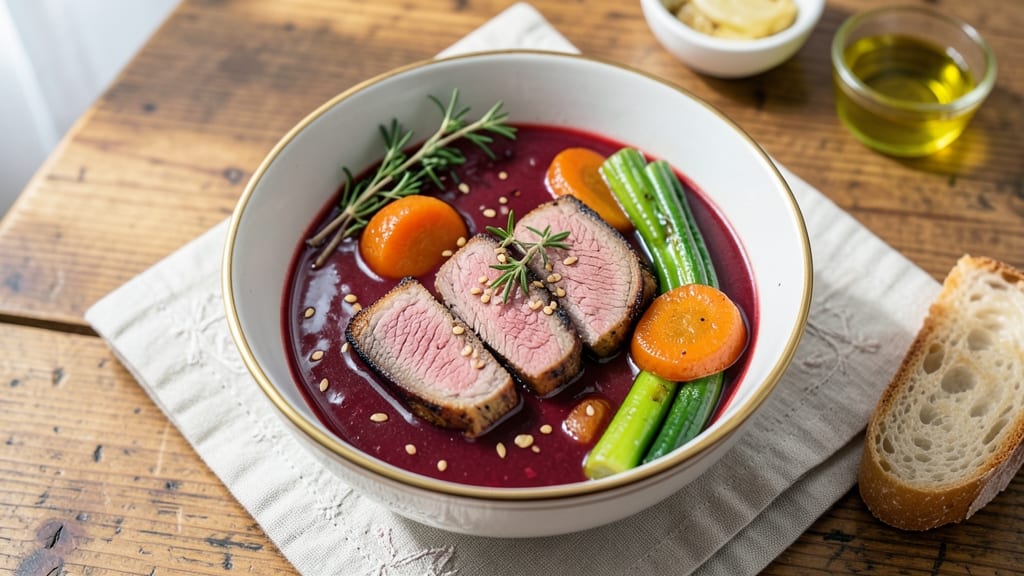
This au jus soup recipe transforms humble beef bones into a velvety, umami-rich masterpiece that belongs in both French bistros and home kitchens. The secret lies in slow-roasting bones to deepen their flavor, then simmering them for hours to extract every last drop of gelatinous richness.
What starts as a simple broth becomes a complex, aromatic foundation—where caramelized meat meets delicate herbs and a whisper of acidity.
The process begins with roasting beef bones until they develop a deep mahogany crust, intensifying their natural flavors. Then, they simmer in water with aromatic vegetables until the broth reduces to a concentrated, velvety consistency.
The result? A soup that’s deeply savory yet balanced, with a silky texture that coats every spoonful. This isn’t just a side—it’s a dish worthy of center stage.
What makes this recipe special is its versatility. Use it as a base for beef dishes, serve it alongside roasted meats, or enjoy it solo with crusty bread for dipping.
The slow simmering process clarifies the broth naturally, eliminating the need for complex clarifying agents while preserving all that umami richness. Each sip delivers layers of flavor—caramelized, herby, and subtly tangy—that make it impossible to resist.
Perfect for weeknight dinners or special occasions, this au jus soup proves that simple ingredients, when given time and care, can create something extraordinary. The key is patience—letting the bones work their magic over hours to develop a depth of flavor that’s hard to replicate.
Ready to elevate your soup game?
Ingredients for au jus soup
Transform humble bones into velvety umami richness with these carefully chosen ingredients.
| Ingredient | Amount | Notes |
|---|---|---|
| Beef Bones (Knuckle or Marrow) 🦴 | 2 ½ lb | Raw, uncooked, cut into 2-inch pieces |
| Yellow Onion 🧅 | 1 whole | Peeled, cut into 4 wedges |
| Carrot 🥕 | 2 whole | Scrubbed, cut into 2-inch chunks |
| Celery Stalks 🌿 | 3 whole | Trimmed, cut into 2-inch pieces |
| Garlic Cloves 🧄 | 6 cloves | Peeled, smashed but not minced |
| Fresh Thyme Sprigs 🌿 | 4 whole | Stems intact for easy removal |
| Fresh Parsley Sprigs 🌿 | 4 whole | Stems intact for easy removal |
| Red Wine Vinegar 🍷 | ¼ cup | Balsamic or apple cider substitute |
| Water 💧 | 8 cups | Filtered preferred for clarity |
| Kosher Salt 🧂 | 2 tsp | Diamond Crystal preferred |
| Black Peppercorns 🌶️ | 1 tsp | Crushed lightly, not powdered |
| Bay Leaves 🌿 | 2 whole | Dried, standard size |
| Olive Oil 🫒 | 2 tbsp | Extra-virgin for roasting |
| Cold Butter 🧈 | 4 tbsp | Unsalted, cubed for finishing |
The beef bones are the foundation—knuckle or marrow bones yield the most gelatinous richness. Source them from a butcher or grocery store meat counter, ideally the same day you plan to roast. Costco or Whole Foods often carry high-quality beef bones, but any reputable butcher will have them. Look for bones with some meat clinging to them; these develop deeper flavor during roasting. Avoid bones that smell ammonia-like or have a grayish tint, as these indicate poor quality. The aromatic vegetables—onion, carrot, and celery—should be fresh, with crisp edges and vibrant colors, ensuring they contribute their full flavor profile without bitterness.
No beef bones? Pork bones or chicken carcasses work in a pinch, though the flavor profile shifts slightly. The vinegar adds brightness—substitute with lemon juice or apple cider vinegar if unavailable. Fresh herbs are ideal, but dried thyme and parsley at half the amount suffice. For the roasting step, high-heat broiling caramelizes the bones faster than an oven, but a conventional oven set to 450°F works too. If you lack olive oil, avocado oil or vegetable oil are suitable substitutes. The butter at the end isn’t just for richness—it emulsifies the broth for a silky texture, so don’t skip it.
Store the roasted bones in an airtight container in the fridge for up to 3 days before simmering, or freeze them for 3 months to use later. The finished broth keeps in the refrigerator for 5 days or freezes for 6 months in airtight containers. For long-term storage, portion it into ice cube trays before transferring to freezer bags—perfect for adding depth to future dishes. Always cool the broth quickly by placing the pot in an ice bath before refrigerating to prevent bacterial growth. The butter should be added at the very end to maintain its flavor and texture.
Why You'll Love This Recipe
- No-Chop Night: I swear by the "mirepoix hack" here—just toss whole onion, carrots, and celery into the pot with the bones. The broth breaks them down perfectly, and I’m left with zero prep mess. (Yes, even on a Tuesday night.)
- Rich Without Effort: That marrow bone? It melts into the broth like liquid gold, turning a simple simmer into something deep and velvety. Honestly, the garlic and onions caramelize just enough to give it this smoky-sweet edge that’s ridiculously good.
- Leftovers That Shine: This soup keeps for days in the fridge, and it only gets better. Use it as a base for dumplings, a quick sauce for roasted veggies, or even a brothy rice bowl. My freezer’s always stocked with it—because why make it once?
- Budget Bone Magic: Beef knuckles and marrow bones are cheap, and one pot yields gallons of flavor. I’ll be real: it’s my secret weapon for stretching meals without sacrificing taste. Plus, the bones render down to nothing, so you’re not left with waste.
Step-by-step instructions for slow-simmered beef bone broth
Transform humble beef bones into a deeply flavorful au jus foundation through precise technique.
Roast the Beef Bones for Maximum Flavor
Preheat your oven to 425°F and position a rack in the middle position. Arrange the 2.5 lb beef bones on a rimmed baking sheet in a single layer, ensuring they don't overlap. This arrangement allows for even browning and maximum surface area exposure.
Drizzle the bones with the 2 tbsp olive oil and rub it evenly over all surfaces. Roast for 25-30 minutes, turning occasionally, until the bones develop a deep mahogany color and begin to smell intensely caramelized. This roasting step is crucial—it develops the Maillard reaction that forms the foundation of your au jus flavor. The bones should be well-browned but not charred.
Build the Aromatic Base
While the bones roast, prepare your vegetables. In a large Dutch oven or heavy pot, add the 1 whole yellow onion cut into wedges, 2 whole carrots in chunks, and 3 whole celery stalks cut into 2-inch pieces. Add the 6 peeled garlic cloves (smashed but not minced) and the 4 whole thyme sprigs and 4 whole parsley sprigs with stems intact.
Once the bones are roasted, transfer them to the prepared Dutch oven along with any accumulated drippings. Add the 0.25 cup red wine vinegar and the 2 whole bay leaves. The vinegar helps extract additional collagen and adds brightness to the final au jus. Pour in the 8 cups water and bring the mixture to a boil over high heat.
Simmer for Deep Flavor Extraction
Once boiling, reduce the heat to low to maintain a gentle simmer. The liquid should bubble softly with occasional small bubbles breaking the surface—this indicates proper simmering temperature. Skim any foam or impurities that rise to the surface during the first 30 minutes of simmering.
Cover the pot and let it simmer uncovered for 3-4 hours. This long, slow cook time is essential for extracting maximum gelatin and collagen from the bones, which will give your au jus its signature richness. Check occasionally and add water if the level drops below halfway up the bones. The final broth should be deep amber in color and have a rich, meaty aroma.
Strain and Finish with Butter
After simmering, carefully strain the broth through a fine-mesh sieve or cheesecloth-lined colander into a clean pot. Discard the solid vegetable pieces and bones. Return the strained broth to the pot and add the 2 tsp kosher salt and 1 tsp lightly crushed black peppercorns. Taste and adjust seasoning if needed—this is your base flavor profile.
Remove the broth from heat and let it cool slightly. Stir in the 4 tbsp cold butter, allowing it to melt and emulsify into the broth. This final step adds luxurious mouthfeel and balances the acidity from the vinegar. The butter should be completely melted and evenly distributed throughout the au jus. For best results, let the finished au jus cool to room temperature before refrigerating.
Pro Tips For Making Au Jus Soup
- Char Bones First: Don’t rush the searing—get those beef bones screaming hot in a dry pot for 8–10 minutes until the edges turn deep brown. I used to skip this, and the broth always tasted flat. The Maillard reaction here is your flavor foundation.
- Blanch Veggies Before Browning: Toss chopped onion, carrot, and celery into boiling water for 2 minutes, then shock in ice water. This softens them just enough so they don’t turn to mush later—no more slimy soup. (Yes, even if you’re impatient like me.)
- Skimp on Garlic: Two cloves max, and crush them with the flat of your knife—not minced. Whole cloves burn easily, and minced garlic turns bitter. My grandmother swore by this, and she was right: subtlety wins.
- Strain Twice for Clarity: After simmering, strain through a fine-mesh sieve first, then a cheesecloth-lined colander. The second pass removes the last of the grit—no one wants to taste their own effort. (Your future self will thank you.)
Flavor customization for this au jus soup
Classic Umami Depth
Start with the foundational flavors by adjusting the roasting time. For extra caramelization, roast the bones at 450°F for 40 minutes, turning every 10 minutes. This intensifies the Maillard reaction, creating deeper umami notes.
If you prefer a lighter color, stick to 425°F for 25 minutes—this preserves a cleaner appearance while still delivering rich flavor. 🔥
Herb Variations
Swap out thyme and parsley for rosemary and tarragon for a French bistro twist—these herbs add piney, anise-like notes that pair beautifully with beef. For a Mediterranean touch, use oregano and basil instead.
Always keep the stems intact for easy removal after simmering. The herbs should be fresh, not dried, for the brightest flavor.
Acidity Balance
The red wine vinegar is key for brightness, but you can experiment with alternatives. For a tangier profile, use lemon juice (start with ¼ cup and adjust to taste). A splash of balsamic vinegar adds depth, while apple cider vinegar introduces subtle sweetness.
Taste the broth before finishing with butter—if it lacks brightness, add ½ tsp more vinegar per cup of broth.
Richness Boosters
For a creamier texture, stir in 2 tbsp heavy cream or ½ cup crème fraîche after adding the butter. If you prefer a lighter finish, replace the butter with 2 tbsp olive oil for a brighter, oilier mouthfeel.
For extra depth, add 1 tsp Worcestershire sauce during the final simmer—it enhances umami without overpowering.
Spice Infusions
Add heat with ½ tsp smoked paprika or ¼ tsp cayenne pepper during the simmer. For warmth, include 1-inch piece of fresh ginger or 2 whole cloves while simmering.
Remove the ginger before straining. A pinch of ground coriander adds a citrusy note that complements the vinegar beautifully. Always taste as you go—spices concentrate during reduction.
Finishing Touches
Elevate your au jus with garnishes that complement its depth. A sprig of fresh parsley adds freshness, while toasted bread croutons offer texture. For luxury, drizzle with truffle oil (start with ½ tsp) or a pinch of flaky sea salt.
Serve with crusty baguette slices for dipping—this turns your au jus into a full-course experience. ✨
Nutrition facts
Frequently asked questions
Can I make au jus soup without beef bones?
Yes, but the flavor will differ significantly. For a similar depth, use chicken carcasses (for lighter broth) or pork bones (for richer umami). Vegetarian versions require mushroom stems, kombu seaweed, or soy sauce to mimic meaty richness. The roasting step remains essential for developing caramelized flavors.
How long can I store leftover au jus soup?
Store in an airtight container in the fridge for 5 days or freeze for 6 months. For freezing, portion into ice cube trays first—this makes it easy to thaw just what you need. Always cool the broth quickly by placing the pot in an ice bath before refrigerating to prevent bacterial growth.
Why does my au jus look cloudy after simmering?
Cloudiness usually means proteins haven't fully settled. Skim more foam during the first 30 minutes of simmering, and strain through a cheesecloth-lined sieve for extra clarity. For a restaurant-quality finish, chill the broth overnight—fat will solidify on top, and you can remove it before reheating.
Can I use store-bought beef broth instead?
Technically yes, but you'll miss the depth from roasted bones. If using store-bought, add 2 tbsp tomato paste and 1 tsp soy sauce during simmering to enhance umami. For best results, still roast bones separately and combine them with the broth during the final simmer to infuse flavor.
What's the best way to reheat au jus soup?
Reheat gently on low heat until just warm—never boil. For restaurant-style presentation, warm in a saucepan with a splash of water to prevent skin formation. If using frozen portions, thaw in the fridge overnight and reheat slowly. Stir in a pat of cold butter at the end to restore richness.