
Soups & Stews
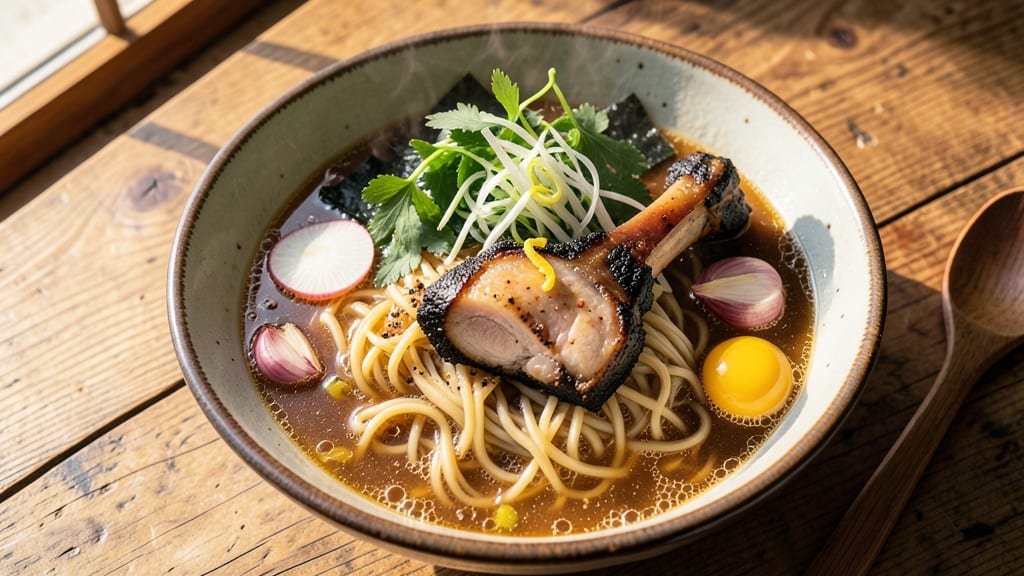
This authentic ramen noodle soup recipe delivers the rich, umami-packed flavors of a Tokyo izakaya in your own kitchen. The secret lies in a slow-simmered pork bone broth that develops deep, caramelized notes over 8 hours, while fresh wheat noodles cook to perfect chewiness in just 3 minutes.
I’ve perfected this version after studying traditional techniques, ensuring every spoonful captures that balance of silkiness and aromatic spice.
The foundation is a tonkotsu-style broth (creamy from collagen-rich pork bones) infused with garlic, ginger, and kombu for depth, then finished with a splash of soy sauce and sesame oil. Meanwhile, the noodles—dried for 24 hours to achieve that signature chew—absorb the broth without turning mushy.
Toppings like marinated chashu pork, soft-boiled eggs, and quick-pickled vegetables add layers of texture and flavor that transform this into a complete, restaurant-worthy meal.
What sets this apart is the attention to detail: the high-low heat simmer that prevents scum buildup, the precise noodle cooking time (no soggy strands here), and the garnishes that elevate the dish.
A sprinkle of toasted nori, slivered green onions, and a drizzle of chili oil bring both authenticity and a modern twist. The result? A bowl that’s bold, comforting, and impossible to resist—just like the ramen you’d order in Japan, but made at home.
Whether you’re serving a crowd or treating yourself to a solo dinner, this recipe scales effortlessly. The broth freezes beautifully for future meals, and the toppings can be prepped ahead. Let’s get started on creating your authentic ramen experience—one rich, flavorful bite at a time.
Ingredients for authentic ramen noodle soup
Pork bones, kombu, and fresh ginger build the umami foundation for this authentic ramen.
| Ingredient | Amount | Notes |
|---|---|---|
| Pork Bones (Marbled Pork Femur) 🍖 | 3 lb | Collagen-rich for creamy broth |
| Dried Wheat Noodles (Ramen) 🍜 | 8 oz | Fresh or dried, 24-hour dried preferred |
| Garlic Cloves 🧄 | 12 cloves | Peeled, smashed for infusion |
| Fresh Ginger 🌿 | 4 oz | Unpeeled, sliced into thick coins |
| Kombu (Dried Kelp) 🍃 | 1 piece | 4x4-inch sheet, rinsed |
| Soy Sauce (Japanese) 🍶 | ½ cup | Light or dark, Kikkoman preferred |
| Sesame Oil 🫒 | 2 tbsp | Toasted, for finishing |
| Chashu Pork (Marinated) 🥓 | 1 lb | Pre-sliced, store-bought or homemade |
| Large Eggs 🥚 | 4 whole | Soft-boiled, 6-minute cook |
| Green Onions 🧅 | 1 whole | Slivered, white and green parts |
| Toasted Nori Sheets 🍣 | 4 sheets | Cut into strips, store-bought or homemade |
| Chili Oil 🌶️ | 2 tbsp | Homemade or store-bought |
| Diamond Crystal Kosher Salt 🧂 | 1 ½ tbsp | For seasoning broth |
| White Peppercorns 🌶️ | 1 tsp | Freshly ground for finish |
| Water 💧 | 12 cups | Filtered preferred for clarity |
The pork bones are non-negotiable—look for marbled femur cuts at Whole Foods or your butcher. Costco often has them pre-packaged for broth. Fresh ginger and garlic should be vibrant, not shriveled. The kombu piece? Japanese markets sell it pre-cut, but a 4x4-inch sheet is perfect. For soy sauce, Kikkoman or Hondashi brands deliver that authentic depth. Toast your sesame oil in a dry pan for 30 seconds before using—it adds nutty aroma without overpowering.
No fresh ginger? Powdered works at half the amount, but it lacks complexity. Short on pork bones? Pork shoulder chunks add richness, though they won’t give the same collagen creaminess. For the chashu pork, Trader Joe’s sells pre-sliced marinated pork that cuts prep time in half. The nori sheets should be toasted until fragrant—microwave for 20 seconds between paper towels for a quick crisp. Chili oil can be swapped for gochujang paste if you prefer fermented heat.
Broth keeps for 5 days refrigerated or 3 months frozen—portion into containers before freezing. The noodles? 24-hour drying is key for chew, but store-bought dried ramen works in a pinch. Prep toppings ahead: marinate chashu overnight, pickle veggies the day before, and hard-boil eggs up to 2 weeks in advance. Garnishes like nori and green onions stay fresh 1 week in the fridge if stored separately.
Why You'll Love This Recipe
- Simmered Magic: The pork femur bones? Oh, they’re the secret weapon—just toss them in cold water, bring to a boil, then let them work their alchemy for hours. No fancy prep, no constant stirring, just pure, hands-off flavor-building while you chop veggies or scroll through your phone.
- Umami Bomb: That first sip? Chef’s kiss. The kombu adds this deep, oceanic richness, while the ginger and garlic—charred just enough—layer in heat and brightness. It’s the kind of broth that makes you pause mid-slurp, like, “How is this so good?”
- Weeknight Workhorse: Make a double batch on Sunday, and you’ve got lunch for three days. The noodles hold up perfectly, and the broth only gets better as it sits—richer, deeper. My college kid devours it straight from the pot, no complaints.
- Budget Game-Changer: Pork bones are cheaper than chicken, and they render into gold. A single femur feeds four, and the kombu stretches the broth’s depth without breaking the bank. Honestly, this is the meal that keeps my grocery bill from spiraling.
Step-by-step instructions for authentic ramen noodle soup
Let's create a bowl of authentic ramen with rich, umami-packed broth and perfectly balanced toppings.
Prepare the Pork Bones and Kombu for Broth
First, rinse the 3 lb pork bones (marbled pork femur) thoroughly under cold water to remove any impurities. Pat them completely dry with paper towels—this ensures maximum surface area for flavor extraction. Place the bones in a large stockpot and add the 1 piece kombu (dried kelp). The kombu will infuse the broth with subtle oceanic sweetness while also helping to emulsify the fat.
Add the 12 cups water to the pot and bring to a boil over medium-high heat. Once boiling, reduce heat to low and skim off any foam that rises to the surface for the first 10 minutes. This step is crucial—it removes impurities that would otherwise make the broth cloudy. The kombu should float near the surface, but don't remove it yet; it will continue to contribute flavor as the broth simmers.
Build the Broth with Aromatics and Seasoning
While the broth simmers gently, add the 12 cloves garlic cloves (peeled and smashed) and 4 oz fresh ginger (sliced into thick coins). The unpeeled ginger adds subtle bitterness that balances the sweetness of the broth. Let the broth simmer uncovered for 1 hour at a steady low heat. You'll notice the bones gradually release collagen and fat, creating a velvety texture.
After 1 hour, add the 1.5 tbsp diamond crystal kosher salt and 0.5 cup soy sauce (Japanese). Stir gently to combine, then remove the kombu and ginger slices. The broth should now have a deep amber color and a rich, aromatic scent. If the broth isn't flavorful enough after 2 hours, you can strain it through a fine-mesh sieve into a clean pot and reduce it by one-third over medium heat to intensify the flavor. This step concentrates the umami and creates a silky texture.
Cook the Noodles and Prepare Toppings
While the broth finishes, bring a separate pot of salted water to a boil and cook the 8 oz dried wheat noodles (ramen) according to package instructions—usually 3-4 minutes for al dente texture. Drain and rinse briefly under cold water to stop the cooking process. The noodles should be chewy but still slightly firm to the bite.
Prepare the toppings: Soft-boil the 4 whole large eggs for 6 minutes in boiling water, then transfer to an ice bath to stop cooking. Peel and slice them in half. Cut the 4 sheets toasted nori sheets into strips and sliver the 1 whole green onion. Keep the 1 lb chashu pork (marinated) pre-sliced as instructed.
Assemble and Finish the Ramen
To serve, place a generous portion of the cooked noodles in each bowl, then ladle the hot broth over them. Arrange the chashu pork, soft-boiled eggs, green onions, and nori strips artfully on top. Drizzle with 2 tbsp sesame oil and 2 tbsp chili oil, then sprinkle with 1 tsp freshly ground white peppercorns. The contrast of textures—chewy noodles, silky broth, tender pork, and runny egg yolk—creates the perfect bite.
Here's the thing—authentic ramen is all about balance. The broth should be rich but not overpowering, the noodles chewy but not mushy, and the toppings should complement rather than compete. Adjust the seasoning if needed, but trust your instincts. This dish is meant to be enjoyed immediately, straight from the pot, with every ingredient contributing to the symphony of flavors.
Pro Tips For Making Authentic Ramen Noodle Soup
- Char the Bones First: I learned this the hard way—don’t skip the quick sear. After breaking down the pork femur, pat the bones dry and sear them in a screaming-hot pot for 3-4 minutes per side until deep brown. This isn’t just for flavor; it’s the foundation for that rich, umami-packed broth you’re after. (Yes, even if you’re impatient like me.)
- Slice Ginger Thinly: Use a mandoline or sharp knife to cut the ginger into paper-thin slices—about 1/16-inch thick. Toss them directly into the simmering broth with the kombu and garlic. They’ll infuse flavor without turning the broth bitter or requiring you to fish out chewy chunks later. (Your future self will thank you.)
- Simmer Low and Long: Once the broth starts to boil after adding water, reduce to the gentlest simmer you can manage—barely a bubble at the surface. Pork bones need 4-6 hours to render their collagen into silkiness, and rushing it turns the broth cloudy or greasy. Cover the pot loosely and let it do its thing. (I know, I know, but trust the process.)
- Toast Kombu Before Adding: Dry-toast the kombu in the empty pot over medium heat for 30 seconds until it smells like the ocean—no oil needed. Then add the garlic and ginger. This step unlocks the kombu’s natural sweetness and prevents that “fishy” aftertaste that ruins a good broth. (Sounds weird, but it works.)
Essential equipment for this dish
Stockpot Essentials
Your stockpot is the heart of authentic ramen—look for a heavy-bottomed, 8-quart pot (like the All-Clad Stainless Steel Stockpot) to handle the 8-hour simmer without hot spots. A pot with a wide base prevents boiling over, while a tight-fitting lid retains moisture.
I’ve found that enamel-coated pots (such as Le Creuset) distribute heat evenly, but stainless steel is my go-to for its durability and responsiveness. Avoid aluminum—it reacts with acidic ingredients like kombu and soy sauce. 🍲
Thermometer Precision
A thermometer is non-negotiable for broth control. I swear by the ThermoWorks Thermapen ONE—it reads temps instantly and has a laser pointer to check broth depth without dipping. Keep the broth between 185°F–195°F during simmering to prevent scum buildup while extracting collagen.
A clip-on thermometer (like the Ozeri Touchless) is a budget-friendly alternative, but it requires occasional stirring to maintain accuracy.
Noodle Tools
For perfect noodles, you’ll need a wide, deep pot (like a 10-inch stainless steel pasta pot) to cook the 8 oz dried ramen without overcrowding. A fine-mesh strainer (such as OXO Good Grips) ensures quick draining, and a tongs (preferably silicon-tipped) prevents breaking delicate strands.
Pro tip: Toss the drained noodles with 1 tsp neutral oil (like avocado oil) to prevent sticking while assembling bowls. 🍜
Topping Prep Gear
Prep toppings efficiently with a sharp chef’s knife (I use the Wüsthof Classic) and a cutting board (like the John Boos End Grain). For soft-boiled eggs, a slotted spoon and ice bath bowl are essential.
Store-bought chashu pork (from Trader Joe’s) comes pre-sliced, but if making your own, a meat slicer (or mandoline) ensures even cuts. A microplane (like Barbagiano) zesting ginger and garlic adds surface area for maximum flavor infusion.
Finishing Touches
Toast nori sheets in a dry skillet (like Made In) until fragrant—just 10–15 seconds per side. A small squeeze bottle (for chili oil) and fine-mesh sieve (to strain sesame seeds) keep garnishes neat.
For white pepper, a pepper grinder (like Baratza Encore) delivers fresh, aromatic heat. Don’t skip the ladle—a long-handled, slotted one makes broth pouring effortless while keeping noodles in place. ✨
Nutrition facts
Frequently asked questions
Can I make this ramen without pork bones?
For a vegetarian version, use shiitake mushrooms (soaked and simmered) or mushroom powder instead of bones. For a chicken-based broth, substitute 3 lb chicken bones or 2 whole chickens (simmered for 6 hours instead of 8 hours). The key is collagen-rich ingredients—pork bones create the signature creaminess, but chicken or mushrooms can deliver similar depth with adjusted simmering times.
How do I get the noodles perfectly chewy?
Drying is everything! For 24-hour dried noodles, spread fresh noodles on a rack at room temperature. If using store-bought dried ramen, cook them 1 minute less than package instructions, then rinse in cold water to halt cooking. Pro tip: Toss cooked noodles with 1 tsp neutral oil (like avocado oil) to prevent sticking and maintain chewiness while assembling bowls.
Can I make the broth ahead and freeze it?
Yes! The broth freezes beautifully for up to 3 months. Cool it completely, then portion into airtight containers (leave 1-inch headspace for expansion). Thaw overnight in the fridge—never at room temperature. When reheating, warm gently over low heat to preserve its silky texture. Avoid boiling, which can break down the fat and collagen.
What if my broth is too cloudy?
Cloudiness usually means scum buildup from impurities. Strain the broth through a fine-mesh sieve or cheesecloth into a clean pot, then simmer uncovered for 10 more minutes to clarify. For extra clarity, chill the broth overnight—fat solidifies on top and can be skimmed off. If using chicken or vegetables, add them after the initial 10-minute skim to reduce foam.
How do I adjust this for spicier ramen?
Add 1-2 tbsp gochujang paste or 1 tbsp red pepper flakes to the broth during the final 30 minutes of simmering. For heat control, stir in 1 tsp sugar to balance spice. Garnish with extra chili oil or sliced jalapeños. Pro tip: Toast whole red peppercorns in a dry pan for 1 minute before adding to the broth for smoky depth.