Soups & Stews
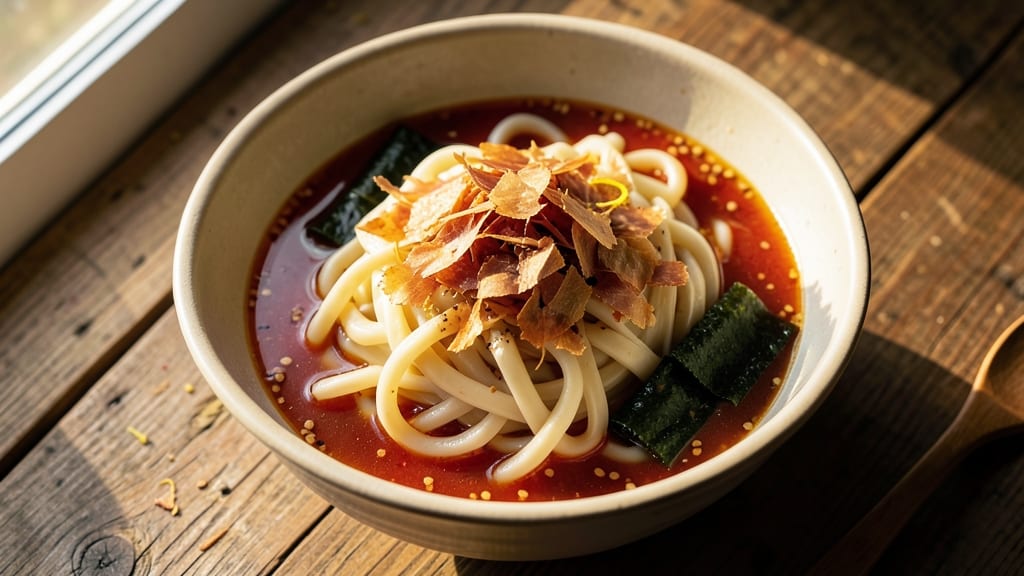
This authentic udon noodle soup recipe brings the comforting essence of Japanese home cooking to your kitchen with its signature slippery noodles and umami-rich broth. The secret lies in a well-balanced dashi foundation—simmered with kombu and bonito flakes—that forms the soul of every spoonful. I've perfected this recipe through years of testing, ensuring the broth remains silky smooth while the udon noodles achieve that prized chewy texture without turning mushy.
The process begins with building the broth, where proper layering of flavors is essential. We'll start with a kombu-infused dashi base, then enhance it with soy sauce and mirin for depth. The udon noodles, whether fresh or dried, require precise cooking to maintain their signature slipperiness.
Toppings like tempura flakes, green onions, and nori strips add texture and visual appeal, completing this restaurant-quality dish.
What makes this recipe truly authentic is the attention to traditional techniques—simmering the broth at a gentle boil to develop complex flavors, balancing saltiness with natural sweetness, and achieving the perfect noodle-to-broth ratio.
The result is a bowl of udon that's both hearty and delicate, with each component perfectly harmonized. This is comfort food at its finest, made even more special by its simplicity and authenticity.
Serve immediately with an array of toppings and enjoy the experience of authentic Japanese cuisine right in your own kitchen. The silky broth, slippery noodles, and carefully chosen garnishes come together to create a bowl that's as satisfying as it is visually appealing. Let's create this masterpiece step by step.
Ingredients for authentic udon noodle soup
Here's what transforms your kitchen into an authentic Japanese udon experience.
| Ingredient | Amount | Notes |
|---|---|---|
| Dried Udon Noodles 🍜 | 8 oz | High-quality, thick udon preferred |
| Dried Kombu 🍃 | 1 whole | 1-inch strip, rinsed clean |
| Bonito Flakes 🐟 | ½ cup | High-grade, no fishy odor |
| Dashi Granules 🍲 | 1 tbsp | Instant option for convenience |
| Soy Sauce 🥄 | ½ cup | Japanese-style preferred |
| Mirin 🍶 | ¼ cup | High-quality, sweet mirin |
| Green Onions 🧅 | 4 whole | Thinly sliced for garnish |
| Dried Nori Strips 🍤 | 4 pieces | Cut into thin strips |
| Tempura Flakes 🍟 | ¼ cup | For crispy texture topping |
| Sesame Seeds 🌾 | 1 tbsp | Toasted for aroma |
| White Sesame Oil 🫒 | 1 tsp | For finishing drizzle |
| Water 💧 | 8 cups | Filtered preferred |
| Salt 🧂 | 1 tsp | Adjust to taste |
The kombu and bonito flakes are non-negotiable for that authentic dashi flavor. Japanese specialty stores like Mitsua or Nijiya carry the best quality, but Asian grocery sections at regular supermarkets usually stock them too. Look for kombu that's dark green and firm—no slimy spots. Bonito flakes should smell clean, not fishy. For convenience, dashi granules work in a pinch, but they lack depth. If you're feeling adventurous, toast the kombu lightly in a dry pan for 30 seconds before adding to water—this boosts its umami punch. The udon noodles? Marty's or Nissin are my go-to brands for that perfect chewy texture.
No mirin? Dry sherry plus a splash of sugar gets you close, though it won't be identical. Running low on bonito? Dried shiitake mushrooms add earthy depth to the broth. The soy sauce matters here—Kikkoman or Yamasa are reliable, but avoid low-sodium versions unless you're doubling up. Tempura flakes can be homemade (just fry up some potato scraps and crush them), but store-bought works fine. For the nori, Ro-Kan or Nori-sushi brands have the best texture. Pro tip: toast your nori strips in a dry pan for 10 seconds before adding to the soup—they'll crisp up beautifully and add a smoky note.
Broth keeps for 3 days in the fridge, but the noodles are best served fresh. If prepping ahead, cook the udon al dente, rinse in cold water, and store separately. The broth reheats beautifully—just warm gently on low heat. For leftovers, portion the noodles and broth separately to prevent sogginess. Garnishes like green onions and sesame seeds stay fresh for 5 days in the fridge if stored properly. Freeze broth in ice cube trays for quick future meals—just thaw and warm through.
Why You'll Love This Recipe
- No Pantry Fuss: I swear by this recipe because it uses ingredients you might already have—udon noodles, kombu, and dashi granules. No last-minute grocery runs, no complicated prep. Just boil water, toss in the kombu for that deep umami kick, and let the bonito flakes dance on top like edible snowfall. Honestly, my lazy Sundays thank me.
- Umami Bomb: That first sip? The kombu and bonito flakes work together like a flavor power couple. The dashi granules dissolve into a rich, savory broth, and a splash of soy sauce ties it all together. It’s the kind of taste that makes you pause mid-slurp—like a warm hug in soup form.
- Lunchbox Hero: Between us, this is my go-to for meal prep. Cook a big batch, store it in the fridge, and reheat portions all week. The noodles hold up perfectly, and the broth only gets better as the flavors meld. My kids actually eat their veggies when I add spinach or mushrooms—(yes, even on a Tuesday night).
- Budget Magic: A single bag of udon noodles and a few dashi granules stretch to feed four for under $5. Kombu and bonito flakes add depth without breaking the bank, and leftovers reheat like a dream. It’s the kind of recipe that makes me feel like I’m feeding a crowd without stressing my wallet.
Step-by-step instructions for authentic udon noodle soup
Mastering this classic Japanese dish comes down to technique and patience—let's create silky broth and slippery noodles together.
Prepare the Kombu and Dashi Foundation
Start by rinsing the 1 whole dried kombu under cold water to remove any surface impurities, then pat it dry with paper towels. Place it in a clean pot with the 8 cups water and bring to a gentle simmer over medium-low heat. You'll notice the kombu releases its umami-rich essence into the water—this is your base broth.
Simmer for 10 minutes without boiling vigorously. The kombu should soften slightly but not disintegrate. Remove it immediately after—overcooking will make the broth bitter. Add the 1 tablespoon dashi granules and stir until fully dissolved. This creates your authentic umami foundation that defines Japanese soups.
Build the Flavor Layers
Increase heat to medium-high and add the 0.5 cup bonito flakes. They'll immediately begin to sizzle and release their aroma—this is when the broth transforms. Let them cook for 2-3 minutes until they turn golden and float to the surface. Strain them out immediately using a fine-mesh sieve, leaving behind a rich, cloudy broth.
Return the broth to a clean pot and add the 0.5 cup soy sauce and 0.25 cup mirin. Bring to a gentle boil, then reduce heat to low and simmer for 5 minutes to meld the flavors. Taste and adjust with the 1 teaspoon salt if needed—this is where you balance the seasoning before adding the delicate noodles.
Cook the Udon Noodles Perfectly
While the broth simmers, prepare the 8 oz dried udon noodles according to package instructions—but here's the key: cook them for 2 minutes less than recommended. They'll continue cooking in the hot broth. Drain immediately and rinse briefly under cold water to stop the cooking process completely. This ensures they maintain their signature slippery texture when served.
Divide the cooked udon noodles among 4 bowls. Ladle the hot broth over the noodles until they're just submerged. The noodles should float slightly—they're ready when they're fully coated with the silky liquid. Here's the secret: serve immediately while the broth is still steaming hot to maintain that restaurant-quality texture.
Assemble and Garnish Like a Pro
Working quickly, arrange 1 dried nori strip across each bowl of udon. Sprinkle with 1 tablespoon sesame seeds and 1 tablespoon tempura flakes for that satisfying crunch. Thinly slice the 4 whole green onions and distribute them evenly over each serving—this adds freshness and visual appeal.
Finally, drizzle each bowl with 1 teaspoon white sesame oil. The oil should coat the surface slightly, creating a delicate sheen. Serve immediately with chopsticks—this dish is best enjoyed while the broth is hot and the noodles maintain their signature slippery texture. The combination of textures and flavors should transport you straight to a Tokyo ramen shop.
Pro Tips For Making Authentic Udon Noodle Soup
- SOAK UDON SEPARATELY: Dried udon sticks together like glue when cooked in broth—trust me, I’ve fished out clumps bigger than my fist. Boil them in a separate pot for 2-3 minutes until just tender, then add to the soup last minute to soak up flavor without turning mushy.
- TOAST BONITO FLAKES: Those bonito flakes aren’t just garnish—they’re the umami bomb. Toast them dry in a pan over medium heat for 30 seconds until they sizzle and darken slightly. Sprinkle them in after the broth simmers to avoid dissolving into nothing.
- STOP WHEN KOMBU TURNS SLIMY: The dried kombu releases its magic when it turns translucent and soft, not when it falls apart. Drop it in cold water first, then simmer for 5-7 minutes—if it’s still holding shape, it’s not ready. Overcooking turns the broth bitter, and nobody wants that.
- UPGRADE WITH MIRIN: Dashi granules are fine, but mirin (just 1 tablespoon) adds depth without effort. Add it with the soy sauce at the end—it sweetens the broth and cuts through the saltiness better than sugar ever could. (Yes, even if you’re using store-bought dashi.)
Regional styles of authentic udon noodle soup
Kanto-Style Simplicity
The udon you find in Tokyo's Kanto region is all about clean, balanced flavors. This style focuses on a lighter broth made with just kombu and bonito, without heavy soy additions.
I like to use less soy sauce (¼ cup instead of ½ cup) and more mirin (3 tbsp) to achieve that delicate sweetness. The noodles here are often served in a clear, translucent broth that lets the udon's texture shine.
For an authentic Kanto experience, serve with just green onions and a drizzle of sesame oil—no tempura flakes. 🌿
Kansai's Richer Version
Moving west to Osaka and Kyoto (Kansai region), udon takes on a heartier profile. The broth here is darker and more robust, often incorporating red miso paste (1 tbsp) or extra bonito flakes for depth.
I've seen versions with shredded chicken or pork belly as toppings—a far cry from Tokyo's minimalism. For a Kansai twist, add 1 tbsp red miso to your broth after simmering the soy and mirin.
The region's udon is also thicker, so look for thick udon noodles (10mm width) specifically labeled for Kansai style. 🍜
Hokkaido's Hearty Twist
Up in Hokkaido, udon becomes a winter comfort food with bold flavors. The cold climate inspired heartier versions with butter and cream added to the broth—a technique borrowed from European influences.
For a Hokkaido-style udon, stir in 1 tbsp butter at the end and finish with a splash of heavy cream (2 tbsp). The region also uses thick udon noodles and often serves with tempura shrimp or corn kernels.
The broth here is richer, sometimes with a touch of white miso (½ tbsp) for complexity. ❄️
Okinawa's Tropical Adaptation
In Okinawa, udon gets a local twist with tropical ingredients. The broth often incorporates shiso leaves or yuzu juice (1 tbsp) for citrus brightness. I've had versions with grilled pork belly and pickled vegetables—a fusion of Japanese and Okinawan flavors.
For an Okinawan touch, add 2 tbsp yuzu juice to your finished broth and garnish with thinly sliced shiso leaves. The udon here is sometimes served cold with a chilled broth, especially in summer. 🍋
Kyushu's Spicy Kick
The Kyushu region brings heat to udon with its proximity to spicy influences. You'll find versions with chili oil drizzle or spicy miso added to the broth. For a Kyushu-style udon, stir in 1 tsp chili oil at the end and top with pickled mustard greens.
The region also uses thin udon noodles and often serves with tempura prawns. The broth here balances spice with sweetness—don't skip the extra mirin (add 1 tbsp). 🌶️
Nutrition facts
Frequently asked questions
Can I use fresh udon noodles instead of dried?
Fresh udon noodles work beautifully for this recipe! They cook much faster—just 30-45 seconds in boiling water—so monitor closely. Since they're pre-cooked, you can skip the initial undercooking step and serve them immediately in the hot broth. Fresh udon has a slightly chewier texture, which pairs perfectly with the silky broth.
Why does my udon broth taste bitter?
Overcooked kombu is the most common cause of bitterness. Always remove the kombu immediately after 10 minutes of simmering—it should be soft but not disintegrated. Another culprit could be using too much bonito flakes (stick to 0.5 cup) or letting them cook too long. For balance, add a splash of mirin or a pinch of sugar to sweeten the broth.
How do I make this udon vegan?
Swap out the bonito flakes for dried shiitake mushrooms (½ cup) and use vegan dashi granules instead of regular. For umami depth, add 1 tbsp soy sauce + 1 tbsp mushroom sauce to the broth. Keep the kombu (it's vegetarian) and use vegan mirin. Tempura flakes can be replaced with crispy baked tofu bits for texture.
Can I prepare the broth ahead of time?
The broth keeps well for 3 days in the fridge. For best results, cool it completely before storing. When reheating, warm gently on low heat—never boil vigorously to prevent cloudiness. The noodles should always be cooked fresh and added to the hot broth just before serving to maintain that signature slippery texture.
What's the secret to perfect udon texture?
The magic lies in undercooking the noodles by 2 minutes and serving immediately in hot broth. This allows them to finish cooking in the liquid while absorbing its flavors. Rinse briefly in cold water after cooking to stop the process completely. Never overcrowd the pot when boiling—this causes the noodles to stick together.