
Soups & Stews
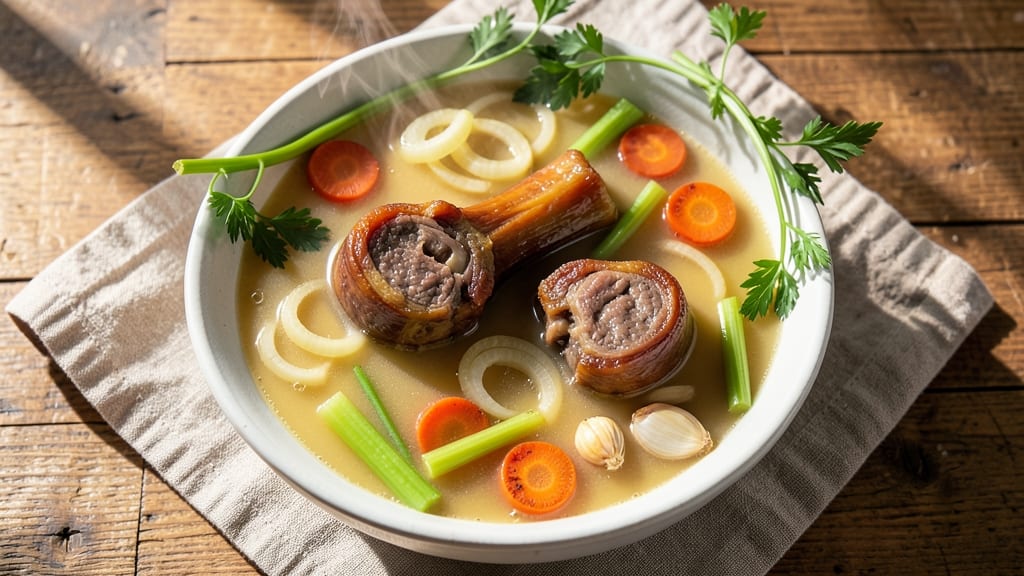
Slow-simmered beef bones transform ordinary broth into a deeply umami-rich soup that tastes like comfort food elevated. This traditional recipe builds flavor layer by layer—starting with the bones, then vegetables, and finishing with aromatic herbs.
The key? Patience and technique, like skimming foam and straining for clarity, to create a broth so rich it becomes the star of the dish.
What sets this beef bone soup apart is its authentic depth—no shortcuts, no bouillon cubes. The bones release collagen over hours, creating a velvety texture while vegetables like carrots and celery infuse natural sweetness.
A splash of vinegar at the end brightens the richness, balancing the soup's complex flavors without overpowering them. This is the kind of soup that warms both body and soul.
The result is a golden, fragrant broth with tender beef pieces that practically melt in your mouth. Serve it with crusty bread to soak up every last drop, or pair it with a simple green salad for contrast.
The aroma alone will have everyone gathering around the table—because some meals are worth the wait.
Perfect for chilly evenings or when you crave a meal that feels like home. The technique is straightforward, but the reward is unmatched flavor. Let's get started on creating a soup that tastes like tradition in every spoonful.
Ingredients for beef soup recipe with beef bones
Authentic umami begins with bones and aromatic vegetables—slow-simmered for depth.
| Ingredient | Amount | Notes |
|---|---|---|
| Beef Bones (Kneecaps and Marrow) 🦴 | 3 lb | Raw, uncooked, organic preferred |
| Yellow Onions 🧅 | 2 whole | Medium, peeled and halved |
| Carrots 🥕 | 4 whole | Medium, scrubbed and cut into chunks |
| Celery Stalks 🧄 | 6 whole | Fresh, stringy parts trimmed |
| Garlic Cloves 🧄 | 8 cloves | Peeled, lightly smashed |
| Fresh Parsley Stems 🌿 | 4 whole | Tough stems only, for bouquet garni |
| Fresh Thyme Sprigs 🌿 | 4 whole | Stems intact, tied with twine |
| Fresh Bay Leaves 🍃 | 2 whole | Dried if fresh unavailable |
| White Wine Vinegar 🍶 | ¼ cup | For acidity balance |
| Diamond Crystal Kosher Salt 🧂 | 2 tbsp | For seasoning and flavor |
| Freshly Ground Black Peppercorns 🌶️ | 1 tsp | Coarsely cracked |
| Extra-Virgin Olive Oil 🫒 | ½ cup | For initial searing |
| Cold Water 💧 | 12 cups | For initial broth dilution |
| Fresh Parsley Leaves 🌿 | ¼ cup | Chopped, for garnish only |
The bones are the foundation—organic beef marrow and knuckle bones release unmatched collagen and gelatin during the long simmer. Local butcher shops often sell these specifically for broth, but any beef bones with good marrow work. Avoid bones that are too small or lack marrow, as they won't yield enough gelatin. If you can't find marrow bones, chuck roast bones or beef shank bones are excellent substitutes. For the vegetables, organic produce ensures no bitter pesticides, but conventional works fine. The onion, celery, and carrot combination is non-negotiable—this classic trio creates the 'holy trinity' of flavor balance in French and Asian broths alike.
No fresh herbs? Dried thyme at one-third the amount works in a pinch, but fresh is ideal for aromatic depth. The vinegar is crucial—white wine vinegar or apple cider vinegar brightens the richness without overpowering. If you're making this ahead, freeze the bones and vegetables until ready to use, then thaw directly in the pot. For extra richness, add 1/2 cup of tomato paste during the simmer, but omit if you prefer a clear broth. The broth should be golden and cloudy when finished, not crystal clear—this indicates proper collagen extraction. If it's too cloudy, strain through a fine-mesh sieve lined with cheesecloth.
This soup improves with time—reheat gently on the stove, never microwaved, to preserve texture. Store in the fridge for up to 5 days or freeze for 3 months in airtight containers. For serving, skimming fat before reheating is optional—traditionalists leave it for richness, while health-conscious cooks remove it. The broth thickens as it cools, so add a splash of water when reheating if it seems too concentrated. Always taste before serving—adjust salt to preference, as bone broth varies in natural saltiness depending on the bones used.
Why You'll Love This Recipe
- I’ll be real: the first time I cracked open those beef bones, the marrow just melted into the broth like liquid gold. No fancy tricks—just a knife, a spoon, and a simmering pot turning scraps into something luxurious. That rich, velvety depth? It’s the secret weapon.
- Marrow Magic: I’ll be real: the first time I cracked open those beef bones, the marrow just melted into the broth like liquid gold. No fancy tricks—just a knife, a spoon, and a simmering pot turning scraps into something luxurious. That rich, velvety depth? It’s the secret weapon.
- One-Pot Wonder: Honestly, this soup is about as hands-off as comfort food gets. Toss in the onions, carrots, and celery—no need to julienne, just rough chop—and let the bones work their magic while you stir maybe twice. By the time the garlic’s fragrant, the broth’s already building layers of flavor without you lifting a finger.
- Weeknight to Potluck: Between us, this soup is my go-to for everything: tired Tuesday dinners, holiday leftovers, or that last-minute potluck where you forgot to bring a casserole. The bones give it depth, but it’s simple enough to throw together when the kids are begging for dinner. (Yes, even on a Tuesday night.)
Step-by-step instructions for beef bones soup with deep umami flavor
Transform simple ingredients into a rich, velvety broth through precise technique and patience.
Prepare the Bones and Aromatics for Maximum Flavor Extraction
Pat the 3 lb beef bones (kneecaps and marrow) thoroughly with paper towels to remove any surface moisture. This drying step is critical—it prevents the bones from steaming instead of rendering their gelatin and marrow. Place them in a large Dutch oven or heavy pot capable of holding all ingredients.
In a separate bowl, combine the 2 whole yellow onions (peeled and halved), 4 whole carrots (scrubbed and cut into chunks), 6 whole celery stalks (stringy parts trimmed), and 8 cloves garlic (peeled and lightly smashed). Tie the 4 whole fresh parsley stems and 4 whole fresh thyme sprigs together with kitchen twine to create a bouquet garni. Add the 2 whole fresh bay leaves to the pot as well. This aromatic bundle will infuse the broth with layered complexity.
Sear the Bones and Build Deep Flavor Layers
Heat the 0.5 cup extra-virgin olive oil in the Dutch oven over medium-high heat until shimmering. Working in batches if needed, sear the beef bones on all sides until they develop a deep golden-brown crust—about 3-4 minutes per side. This caramelization creates the Maillard reaction, which forms the foundation of your soup's rich umami flavor.
Remove the seared bones and set them aside. In the same pot, add the prepared vegetable mixture and sauté for 5-6 minutes until the onions soften and the carrots begin to caramelize slightly. This step develops sweetness that will balance the broth's savory depth. Deglaze the pot immediately with the 0.25 cup white wine vinegar, scraping up all the browned bits from the bottom—these contain concentrated flavor that would otherwise be lost.
Simmer the Broth for Maximum Gelatin Extraction
Return the seared bones to the pot and add the 12 cups cold water. This gradual temperature change helps extract more gelatin from the bones. Bring the liquid to a gentle boil over medium-high heat, then immediately reduce to a barely simmering state—you should see only small bubbles breaking the surface. Cover partially with a lid and maintain this temperature.
Simmer for 3-4 hours, skimming any foam or impurities that rise to the surface with a fine-mesh skimmer. This slow cooking transforms connective tissues into gelatin, creating a velvety texture. Check the liquid level periodically and add hot water as needed to maintain coverage. The bones should become tender enough to pierce with a fork, and the broth should develop a deep amber color and rich aroma.
Season and Finish with Precision Timing
Once the bones are tender, remove them from the pot and set aside to cool slightly. Strain the broth through a fine-mesh sieve into a clean pot, pressing gently on the solids to extract maximum flavor. Discard the vegetable solids and bouquet garni. Return the strained broth to the heat and bring it to a gentle simmer over low heat. Add the 2 tbsp Diamond Crystal kosher salt and 1 tsp freshly ground black peppercorns, stirring until fully dissolved.
Taste and adjust seasoning if needed—this broth should be deeply savory with just a hint of acidity from the vinegar. For serving, return the cooled bones to the broth and let them warm through for 10 minutes. Ladle the soup into bowls, garnishing each serving with 0.25 cup chopped fresh parsley leaves for brightness and color contrast. The marrow from the kneecaps will have melted into the broth, adding luxurious richness to each spoonful.
Pro Tips For Making Beef Soup Recipe With Beef Bones
- Char the Bones First: I learned this the hard way—skipping the char ruins depth. Sear kneecaps and marrow bones in a dry pot until deep brown (10-15 minutes), then deglaze with white wine or water. That crust unlocks flavors you won’t get by simmering raw bones.
- Cut Onions Like a Pro: Slice yellow onions into 1/2-inch chunks—not rings. Thicker pieces hold up better during hours of simmering, and they caramelize more evenly. (Yes, even if you’re impatient like me, resist the urge to dice them small.)
- Simmer Low and Slow: This isn’t the time for rushing. After 2 hours, the broth should be gently bubbling, not rolling. If it’s too vigorous, reduce heat or skim foam—high heat turns rich marrow into greasy sludge. Patience here makes all the difference.
- Save the Celery Leaves: Don’t toss them! Finely chop the green tops and stir them into the broth at the end. They add a bright, herbal note that balances the richness of the marrow and beef. (I know, it sounds weird, but it works—trust me.)
Creative variations of this recipe
Asian-Inspired Miso Glaze
Transform your beef bone soup into a Japanese-inspired ramen-style broth by adding 2 tablespoons red miso paste during the final 10 minutes of simmering. Stir in 1 teaspoon grated fresh ginger and 2 cloves minced garlic along with 1 cup shiitake mushrooms (sliced) for umami depth.
Finish with 1 tablespoon toasted sesame oil and 1 teaspoon fish sauce for a balanced, savory-sweet profile. Serve with soft egg noodles and sliced green onions. 🌶️
French-Inspired Consommé
For a refined French-style consommé, clarify the broth by creating a raft with egg whites and mushroom caps during the final hour of simmering. After straining, chill the broth uncovered to solidify the fat, then skim it off.
Add 1/2 cup dry white wine and 1 sprig fresh tarragon during the last 15 minutes of cooking. Serve with a hard-boiled egg and buttered croutons for an elegant touch. This method yields a crystal-clear, restaurant-quality broth. ✨
Smoky Chipotle Twist
Infuse your soup with smoky heat by adding 2 chipotle peppers in adobo sauce (minced) and 1 teaspoon ground cumin during the final 30 minutes of simmering. For extra depth, stir in 1/2 cup fire-roasted tomatoes (crushed) and 1/2 teaspoon smoked paprika.
Garnish with avocado slices and pickled red onions for a Southwestern-inspired bowl. This variation works beautifully with cornbread on the side. 🔥
Italian Wedding Soup Style
Turn your beef bone soup into an Italian wedding soup by adding 1/2 lb small meatballs (homemade or store-bought) and 1 cup small pasta (like ditalini) during the final 20 minutes of cooking. Stir in 1/2 cup canned cannellini beans (drained) and 1/4 cup grated Parmesan cheese at the end.
Garnish with fresh basil leaves and a drizzle of olive oil for a hearty, family-friendly meal. This version is perfect for potlucks or holiday gatherings. 💛
Spicy Cajun Bayou
Give your soup a Louisiana-inspired kick by adding 1 tablespoon Cajun seasoning (like Tony Chachere’s) and 1/2 teaspoon cayenne pepper during the final 30 minutes of simmering. Stir in 1/2 cup andouille sausage (sliced) and 1/2 cup okra (sliced) for texture.
Finish with hot sauce and green onions for a bold, spicy-sweet flavor. Serve with crusty cornbread to soak up the rich broth. 🌶️🔥
Vegetable-Packed Harvest Bowl
For a lighter, vegetable-forward version, add 2 cups diced butternut squash, 1 cup chopped kale, and 1 cup chopped sweet potatoes during the final 45 minutes of simmering. Stir in 1 teaspoon ground cinnamon and 1/2 teaspoon nutmeg for warmth.
Top with toasted pumpkin seeds and crumbled feta cheese for a seasonal, autumnal twist. This variation is ideal for health-conscious eaters who still crave depth of flavor. 🍂
Nutrition facts
Frequently asked questions
What makes beef bones better than regular beef for soup?
Beef bones release collagen and gelatin during long simmering, creating a naturally rich, velvety texture that regular beef can't match. The marrow adds luxurious depth, while connective tissues break down into flavorful gelatin. This transforms ordinary broth into a deeply satisfying, restaurant-quality soup.
Can I use chicken or pork bones instead?
While chicken bones work for lighter broths, beef bones provide the most robust umami flavor. Pork bones can be used but have a stronger taste that may overpower delicate vegetables. For authenticity, stick with beef—especially marrow bones and knuckles—which deliver the richest gelatin content.
How do I know when the bones are done?
The bones are ready when they're fork-tender (pierces easily) and the broth turns deep amber with a rich aroma. This typically takes 3-4 hours of simmering. If the broth smells intensely savory and the bones separate cleanly, it's perfect. Overcooking can make them brittle, but this soup only gets better with extra time.
What if I don't have time for a 4-hour simmer?
For a quicker version, use 2-3 hours of simmering and add 1 tbsp fish sauce or 1/2 cup soy sauce during the last 30 minutes to boost umami. You can also pressure cook for 90 minutes (high pressure) for concentrated flavor in less time. Just remember—longer simmering yields the best gelatin extraction.
Why does my broth look cloudy instead of clear?
Cloudiness is normal and actually desirable! The broth should be golden and slightly cloudy from natural collagen and gelatin. For a clearer consommé, clarify it by creating an egg white raft during the final hour, then strain through cheesecloth. But traditional bone broth is meant to be rich and opaque—not crystal clear.